
Zet AI‑inzichten om in gerichte actie

Trending
Categories
Aviation Leaders Discuss Advances in Retail and AI Applications
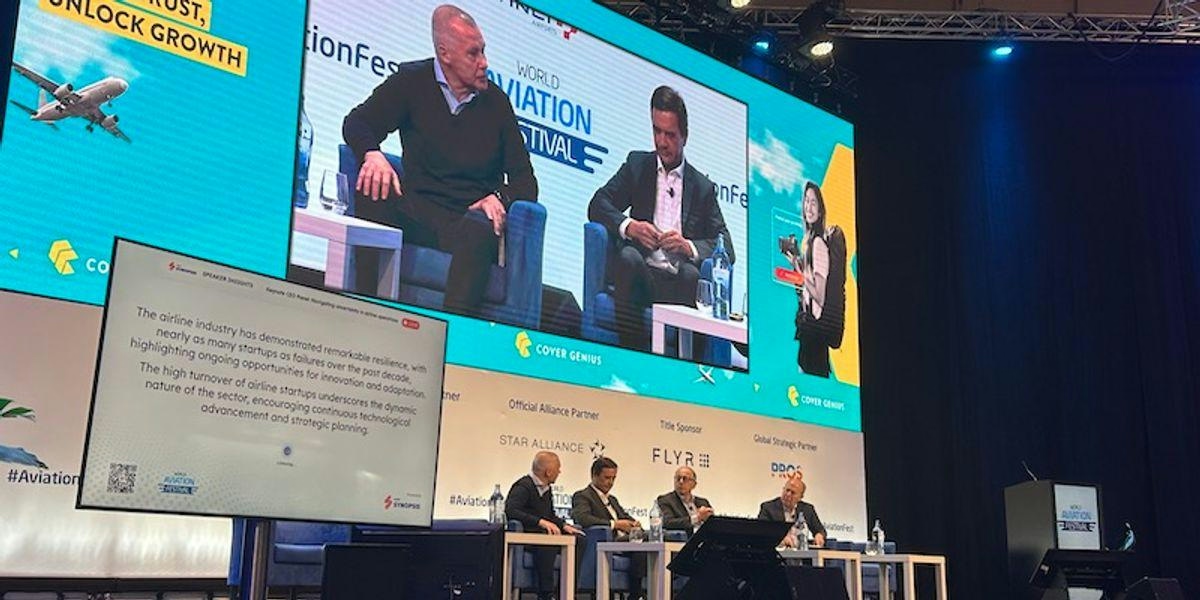
Aviation Industry Embraces Modularity and AI to Drive Innovation
Modularity as a Strategic Imperative
The aviation sector is increasingly prioritizing modularity in retail systems, a shift underscored by industry leaders at the recent World Aviation Festival in Lisbon. Willie Walsh, director general of the International Air Transport Association (IATA), emphasized that modular, flexible, and interoperable technology frameworks are essential for airlines aiming to reduce reliance on single providers and to integrate best-in-class solutions. This approach is gaining momentum despite the gradual pace of change, reflecting a broader industry effort to modernize legacy systems.
IATA has been instrumental in this transformation through initiatives such as the New Distribution Capability (NDC) and ONE Order, which have been in development for over a decade. These frameworks seek to replace traditional passenger name record (PNR) systems with an “offer and order” model, enabling airlines to enhance their retailing capabilities and better meet evolving customer demands. Walsh, who previously led British Airways and International Airlines Group (IAG), acknowledged the significant challenges posed by entrenched legacy IT infrastructures. He described the transition as “a frightening issue for a lot of airlines” but stressed that adopting a modular approach facilitates the entry of new suppliers and the integration of emerging technologies.
Major technology providers are responding to this call for modularity. Amadeus is advancing its Nevio platform, Sabre is developing Mosaic, and Accelya has partnered with Amazon Web Services (AWS) to accelerate the adoption of modular retailing. These efforts include expanding platforms like Accelya’s FLX ONE, designed to help airlines incorporate artificial intelligence (AI)-ready solutions into their existing systems.
AI Integration and Industry Challenges
The push toward modular retailing coincides with the aviation industry’s broader challenges, including geopolitical uncertainties, the imperative of decarbonization, and the integration of advanced technologies. Industry leaders recognize that addressing these issues is critical to maintaining competitiveness. Market dynamics have intensified the urgency, with airlines and technology partners increasing investments in AI applications such as precision forecasting and supply chain management, reflecting trends observed in the wider retail sector.
Walsh noted that while some airlines have begun adopting offer and order models, many remain focused solely on flight sales and have limited incentives to overhaul their systems. He explained that existing models are easier to maintain but fall short when airlines attempt to sell complex packages or accommodate customer changes, situations where the offer and order framework becomes indispensable.
AI’s transformative potential is now a central theme in aviation discussions. Luis Gallego, Walsh’s successor as CEO of IAG, revealed that 80% of the group’s projects involve AI, highlighting the technology’s growing prominence. Collaborative efforts, such as the partnership between Epic Aircraft and Microsoft, exemplify the industry’s commitment to leveraging AI to address shared challenges and unlock new opportunities.
As the aviation sector navigates these complexities, the transition to modular, AI-enabled systems is viewed as a vital step toward fostering innovation, enhancing customer experience, and sustaining competitiveness in an evolving global landscape.

Etihad Airways Suspends Airbus A380 Flights on Key Route

Aditya Birla Group Seeks Approval for Aircraft Leasing in GIFT City

Qatar Airways Highlights Innovation and Connectivity at Arabian Travel Market 2026

Hong Kong's Five-Year Plan Includes Andrew Fan's Aircraft Parts Processing Hub Proposal

ACIA Aero Leasing Delivers ATR72-600 to Air Nostrum

RTX Appoints Jill Albertelli as Head of Pratt & Whitney

TAT Technologies Joins Beyond Aero Hydrogen Aircraft Program

AURAK Study Highlights Barriers to Air Taxi Adoption in Emerging Economies

Xiamen Air Selects Altitude for 787 Maintenance at Heathrow

Etihad and Swissport Extend Global Partnership
