
Zet AI‑inzichten om in gerichte actie

Trending
Categories
Boeing 747s Repurposed as Homes, Hotels, and Buildings
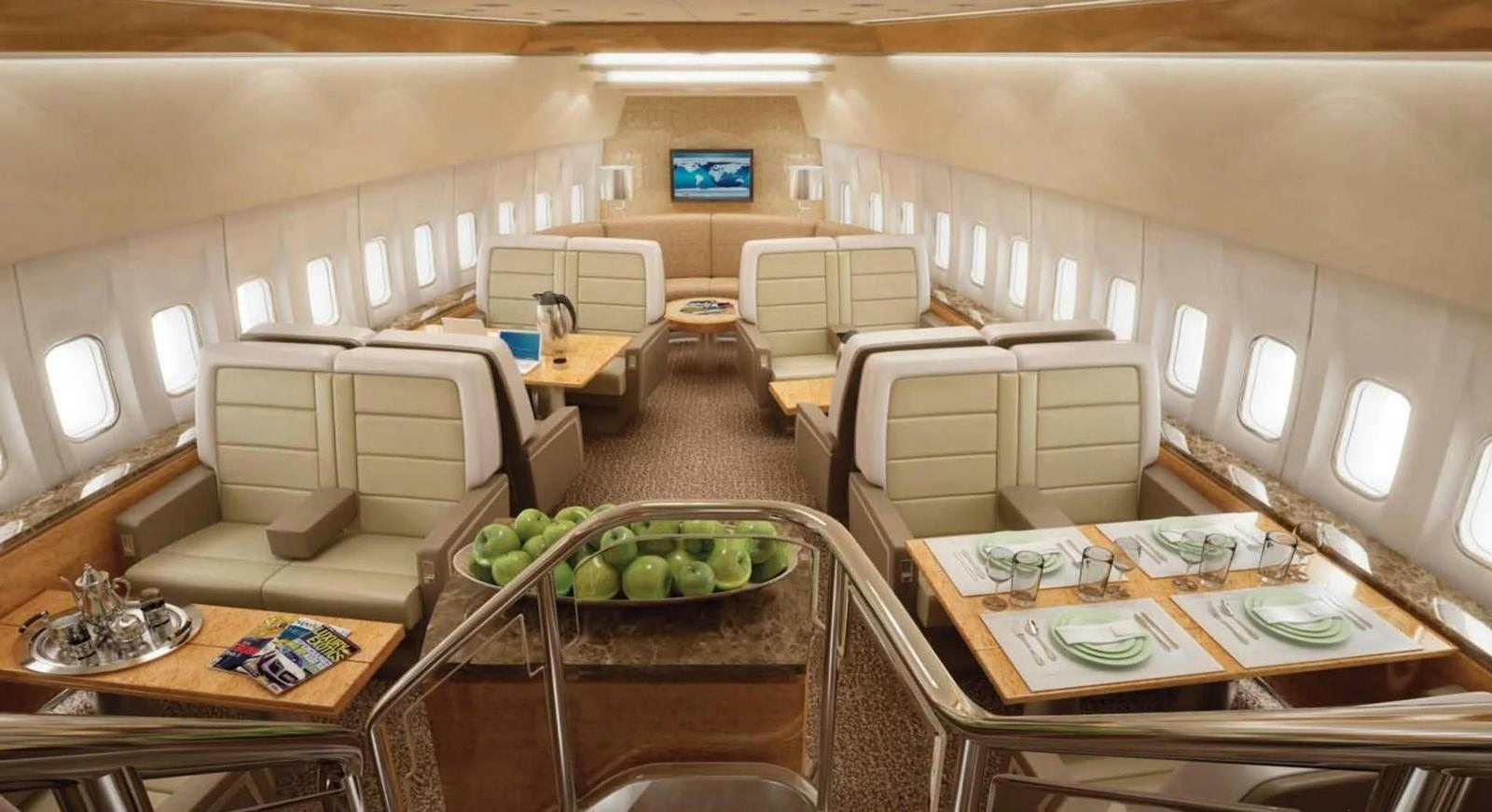
Boeing 747s Repurposed as Homes, Hotels, and Architectural Landmarks
The retirement of the Boeing 747 from most commercial airline fleets has ushered in an unexpected chapter for the iconic jumbo jet. While many of these aircraft are dismantled in desert storage facilities, a select number have been creatively transformed into distinctive architectural features. These repurposed jets now serve as office spaces, hotels, restaurants, and event venues, blending aviation history with innovative design.
The WB1200 Project in Seattle
One of the most ambitious examples of this trend is unfolding in downtown Seattle, a city deeply connected to Boeing’s legacy as the birthplace of the company. The WB1200 complex, also known as 1200 Stewart, is a twin-tower residential development featuring two 48-story buildings with over 1,000 apartments. These towers rise above an eight-story podium that houses retail and entertainment spaces, with a striking centerpiece: a retired Boeing 747-400 fuselage suspended within a three-story indoor galleria.
The aircraft, which flew for United Airlines from 1990 to 2017, was acquired from a California scrapyard. It was carefully cut into 39 sections and transported by truck before being reassembled inside the building’s frame. Suspended approximately 14 feet above a pedestrian walkway connecting Denny Way and Stewart Street, the fuselage will be repurposed as functional office space, integrating a tangible piece of aviation history into the urban fabric.
Designed by Henriquez Partners Architects, the WB1200 complex is distinguished by its wave-like balconies, rooftop terraces, gardens, a pool, and a dog park, alongside extensive retail offerings. However, the project has encountered significant challenges, including financial disputes, contractor changes, and delays related to the COVID-19 pandemic. Construction began in 2018, with completion now anticipated in 2026.
Challenges and Global Context of Repurposing Boeing 747s
Transforming Boeing 747s into new uses presents considerable obstacles. Developers must navigate complex regulatory frameworks, undertake extensive structural modifications, and address market acceptance for such unconventional spaces. Compliance with both aviation and construction regulations is critical, and the market response can vary significantly depending on location and demand for unique accommodations. Additionally, competition may intensify as other developers pursue similar projects or enhance their facilities to attract attention.
Globally, over 1,500 Boeing 747s were produced between the late 1960s and 2023, making it one of the most recognizable airliners in history. As airlines retire the four-engine “Queen of the Skies” in favor of more fuel-efficient twin-engine models, creative preservation efforts have emerged. These efforts have given the 747 a second life, no longer as a vehicle traversing continents but as an integral part of the built environment.
A notable example of this adaptive reuse is the 747 Wing House in Malibu, California, designed by architect David Randall Hertz. This residence incorporates the wings and structural elements of a retired Trans World Airlines 747, with the aircraft’s wings forming the roof and other sections repurposed as an art studio, guest buildings, and a barn.
The growing trend of converting retired jumbo jets into architectural landmarks underscores both the challenges and opportunities inherent in adaptive reuse. It reflects a unique fusion of aviation heritage and innovative design, creating spaces that are as functional as they are emblematic.

Etihad Airways Suspends Airbus A380 Flights on Key Route

Aditya Birla Group Seeks Approval for Aircraft Leasing in GIFT City

Qatar Airways Highlights Innovation and Connectivity at Arabian Travel Market 2026

Hong Kong's Five-Year Plan Includes Andrew Fan's Aircraft Parts Processing Hub Proposal

ACIA Aero Leasing Delivers ATR72-600 to Air Nostrum

RTX Appoints Jill Albertelli as Head of Pratt & Whitney

TAT Technologies Joins Beyond Aero Hydrogen Aircraft Program

AURAK Study Highlights Barriers to Air Taxi Adoption in Emerging Economies

Xiamen Air Selects Altitude for 787 Maintenance at Heathrow

Etihad and Swissport Extend Global Partnership
