
Zet AI‑inzichten om in gerichte actie

Trending
Categories
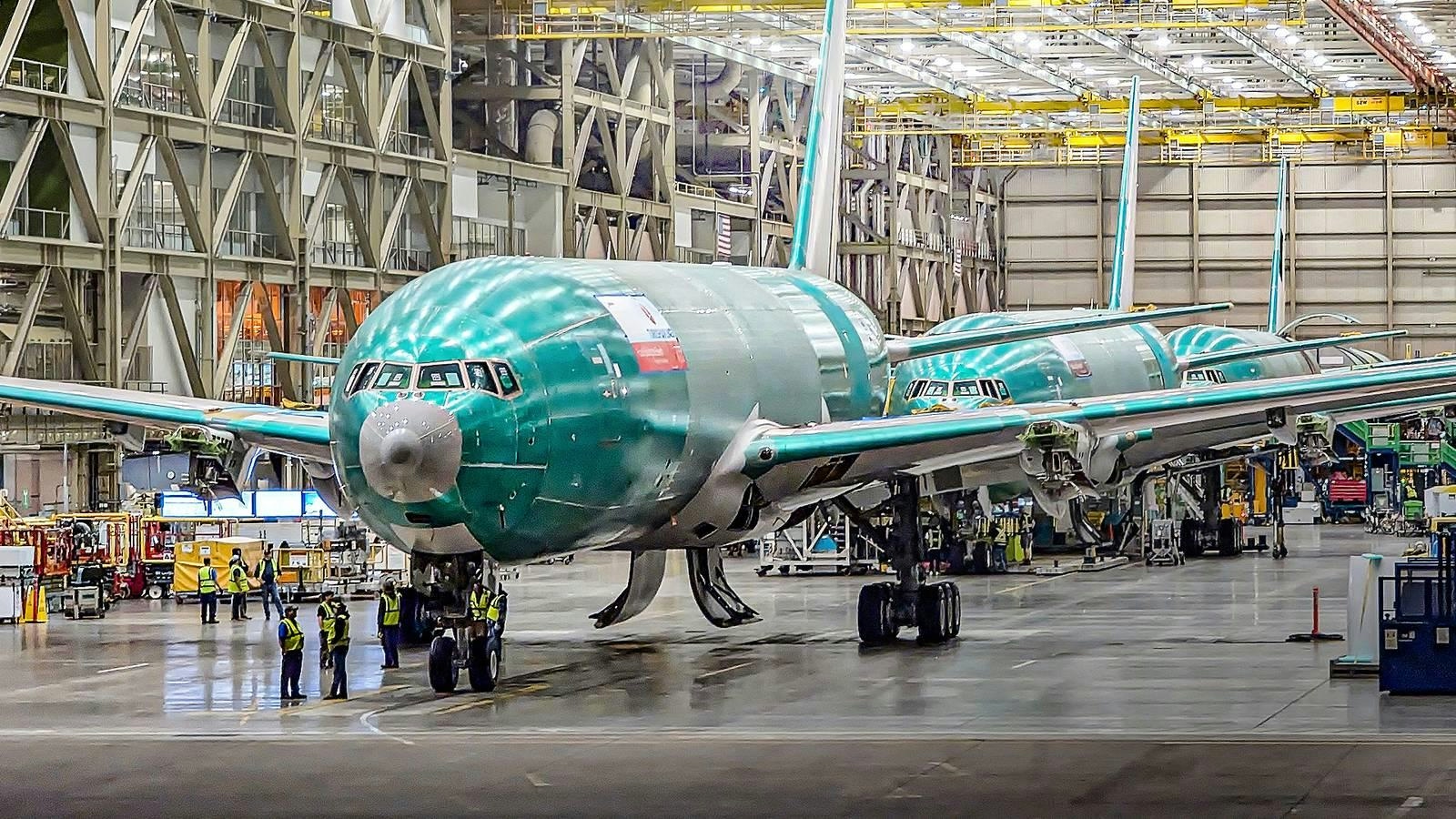
Boeing 777-8 Freighter Delayed by 777X Passenger Jet Certification Issues
Boeing 777-8 Freighter Delayed by 777X Passenger Jet Certification Issues
Certification Challenges Impact Freighter Timeline
The global air cargo sector, long dependent on aging converted passenger aircraft, stands on the brink of a significant transformation with the introduction of Boeing’s next-generation 777-8 Freighter. Designed to deliver enhanced fuel efficiency and increased payload capacity, the 777-8F represents a critical advancement in air freight capabilities. However, its commercial debut remains intricately linked to the protracted certification process of its passenger counterpart, the 777X—particularly the 777-9 model.
This interdependence has created a substantial bottleneck. International regulations require the retirement of older, less efficient widebody freighters by the end of the decade, prompting airlines to urgently seek modern replacements to maintain and expand their cargo capacity. Each delay in certifying the 777X passenger jet consequently postpones the freighter’s entry into service, intensifying competition between Boeing and its European rival, Airbus.
Progress Amid Uncertainty
Despite these setbacks, Boeing has achieved notable milestones. At its Everett, Washington facility, the first 777-8 Freighter prototype has emerged from final assembly, transitioning from a collection of components to a fully integrated airframe. This development provides some reassurance to carriers relying on the aircraft for future fleet planning. The prototype is now entering an intensive phase of ground testing, which includes engine integration with the advanced General Electric GE9X powerplants, structural shake tests, and comprehensive system evaluations to verify the aircraft’s design and operational performance.
The 777-8F’s development is under close scrutiny by aerospace suppliers worldwide, including key Japanese partners responsible for manufacturing core fuselage segments. The aircraft aims to achieve a payload capacity of approximately 130 tons (118 metric tonnes), a critical benchmark for the next generation of heavy-lift cargo aircraft.
Market Reactions and Competitive Dynamics
The ongoing certification difficulties with the 777X passenger jet continue to cast doubt over the freighter’s delivery schedule. Market responses have been mixed. Airlines such as Emirates maintain optimism regarding the 777X’s eventual certification and entry into service. Conversely, carriers like ANA express confidence in Boeing’s ability to deliver the 777-9 by 2027 but are simultaneously preparing contingency plans should further delays arise.
Meanwhile, Airbus is poised to leverage Boeing’s challenges by intensifying promotion of its A350-1000 model. The European manufacturer emphasizes the aircraft’s range and performance as a credible alternative, particularly if Rolls-Royce can resolve persistent engine durability issues. This increased marketing effort may influence operators seeking greater certainty amid Boeing’s ongoing delays.
As the 777-8 Freighter moves from assembly toward flight testing, the program’s success hinges not only on validating Boeing’s technical promises but also on addressing the urgent demands of a rapidly evolving cargo market. With regulatory hurdles still looming, the competition to modernize global air freight remains fierce, and the outcome will significantly shape the industry’s trajectory in the years ahead.

Etihad and Swissport Extend Global Partnership

Sepehran Airlines B737 Returns to Mashhad After Tyre and Engine Issues

Etihad Deploys Widebody Fleet to Meet Strong Demand

Korean Air Finalizes $36.2 Billion Deal with Boeing

Australia’s RFDS Queensland Section Orders Six King Air 260Cs

Korean Air Finalizes Order for 103 Boeing Jets and Engines
Embraer E195-E2 Features Distinctive Engine Placement Among Regional Jets
What Passengers Can Expect on Boeing’s New 777X Jet

How Ethiopian Airlines Became Africa’s Leading Carrier Amid Gulf Competition

Joby Aviation Extends Autonomous Flight Capabilities with Cross-Country Tour
