
Zet AI‑inzichten om in gerichte actie

Trending
Categories
Boeing and Airbus May Not Rely on Iran’s Aviation Market Reopening by 2026
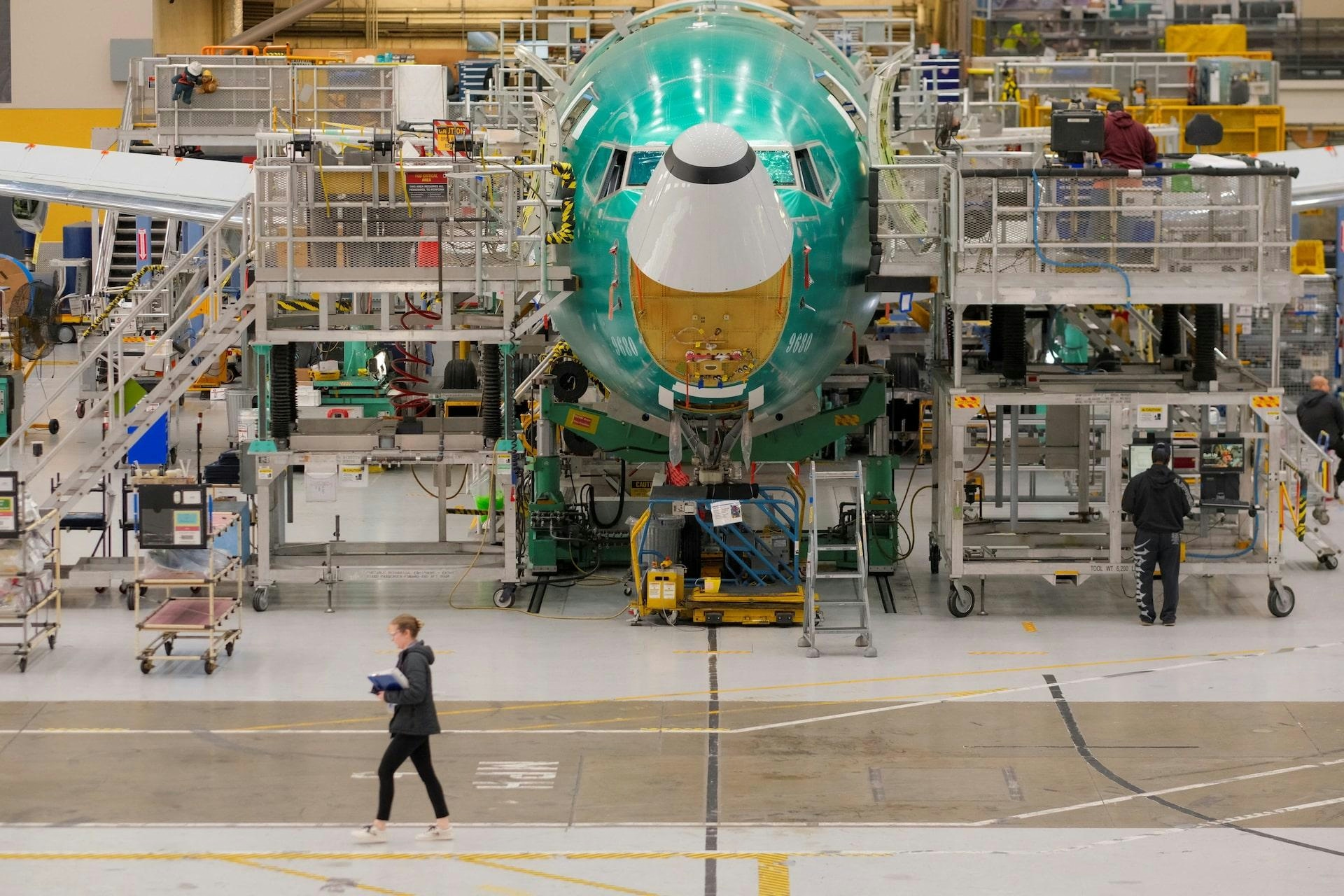
Boeing and Airbus Face Challenges in Iran’s Aviation Market Reopening by 2026
Iran’s potential reintegration into the global aviation market presents a significant commercial opportunity, given its population approaching 90 million, an ageing aircraft fleet, and years of suppressed demand. However, the timing of this reopening coincides with a complex and constrained global aviation environment, posing substantial challenges for manufacturers and suppliers. Despite the promise of renewed demand, Boeing and Airbus are unlikely to rely on Iran’s market reopening as a key growth driver by 2026.
Industry Constraints and Market Realities
The aviation sector is currently burdened with record order backlogs, supply chain disruptions, and geopolitical uncertainties. Unlike the brief period following the 2016 nuclear deal, when Iran Air placed substantial orders with both Airbus and Boeing, the present circumstances are far less favorable. Airbus has already secured 815 commercial orders in 2026, with 379 orders recorded in May alone, while Boeing has 298 orders for the year, including just 13 in May. Although Boeing’s deliveries in May 2026 have increased by over 13% compared to the same period in 2025, both manufacturers face intense pressure to fulfill existing commitments.
Engine manufacturers remain a critical bottleneck, and airlines worldwide are postponing aircraft purchase decisions amid ongoing uncertainties. The conflict in Iran has further complicated market forecasts by driving up jet fuel prices, adding another layer of complexity to an already strained industry. These factors collectively diminish the likelihood of a swift and substantial influx of new aircraft orders from Iran in the near term.
Focus on Maintenance and Regulatory Compliance
Given these constraints, the immediate opportunities in Iran’s aviation sector are expected to lie primarily in maintenance, repair, and overhaul (MRO) services, as well as regulatory compliance. Demand will likely concentrate on spare parts, heavy maintenance, engine overhauls, training, and the restoration of grounded fleets. Before financing or leasing arrangements can resume, the industry must navigate complex issues related to sanctions due diligence, aircraft records, ownership structures, and regulatory frameworks.
Iran’s re-entry into the market is not anticipated to disrupt established Gulf aviation hubs such as Dubai, Doha, and Istanbul in the short term. Instead, these hubs may benefit from increased regional connectivity, as Iran’s aviation infrastructure will require years of investment to meet international standards. The broader industry will also face ongoing challenges in aircraft supply, MRO capacity, insurance, leasing, and sanctions compliance.
Historical Context and Future Outlook
Historically, the reopening of restricted markets has been viewed positively by the aviation sector, generating more passengers, routes, and aircraft orders. However, the optimism surrounding Iran’s reopening should be tempered by past experience. Following the Joint Comprehensive Plan of Action (JCPOA), Iran Air placed orders for 100 Airbus aircraft, 80 Boeing planes, and ATR turboprops, but only a fraction were delivered before sanctions were reinstated. Those delivery slots have since been allocated elsewhere, even as underlying demand in Iran has grown.
With Airbus and Boeing’s order books extending well into the next decade and lessors controlling scarce near-term delivery slots, Iran’s return would add another major buyer to an already saturated market. Consequently, the industry’s focus has shifted toward alternative markets and operational strategies to navigate ongoing geopolitical risks and supply chain pressures.
While Iran’s reintegration represents one of the most significant commercial openings in the Middle East in decades, it coincides with a period when the global aviation industry has limited spare capacity to accommodate such growth. For Boeing, Airbus, and their suppliers, Iran’s return is unlikely to serve as a near-term priority or solution by 2026.

Hong Kong's Five-Year Plan Includes Andrew Fan's Aircraft Parts Processing Hub Proposal

ACIA Aero Leasing Delivers ATR72-600 to Air Nostrum

RTX Appoints Jill Albertelli as Head of Pratt & Whitney

TAT Technologies Joins Beyond Aero Hydrogen Aircraft Program

AURAK Study Highlights Barriers to Air Taxi Adoption in Emerging Economies

Xiamen Air Selects Altitude for 787 Maintenance at Heathrow

Etihad and Swissport Extend Global Partnership

Sepehran Airlines B737 Returns to Mashhad After Tyre and Engine Issues

Etihad Deploys Widebody Fleet to Meet Strong Demand

Korean Air Finalizes $36.2 Billion Deal with Boeing
