
Zet AI‑inzichten om in gerichte actie

Trending
Categories
Boeing and Rolls-Royce Engine Failures Prompt Market Restructuring in 2026
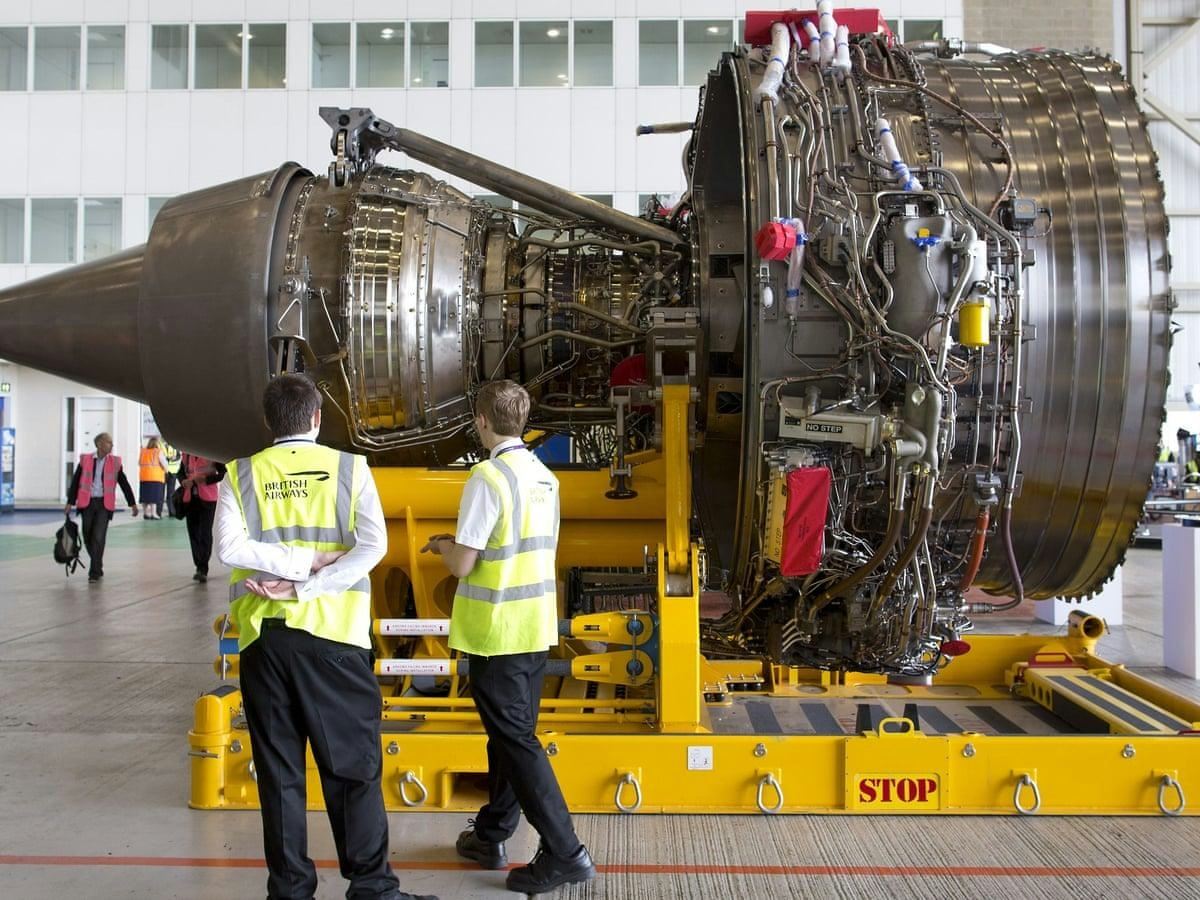
Boeing and Rolls-Royce Engine Failures Prompt Market Restructuring in 2026
Persistent failures of Rolls-Royce Trent 1000 engines installed on Boeing 787 Dreamliners have instigated a significant transformation within the aerospace industry. Beginning in 2024 and intensifying through 2026, these issues have exposed critical vulnerabilities in Boeing’s traditional strategy of relying on a single engine supplier. The resulting operational disruptions have compelled manufacturers and airlines alike to reconsider long-standing exclusive engine agreements, with carriers increasingly demanding greater flexibility and alternative powerplant options.
Engine Failures Disrupt Global Operations
The Trent 1000 engines experienced reliability problems that led to unexpected failures during both flight and ground operations, impacting airlines across the globe. Major international airports such as London Heathrow, Dubai International, and Singapore Changi witnessed widespread schedule disruptions, leaving passengers stranded and airlines scrambling to manage their affected 787 fleets. Faced with these challenges, carriers confronted a difficult choice: continue operating with Rolls-Royce engines or explore alternative aircraft and engine solutions. The Federal Aviation Administration (FAA) issued over 1,000 engine-related maintenance directives between 2024 and 2026, underscoring the operational and financial burdens imposed by Boeing’s exclusive engine arrangement.
Market Response and Shifting Strategies
The crisis has strained the Boeing-Rolls-Royce partnership and reshaped the competitive dynamics of the widebody aircraft market. Airbus, for instance, has reported increased interest in its A350 variants equipped with alternative engine options, while manufacturers across the sector are actively pursuing secondary engine qualification pathways that were previously deemed economically impractical. Historically, aircraft manufacturers resisted offering multiple engine options due to the substantial engineering costs involved, including the need for distinct pylons, mounting structures, fuel systems, and electronic controls for each engine type. Boeing defended its exclusivity model on the basis of development efficiency and supply chain simplification. However, the Trent 1000 failures have revealed the commercial risks inherent in this approach: when a single engine supplier encounters difficulties, airlines are left with limited alternatives, resulting in operational disruptions and diminished customer satisfaction.
Airlines Push for Greater Choice
In response to the ongoing challenges, major carriers such as Turkish Airlines, Air China, and United Airlines have publicly advocated for the certification of alternative engines, specifically urging Boeing to consider compatibility with General Electric powerplants for the 787. The operational disruptions and financial losses stemming from the Trent 1000 failures have shifted negotiating power toward airlines, which now demand greater flexibility to mitigate supply chain risks and secure more favorable contractual terms.
Signs of Recovery and Enduring Confidence
Despite the turbulence, 2026 has also witnessed signs of renewed confidence in Rolls-Royce. LATAM Airlines’ recent order for Trent 1000 XE engines to power three new Boeing 787 aircraft signals a cautious restoration of trust in Rolls-Royce’s improved engine offerings. The company’s optimistic outlook for 2026, even amid geopolitical uncertainties in the Middle East, is supported by growth in its large civil engine and business aviation aftermarket sectors. Further reinforcing industry confidence, the U.S. Air Force approved the B-52H Stratofortress engine replacement program, selecting Rolls-Royce F130 engines to replace aging Pratt & Whitney TF33 turbofans. This decision highlights the enduring faith in Rolls-Royce’s engineering capabilities despite recent setbacks.
A New Era for Aircraft Manufacturing
The Trent 1000 crisis has catalyzed a broader industry shift away from engine exclusivity. Manufacturers now acknowledge that offering dual-engine options, despite the higher upfront costs, provides a competitive advantage and aligns with airline demands for operational resilience. As the market restructures, flexibility and reliability are emerging as paramount priorities in widebody aircraft procurement, fundamentally reshaping the future landscape of commercial aviation.

Etihad Airways Suspends Airbus A380 Flights on Key Route

Aditya Birla Group Seeks Approval for Aircraft Leasing in GIFT City

Qatar Airways Highlights Innovation and Connectivity at Arabian Travel Market 2026

Hong Kong's Five-Year Plan Includes Andrew Fan's Aircraft Parts Processing Hub Proposal

ACIA Aero Leasing Delivers ATR72-600 to Air Nostrum

RTX Appoints Jill Albertelli as Head of Pratt & Whitney

TAT Technologies Joins Beyond Aero Hydrogen Aircraft Program

AURAK Study Highlights Barriers to Air Taxi Adoption in Emerging Economies

Xiamen Air Selects Altitude for 787 Maintenance at Heathrow

Etihad and Swissport Extend Global Partnership
