Afbeelding

Zet AI‑inzichten om in gerichte actie

Meld je vandaag nog aan voor de AeroGenie-wachtlijst!

Trending

Categories

Boeing Plans 777-9 and New Max Deliveries for Next Year
April 22, 2026By ePlane AI
Boeing Plans 777-9 and New Max Deliveries for Next Year
0
0
Boeing 777-9
737 Max Variants
Aircraft Deliveries

Boeing Advances 777-9 and 737 Max Deliveries Amid Strong Market Performance

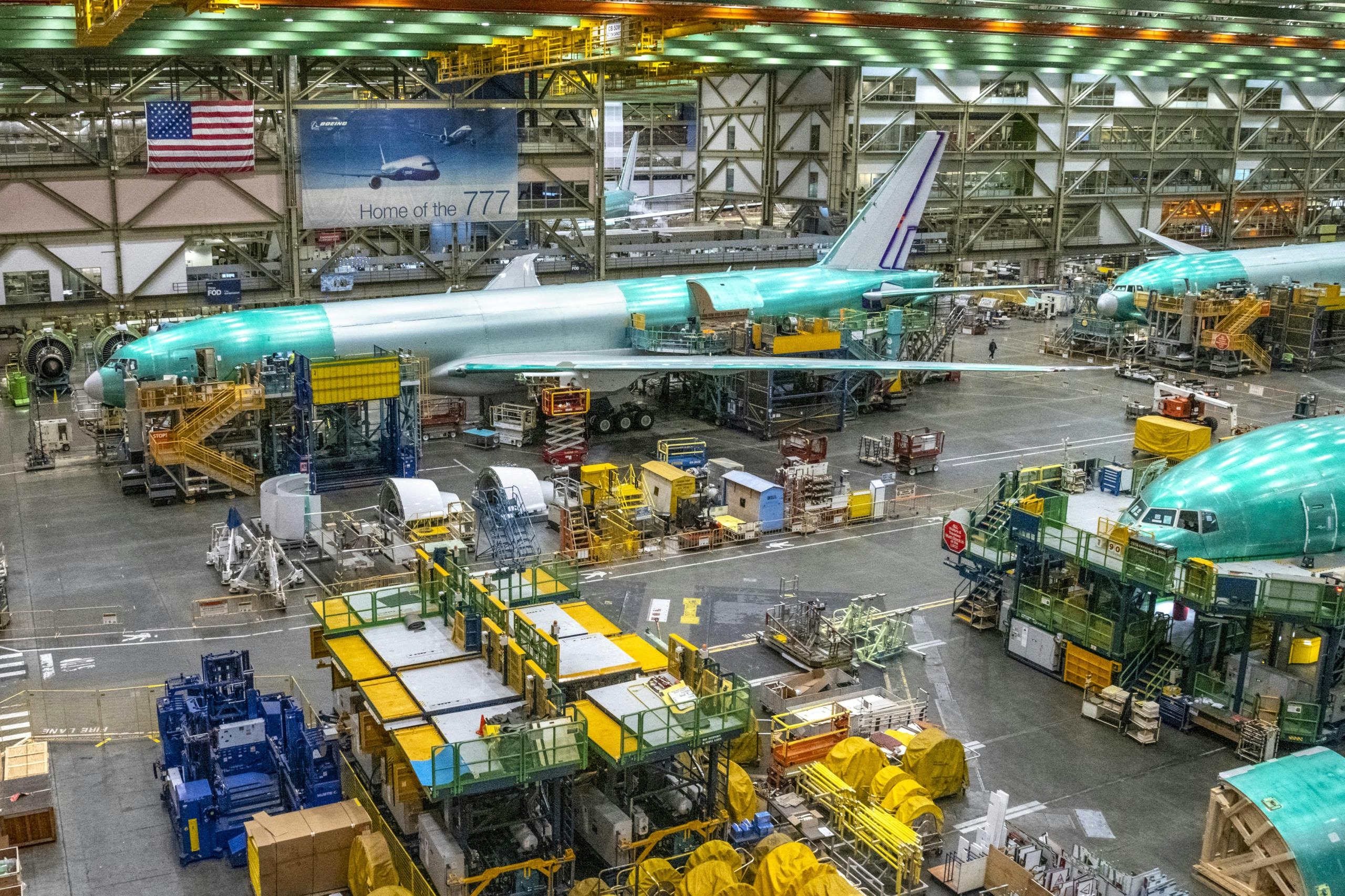
Boeing is progressing steadily toward the delivery of its 777-9 wide-body aircraft, with initial units expected to be handed over next year. Concurrently, the company is in the final stages of certification flight-testing for the 737 Max 10, aiming to secure certification for both the Max 10 and Max 7 variants within the year. Deliveries of these new 737 Max models are anticipated to commence in 2027, reflecting Boeing’s strategic timeline for expanding its narrow-body portfolio.

Certification Progress and Production Rates

During the first quarter, Boeing achieved significant certification milestones. The U.S. Federal Aviation Administration (FAA) granted approval for the Type Inspection Authorisation phase 4a on the 777-9, marking a critical step toward its entry into service. Additionally, the final Type Inspection Authorisation stage for the 737 Max 10 has begun, further advancing the program. The FAA also approved an increased maximum take-off weight for the 787-9 and 787-10 variants, enhancing the operational capabilities of these aircraft.

Production rates remain consistent, with the 737 program maintaining a monthly output of 42 aircraft and the 787 program producing eight aircraft per month. This steady production supports Boeing’s robust order book and delivery commitments.

Market Performance and Order Book

Boeing’s commercial aircraft deliveries reached 143 units in the first quarter, the highest quarterly total since 2019 and a notable increase from 130 deliveries in the same period last year. This growth contributed to a 13 percent rise in revenues, which totaled $9.2 billion. Deliveries spanned all four commercial programs, including 114 737s, 15 787s, eight 777s, and six 767s.

Despite a commercial aircraft operating loss margin of 6.1 percent, representing a deficit of $563 million for the quarter, Boeing’s market position remains strong. The company secured net orders for 140 commercial aircraft during the quarter, highlighted by significant deals such as 30 787-10s for Delta Air Lines, 25 737 Max 10s and 25 Max 8s for Aviation Capital Group, and 20 Max 8s for Air India.

Chief Executive Kelly Ortberg reaffirmed Boeing’s dedication to safety, quality, and customer commitments, emphasizing the company’s focus on delivering high-quality products while increasing production to meet market demand. Boeing’s commercial backlog now exceeds 6,100 jets, valued at $576 billion, underscoring its resilience amid regulatory scrutiny and competitive pressures from rivals like Airbus.

More news
Why New Boeing Planes Are Painted Green Before Delivery

Why New Boeing Planes Are Painted Green Before Delivery

Why New Boeing Planes Are Painted Green Before Delivery One of the final stages in the production of large commercial airliners is the application of paint. While airlines invest heavily in distinctive liveries to represent their brands, newly assembled Boeing aircraft are often seen coated in a striking glossy emerald green before receiving their final colors. Contrary to popular belief, these planes are not left as bare metal during assembly. Instead, the green appearance results from a specialized primer applied to the aircraft’s aluminum alloy components. The Role of the Green Primer Modern airliners, including Boeing’s models, are primarily constructed from aluminum alloys. The green hue originates from a corrosion-resistant primer that protects the metal from environmental damage and metal fatigue. Although the primer itself is originally yellow, the addition of lampblack pigment provides ultraviolet protection, producing the characteristic green color. This primer is applied early in the manufacturing process, and components are transported to Boeing’s assembly facilities with this protective coating intact. During assembly, aircraft such as the 737, 777, and 787 may undergo ground and flight testing while still bearing the green primer. Only after these tests are completed and the interior outfitting is finished do the planes receive their final airline livery prior to delivery. The Assembly Process Boeing’s production is a complex global operation involving multiple suppliers. For instance, the 737 fuselage is assembled by Spirit AeroSystems in Wichita, Kansas, while the 777 fuselage is produced in Everett, Washington. Final assembly lines are situated in Renton for the 737, Everett for the 767 and 777, and North Charleston, South Carolina, for the 787. Upon arrival at the final assembly line, the fuselage undergoes installation of interior systems, radome, doors, wings, landing gear, stabilizers, and engines. The interior is then completed before the aircraft proceeds to the paint shop for its final livery application. Assembly times vary by model, with a Boeing 737 MAX typically built in nine to ten days, while a widebody 777 requires approximately 17 days. Strategic Significance of the Green Paint Beyond its protective function, the green primer has acquired symbolic importance amid evolving global aviation dynamics. Following China’s confirmation of an order for 200 Boeing aircraft—their first major purchase in nearly a decade—the green-painted jets have come to represent a potential easing of tensions in U.S.-China aviation relations. This development is viewed as part of broader efforts by U.S. officials to secure significant Boeing orders internationally, aiming to alleviate trade frictions and strengthen Boeing’s competitive position. Thus, the green primer not only safeguards the aircraft during assembly but also serves as a subtle emblem of Boeing’s shifting role in global aviation and international diplomacy.
Air India Flight 171 Engine Shutdown: Investigation Begins

Air India Flight 171 Engine Shutdown: Investigation Begins

Air India Flight 171 Engine Shutdown: Investigation Underway The preliminary investigation into the sudden shutdown of both engines on Air India Flight AI171 has raised serious concerns within the aviation community. The Aircraft Accident Investigation Bureau (AAIB) revealed that, mere seconds before the incident, the fuel switches for both engines on the Boeing 787 Dreamliner were moved from the RUN to the CUTOFF position, effectively cutting off fuel supply during a critical phase of flight. Confusion in the Cockpit and Unanswered Questions Cockpit voice recordings captured a moment of confusion between the flight crew as the engines lost power. One pilot questioned, “Why did you cut off the fuel?” to which the other responded, “I didn’t do it.” This exchange has left investigators grappling with several possibilities, including mechanical failure of the fuel switches, intentional pilot action, or a technical malfunction. While the incident has drawn comparisons to past aviation tragedies involving deliberate pilot interventions, no definitive parallels have yet been established. Flight Details and Operational Context The incident occurred on the morning of June 12, 2025, at Ahmedabad International Airport. The day had begun under routine conditions, with clear skies and normal airport operations. Flight AI171, operated by Air India’s Boeing 787 with tail number VT-ANB, was scheduled to fly from Ahmedabad to London following an earlier arrival from Delhi. The aircraft had been cleared for departure after a minor technical issue on its previous flight was addressed by maintenance personnel. Captain Sumeet Sabharwal, aged 56, with 15,600 flight hours including 8,200 on the 787, and First Officer Clive Kunder, 32, with 3,400 hours including 1,128 on the 787, were at the controls. Both pilots passed pre-flight breathalyzer tests and were deemed fit for duty. The aircraft was carrying 230 passengers and 54,200 kilograms of fuel, with a takeoff weight of 213,400 kilograms—well within operational limits. No hazardous cargo was on board, and all pre-flight checks were completed without issue. At approximately 1:13 PM, the crew requested pushback and engine start clearance. By 1:33 PM, the aircraft was aligned on the runway when the unexpected shutdown of both engines occurred, triggering alarms and prompting an immediate investigation. Broader Implications and Ongoing Scrutiny The AAIB’s investigation has intensified scrutiny of Air India’s safety protocols amid a period of operational challenges and leadership changes within the airline. The incident has placed the carrier’s safety record under the spotlight, raising concerns among regulators and the public alike. Beyond Air India, the wider aviation sector is also affected. Geopolitical tensions have restricted access to certain airspaces, complicating flight routes and increasing operational costs for airlines in the region. The Indian government is closely monitoring Boeing’s ongoing testing of fuel-switch mechanisms in connection with the incident, highlighting the critical need for stringent safety oversight and transparent investigative processes. As the inquiry progresses, the aviation industry awaits clarity on the cause behind the simultaneous shutdown of both engines at such a pivotal moment. The findings will carry significant implications not only for Air India but for global aviation safety standards.
China Unveils First Domestic eVTOL Engine

China Unveils First Domestic eVTOL Engine

China Unveils First Domestic eVTOL Engine China has achieved a significant advancement in its low-altitude aviation sector with the introduction of its first domestically developed engine specifically designed for electric vertical takeoff and landing (eVTOL) aircraft. The AEE25 aviation electric engine, produced by the Aero Engine Corporation of China (AECC) Aeroengine Control System Institute, was officially delivered in Wuxi City, Jiangsu Province, marking a key milestone in the country’s pursuit of innovation in electric aviation propulsion. Technical Innovation and Design Integration The AEE25 sets a new national standard for torque density, achieving 40 newton-meters per kilogram, the highest among China’s publicly disclosed 200-kilowatt-class aviation electric engines. This enhanced torque density results in a lighter engine, allowing eVTOL aircraft to increase their payload capacity for passengers or cargo. The engine efficiently converts electrical energy from onboard batteries into lift and thrust for rotor systems, with performance levels reportedly meeting internationally advanced benchmarks. A distinctive feature of the AEE25 is its high degree of integration. The engine consolidates six core components—including the main motor and controller, cooling system motor and controller, and variable-pitch actuator and controller—into a single unit. Liu Guoping, deputy director of the AECC institute, emphasized that this integration simplifies the aircraft design process, stating, “For aircraft manufacturers, it can start to work after being installed with the propeller and connected to power and the bus.” The engine also incorporates safety measures such as redundant motors and dual-channel controllers to maintain power output in the event of a single-point failure. Deployment and Industry Implications The AEE25 is slated for installation on the E20 eVTOL aircraft developed by Shanghai TCab Technology Co., Ltd (TCab Tech) and has already entered the airworthiness certification process alongside the aircraft program. While the unveiling of the AEE25 represents a major breakthrough in China’s aviation electric propulsion technologies, it also introduces new challenges. Both the engine and its associated aircraft must undergo rigorous testing and certification, navigating regulatory requirements domestically and internationally. This development is expected to draw increased scrutiny from aviation authorities and may influence investment strategies among global competitors. Industry analysts suggest that established players in the eVTOL market could respond by accelerating their own development timelines or pursuing strategic partnerships to maintain their competitive positions. As China advances its ambitions in the low-altitude economy, the successful deployment and certification of the AEE25 will be closely monitored by regulators and industry stakeholders worldwide.
Comparing the Fan Diameters of the GE90 and Rolls-Royce Trent XWB Engines

Comparing the Fan Diameters of the GE90 and Rolls-Royce Trent XWB Engines

Comparing the Fan Diameters of the GE90 and Rolls-Royce Trent XWB Engines The scale of modern commercial jet engines is most striking when viewed from beneath the wing of a widebody airliner. As airlines increasingly demand greater fuel efficiency and face stricter environmental regulations, engine manufacturers have pushed the limits of fan diameter and bypass ratio, fundamentally influencing the design of today’s long-haul aircraft. Among the most notable examples are the General Electric GE90 and the Rolls-Royce Trent XWB, which represent distinct engineering philosophies that have shaped both performance capabilities and market competition. Physical and Performance Differences Central to this comparison is a significant physical disparity in fan diameter. The GE90-115B, which powers the Boeing 777-300ER, features an imposing 128-inch (325 cm) fan diameter. By contrast, the Rolls-Royce Trent XWB, designed for the Airbus A350, has a fan diameter of 118 inches (300 cm). This 10-inch (25.4 cm) difference means the GE90’s fan is approximately 8.5% larger, a variation with substantial implications. To put this in perspective, the entire core of a Boeing 737 engine could fit within the GE90’s intake cowling. This size difference is not merely aesthetic. The GE90’s larger fan enables it to generate record-breaking thrust, reaching 127,900 pounds-force (568.9 kN) during certification and maintaining a commercial service rating of 115,300 pounds-force (512.9 kN). The Trent XWB, meanwhile, delivers maximum thrust ranging from 84,000 to 97,000 pounds-force (373.7 to 431.5 kN). The greater fan diameter of the GE90 allows for higher mass airflow and power output but also requires specialized wing mounting on the 777 to ensure adequate ground clearance. Market Impact and Strategic Responses These engineering decisions have influenced the competitive dynamics within the widebody engine market. The larger fan diameter of the GE90 has contributed to General Electric’s significant market share advantage, particularly in the Boeing 787 segment, where GE engines power approximately two-thirds of the in-service fleet, representing a 67:33 split over Rolls-Royce. In response, Rolls-Royce has concentrated on incremental efficiency improvements, exemplified by the Trent XWB-84 Enhanced Performance (EP) variant. This upgrade offers an average 1.8% reduction in fuel burn, translating to annual savings of around $450,000 per aircraft—an important factor for airlines focused on operational costs. Despite these advancements by Rolls-Royce, GE’s market dominance remains pronounced. Strategic partnerships, such as its collaboration with Emirates to develop advanced engine repair capabilities, have further reinforced its position. Meanwhile, Rolls-Royce continues to emphasize the operational savings and compact design of its engines, targeting airlines that prioritize fuel efficiency and reduced emissions. The difference in fan diameter between the GE90 and Trent XWB thus extends beyond mere measurements; it encapsulates divergent approaches to propulsion technology, efficiency, and market strategy. As engine manufacturers continue to innovate, these choices will play a pivotal role in shaping the future of widebody aircraft and the competitive landscape of the global engine industry.
ACFI Announces 2026 Innovatopia Awards for Aviation Innovation

ACFI Announces 2026 Innovatopia Awards for Aviation Innovation

ACFI Announces 2026 Innovatopia Awards to Advance Aviation Innovation Air Cargo Forum India (ACFI) has officially launched the 2026 edition of its Innovatopia Awards, a prestigious platform dedicated to recognising outstanding innovation and excellence within the aviation and air cargo sectors. The announcement was made during a press conference held at the DIAL Auditorium, New Udaan Bhawan in New Delhi, which was attended by prominent industry leaders, logistics experts, innovation specialists, and members of the media. Objectives and Categories of the Innovatopia Awards Now in its third year, the Innovatopia Awards seek to celebrate achievements in areas such as technology adoption, operational excellence, customer-centricity, safety, security, sustainability, and business transformation. The initiative encourages organisations and professionals to develop and implement innovative solutions that improve service delivery, optimise operational efficiency, enhance safety protocols, and promote sustainable practices within the aviation ecosystem. Nominations for the 2026 awards are open across five key categories: Enhanced Customer Experience, Competitiveness, Air Cargo Safety and Security, Digitisation, and Sustainability and Go Green Efforts. Eligible participants include organisations, institutions, start-ups, professionals, and other stakeholders who have demonstrated measurable impact through their innovative initiatives. The deadline for submissions is June 30, 2026. Industry Perspectives and Future Outlook ACFI President Sanjiv Edward, Vice President Ramesh Mamidala, and Keku Gazder, Chairman of the Task Pillar on Knowledge, Innovation and Research, underscored the critical role of continuous innovation in building a resilient, efficient, and globally competitive aviation and logistics sector. They highlighted the need for ongoing collaboration and creative problem-solving to navigate the rapidly evolving industry landscape and to capitalise on emerging opportunities. While the awards are poised to set new standards of excellence and encourage the adoption of best practices, ACFI acknowledges challenges in securing participation from major aviation companies and sustaining momentum amid intense competitive pressures. Industry analysts suggest that the awards could significantly influence market dynamics by accelerating advancements in aviation technology and sustainability. This, in turn, may prompt competitors to intensify their innovation efforts, fostering greater collaboration and partnerships across the sector. Karanjit Singh Wadhwa, Chairman of ACFI’s Event Management Task Pillar and Director of Grace Group, announced that the winners will be honoured at the ACFI World Conclave 2026, scheduled for August 12-13 in New Delhi. The conclave is expected to draw policymakers, industry leaders, global experts, and key stakeholders from the air cargo and logistics value chain. Reflecting on previous editions, Wadhwa noted the remarkable participation and widespread industry engagement, expressing optimism about the enthusiasm surrounding this year’s event. In closing, ACFI expressed its gratitude to the media for their continued support and reaffirmed its commitment to fostering innovation, knowledge-sharing, collaboration, skill development, and sustainable growth throughout the aviation and logistics ecosystem.
Southwest Airlines Boeing 737 Returns to Austin After Engine Damage

Southwest Airlines Boeing 737 Returns to Austin After Engine Damage

Southwest Airlines Boeing 737 Returns to Austin Following Engine Damage Southwest Airlines Flight WN-375 was compelled to return to Austin Bergstrom International Airport (AUS) on Friday after the flight crew identified an engine issue shortly after takeoff. The Boeing 737-700, bound for Phoenix Sky Harbor International Airport (PHX), was ascending through 13,000 feet when the pilots elected to abort the flight and return to Austin, despite no engine fire alert being activated. Inspection and Immediate Response Upon landing, emergency responders conducted a thorough inspection of the aircraft and discovered metal debris within the right engine. The flight crew had adhered to standard operating procedures and checklists, requesting an inspection as a precautionary measure. The Federal Aviation Administration (FAA) confirmed that the post-flight examination revealed both metal fragments and damage inside the engine. The aircraft, registered as N7855A and over two decades old, was subsequently grounded. Southwest dispatched a replacement Boeing 737-700, tail number N920WN, enabling passengers to continue their journey to Phoenix after a delay of approximately three and a half hours. Investigation and Potential Causes The root cause of the engine damage remains under investigation. Aviation experts suggest several possible factors, including the ingestion of foreign object debris (FOD) such as rocks or loose asphalt from the runway during taxi or takeoff. Additionally, the aircraft’s age raises the possibility of component fatigue, where internal parts like shaft bearings or fan blades may deteriorate and shed metal fragments. Other potential contributors include extreme heat exposure or gearbox wear, both of which can generate metal shavings within the engine. This incident occurs amid heightened regulatory scrutiny, as the FAA recently mandated a sensor replacement for PW4000-94 engines due to identified sensor damage issues. Although it is not confirmed that the affected aircraft utilizes the PW4000-94 engine, the broader regulatory environment is expected to impact Southwest’s maintenance operations, potentially increasing costs and causing operational disruptions. Industry and Market Implications Operational setbacks such as this can prompt swift market reactions. Southwest Airlines may face a temporary decline in its stock value as investors weigh the implications of increased maintenance expenses and potential service interruptions. Competitors, including United Airlines and American Airlines, might capitalize on the situation by offering competitive fares or enhanced services to attract displaced passengers. Meanwhile, Boeing’s recent announcement to increase 737 production to 47 jets per month, with plans to reach 52 monthly deliveries next year, is unlikely to directly influence this specific event. However, the production ramp-up could affect broader market dynamics, particularly regarding aircraft and engine availability for airlines managing aging fleets. The damaged aircraft was originally delivered to China Eastern Airlines and has been operated by Southwest for the past nine years without any prior incident history. As investigations proceed, both the airline and regulatory authorities remain focused on determining the precise cause of the engine damage to uphold safety standards for passengers and crew.
Inside a Startup’s Unique Electric Plane Poised to Transform Air Travel by 2027

Inside a Startup’s Unique Electric Plane Poised to Transform Air Travel by 2027

Inside a Startup’s Unique Electric Plane Poised to Transform Air Travel by 2027 A Glimpse into the Future of Aviation During a recent flight in an innovative electric airplane, I experienced firsthand the potential transformation awaiting regional air travel. Vermont-based startup Beta Technologies is spearheading this change with its Alia CX300, an all-electric aircraft designed to revolutionize short-haul flights. The 20-minute demonstration flight over Burlington, Vermont, piloted by Beta’s test pilot Chris “Pooter” Caputo, was notably smooth, quiet, and impressively swift. The journey offered expansive views of Lake Champlain and the Green Mountains, underscoring the aircraft’s capability to combine efficiency with passenger comfort. Beta Technologies envisions replacing conventional small turboprops and helicopters with cleaner, quieter, and more cost-effective electric planes. The Alia CX300, classified as a conventional takeoff and landing (cTOL) aircraft, accommodates five passengers alongside a pilot. The cabin design is spacious, featuring two rows of seats behind the cockpit, with ample legroom even for taller passengers. This focus on comfort and practicality positions the CX300 as a viable alternative for regional air travel. Industry Interest and Strategic Development The Alia CX300 has already attracted attention from major airlines, including Air New Zealand, which has placed orders for the aircraft. Beta anticipates commencing revenue-generating cargo flights later this year under a Transportation Department pilot program, with full certification targeted for late 2027. In parallel, the company is developing the Alia 250, an electric vertical takeoff and landing (eVTOL) aircraft that leverages much of the CX300’s technology. The Alia 250 is designed for urban environments, capable of operating from vertiports and catering to city commuters. Beta’s approach to certification distinguishes it from other U.S. competitors such as Joby Aviation and Archer Aviation, which primarily focus on eVTOL models. Kyle Clark, Beta’s president and CEO, describes this stepwise strategy as pragmatic: certifying the cTOL aircraft first addresses approximately 80% of the regulatory requirements needed for the eVTOL, potentially streamlining future approvals and accelerating market entry. Challenges and Market Dynamics Despite the promise, the electric aviation sector faces significant obstacles. Certification processes remain complex, while the development of charging infrastructure and improvements in battery technology are ongoing challenges. Public acceptance also plays a critical role in the adoption of electric aircraft. Financial risks are substantial, as evidenced by the recent bankruptcy of Maeve Aerospace, a hybrid-electric plane developer previously supported by major airlines. Securing adequate funding continues to be a major hurdle for startups, compounded by the high costs and extended timelines associated with developing cleaner aircraft. Market reactions to Beta’s technology are mixed. While some carriers are embracing the innovation, the broader aviation industry remains cautious. Battery replacement costs, projected to reach as high as $13 million over the lifetime of each aircraft according to a 2025 SEC filing, may deter potential buyers, especially if the anticipated operational savings do not translate into affordable fares for passengers. Competition within the green aviation sector is intensifying, with startups like Noemi Aerospace advancing their own electric aircraft projects. As the market evolves, Beta Technologies will need to navigate not only technical and regulatory challenges but also a rapidly shifting competitive landscape. My flight aboard the Alia CX300 provided a compelling preview of a quieter, cleaner, and potentially more accessible future for regional air travel—contingent on the industry’s ability to overcome the significant hurdles that lie ahead.
Airbus Suspends A220-500 Development Amid Industry Concerns

Airbus Suspends A220-500 Development Amid Industry Concerns

Airbus Suspends Development of A220-500 Amid Industry Challenges Airbus has announced the suspension of its development program for the A220-500, a stretched variant of the existing A220-300 model. This decision follows growing concerns expressed by airlines, leasing companies, and Airbus’s own commercial teams, according to sources cited by Reuters. The move comes at a time when the European aerospace manufacturer is contending with broader operational difficulties, including delays in its A350 program and the integration of recently acquired U.S. parts factories. Strategic and Market Considerations The A220-500 was initially expected to be unveiled at the Farnborough Airshow in July and was designed as a straightforward stretch of the A220-300. The proposed model aimed to increase seating capacity to approximately 180 passengers while retaining the current wing design and Pratt & Whitney GTF engines. This approach was intended to keep development costs low, though it would have resulted in a reduced range compared to the existing aircraft—a compromise that has divided potential customers. While the larger aircraft promised improved operating costs per seat, some airlines have expressed reservations about sacrificing range and performance for additional capacity. Leasing companies have also responded cautiously, concerned that the introduction of a larger A220 could blur the distinction between the A220 family and the Airbus A320neo series. Many lessors, heavily invested in the A320neo, fear that this overlap could negatively impact the residual values of their existing fleets. Implications for Airbus and the Single-Aisle Market The suspension places Airbus in a challenging position. Since acquiring the A220 program from Bombardier in 2018, the manufacturer has struggled to achieve sustained profitability, with recent orders lost to Brazilian competitor Embraer. The A220-500 had the potential to reduce production costs across the A220 line and bolster Airbus’s competitiveness in the single-aisle market. However, internal assessments now question whether the new variant would attract new customers or merely cannibalize demand from the highly successful A320neo. Market reactions to the suspension have been mixed. Some analysts interpret the pause as a strategic decision, allowing Airbus to concentrate on more profitable segments and address ongoing operational issues. Others view it as a missed opportunity to challenge Embraer more aggressively, especially as the Brazilian manufacturer recently surpassed 500 orders for its E2 family following a significant deal with U.S. lessor Azorra. Despite Airbus securing the largest A220 order to date from Malaysian low-cost carrier AirAsia, totaling 150 aircraft, the program continues to face financial pressures. The uncertainty surrounding the A220-500’s future has fueled speculation that Embraer could further capitalize on Airbus’s difficulties, potentially expanding its market share in the critical single-aisle segment. As Airbus reevaluates its strategy, the future of the A220-500 remains uncertain, underscoring the complex interplay between market demand, internal priorities, and an evolving competitive landscape.
Amadeus and Accenture Introduce AI Travel Advertising Platform to Help Hotels and Airlines Optimize Campaigns

Amadeus and Accenture Introduce AI Travel Advertising Platform to Help Hotels and Airlines Optimize Campaigns

Amadeus and Accenture Launch AI-Powered Travel Advertising Platform to Enhance Campaign Effectiveness Amadeus, a global leader in travel technology, has partnered with Accenture to introduce an advanced AI-driven travel advertising platform designed to help hotels, airlines, and destinations optimize their digital marketing efforts and boost bookings worldwide. This new platform represents a significant evolution in how travel brands manage and execute advertising campaigns, leveraging artificial intelligence to anticipate traveler demand and deliver more targeted messaging. Revolutionizing Travel Marketing Through Artificial Intelligence The Amadeus Travel Advertising Platform integrates Accenture’s sophisticated campaign management tools with AI capabilities to detect emerging traveler intent earlier than conventional methods. By connecting these insights with automated advertising across search engines, social media, and online travel agencies, the platform aims to transform the way travel brands engage potential customers. It replaces Amadeus’s previous Media Solutions business and functions as a centralized hub for managing cross-channel advertising campaigns. A notable innovation within the platform is the AI-powered Omnichannel Budget Allocator, which continuously monitors campaign performance and dynamically reallocates budgets in real time to maximize key objectives such as bookings or return on ad spend. This system supports omnichannel coordination, enabling brands to synchronize efforts across search, social, and metasearch channels while tailoring campaigns based on early traveler behavior insights. Adoption and Industry Implications Currently deployed for managed hotel advertising, the platform allows properties to deliver more precise and timely messaging to prospective guests. Airlines and destination marketing organizations are expected to integrate the platform in subsequent phases, benefiting from predictive insights that facilitate dynamic budget adjustments and sustained visibility across multiple channels without manual intervention. By providing early signals of traveler demand, the platform reduces dependence on historical data, allowing advertisers to engage audiences during the active trip planning phase rather than reacting after booking windows open. This proactive approach addresses the increasing complexity faced by travel marketers, who must navigate fragmented consumer behavior and escalating advertising costs. Addressing Challenges in Travel Marketing Travel consumers frequently research flights, accommodations, and experiences across diverse platforms, complicating efforts by brands to capture attention effectively. The AI-driven platform tackles these challenges by identifying early demand signals, automatically optimizing advertising spend across digital channels, and minimizing wasted expenditure. It also simplifies campaign management through a unified interface, enabling marketing teams to execute more strategic campaigns that reach the right audience at the optimal moment while reducing the need for manual adjustments. For hotels, airlines, and destinations, this translates into enhanced campaign precision and efficiency, freeing resources to focus on broader marketing strategies. Broader Industry and Traveler Impact For travelers, the platform promises more relevant and personalized travel offers delivered during the planning phase, potentially enriching trip discovery and engagement by aligning options with user preferences. However, integrating AI into existing systems presents challenges, including safeguarding data privacy and security, as well as managing organizational transitions for staff accustomed to traditional marketing methods. Market responses may include skepticism regarding AI’s effectiveness in travel advertising, while competitors might accelerate their own AI initiatives or pursue new partnerships to maintain competitiveness. Amadeus’s collaboration with Accenture highlights a wider industry trend toward harnessing artificial intelligence for demand orchestration and customer engagement. As the travel sector evolves, the adoption and impact of such AI-powered platforms will remain under close observation by industry stakeholders and travelers alike.
First Flight of Pratt & Whitney PurePower PW1100G-JM Engine

First Flight of Pratt & Whitney PurePower PW1100G-JM Engine

First Flight of Pratt & Whitney PurePower PW1100G-JM Engine Marks a Key Milestone On May 15, Pratt & Whitney achieved a significant milestone with the successful first flight of its PurePower PW1100G-JM engine. Conducted at the Mirabel Aerospace Centre in Quebec, Canada, the engine was mounted on Pratt & Whitney’s Boeing 747SP flying test bed. This inaugural flight officially initiates the PW1100G-JM’s flight test program, a critical phase preceding its integration with the Airbus A320neo aircraft. The event underscores the company’s commitment to advancing more efficient and environmentally friendly aviation technologies. Advancements and Industry Context The PW1100G-JM represents the forefront of Pratt & Whitney’s next-generation geared turbofan engines, designed to deliver enhanced fuel efficiency and lower emissions for commercial airlines. Market confidence in the engine’s capabilities is evident, as demonstrated by Scoot’s recent order for 11 additional A320neo-family jets powered by the PW1100G. This order highlights the growing demand for innovative propulsion systems that meet evolving operational and environmental standards. Despite this progress, the engine’s introduction occurs amid increased regulatory scrutiny. The Federal Aviation Administration (FAA) has recently proposed a directive concerning sensor durability issues in the earlier PW4000 series. Although this directive does not directly affect the PW1100G-JM, it signals a heightened level of oversight that may impact certification and operational procedures for new engine models. Simultaneously, the competitive landscape in aviation propulsion is intensifying. Rival manufacturers, such as General Electric, have accelerated their development efforts, with GE recently completing ground tests of a hybrid-electric powertrain. This reflects a broader industry trend toward sustainable and efficient aviation solutions, underscoring the dynamic environment in which Pratt & Whitney is advancing its technology. As the PW1100G-JM embarks on its flight test program, Pratt & Whitney navigates a complex interplay of opportunity and challenge. The engine’s successful first flight and strong market reception position it as a pivotal component in the future of commercial aviation, even as regulatory and competitive pressures continue to influence the sector’s trajectory.
line









