
Zet AI‑inzichten om in gerichte actie

Trending
Categories
Boeing Says Growing Passenger Traffic Will Expand Africa’s Air Fleet
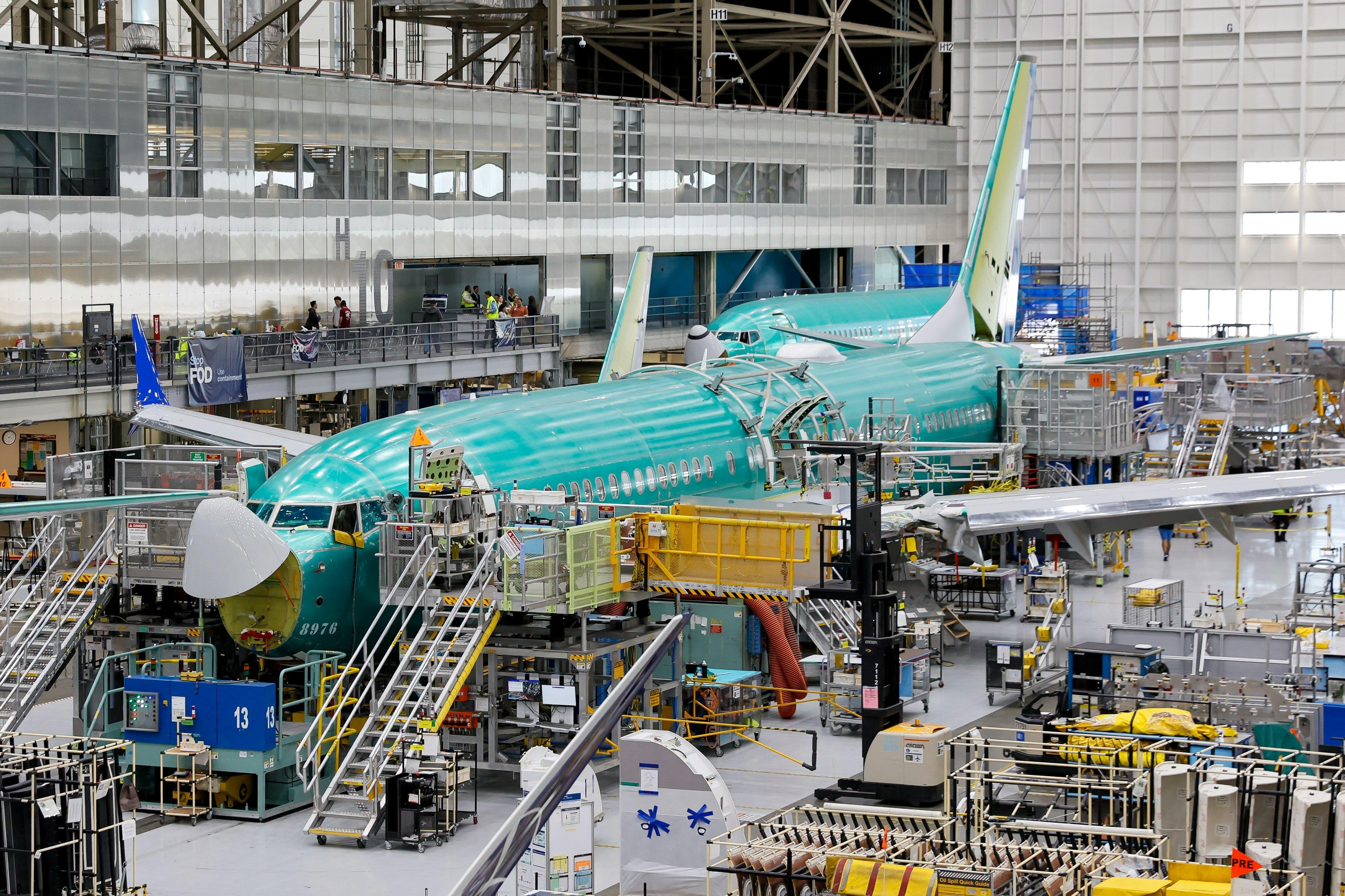
Boeing Forecasts Significant Growth in Africa’s Air Fleet Amid Rising Passenger Demand
Boeing’s latest Commercial Market Outlook (CMO) projects that passenger air traffic in Africa will increase at an average annual rate of 6% through 2044. This robust growth is attributed to several key factors, including the continent’s youthful population, expanding middle class, rapid urbanisation, and substantial investments in airport infrastructure and connectivity. These dynamics are expected to drive a transformative expansion of Africa’s commercial aviation sector over the next two decades.
Expansion of Africa’s Commercial Fleet and Market Dynamics
According to Boeing, Africa’s commercial aircraft fleet is anticipated to more than double, reaching approximately 1,680 planes by 2044. The majority of new deliveries—over 1,200 aircraft—will predominantly consist of single-aisle models, which are well-suited to support the growth of domestic and short-haul international routes. This trend is particularly advantageous for African low-cost carriers, which are poised to capitalize on emerging opportunities by launching new routes within the continent as well as to Europe and the Middle East. These carriers aim to offer affordable fares that enhance connectivity and stimulate broader economic activity.
Shahab Matin, Boeing’s managing director of Commercial Marketing for the Middle East and Africa, emphasised the pivotal role of aviation in Africa’s economic development. He noted that the sector acts as a catalyst for both economic expansion and intra-continental connectivity, building on two decades of industry growth. Matin highlighted that the introduction of more efficient and versatile aircraft, combined with strategic investments to make air travel more accessible, will unlock further growth opportunities for airlines and regional hubs.
Economic Impact and Workforce Demand
The influence of aviation in Africa extends well beyond the airlines themselves. The sector supports tourism, trade, investment, and logistics, while generating thousands of indirect jobs in related industries such as hospitality and manufacturing. As African carriers expand their fleets and networks, Boeing projects a substantial demand for skilled personnel, estimating the need for 74,000 new pilots, technicians, and cabin crew over the next 20 years.
In addition to fleet expansion, Boeing’s outlook anticipates significant demand for aviation services valued at approximately $130 billion. This includes support for operational resilience and the ongoing modernisation of wide-body aircraft to accommodate growing long-haul operations. The demand for freighter aircraft is also expected to remain strong, reflecting the development of Africa’s logistics and export markets.
Challenges and Competitive Landscape
Despite the optimistic projections, Boeing faces considerable challenges in executing its expansion plans across Africa. The company contends with intense competition from other major aircraft manufacturers, including Airbus and Embraer. Moreover, many African airlines continue to confront logistical and financial obstacles that could impede fleet growth and operational efficiency.
Market responses to Boeing’s outlook have been largely positive. Ethiopian Airlines, one of the continent’s leading carriers, recently reaffirmed its confidence in Boeing by committing to an order of 11 additional 737 MAX jets. Meanwhile, competitors are actively responding to the region’s aviation growth. FlyDubai has announced plans to expand its fleet with both Boeing and Airbus narrowbody aircraft, and Emirates remains focused on large aircraft such as the Boeing 777X.
Boeing’s concurrent efforts to secure F-15 fighter jet orders in the Middle East may also influence the allocation of resources and attention, potentially affecting its commercial fleet expansion initiatives in Africa.
As Africa’s aviation sector continues to evolve, Boeing’s outlook remains cautiously optimistic. The company will need to adeptly navigate a complex environment marked by competitive pressures and operational challenges to fully realise the continent’s considerable growth potential.

Etihad Airways Suspends Airbus A380 Flights on Key Route

Aditya Birla Group Seeks Approval for Aircraft Leasing in GIFT City

Qatar Airways Highlights Innovation and Connectivity at Arabian Travel Market 2026

Hong Kong's Five-Year Plan Includes Andrew Fan's Aircraft Parts Processing Hub Proposal

ACIA Aero Leasing Delivers ATR72-600 to Air Nostrum

RTX Appoints Jill Albertelli as Head of Pratt & Whitney

TAT Technologies Joins Beyond Aero Hydrogen Aircraft Program

AURAK Study Highlights Barriers to Air Taxi Adoption in Emerging Economies

Xiamen Air Selects Altitude for 787 Maintenance at Heathrow

Etihad and Swissport Extend Global Partnership
