
Zet AI‑inzichten om in gerichte actie

Trending
Categories
Busan Bets on Composites, AI to Enter Global Aircraft Parts Supply Chain
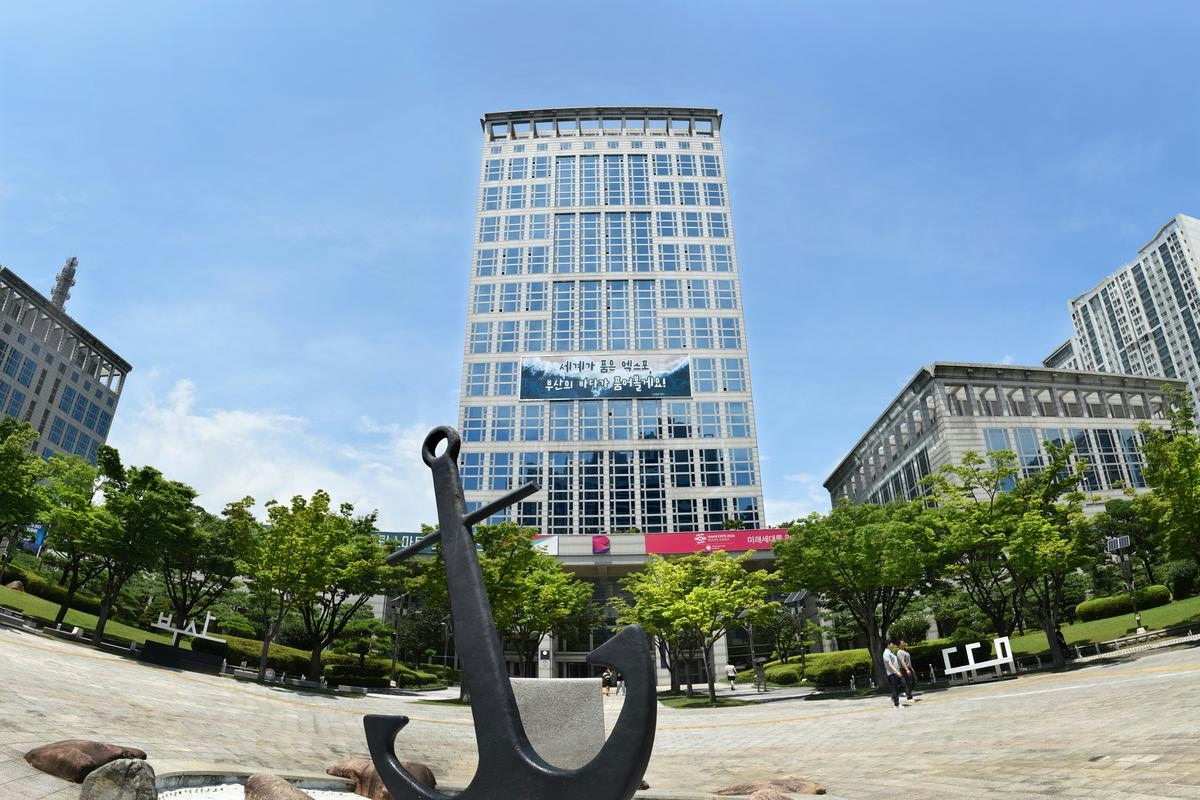
Busan Bets on Composites and AI to Enter Global Aircraft Parts Supply Chain
Busan is intensifying its efforts to transition from a traditional aircraft production hub into a significant contributor to the global aircraft parts supply chain. The city is focusing on the development of large composite structures and the adoption of artificial intelligence-driven manufacturing technologies. To support this transformation, Busan is establishing a comprehensive infrastructure that includes demonstration facilities, research and development programs, certification processes, and order networks. This initiative is designed to enable local aviation companies to independently develop and manufacture high-value airframe components and engage in risk-sharing partnerships with leading global aircraft manufacturers.
Launch of Advanced Manufacturing Demonstration Center
On June 10, Busan officials announced the commencement of a project to build a demonstration support base dedicated to the advanced manufacturing of next-generation aircraft structural parts. Selected through a recent open call by the Korea AeroSpace Administration (KASA), the project officially began with a briefing held on June 9. Central to this initiative is the Next-Generation Aviation Advanced Manufacturing Demonstration Center, which will be constructed in Mieum-dong, Gangseo District. The facility will provide shared equipment for producing large composite airframe structures and serve as a platform for demonstrating cutting-edge manufacturing processes while offering technical support to local firms.
The project is backed by a total investment of 21.5 billion won through 2030, with 15 billion won sourced from national funds and 6.5 billion won from the city budget. Its primary objective is to enhance Busan’s aviation manufacturing capabilities in response to the growing global demand for commercial aircraft and the ongoing restructuring of the industry’s supply chain. The center will facilitate the verification of high-speed production technologies for large composite structures and advanced manufacturing processes under real-world conditions.
Emphasis on Automation and AI Integration
A critical aspect of the project is the integration of automation and digitalization, particularly through AI-driven autonomous manufacturing. This approach aims to improve quality control by leveraging production data and optimizing manufacturing processes. Given the stringent requirements for precision and consistent quality in aircraft structural parts, simply expanding equipment capacity has proven insufficient for entering the global supply chain. The adoption of AI technologies is expected to address these challenges by enhancing manufacturing efficiency and reliability.
Industry Challenges and Competitive Landscape
Busan’s ambitious initiative unfolds amid significant challenges facing the global aerospace sector, including supply chain disruptions, rising costs, and labor shortages. As Busan and other regions invest heavily in composites and AI, competition within the industry is expected to intensify. Major players such as Bombardier are accelerating their investments in these technologies, particularly in defense and business jet segments, to maintain competitive advantage. Furthermore, the aerospace industry continues to grapple with concerns over supply chain resilience, cybersecurity threats, and tariff uncertainties, all of which could influence the success of Busan’s efforts.
Support for Local Firms and Global Collaboration
To ensure local companies move beyond prototype development and basic parts supply, Busan plans to offer comprehensive support encompassing research and development, certification, and technical consulting. The city will also facilitate regular technology exchanges with global original equipment manufacturers (OEMs) and establish a joint technology cooperation network. These measures aim to enable local firms to participate effectively in risk-sharing partnerships and secure a foothold in the global aircraft parts market.
Through this project, Busan seeks to establish a robust aviation industry cluster centered on large composite materials, thereby enhancing the competitiveness of local firms in securing international orders. The initiative is managed by Busan Techno Park, with collaboration from the National Korea Maritime and Ocean University, Dong-A University, and the Korea Institute of Materials Convergence Technology as joint development partners.

Etihad Airways Suspends Airbus A380 Flights on Key Route

Aditya Birla Group Seeks Approval for Aircraft Leasing in GIFT City

Qatar Airways Highlights Innovation and Connectivity at Arabian Travel Market 2026

Hong Kong's Five-Year Plan Includes Andrew Fan's Aircraft Parts Processing Hub Proposal

ACIA Aero Leasing Delivers ATR72-600 to Air Nostrum

RTX Appoints Jill Albertelli as Head of Pratt & Whitney

TAT Technologies Joins Beyond Aero Hydrogen Aircraft Program

AURAK Study Highlights Barriers to Air Taxi Adoption in Emerging Economies

Xiamen Air Selects Altitude for 787 Maintenance at Heathrow

Etihad and Swissport Extend Global Partnership
