
Zet AI‑inzichten om in gerichte actie

Trending
Categories
CFM Expands and Strengthens Open MRO Ecosystem

CFM Expands and Strengthens Open MRO Ecosystem
Strategic Investment to Meet Growing Aftermarket Demand
CFM International is significantly increasing its investment in the open maintenance, repair, and overhaul (MRO) ecosystem to enhance both capability and capacity in anticipation of a surge in LEAP engine shop visits over the coming years. This expansion is supported by substantial five-year financial commitments exceeding $1 billion USD from GE Aerospace and more than €1 billion EUR from Safran Aircraft Engines. These investments position CFM to effectively address the rising demand in the aftermarket sector.
In 2025, CFM inaugurated new facilities across Belgium, India, Mexico, and Poland. The company continues to expand its operational footprint in 2026, with recent capacity enhancements in Belgium and Mexico. Gaël Méheust, president and CEO of CFM International, highlighted the company’s commitment to ensuring sufficient capability to support the LEAP engine aftermarket requirements, underscoring the scale and urgency of these developments.
Expansion of the Global MRO Network
CFM’s global MRO network is growing through the addition of licensed shops, further strengthening its open ecosystem. Over the past 18 months, three new Premier MRO providers have joined: MTU Maintenance in Fort Worth, Texas; Iberia Maintenance in Madrid, Spain; and SSAMC in Chengdu, China. These new entrants complement established industry leaders such as Air France Industries KLM Engineering & Maintenance, Delta TechOps, Lufthansa Technik, ST Engineering, and StandardAero, collectively broadening the service options available to operators.
Despite this growth, CFM faces a competitive and evolving market landscape. Established players like MTU, which already maintain a significant presence in the CFM aftermarket and collaborate closely with GE Aerospace, continue to offer strong competition. The expansion of CFM’s open MRO model has drawn close attention from airlines and maintenance providers, some of whom remain cautious about the cost-effectiveness and reliability of open MRO solutions compared to traditional maintenance arrangements. This scrutiny is driving competitors to enhance their own MRO offerings, potentially leading to a more fragmented and competitive market environment.
Focus on Efficiency, Cost Control, and Fleet Upgrades
Méheust emphasized CFM’s dedication to operational efficiency and cost management, stating that the company is focused on ensuring the fastest possible shop visits at the lowest cost. To achieve this, CFM is accelerating the development of high-yield repairs, collaborating with suppliers to improve delivery performance, and expanding spare parts inventories. Additionally, the company is refining engine and shop manuals to reduce the necessity for part repair or replacement whenever feasible.
With over 10,000 LEAP engines delivered to date—representing the fastest ramp-up in commercial aviation history—CFM is also implementing fleet upgrades designed to enhance durability and reduce maintenance burdens. These include a high-pressure turbine (HPT) durability kit to extend time on wing and a reverse bleed system (RBS) aimed at lowering maintenance requirements for airlines. Through these initiatives, CFM remains committed to delivering high engine availability, competitive cost of ownership, and the advantages of aftermarket competition within its open MRO ecosystem, even as the market responds with increased scrutiny and rival initiatives.

Etihad and Swissport Extend Global Partnership

Sepehran Airlines B737 Returns to Mashhad After Tyre and Engine Issues

Etihad Deploys Widebody Fleet to Meet Strong Demand

Korean Air Finalizes $36.2 Billion Deal with Boeing
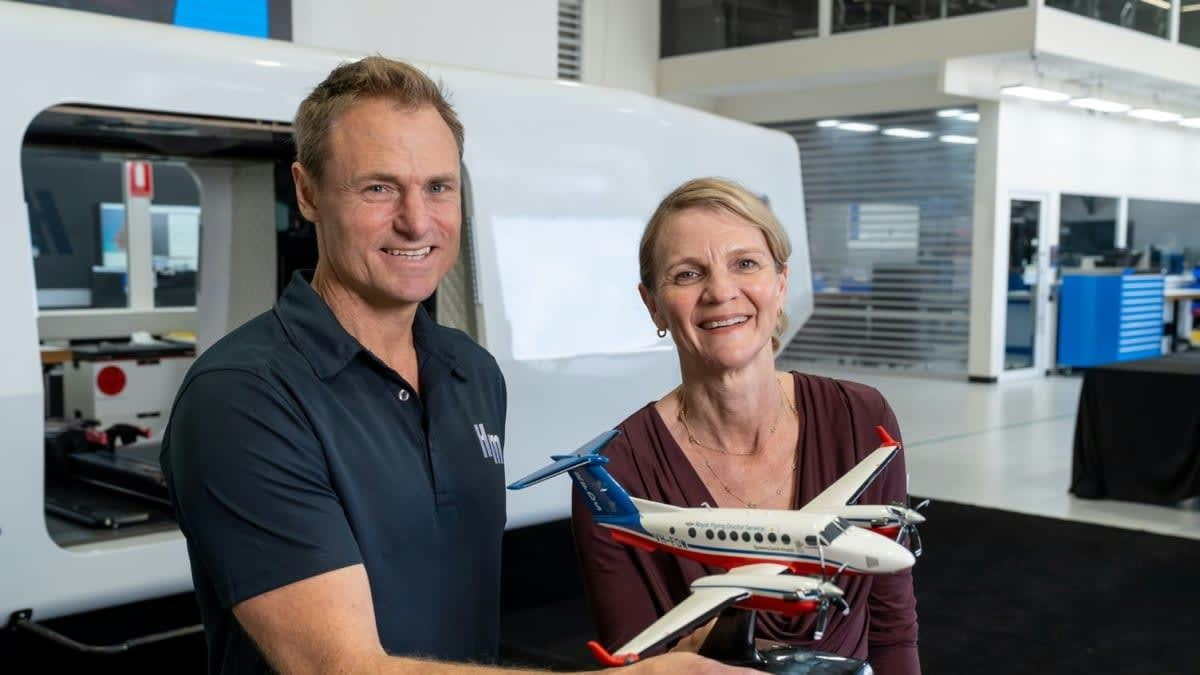
Australia’s RFDS Queensland Section Orders Six King Air 260Cs

Korean Air Finalizes Order for 103 Boeing Jets and Engines

Embraer E195-E2 Features Distinctive Engine Placement Among Regional Jets

What Passengers Can Expect on Boeing’s New 777X Jet

How Ethiopian Airlines Became Africa’s Leading Carrier Amid Gulf Competition

Joby Aviation Extends Autonomous Flight Capabilities with Cross-Country Tour
