Afbeelding

Zet AI‑inzichten om in gerichte actie

Meld je vandaag nog aan voor de AeroGenie-wachtlijst!

Trending

Categories

CFM International Aims to Increase Engine Deliveries
July 19, 2026By ePlane AI
CFM International Aims to Increase Engine Deliveries
0
0
CFM International
Engine Deliveries
Leap-1B Engine

CFM International Aims to Boost Engine Deliveries Amid Durability Enhancements

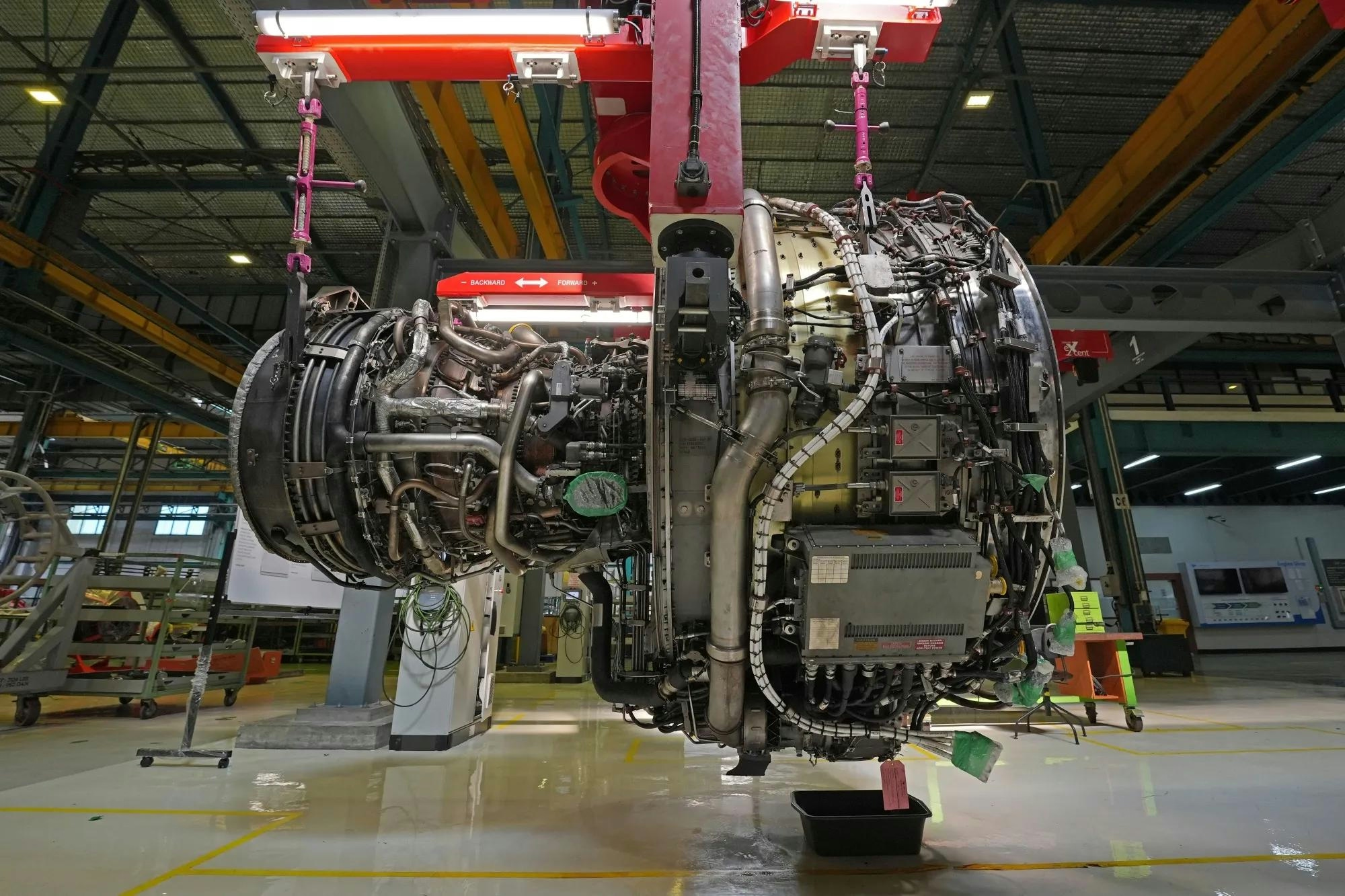
LONDON — CFM International, the principal engine supplier for Boeing and Airbus single-aisle aircraft, has announced plans to increase its engine deliveries by 15% this year. This target aligns with the growing production rates of aircraft manufacturers, who have identified jet engines as a critical bottleneck in scaling up output. Gael Meheust, CEO of CFM, expressed confidence in meeting the rising demand during a media briefing in London ahead of the Farnborough Air Show, stating that the company is well aligned with the ramp-up schedules set by airframers.

Addressing Durability Challenges for the Leap-1B Engine

CFM, a joint venture between General Electric Co. and France’s Safran SA, is simultaneously tackling durability issues affecting its Leap-1B engines, which power the Boeing 737 Max exclusively. These engines have encountered premature overhauls, particularly in harsh operating conditions characterized by heat and dust. In response, the company has accelerated efforts to enhance engine longevity.

To mitigate these challenges, CFM has obtained approvals from both the U.S. Federal Aviation Administration (FAA) and European regulators for a high-pressure turbine durability kit and a reverse bleed system aimed at extending the lifespan of fuel nozzles. The upgraded durability kit has already been implemented on the Airbus A320, which offers customers a choice between two engine types, and is now approved for use on the 737 Max.

Market Impact and Competitive Landscape

The market has reacted positively to these technical advancements, with expectations that the time on wing for Leap-1B engines will double by 2027-2028. CFM’s proactive measures are viewed as essential to maintaining its leadership position amid increasing competition. Rivals such as MTU Aero Engines are expanding their aftermarket presence and deepening partnerships with GE Aerospace, intensifying the competitive environment.

As CFM strives to meet heightened demand while resolving technical issues, its ability to deliver reliable engines at scale will remain under close scrutiny from aircraft manufacturers and airlines alike, both of whom depend on timely deliveries and enhanced engine performance.

More news
Archer Shares Rise 20% Following Military eVTOL Deal with Anduril

Archer Shares Rise 20% Following Military eVTOL Deal with Anduril

Archer Shares Rise 20% Following Military eVTOL Deal with Anduril Archer Aviation’s shares surged by 20% on Monday after the company announced a strategic partnership with defense technology firm Anduril Industries to develop a military electric vertical takeoff and landing (eVTOL) aircraft. This collaboration centers on the newly introduced Thunder autonomous VTOL platform and represents Archer’s first significant entry into defense contracting, even as it continues to pursue Federal Aviation Administration (FAA) certification for its commercial air taxi fleet. Strategic Partnership and Market Response The market reacted enthusiastically to the announcement, boosting Archer’s market capitalization by approximately $400 million. Investors appear increasingly confident that military contracts could provide essential revenue streams amid ongoing delays in commercial certification. Archer, along with competitors such as Joby Aviation, has faced mounting financial pressure as the anticipated FAA certification timeline has slipped from 2024 to 2026 or later. The Thunder platform, co-developed with Anduril, is engineered for both military and commercial use and features a series hybrid powertrain. Military customers, operating under different regulatory frameworks, can deploy experimental aircraft years before commercial passenger flights receive clearance. This regulatory distinction offers eVTOL manufacturers a critical financial lifeline. Analysts at Vertical Research Partners highlight the defense market as a substantial opportunity for eVTOL technology, noting that military applications are not constrained by passenger comfort or noise restrictions that often delay commercial certification. Anduril’s Role and Industry Context Anduril brings considerable defense expertise to the partnership, having secured over $1 billion in contracts for autonomous systems with the Pentagon and allied militaries. Its Lattice software platform integrates diverse military hardware into unified command systems, and when combined with Archer’s aircraft, it could enable autonomous missions such as medical evacuation and cargo resupply. Archer’s CEO, Adam Goldstein, outlined the company’s dual-track approach, emphasizing efforts to achieve FAA certification—now targeted for 2028—while simultaneously preparing for high-profile events like the 2028 Los Angeles Olympics. Goldstein noted the company’s commitment to scaling production, with its manufacturing facility in Georgia aiming to produce up to 650 aircraft annually once fully operational. Earlier this year, Archer’s flagship Midnight air taxi successfully completed transition flight testing. This move reflects a broader trend within the eVTOL sector. Joby Aviation secured a $131 million contract with the U.S. Air Force in 2023, and Beta Technologies has also obtained contracts with the U.S. Army. As commercial certification timelines extend, defense contracts are increasingly sustaining the industry’s development. Challenges and Market Implications Despite the positive momentum, significant challenges remain. Archer and its peers continue to face regulatory hurdles before launching commercial air taxi services. Meanwhile, Anduril is adopting a cautious growth strategy, with founder Palmer Luckey indicating no immediate plans for an initial public offering amid current market conditions and heightened interest in defense technology. The recent stock surge highlights a shift in investor sentiment, with the market rewarding companies that diversify beyond purely commercial passenger operations. By expanding into defense, cargo, and international markets, Archer is positioning itself to navigate regulatory delays and capitalize on emerging opportunities within the advanced air mobility sector.
Advancing Sustainable Aviation with Additive Manufacturing and Collaboration

Advancing Sustainable Aviation with Additive Manufacturing and Collaboration

Advancing Sustainable Aviation with Additive Manufacturing and Collaboration The global drive toward net zero emissions is profoundly transforming the aerospace sector, prompting significant advancements in propulsion technologies, energy sources, and manufacturing techniques. As the aviation industry intensifies efforts to decarbonize, additive manufacturing (AM) has emerged as a critical enabler, facilitating the production of smarter, lighter, and more sustainable aircraft components. At the forefront of this transformation is Conflux Technology, which views AM not merely as an innovative manufacturing method but as a key driver of sustainable flight. Through strategic collaborations with industry leaders such as Airbus, Honeywell’s TheMa4HERA consortium, and AMSL Aero, Conflux is addressing one of aviation’s most urgent technical challenges: effective thermal management. The Critical Role of Thermal Management Next-generation aircraft—whether powered by hydrogen fuel cells, hybrid-electric systems, sustainable aviation fuel (SAF), or batteries—generate significant heat that must be managed efficiently to ensure safety and optimal performance. Overheating in hydrogen fuel cell systems can diminish efficiency and reduce component lifespan, while insufficient cooling in battery or hybrid-electric configurations risks accelerated degradation and safety concerns. Conventional heat exchangers often face design constraints that force compromises among weight, size, and thermal efficiency. Additive manufacturing overcomes these limitations by enabling the creation of complex geometries and optimized flow paths that enhance cooling performance without adding unnecessary weight or complexity. This design flexibility allows for the production of lightweight, high-performance heat exchangers that were previously unattainable through traditional manufacturing methods. Collaboration and Real-World Impact Conflux’s partnerships exemplify the practical application of AM in advancing sustainable aviation. For Airbus’s ZEROe program, Conflux is developing heat exchangers featuring intricate internal channels specifically designed for hydrogen fuel cell cooling—configurations achievable only through additive manufacturing. Within the TheMa4HERA consortium, the company is engineering scalable heat exchangers for hybrid-electric regional aircraft, drawing on expertise from 28 European partners to optimize energy efficiency and reduce material consumption. These collaborative efforts highlight the vital role of shared knowledge and innovation in overcoming technical obstacles. Nonetheless, the path to sustainable aviation through AM is not without challenges. The substantial initial investment required for AM technology, the necessity of securing extensive offtake agreements to scale SAF production, and the complexities involved in integrating new technologies into existing aviation infrastructure all represent significant barriers. Market and Industry Response Despite these hurdles, the aerospace market is increasingly recognizing the potential of additive manufacturing to produce lightweight, durable aircraft components. Competitors are actively forming partnerships and investing in both AM and SAF initiatives to maintain a competitive advantage. As the industry evolves, collaboration and technological innovation remain essential to achieving the ambitious objective of cleaner, more sustainable flight. Additive manufacturing is thus enabling engineers to prioritize optimal performance in design, unencumbered by the constraints of traditional manufacturing processes—a pivotal advancement in the pursuit of net zero aviation.
IndiGo Finalizes Largest LEAP Engine Order with 1,000 Units

IndiGo Finalizes Largest LEAP Engine Order with 1,000 Units

IndiGo Finalizes Largest LEAP Engine Order with 1,000 Units IndiGo has formalized a landmark agreement with CFM International for the purchase of over 1,000 LEAP-1A engines, intended to power 510 Airbus A320neo family aircraft. This memorandum of understanding, announced at the Farnborough International Airshow, represents the largest single order in the history of the LEAP engine program. Alongside the engine acquisition, the deal encompasses support for IndiGo’s forthcoming engine maintenance, repair, and overhaul (MRO) facility, as well as a long-term material services contract covering spare parts and technical assistance. Strategic Partnership and Technological Advancements The LEAP-1A engine, CFM International’s latest-generation fuel-efficient turbofan, is renowned for its reliability and operational efficiency, making it a preferred choice for Airbus A320neo jets worldwide. This substantial order is poised to underpin IndiGo’s ambitious fleet expansion plans and bolster the airline’s operational resilience as it extends its domestic and international network. Willie Walsh, IndiGo’s CEO-designate, emphasized the significance of the partnership, stating, “As IndiGo embarks on its next phase of growth towards becoming a truly global airline, we are delighted to extend our long-standing partnership with CFM International. The LEAP engine’s industry-leading reliability makes it the ideal choice to support our scale, operational resilience, and sustainability ambitions.” CFM International highlighted that this agreement builds upon a decade of collaboration with IndiGo. GE Aerospace Chairman and CEO H. Lawrence Culp Jr. noted that LEAP engines now deliver up to twice the time on wing in challenging hot and harsh operating environments, while maintaining fuel efficiency and reliability. He also reaffirmed GE Aerospace’s commitment to India’s aviation sector, citing manufacturing operations in Pune and engineering facilities in Bengaluru. Safran CEO Olivier Andriès described the deal as a testament to the enduring partnership between the companies and underscored India’s growing importance in global aviation. He confirmed that Safran will continue investing in LEAP engine production and MRO capabilities within India to support IndiGo’s expansion and contribute to the development of the country’s aerospace industry. Challenges and Market Implications Despite the strategic advantages, the scale of the order presents considerable challenges for IndiGo. The substantial initial investment required to acquire 1,000 LEAP-1A engines, combined with the complexities involved in establishing a new MRO facility, will demand significant resources and meticulous operational planning. Maintaining the reliability and performance of the new engines as the fleet grows will be critical to preserving IndiGo’s reputation for efficiency. Market reactions to the agreement have been predominantly positive, with increased confidence in CFM International’s LEAP engines following IndiGo’s endorsement. This record-breaking order is expected to intensify competition among engine manufacturers, who may seek to attract airlines by offering more cost-effective or reliable alternatives. Such competitive dynamics are likely to compel CFM to continue innovating and maintaining competitive pricing. Currently, IndiGo operates a fleet exceeding 430 aircraft, serving more than 140 destinations across India and internationally. The airline carried over 123 million passengers in the fiscal year 2026. IndiGo has stated that the new agreement will support its expanding fleet, improve engine availability, and enhance maintenance efficiency as it advances into its next phase of growth.
Pratt & Whitney Unveils Valox Small Engine for Uncrewed Fighters

Pratt & Whitney Unveils Valox Small Engine for Uncrewed Fighters

Pratt & Whitney Unveils Valox Small Engine for Uncrewed Fighters Pratt & Whitney (P&W) has introduced the Valox 1500, a new developmental turbofan engine designed specifically to power the emerging class of uncrewed fighter jets. The announcement was made at the 2026 Farnborough Airshow in the United Kingdom. The Valox family targets a thrust range of 800 to 1,500 pounds-force (3.6 to 6.7 kilonewtons), aligning closely with the United States Air Force’s (USAF) requirements for its forthcoming “FQ” class of Collaborative Combat Aircraft (CCAs). Jill Albertelli, head of P&W’s military engines business, emphasized the engine’s tailored design, stating, “The Pratt & Whitney Valox engine will really be purpose-built for the different missions, for high-performance propulsion, at the speed and the scale that our customers are asking for.” Competitive Landscape and Development Efforts The Valox 1500 enters a competitive market, contending with Honeywell’s SkyShot 1600 and the GEK1500, a product of a partnership between GE Aerospace and Kratos. These engines are all competing for propulsion contracts within the USAF’s CCA program, which has seen tens of millions of dollars awarded to various engine manufacturers over the past year. Pratt & Whitney’s Gatorworks unit has received $10 million to advance the Valox 1500 design, while Honeywell, GE, and Kratos have also secured funding to develop their respective concepts. In addition to the Valox 1500, Pratt & Whitney is independently funding the development of the smaller Valox 700 engine, intended to power effectors such as small cruise missiles and drones. Albertelli noted significant progress on this engine family. Meanwhile, Northrop Grumman’s YFQ-48 Talon Blue prototype CCA currently operates with one of P&W’s PW500 commercial business jet engines. Growing Market and Industry Challenges The market for propulsion systems tailored to uncrewed fighters is expanding rapidly. The US Air Force, Navy, and Marine Corps all plan to deploy substantial numbers of these aircraft over the next decade. International interest is also increasing, particularly across Europe, Asia, and Australia. Despite the promising outlook, Pratt & Whitney faces considerable challenges in meeting the stringent performance and reliability standards demanded by the USAF’s CCA program. The company must demonstrate that the Valox engine can deliver both the high performance and operational dependability required for these next-generation platforms. Market reactions to the Valox announcement have been marked by heightened interest from defense contractors and potential customers within the uncrewed fighter and effector sectors. The competitive environment is intensifying, with rivals such as Rolls-Royce and Safran accelerating their own small turbofan engine developments to capture market share. Rolls-Royce is leveraging its AE series to target a larger class of medium-thrust turbofans, while GE is developing the GE426 engine, which aims to produce thrust outputs between 4,000 and 6,000 pounds-force for the USAF’s CCA Increment 2 initiative. Despite the crowded field, Albertelli remains optimistic about the market’s potential, affirming, “Demand is significant, and we want to be there for our customers any way we can.”
SMBC Orders 100 Airbus A320neos at Farnborough Airshow

SMBC Orders 100 Airbus A320neos at Farnborough Airshow

SMBC Aviation Capital Places Landmark Order for 100 Airbus A320neos at Farnborough Airshow SMBC Aviation Capital has solidified its status as a leading global aircraft lessor by placing a substantial order for 100 Airbus A320neo family aircraft during the Farnborough Airshow. The agreement includes 65 A321neo and 35 A320neo jets, complementing SMBC’s recent commitment to acquire 100 Boeing 737 MAX aircraft, which features the larger 737-10 variant. This dual engagement underscores the lessor’s strategic approach to maintaining a diverse and modern fleet. Strategic Significance and Market Implications Peter Barrett, CEO of SMBC Aviation Capital, emphasized the importance of the order in ensuring a continuous delivery pipeline of the latest A320neo family aircraft through the mid-2030s. He highlighted the enduring partnership between SMBC and Airbus, which spans over 25 years, and expressed confidence in the sustained demand for the A320neo family. The inclusion of a significant number of A320neos alongside the larger A321neos signals the ongoing relevance of the smaller variant, despite a market trend favoring larger single-aisle jets. This decision may challenge competitors who have predominantly focused on upsizing their offerings. Boeing, for instance, is likely to respond by promoting the fuel efficiency and passenger capacity of its single-aisle models to attract similar leasing company orders. SMBC’s balanced approach reflects a nuanced understanding of airline needs and market dynamics. Fleet Expansion and Industry Context Prior to this latest order, SMBC’s Airbus fleet comprised 82 A321neos and 167 A320neos, with a substantial backlog of additional aircraft on order. The new commitment elevates SMBC’s total future Airbus fleet to over 800 aircraft. Airbus reports that SMBC and its parent company, Sumitomo Corporation, collectively hold more than 900 commitments across all Airbus types. The announcement provided a notable boost to Airbus on the opening day of the Farnborough Airshow, which has otherwise seen limited activity. Aside from SMBC’s order, Airbus secured only a few other deals, including Riyadh Air’s firming of six A350-1000s and several helicopter contracts. The A320neo family, a cornerstone of Airbus’s narrowbody lineup, had attracted relatively little attention until this significant order. Benoît de Saint-Exupéry, Executive Vice President of Sales at Airbus Commercial Aircraft, remarked that SMBC’s investment reflects the global market’s strong appetite for the A320neo family. He noted that customers continue to select these latest-generation, highly efficient aircraft to expand and renew their fleets. Outlook Amidst Production Backlogs Although SMBC has not disclosed the specific airlines that will lease the new aircraft, securing a position in Airbus’s production queue is widely regarded as a strategic move. Both Airbus and Boeing are currently managing order backlogs extending over a decade, making timely access to new-generation jets a critical priority for lessors aiming to meet their customers’ evolving needs. As the Farnborough Airshow progresses, industry observers remain attentive to further developments from Airbus and its competitors, as the competition for dominance in the single-aisle aircraft market intensifies.
Philippine Airlines Orders Boeing 787-10, Ending Long Gap

Philippine Airlines Orders Boeing 787-10, Ending Long Gap

Philippine Airlines Places Landmark Order for Boeing 787-10 Dreamliners Philippine Airlines (PAL) has signed a memorandum of understanding to acquire up to 20 Boeing 787-10 Dreamliner widebody aircraft, marking its first Boeing order since 2007 and the largest widebody commitment in the airline’s 85-year history. The agreement, announced at the opening of the 2026 Farnborough International Airshow, includes 15 firm orders and options for an additional five aircraft, with deliveries scheduled between 2031 and 2034. This significant acquisition represents a strategic shift for Asia’s oldest flag carrier, which has relied exclusively on Airbus for both narrowbody and widebody aircraft for nearly two decades. Although PAL currently operates 10 Boeing 777-300ERs, it had not placed a new order with the U.S. manufacturer since 2007. The new deal coincides with PAL’s anticipated entry into the oneworld alliance and its ambitious plans for expansion into the North American market. It also reflects a broader industry trend toward diversifying widebody fleets across multiple manufacturers. Strategic Implications and Aircraft Features Lucio C. Tan III, president and chief operating officer of PAL Holdings, Inc., expressed confidence in the airline’s future, stating that the investment in the Boeing 787-10 will enhance the medium and long-haul fleet, improve operational efficiency, and support long-term sustainability goals. PAL president Richard Nuttall highlighted the operational benefits, noting that the new aircraft will serve as long-term replacements for the medium-haul fleet while also enabling expansion. The Boeing 787-10 is the largest variant in the Dreamliner family, measuring 68.3 meters in length—approximately 5.5 meters longer than the 787-9—without a proportional increase in weight or development cost. Boeing achieved this by extending the 787-9 fuselage with additional barrel sections while maintaining 95% structural commonality. The 787-10 typically accommodates between 300 and 375 passengers, compared to the 787-9’s 280 to 300, utilizing the same engines, wings, and advanced composite airframe. A key innovation of the 787 family is its carbon fiber reinforced polymer structure, which constitutes about 50% of the aircraft’s primary weight. This material reduces fatigue and corrosion relative to traditional aluminum, lowering maintenance requirements—an important advantage for airlines operating in high-humidity environments such as the Pacific region. Industry Context and Challenges Ahead While the order has been met with positive market reaction and signals increased confidence in PAL’s growth strategy, the extended delivery timeline, stretching to 2034, presents financial and operational planning challenges. PAL will need to carefully manage these complexities as it integrates the new aircraft into its fleet. Competitors are pursuing similar renewal strategies; for instance, Riyadh Air has recently committed to additional Boeing 787-10s and Airbus A350-1000s. Industry confidence in Boeing’s production quality has been reinforced by the Federal Aviation Administration’s recent clearance for the manufacturer to resume issuing airworthiness certificates for all new 737 and 787 deliveries. This development supports ongoing fleet renewal efforts across the aviation sector. With this landmark order, Philippine Airlines is positioning itself for a new phase of growth, operational efficiency, and enhanced passenger experience, while reaffirming its confidence in Boeing’s next-generation widebody technology.
Joby and Electra Executives Highlight Potential of Air Taxi Market

Joby and Electra Executives Highlight Potential of Air Taxi Market

Joby and Electra Executives Highlight Potential of Air Taxi Market Progress in eVTOL Testing and Regulatory Framework Since the launch of a pilot programme last year, eight companies, including air taxi innovators Joby and Electra, have been authorized to legally test electric vertical take-off and landing (eVTOL) aircraft. This initiative, led by the US Federal Aviation Administration (FAA), aims to collect real-world data to support the safe certification and commercial operation of these advanced air mobility vehicles. At the Farnborough air show, FAA deputy administrator Chris Rocheleau emphasized the importance of testing in actual flight corridors and ecosystems, rather than relying solely on laboratory or desert trials. Both Joby and Electra are preparing to deploy their eVTOL aircraft across a variety of applications once regulatory approval is secured. These include transporting commuters between airports and city centres, delivering goods, facilitating patient transfers to hospitals, and servicing routes unsuitable for helicopters or conventional airplanes. However, obtaining FAA certification remains a significant hurdle before these commercial operations can commence. Market Potential and Infrastructure Challenges Electra’s chief executive, Mark Allen, underscored the vast market opportunity by referencing an extensive analysis of US travel patterns. By examining data from road tolls, vehicle movements, mobile phones, and credit card transactions, Electra identified approximately 32 million annual trips ranging from 50 to 250 miles. Notably, 85% of these trips originate more than 40 miles from a commercial airport, highlighting a regional mobility gap that is inconvenient for both driving and flying. Allen described this as a critical “pain point” in regional transportation. Addressing infrastructure needs is another major challenge. Joby’s chief executive, Greg Bowles, stressed the necessity of developing new take-off and landing sites beyond traditional airports. He pointed to the potential of novel access points such as heliports and vertiports, which could bring air taxi services closer to where people live, work, and engage in leisure activities. Bowles suggested that these innovations in infrastructure would fundamentally transform air service accessibility and convenience. Industry Momentum and Future Outlook Despite regulatory and infrastructural challenges, the air taxi sector has attracted significant investor confidence. Toyota is anticipated to invest $250 million in Joby by the end of the year, signaling strong support for the company’s vision. On the international front, Dubai has approved the world’s first vertiport, marking a milestone for commercial air taxi operations and demonstrating global momentum in the industry. Joby and Toyota’s joint venture is currently focused on enhancing manufacturing quality and reducing production costs for the S4 series eVTOL aircraft, developments closely monitored by competitors. As the FAA pilot programme advances, the trajectory of the air taxi market will depend heavily on regulatory decisions, infrastructure expansion, and sustained investment, all of which are essential to unlocking the transformative potential of regional air mobility.
Boeing and Airbus Announce New Aircraft Orders at Farnborough Airshow

Boeing and Airbus Announce New Aircraft Orders at Farnborough Airshow

Boeing and Airbus Secure Significant Aircraft Orders at Farnborough Airshow **FARNBOROUGH, UK, July 20 (Reuters)** – The Farnborough International Airshow 2024 commenced with a series of substantial aircraft orders from prominent airlines and leasing companies. However, industry experts caution that the total volume of deals may fall short of the anticipated 800 aircraft benchmark. Both Boeing and Airbus continue to grapple with supply-chain disruptions and production constraints, tempering expectations at one of the aviation sector’s most significant global events. Major Orders and Fleet Expansions Boeing and SMBC Aviation Capital announced a landmark agreement for 100 Boeing 737 MAX aircraft, including 60 units of the high-capacity 737-10 variant and 40 737-8 jets. This transaction marks SMBC Aviation Capital’s inaugural acquisition of the 737-10, the largest model in the MAX series. Saudi Arabia’s Riyadh Air expanded its fleet by exercising options for 28 Boeing 787 Dreamliners from a prior commitment, converting 20 of these to the larger 787-10 model. Additionally, the carrier confirmed an order for six Airbus A350-1000 aircraft, increasing its total firm A350-1000 orders to 31. Philippine Airlines reinforced its longstanding relationship with Boeing by placing a new order for up to 20 Boeing 787-10 Dreamliners, comprising 15 firm orders and five options. This marks the first time the airline will operate the 787-10, complementing its existing Boeing fleet. Other notable agreements include Japan’s Skymark Airlines leasing seven Boeing 737 MAX 10 jets from Aviation Capital Group, with deliveries scheduled to begin in 2028. Meanwhile, the United Kingdom’s National Police Air Service committed to acquiring two additional Airbus H135 helicopters, expanding its fleet renewal program to nine H135s, also expected to be delivered in 2028. Engine Orders and Supplier Commitments British Airways selected Pratt & Whitney’s GTF engines for up to 63 Airbus A320neo aircraft, consisting of 33 firm orders and 30 options. Singapore-based BOC Aviation placed its largest engine order to date, securing up to 300 CFM International engines to support its expanding Airbus and Boeing narrow-body fleet. Production Focus Amid Industry Challenges Despite the flurry of new orders, Boeing’s CEO Stephanie Pope emphasized a strategic pivot at Farnborough, highlighting the company’s focus on enhancing production capabilities rather than prioritizing new sales. Following regulatory approval in May, Boeing is increasing the 737 MAX production rate to 47 jets per month, a critical step toward financial recovery and narrowing the competitive gap with Airbus. The European manufacturer’s A320 family continues to outperform the 737 MAX in the highly contested narrow-body market. As the airshow continues, further announcements are anticipated, but the industry’s primary concern remains addressing production bottlenecks and meeting the growing demand for fuel-efficient aircraft.
Honeywell Signs Major Avionics and APU Agreement with IndiGo for 2026

Honeywell Signs Major Avionics and APU Agreement with IndiGo for 2026

Honeywell Secures Landmark Avionics and APU Deal with IndiGo for 2026 Honeywell Aerospace has announced its largest-ever new-aircraft equipment agreement, having been selected by IndiGo to supply avionics and auxiliary power units (APUs) for the airline’s unprecedented order of 810 Airbus A320neo family aircraft. Unveiled at the 2026 Farnborough International Airshow, this deal represents a significant expansion of Honeywell’s presence in India’s rapidly growing aviation market. Scope of the Agreement and Strategic Partnership Under the terms of the agreement, Honeywell will provide IndiGo with 131-9A APUs, weather radar systems, traffic collision avoidance systems, and flight management systems for its future fleet. The partnership also includes a comprehensive long-term aftermarket support program designed to enhance fleet reliability, improve operational efficiency, and streamline maintenance planning throughout the aircrafts’ service life. Honeywell has been supporting IndiGo’s fleet since 2015, and this latest collaboration further strengthens their relationship amid a period when the global aerospace industry is intensifying its focus on supply chain resilience. The U.S. aerospace sector, including Honeywell, has been actively working to secure robust supply chains in response to ongoing industry challenges. Honeywell’s recent strategic initiatives—such as its spin-off into a pure-play automation company and targeted efforts to fortify its supply chain—have been well received by the market, reinforcing its reputation as a dependable partner for major airlines. Industry Impact and Executive Perspectives Willie Walsh, chief executive designate at IndiGo, emphasized the significance of the partnership, stating, “With one of the industry’s largest future fleet pipelines, IndiGo is effectively contributing to the future of aviation in India and beyond. Honeywell Aerospace has been a valued partner in IndiGo’s growth journey, and we are delighted to deepen our relationship with this collaboration. Fleet resilience, operational efficiency, and safety have been the cornerstones of IndiGo’s growth strategy since inception. As IndiGo continues its transformation into a truly global airline, Honeywell Aerospace’s advanced technologies and long-term support services will further reinforce these strengths, enabling us to consistently deliver the reliability, operational excellence, and seamless customer experience that passengers have come to expect from IndiGo.” Anthony Florian, president of global commercial aftermarket at Honeywell Aerospace, described the deal as a historic milestone for the company’s commercial business. He noted, “The scale of IndiGo’s fleet expansion—and their decision to rely on Honeywell Aerospace’s advanced products—underscores the strength of our technology and demonstrates the confidence customers place in Honeywell Aerospace to support reliable, efficient, and safe operations for decades to come.” While competitor reactions to the agreement have yet to emerge, the magnitude of the deal underscores Honeywell’s technological leadership and the trust it commands among major carriers. As the aviation industry continues to navigate supply chain complexities, Honeywell’s strategic emphasis on stability and innovation positions it favorably for sustained growth.
GE Aerospace Announces Advance in Hybrid-Electric Flight Technology

GE Aerospace Announces Advance in Hybrid-Electric Flight Technology

GE Aerospace Advances Hybrid-Electric Flight Technology at Farnborough Airshow Milestone in Hybrid-Electric Aviation GE Aerospace announced a significant breakthrough in hybrid-electric aviation with the completion of the world’s first high-altitude flight assisted by hybrid-electric propulsion. The achievement was unveiled on July 20 at the Farnborough Airshow in England, marking a pivotal step toward the development of next-generation jet engines. The test flight, conducted above 30,000 feet using a Saab 340 aircraft, is part of a series of discreet trials that began in May. This aircraft, developed in collaboration with NASA and electric aerospace firm BETA Technologies, recently completed a transatlantic journey with multiple stopovers before its public debut at the event. This development comes amid a competitive push among engine manufacturers to create technologies capable of powering future replacements for popular models such as the Boeing 737 and Airbus A320neo. Hybrid-electric propulsion, which integrates traditional and electric power sources, is viewed as a promising approach to enhance aircraft climb efficiency while reducing fuel consumption and emissions—critical objectives for the aviation industry’s sustainability goals. Industry Collaboration and Technological Innovation Kyle Clark, CEO of BETA Technologies, described the hybrid system as a crucial advancement in aviation propulsion during a news conference. The hybrid technology is one of four core research areas within the RISE engine concept, a project led by CFM International, a joint venture between GE and France’s Safran. Alongside hybridisation, CFM is exploring a radical open-fan engine design and a more conventional enclosed engine alternative known as AD-L or ADNB. After years of presenting digital renderings and conceptual designs, engine manufacturers are now under increasing pressure to demonstrate tangible progress. Mohamed Ali, CEO of GE Aerospace Commercial Engines, emphasized this shift, stating, “Simulation has given way to real world innovation.” GE’s announcement arrives amid intensifying competition from rivals Pratt & Whitney and Rolls-Royce, both expected to provide updates on their engine research later in the week. This competitive environment is accelerating innovation, with GE recently raising its 2026 profit forecast, citing strong aftermarket services and robust parts spending from airlines. Market reactions have been positive, reflecting confidence in GE’s technological direction, though responses from competitors remain forthcoming. Challenges and Industry Perspectives Ali refrained from detailing how the high-voltage hybrid system—currently replacing one of the Saab 340’s conventional engines—might be integrated into future commercial products, noting only that it “certainly would become a significant enabling technology.” Industry insiders have observed that Boeing, which has shown less enthusiasm than Airbus for open-fan designs, has expressed concerns regarding the additional weight imposed by hybrid systems, particularly those requiring extra cooling inlets. Ali acknowledged that balancing weight and performance remains a standard challenge in engine development. As the Farnborough Airshow progresses, attention remains focused on how GE Aerospace and its competitors will influence the trajectory of sustainable aviation through continued innovation in hybrid-electric propulsion and other emerging technologies.
line