
Zet AI‑inzichten om in gerichte actie

Trending
Categories
Chinese Aviation Expert Proposes Plan to Shield Passenger Planes from Sanctions
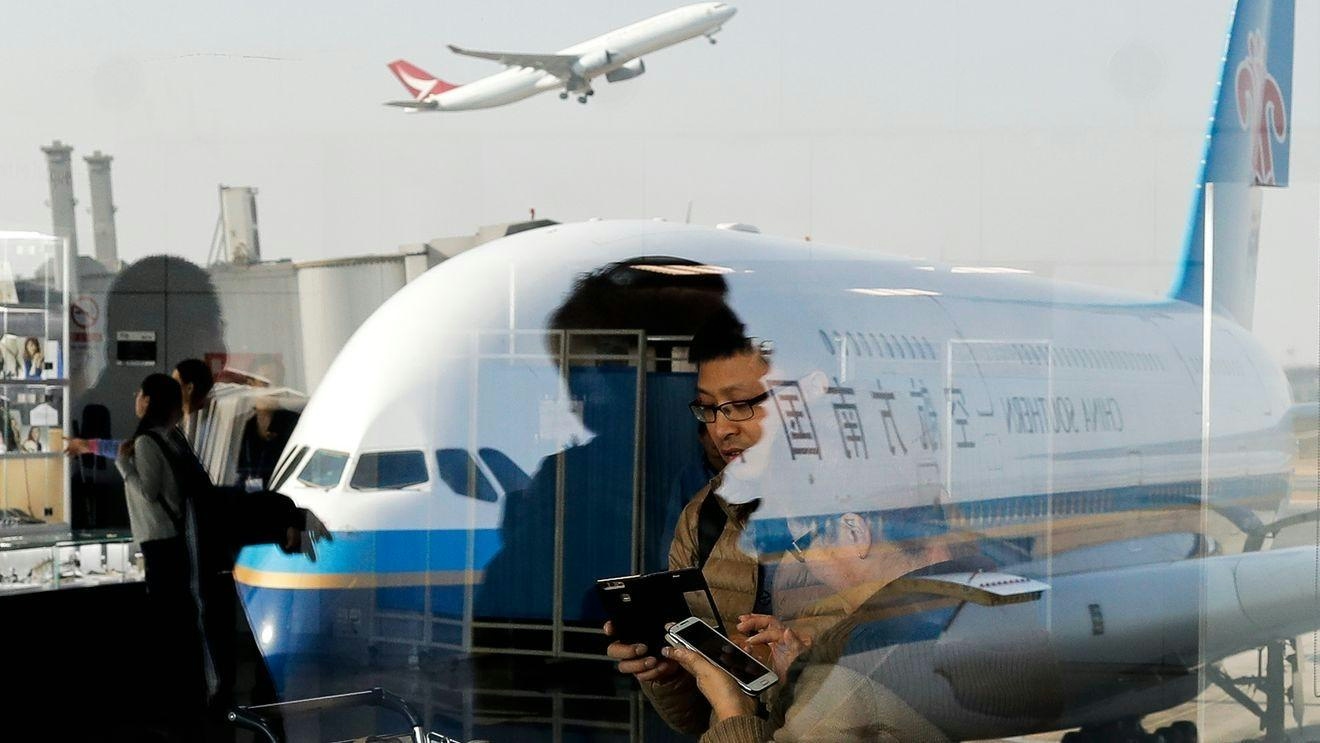
Chinese Aviation Expert Proposes Strategy to Shield Passenger Aircraft from Western Sanctions
A Vision for Supply Chain Independence
Zhang Yanzhong, a leading figure in China’s aviation sector and senior academician at the Chinese Academy of Engineering, has presented a detailed plan aimed at establishing a fully self-reliant supply chain for large passenger aircraft. This initiative seeks to insulate China’s aviation industry from the risks posed by potential Western sanctions. Zhang, widely recognized as the “father of China’s large aircraft” for his instrumental role in developing the Y-20 military transport and the C919 passenger jet, candidly acknowledged the current vulnerabilities stemming from China’s dependence on foreign suppliers for critical components.
The C919 jet, a flagship project in China’s commercial aviation ambitions, currently relies heavily on Western technology. Key parts such as the Leap-1C engine are supplied by CFM International, a joint venture between the United States’ General Electric and France’s Safran. Additional essential systems include the auxiliary power unit from Honeywell, engine nacelles from Nexcelle, avionics from GE and its partners, and communication and navigation subsystems from Collins Aerospace. Honeywell also provides the air data system, main flight controls, autopilot guidance, and braking systems, while Parker Hannifin and Moog supply actuators, hydraulics, and high-lift mechanisms. Zhang’s analysis underscores the depth of this reliance and the strategic vulnerability it entails.
Geopolitical Context and Industry Implications
Zhang’s proposal emerges amid escalating geopolitical tensions and the growing threat of sanctions that could disrupt production and delivery within China’s aviation sector. The plan reflects a broader imperative to navigate complex international regulations and mitigate the financial consequences of potential supply chain interruptions. This urgency is compounded by a surge in passenger demand across Asian aviation markets, driven in part by shifting travel patterns linked to ongoing conflicts in the Middle East. The rapid expansion of Chinese airports in global rankings further intensifies competition and highlights the necessity for operational resilience and strategic foresight.
Industry analysts suggest that Zhang’s recommendations may trigger significant adjustments throughout the global aviation industry. Competitors are likely to enhance their own supply chain security measures, invest in technological innovation, and refine operational strategies to address similar vulnerabilities. Airlines and manufacturers worldwide will need to prioritize adaptability, efficiency, and compliance with evolving international standards to sustain their competitive positions.
Challenges Ahead for China’s Aviation Ambitions
China’s pursuit of technological self-sufficiency in aviation will demand substantial investment, breakthroughs in innovation, and careful diplomatic navigation. Zhang’s blueprint not only emphasizes the urgency of reducing dependence on Western technology but also highlights the complexity of achieving this goal amid mounting geopolitical and market pressures. The path forward will require coordinated efforts across industry, government, and research institutions to build a resilient and independent aviation supply chain capable of withstanding future challenges.

Etihad Airways Suspends Airbus A380 Flights on Key Route

Aditya Birla Group Seeks Approval for Aircraft Leasing in GIFT City

Qatar Airways Highlights Innovation and Connectivity at Arabian Travel Market 2026

Hong Kong's Five-Year Plan Includes Andrew Fan's Aircraft Parts Processing Hub Proposal

ACIA Aero Leasing Delivers ATR72-600 to Air Nostrum

RTX Appoints Jill Albertelli as Head of Pratt & Whitney

TAT Technologies Joins Beyond Aero Hydrogen Aircraft Program

AURAK Study Highlights Barriers to Air Taxi Adoption in Emerging Economies

Xiamen Air Selects Altitude for 787 Maintenance at Heathrow

Etihad and Swissport Extend Global Partnership
