
Zet AI‑inzichten om in gerichte actie

Trending
Categories
Comparing the Power of Rolls-Royce Trent XWB and Trent 1000 Engines
Comparing the Power of Rolls-Royce Trent XWB and Trent 1000 Engines
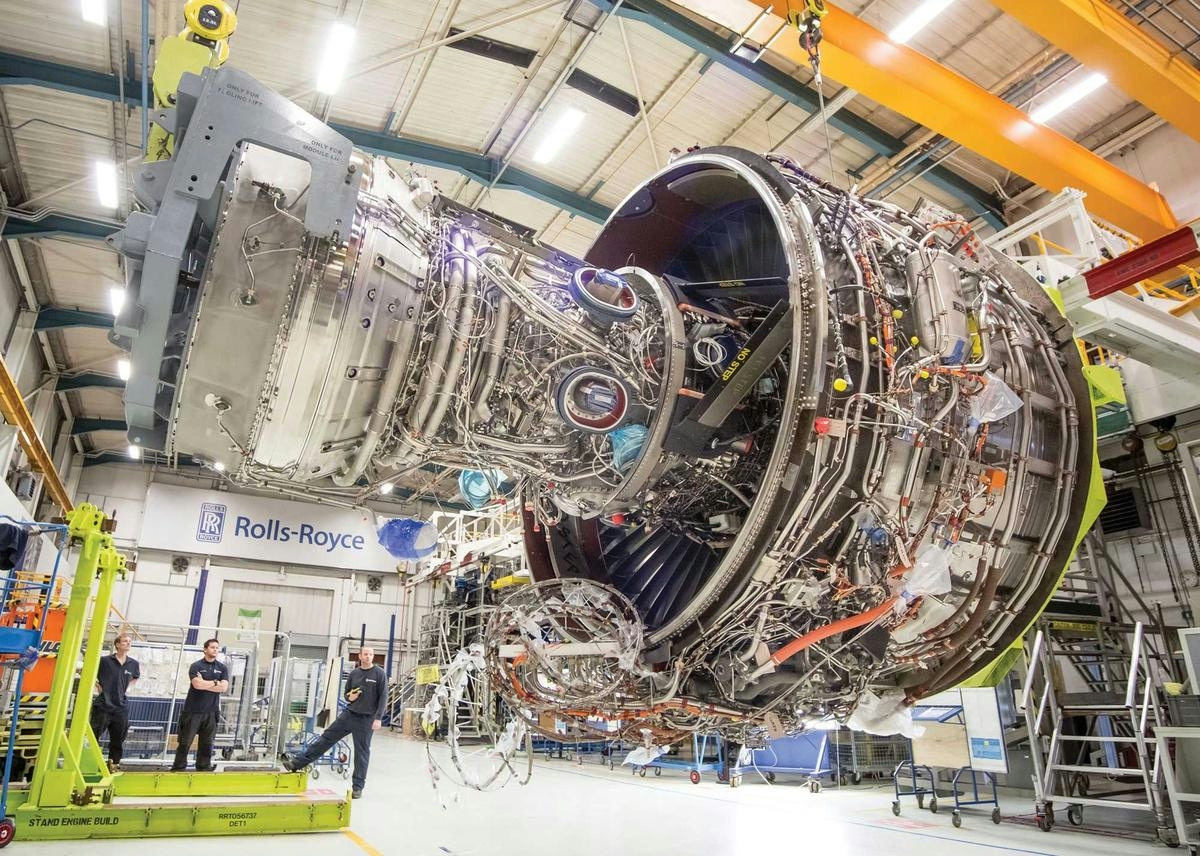
When assessing two of the most prominent widebody jet engines in commercial aviation—Rolls-Royce’s Trent XWB and Trent 1000—the question of power remains central. These engines are integral to modern fleets, powering the Airbus A350 (Trent XWB) and the Boeing 787 Dreamliner (Trent 1000), respectively. Airlines, industry analysts, and aviation experts seek to understand not only which engine delivers greater thrust but also how they compare in terms of efficiency, reliability, and operational performance.
Thrust and Performance Characteristics
At first glance, the Rolls-Royce Trent XWB emerges as the more powerful engine in terms of maximum certified thrust. The flagship variant, the XWB-97, produces up to 97,000 pounds of thrust, whereas the highest-rated Trent 1000 TEN variant reaches a peak of 78,000 pounds. This significant difference provides the Trent XWB with a clear advantage on paper.
However, thrust alone does not fully capture the engines’ capabilities. The Trent 1000 is specifically designed for the lighter and more fuel-efficient Boeing 787, which does not demand the same absolute thrust levels as the Airbus A350. Instead, the Trent 1000 prioritizes weight reduction, advanced cooling technologies, and adaptable performance to suit the 787’s mid-size, long-haul operational profile.
The Trent XWB family comprises two primary variants: the XWB-84, delivering 84,000 pounds of thrust for the A350-900, and the XWB-97, optimized for higher payloads and longer ranges on the A350-1000. The Trent 1000 series, including the latest TEN model, offers up to 78,000 pounds of thrust for the largest 787-10 variant, with earlier versions such as the Package B providing around 74,000 pounds.
Efficiency, Reliability, and Industry Challenges
Engine power in aviation extends beyond thrust to include fuel efficiency, specific fuel consumption, reliability, maintenance requirements, and integration with the airframe. Rolls-Royce has focused on these aspects to enhance the operational value of both engine families.
The Trent XWB emphasizes long-range fuel efficiency and high payload capabilities, while the Trent 1000 concentrates on lightweight design and flexible thrust operations. Both engines have faced challenges, particularly in maintaining durability and meeting airline expectations amid evolving market demands.
Rolls-Royce’s efforts to improve the Trent 1000’s Time-on-Wing—effectively doubling it through durability enhancements—have been well received by the market. This initiative aligns with the company’s broader objective to increase average Time-on-Wing across all modern Trent engines, a critical metric for airline customers seeking to optimize maintenance intervals and reduce operational costs. Competitors in the industry are expected to adopt similar strategies, focusing on efficiency and reliability to sustain competitiveness.
Conclusion
While the Rolls-Royce Trent XWB leads in maximum thrust, both the Trent XWB and Trent 1000 engines are meticulously engineered to meet the distinct requirements of their respective aircraft. As the commercial aviation sector continues to evolve, ongoing advancements in efficiency and durability will be vital for these engines to maintain their prominent positions in the widebody market.

Etihad Airways Suspends Airbus A380 Flights on Key Route

Aditya Birla Group Seeks Approval for Aircraft Leasing in GIFT City

Qatar Airways Highlights Innovation and Connectivity at Arabian Travel Market 2026

Hong Kong's Five-Year Plan Includes Andrew Fan's Aircraft Parts Processing Hub Proposal

ACIA Aero Leasing Delivers ATR72-600 to Air Nostrum

RTX Appoints Jill Albertelli as Head of Pratt & Whitney

TAT Technologies Joins Beyond Aero Hydrogen Aircraft Program

AURAK Study Highlights Barriers to Air Taxi Adoption in Emerging Economies

Xiamen Air Selects Altitude for 787 Maintenance at Heathrow

Etihad and Swissport Extend Global Partnership
