
Zet AI‑inzichten om in gerichte actie

Trending
Categories
Composite Structures and Flight Software in the MQ-25A Program
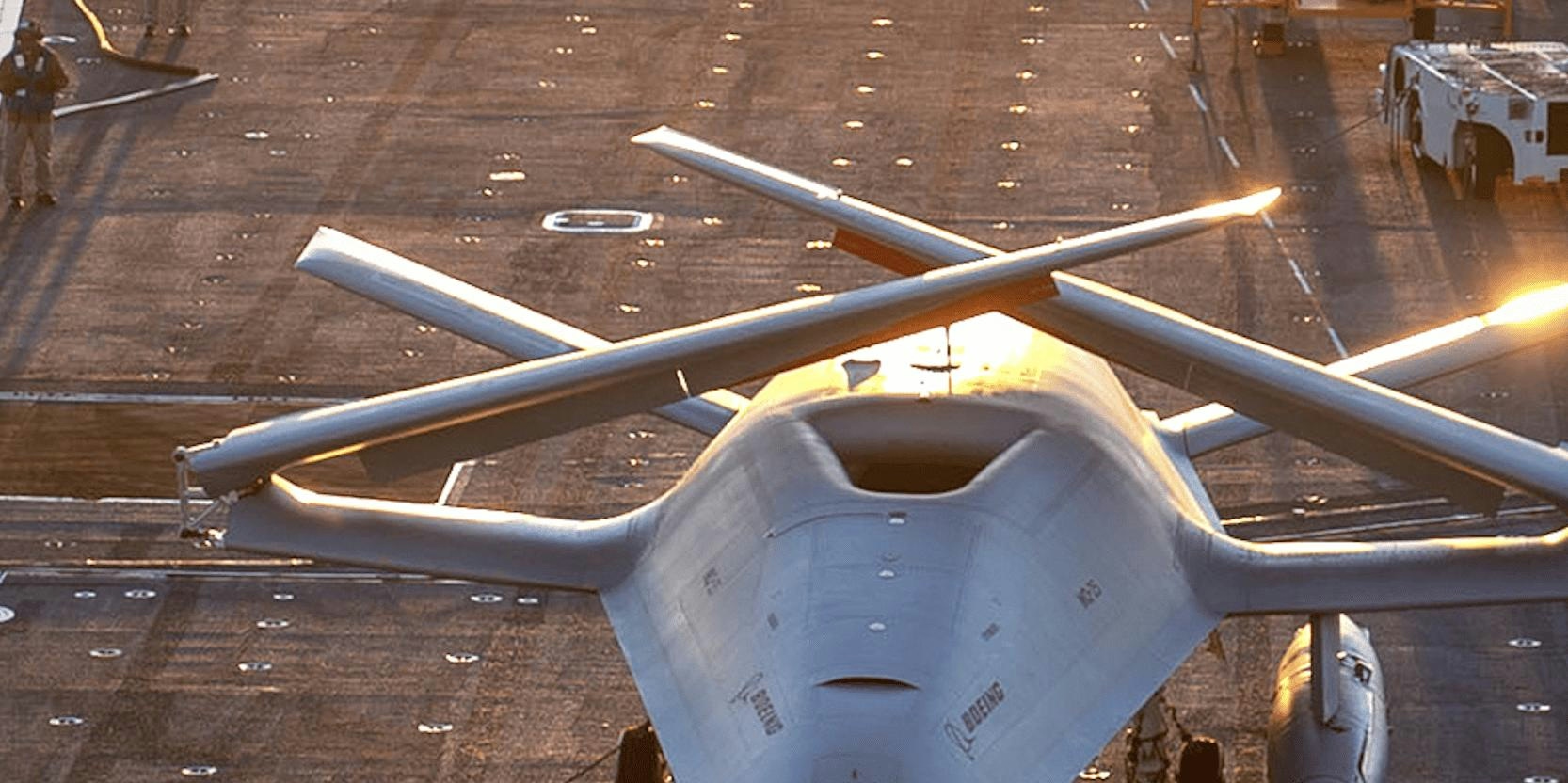
Composite Structures and Flight Software Propel MQ-25A Program Forward
Aurora Flight Sciences has emerged as a key contributor to the development of the MQ-25A Stingray™, the U.S. Navy’s first operational carrier-based unmanned aerial refueler. The company’s expertise in advanced manufacturing, engineering, and software integration has been critical in advancing the aircraft’s readiness, culminating in the successful maiden flight of the MQ-25A test aircraft on April 25.
Advanced Composite Manufacturing for Naval Aviation
Aurora has manufactured 145 components and assemblies for the MQ-25A flight test aircraft at its Mississippi and West Virginia facilities. These parts include nearly the entire exterior surface, crafted from lightweight, high-strength composite skins designed to withstand the corrosive and demanding environment of carrier operations. Engineering teams based in Virginia have also been responsible for the design and analysis of vital components such as tail stabilators, fuselage edges, and engine inlets.
Across multiple MQ-25A builds, Aurora has delivered more than 1,100 components and assemblies. The Mississippi plant produces the majority of these parts, including fuselage skins, door assemblies, and wing components, while the West Virginia facility supplies the complete tail assembly along with additional airframe and wing elements. The integration of advanced composite materials offers significant performance advantages but also presents complex manufacturing and assembly challenges to meet stringent naval aviation standards.
Enhancing Autonomous Flight Software Capabilities
Aurora’s role extends beyond hardware production to critical software development. The company embedded software and autonomy engineers within Boeing’s integrated team to support the MQ-25A’s flight software. The aircraft operates autonomously, executing commands from Air Vehicle Pilots through the Unmanned Carrier Aviation Mission Control System MD-5 Ground Control Station, enabling fully autonomous taxiing, takeoff, flight, and landing.
Aurora engineers have been instrumental in developing the Guidance, Navigation, and Control (GNC) systems, refining software-directed mission procedures, and validating software performance under rigorous operational conditions. These efforts are essential to ensuring safety and reliability during complex carrier operations, including catapult launches and ship-relative maneuvers. Nonetheless, integrating sophisticated autonomous flight software remains a significant technical challenge as the program progresses.
Program Milestones and Industry Implications
The MQ-25A program recently secured Milestone C approval, authorizing the transition to low-rate initial production. The Navy has approved the procurement of three aircraft, reflecting confidence in the program’s advancement. The MQ-25A’s first operational flight and production authorization mark a significant step toward its integration into carrier air wings, where it is expected to enhance operational reach through unmanned aerial refueling and manned-unmanned teaming.
These developments have attracted close attention from industry competitors. General Atomics Aeronautical Systems Inc. (GA-ASI), for instance, is advancing its own unmanned aerial systems, including the MQ-9B equipped with new airborne early warning capabilities, underscoring a dynamic and competitive environment in naval unmanned aviation.
Aurora Flight Sciences’ sustained contributions in composite manufacturing, engineering, and flight software development remain central to the MQ-25A’s trajectory toward operational deployment, shaping the future landscape of carrier-based unmanned aviation.

Bangladesh Launches Initiative to Become Regional Aviation Hub
Russia Transports PD-8 Engine to India for International Certification

Kyrgyzstan to Adopt EMPIC GmbH Software for Flight Safety Oversight

Why Hawaiian Airlines Is Waiting Until 2028 To Add A Premium Economy Cabin To Its Airbus A330 Fleet

Engine Fault Causes Royal Navy Helicopter Crash Fatality

Joby Aviation Begins Texas Air Taxi Test Flights Amid Stock Decline

Iberia Receives Full Approval for Airbus A350 Heavy Maintenance

NetJets to Construct Terminal and Hangar at Dallas Love Field

Using AI in Aircraft Purchases

CIAM Unveils RPD-150T Engine to Replace Rotax 150 hp Model
