
Zet AI‑inzichten om in gerichte actie

Trending
Categories
Consultation Begins on Zurich Runway Extension for Safety Improvements
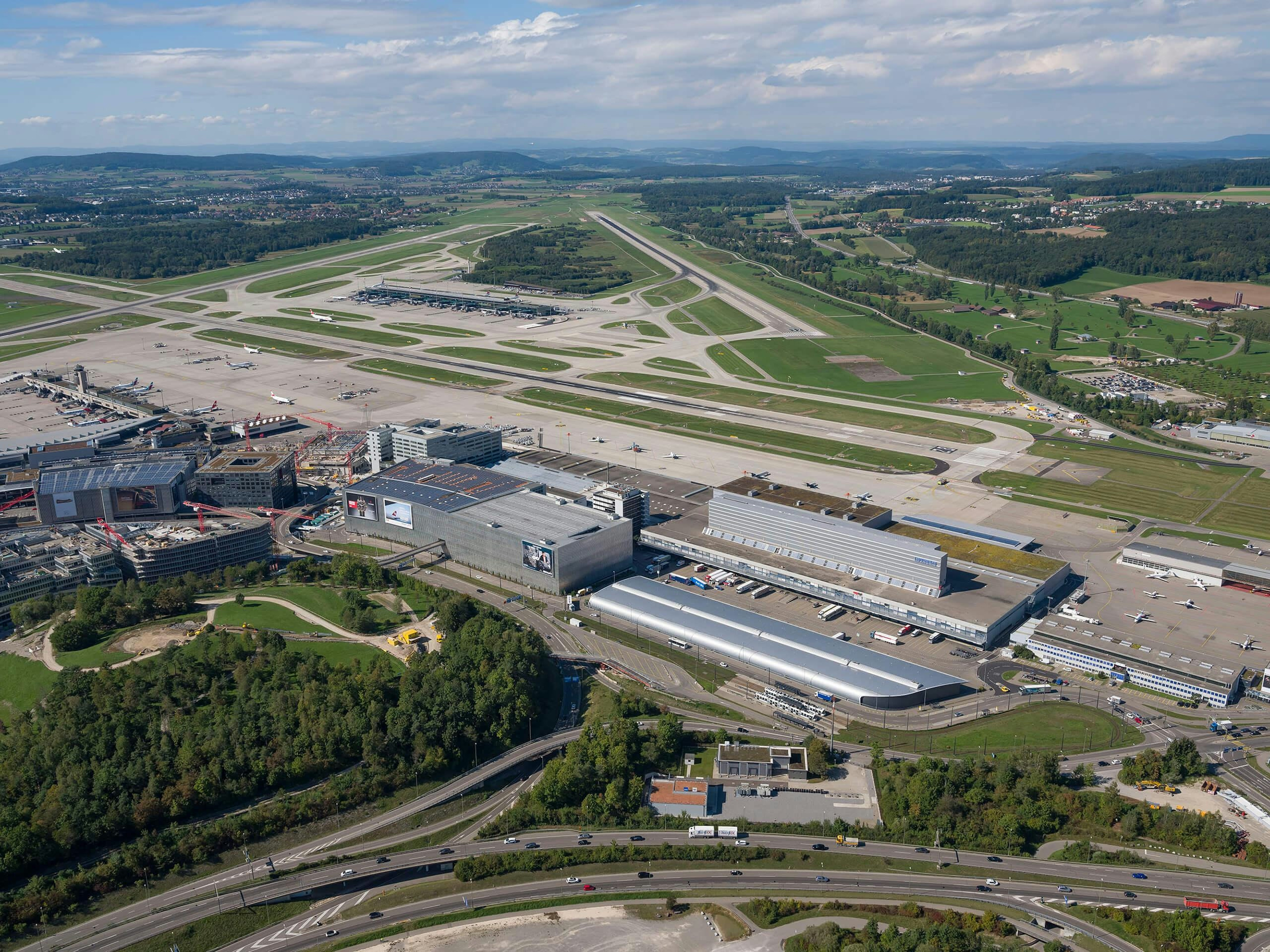
Consultation Begins on Zurich Runway Extension for Safety Improvements
Addressing Safety Concerns at Zurich Airport
Switzerland’s Federal Office of Civil Aviation (FOCA) has initiated a public consultation on proposals to extend two runways at Zurich Airport, the country’s busiest air hub. The consultation aims to gather feedback on plans to lengthen runways 28 and 32, a measure designed to address persistent safety issues linked to the airport’s intersecting runway configuration and to enhance operational efficiency.
Zurich Airport currently operates three runways: 16/34 and 10/28, which intersect, and the separate 14/32. The intersecting layout has raised safety concerns, notably following a serious incident in March 2011 when two Swiss Airbus A320 aircraft were cleared for take-off on intersecting runways within 46 seconds of each other, forcing one to abort at high speed. This event underscored the need for operational redesigns to reduce risks and improve ground movement coordination.
Proposed Extensions and Operational Benefits
The proposed extension of runway 32 is intended to enable most departing widebody aircraft to use this runway instead of runway 34, currently the airport’s longest. At present, widebody aircraft must taxi across runway 28 twice to reach runway 34, a process that increases the risk of runway incursions and lengthens taxi times. FOCA asserts that the extension would eliminate these crossings, streamline ground operations, and reduce delays.
Similarly, extending runway 28, Zurich’s shortest runway, aims to reduce the number of approaches diverted to runway 34 during adverse weather conditions. This adjustment is expected to stabilize flight operations and decrease night-time noise disturbances. FOCA emphasizes that these changes are designed to mitigate safety risks, simplify transitions between different operating modes, and will not affect the overall volume of air traffic at the airport.
Consultation Context and Stakeholder Perspectives
The consultation period, which commenced on 1 June and will last for one month, reflects Zurich’s commitment to aligning with international best practices in airport safety. Other major European airports, such as London Heathrow, face comparable challenges with intersecting runways and are also exploring expansion and safety upgrades to manage increasing traffic volumes.
Nonetheless, the proposed runway extensions are anticipated to encounter scrutiny from local communities concerned about environmental impacts, noise pollution, and the financial implications of the project. Aviation industry stakeholders and regulatory bodies are expected to conduct thorough evaluations of the plans, while other airports may observe Zurich’s approach as a potential model for enhancing safety at complex facilities.
FOCA reiterates that the primary objective is to improve safety and operational reliability, particularly under adverse weather conditions, while minimizing disruption to surrounding communities. The feedback received during the consultation will inform the subsequent stages of the approval process for the runway extension proposals.

Florida’s Aerospace Sector Expands Beyond Launches with Aeras Aviation Growth in Hialeah
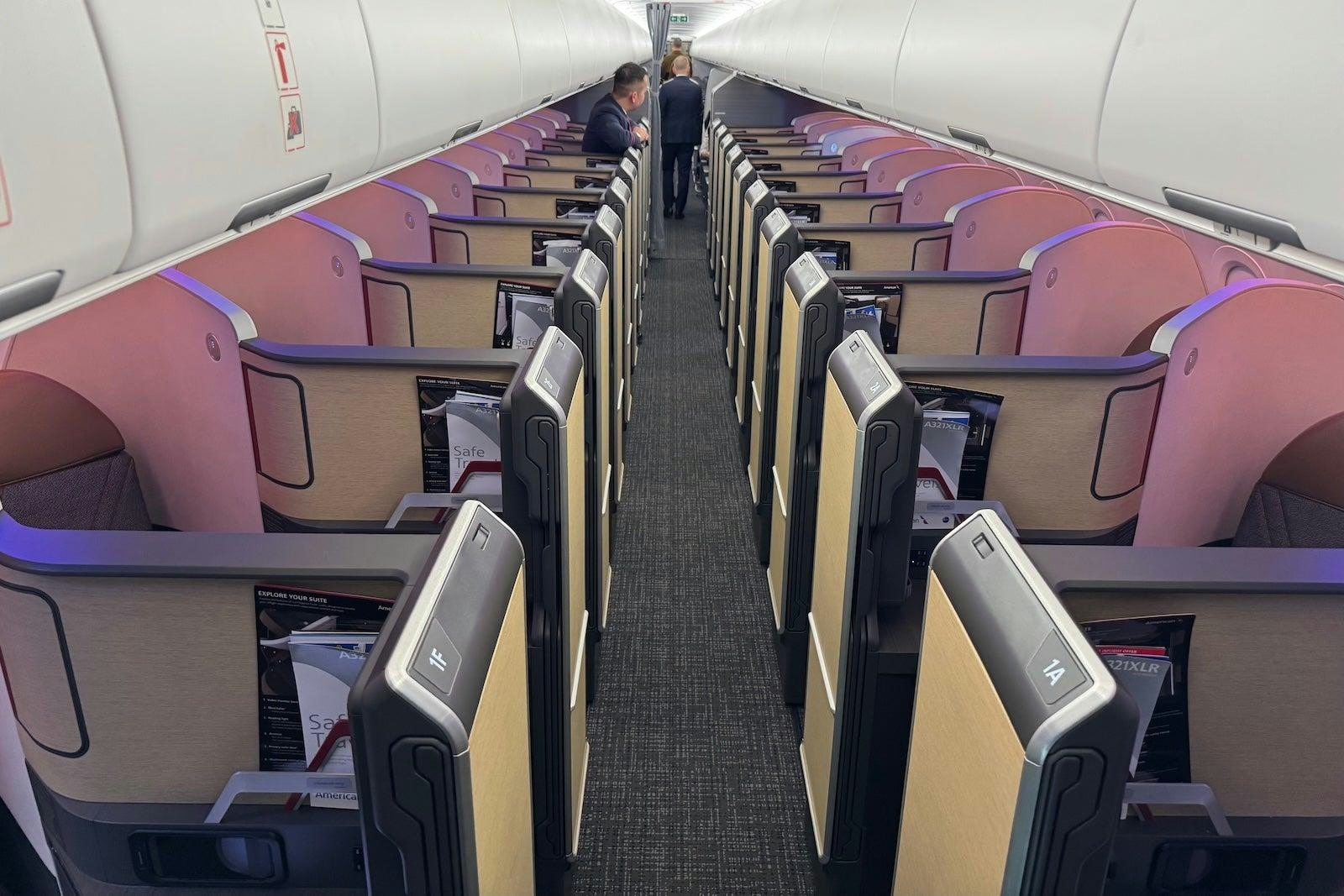
American Airlines to Launch A321XLR Flights to Amsterdam, Nice, Porto, and Vienna in 2027

Wing to Test Nvidia AI in Delivery Drones
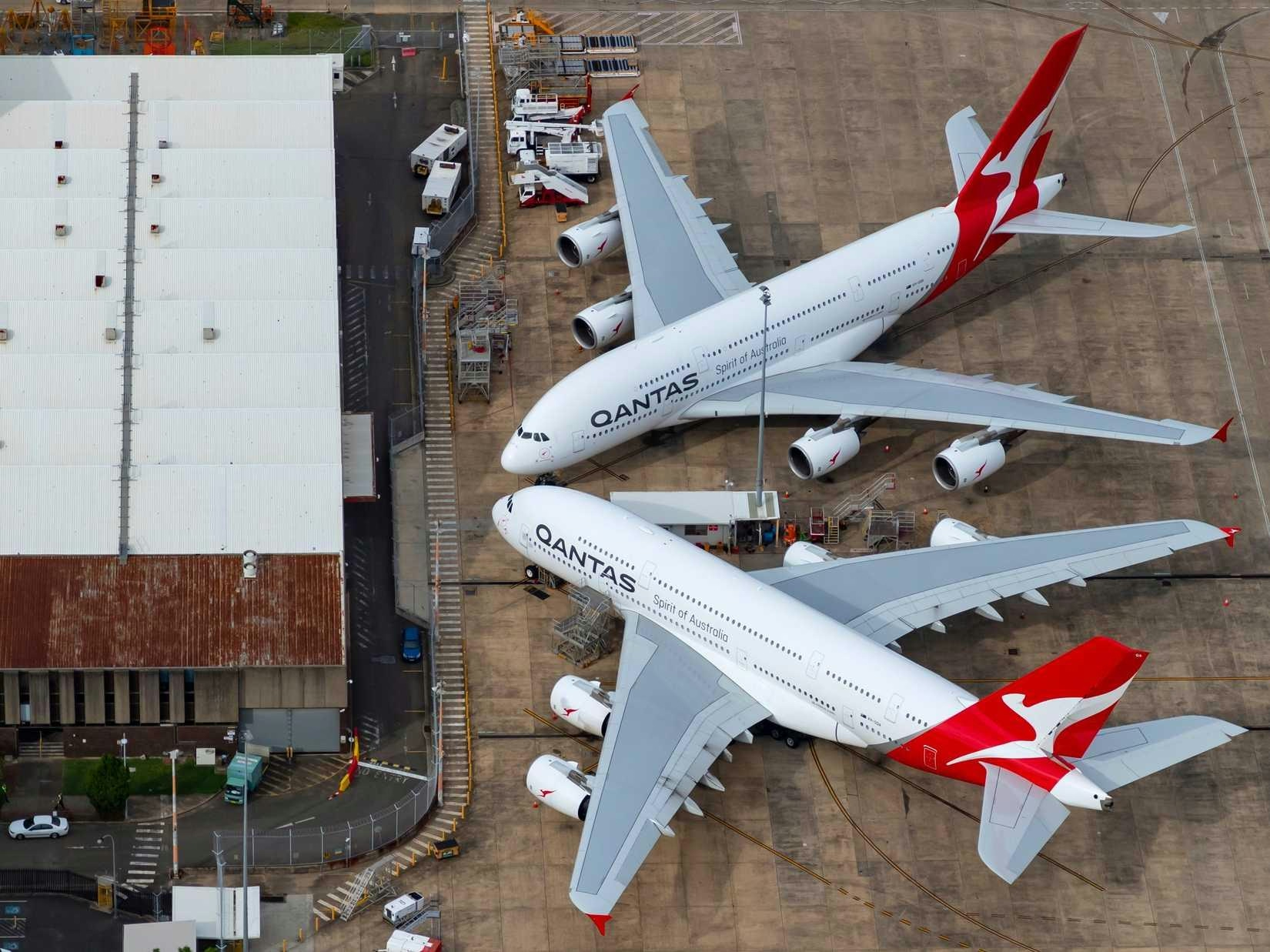
Qantas Advances A380 Retirement, Plans to Expand A350 and 787 Fleet
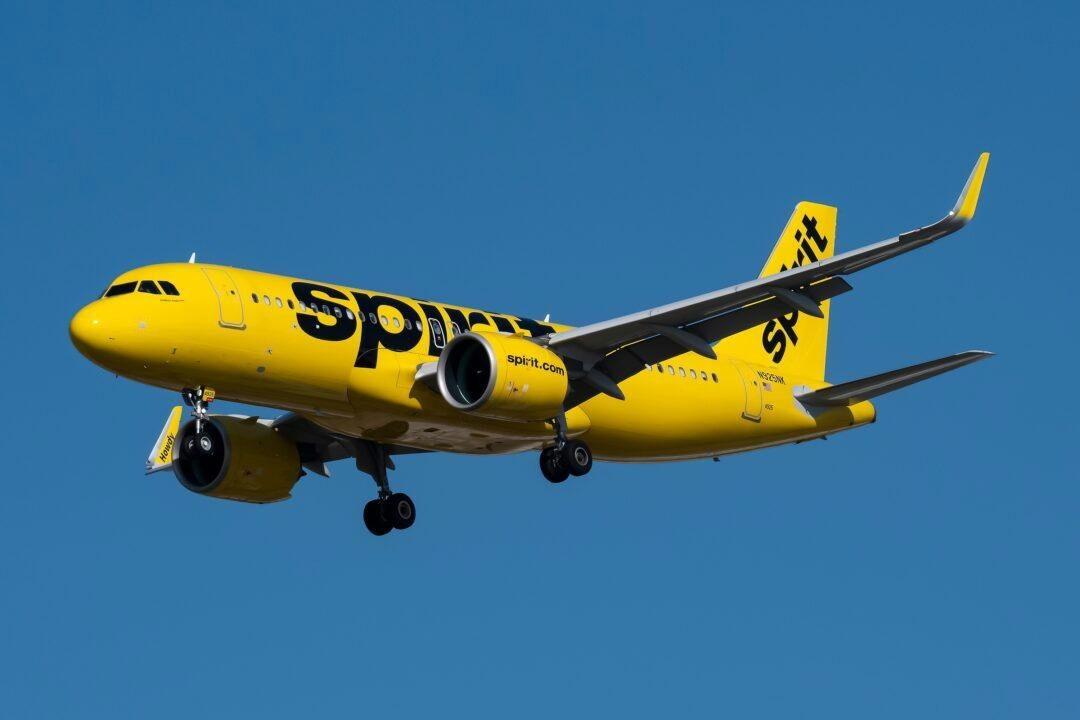
Three Months After Spirit Airlines Bankruptcy: What Happened to the Engines?
Instructional Flight Cut Short by Carburetor Icing

Ornge Adopts Ramco Platform for Paperless Maintenance
Google Paid $10 Million for Spirit Airlines Data, Raising Concerns for CIOs

Clark Develops Solutions for Future Tech Supply Chains

Texas Firm Post Oak Group to Lead FlyOnE Funding Round
