
Zet AI‑inzichten om in gerichte actie

Trending
Categories
Conversion of Passenger Plane to Cargo Aircraft Underway
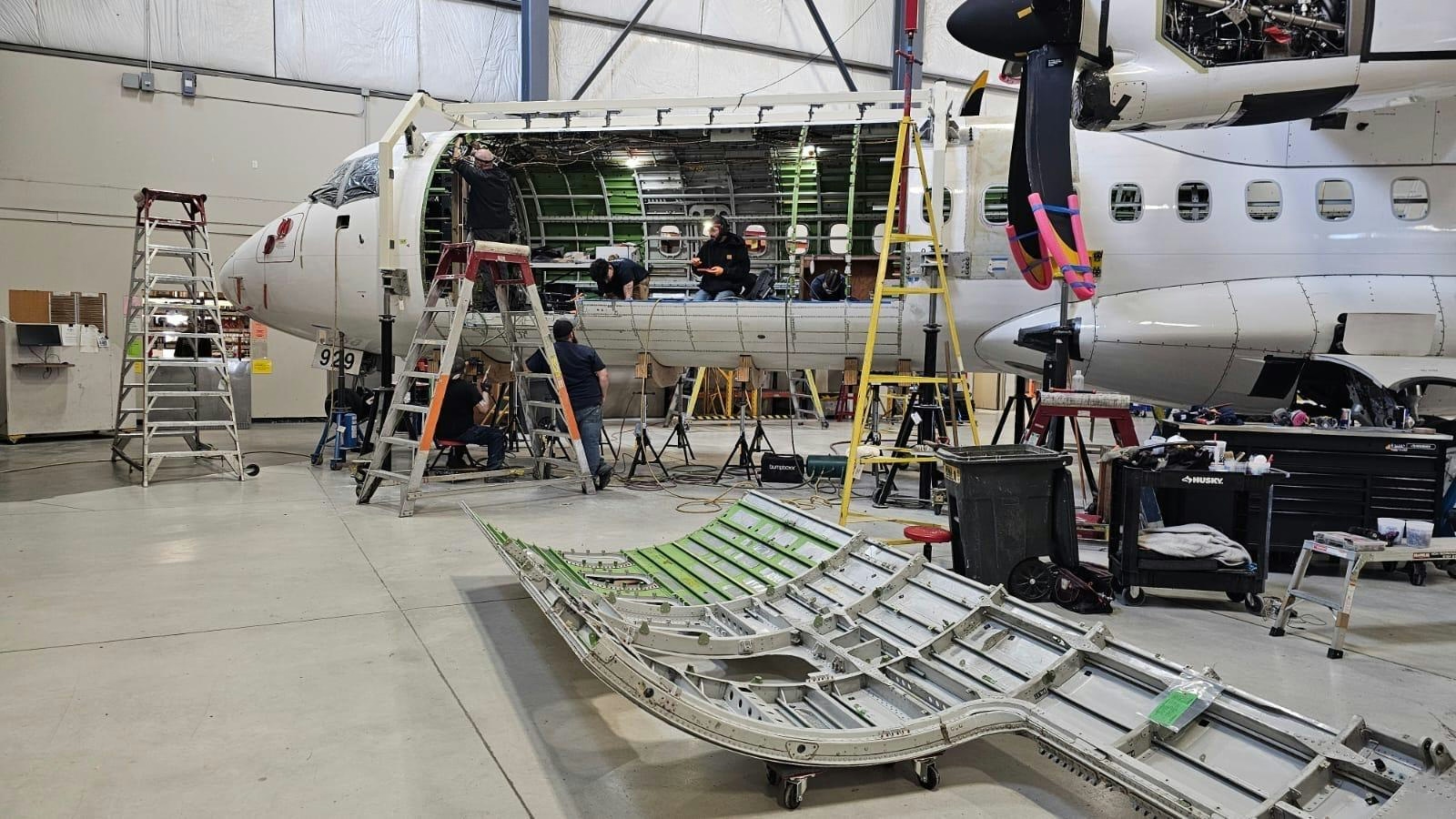
Conversion of Passenger Plane to Cargo Aircraft Underway at Incheon
A significant initiative to transform aging passenger aircraft into cargo freighters is currently in progress at a state-of-the-art facility located behind Incheon International Airport. This development marks a pivotal shift in South Korea’s aviation sector, as the country accelerates the transfer of advanced aircraft remodeling technology from Israel Aerospace Industries (IAI). The first converted aircraft is anticipated to be completed within the year, underscoring the growing emphasis on cargo operations amid evolving market demands.
Advanced Facility and Strategic Partnerships
The conversion project centers on a Boeing B777-300ER, the first passenger plane scheduled for modification, which is expected to arrive at the dedicated facility northwest of Passenger Terminal 2 in June. This effort follows a 2021 memorandum of agreement between IAI, Sharp Technics K (STK), and the Incheon International Airport Corporation to establish a specialized cargo conversion center. The facility, completed in October last year, covers more than 69,000 square meters and comprises two hangars alongside auxiliary buildings. Currently, one hangar is utilized by STK for aircraft maintenance, while the second is slated to commence cargo conversion operations next year.
IKCS, the sole company worldwide certified to convert Boeing cargo aircraft, secured the contract for the project, with STK responsible for the hands-on renovation work. This collaboration is expected to enhance South Korea’s aviation parts industry by enabling local companies to directly manage parts specifications and supply chains, thereby fostering greater domestic expertise and economic activity.
Industry Outlook and Challenges
IKCS plans to convert two B777-300ERs in the first half of this year, with a third aircraft scheduled for conversion by the end of 2024. The company aims to increase its capacity to four aircraft annually starting next year and to secure six orders per year by 2028. Despite these ambitious targets, the project faces significant challenges. The International Air Transport Association (IATA) has highlighted concerns regarding supply chain disruptions and manufacturing delays, particularly linked to performance issues among original equipment manufacturers (OEMs) and a growing backlog of aircraft orders. These factors could potentially affect the timely delivery of converted freighters.
Nevertheless, demand for converted cargo aircraft remains robust. Recent agreements, such as the deal between EFW and Asia Pacific Aviation Leasing Group, demonstrate the strong market appetite for freighter conversions as a solution to cargo capacity constraints. Competitors are also adapting to these market dynamics; for instance, LATAM Cargo has issued warnings about potential capacity shortages due to slower deliveries of new aircraft, prompting airlines to increasingly consider fleet modernization and conversion projects.
Economic Impact and Future Prospects
The partnership with IAI represents a transformative opportunity for domestic maintenance, repair, and overhaul (MRO) providers, allowing them to expand beyond traditional maintenance services into high-value aircraft renovation. Incheon International Airport has set an ambitious target to convert 92 aging aircraft by 2040, with each conversion requiring an investment of approximately 11 billion won. The initiative aims to generate cumulative exports valued at 1 trillion won and create around 2,100 new jobs in the sector.
An official from Incheon International Airport emphasized the strategic importance of the project, stating, “If the renovation project begins in earnest, it will be of great help in securing national competitiveness through technological advancement.” This statement reflects the broader national aspirations tied to the development of advanced aviation capabilities and the strengthening of South Korea’s position in the global aerospace industry.

Etihad Airways Suspends Airbus A380 Flights on Key Route

Aditya Birla Group Seeks Approval for Aircraft Leasing in GIFT City

Qatar Airways Highlights Innovation and Connectivity at Arabian Travel Market 2026

Hong Kong's Five-Year Plan Includes Andrew Fan's Aircraft Parts Processing Hub Proposal

ACIA Aero Leasing Delivers ATR72-600 to Air Nostrum

RTX Appoints Jill Albertelli as Head of Pratt & Whitney

TAT Technologies Joins Beyond Aero Hydrogen Aircraft Program

AURAK Study Highlights Barriers to Air Taxi Adoption in Emerging Economies

Xiamen Air Selects Altitude for 787 Maintenance at Heathrow

Etihad and Swissport Extend Global Partnership
