
Zet AI‑inzichten om in gerichte actie

Trending
Categories
Data Centers Adopt Aviation Engines for Power Generation
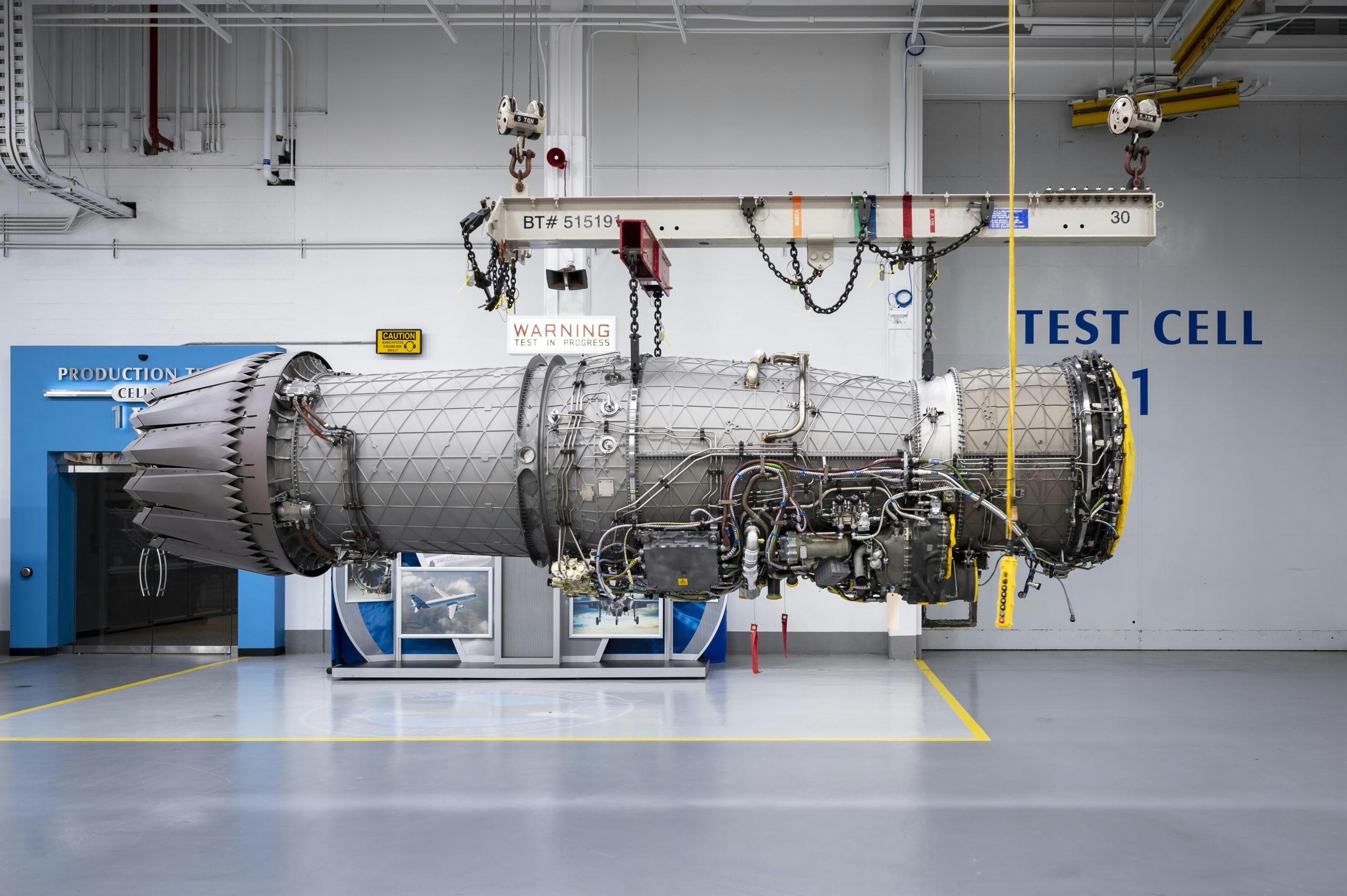
Data Centers Turn to Aviation Engines to Address Power Shortages
As the demand for larger data centers escalates amid the generative AI boom, developers are encountering a significant power supply challenge. Traditional approaches, such as connecting to the electrical grid or building onsite power plants, are increasingly hindered by prolonged delays in acquiring gas turbines or securing grid access. In response, some operators have turned to an unconventional alternative: repurposed aviation engines.
Aeroderivative Turbines as a Temporary Solution
At the Data Center World Power show in San Antonio this October, ProEnergy, a natural-gas power provider, presented its PE6000 gas turbines, which are derived from aircraft engines, as a temporary solution for data centers struggling to obtain reliable power. Landon Tessmer, Vice President of Commercial Operations at ProEnergy, explained that these aeroderivative turbines are being deployed to supply electricity during both the construction phase and the initial years of operation. Once grid power becomes accessible, the turbines can be reassigned to backup roles, supplement the grid, or be sold to local utilities.
Tessmer noted, “We have sold 21 gas turbines for two data-center projects amounting to more than 1 gigawatt (GW). Both projects are expected to provide bridging power for five to seven years, which is when they expect to have grid interconnection and no longer need permanent behind-the-meter generation.”
Aeroderivative gas turbines, adapted from proven aircraft engines by manufacturers such as GE Vernova and Siemens Energy, offer advantages over traditional heavy-frame turbines. They are lighter, more compact, and easier to maintain. For instance, GE Vernova’s LM6000, based on the CF6-80C2 jet engine, underwent extensive modifications for stationary power generation, including expanded turbine sections, new mounting structures, and controls optimized for natural gas use and reduced emissions.
Supply Constraints and Industry Challenges
Despite their benefits, the surge in demand for these turbines has created significant supply constraints. Paul Browning, CEO of Generative Power Solutions and former head of GE Power & Water, warned, “There just aren’t enough gas turbines to go around and the problem is probably going to get worse.” Current wait times for popular models like the LM6000 or Siemens Energy’s SGT-A35 range from three to five years, with some facing even longer backlogs. In contrast, ProEnergy claims its PE6000 units can be delivered as early as 2027.
Adopting aviation engines for data center power generation also presents notable challenges. The initial capital investment is substantial, and these turbines require specialized maintenance. Regulatory hurdles may further complicate deployment, potentially increasing operational costs for data center operators and, consequently, electricity prices. These factors could encourage competitors to explore alternative, more cost-effective power solutions or invest in research aimed at improving the efficiency and affordability of aviation engine technology.
The broader data center market is also grappling with concerns about a potential AI bubble, which could reduce future power demand and affect the long-term viability of aviation engine adoption. As the industry navigates these uncertainties, the use of repurposed aviation engines stands as both an innovative interim measure and a complex risk in the evolving landscape of data center power generation.

Etihad Airways Suspends Airbus A380 Flights on Key Route

Aditya Birla Group Seeks Approval for Aircraft Leasing in GIFT City

Qatar Airways Highlights Innovation and Connectivity at Arabian Travel Market 2026

Hong Kong's Five-Year Plan Includes Andrew Fan's Aircraft Parts Processing Hub Proposal

ACIA Aero Leasing Delivers ATR72-600 to Air Nostrum

RTX Appoints Jill Albertelli as Head of Pratt & Whitney

TAT Technologies Joins Beyond Aero Hydrogen Aircraft Program

AURAK Study Highlights Barriers to Air Taxi Adoption in Emerging Economies

Xiamen Air Selects Altitude for 787 Maintenance at Heathrow

Etihad and Swissport Extend Global Partnership
