
Zet AI‑inzichten om in gerichte actie

Trending
Categories
Delta Air Lines Prohibits Personal AI Smart Glasses for Flight Attendants
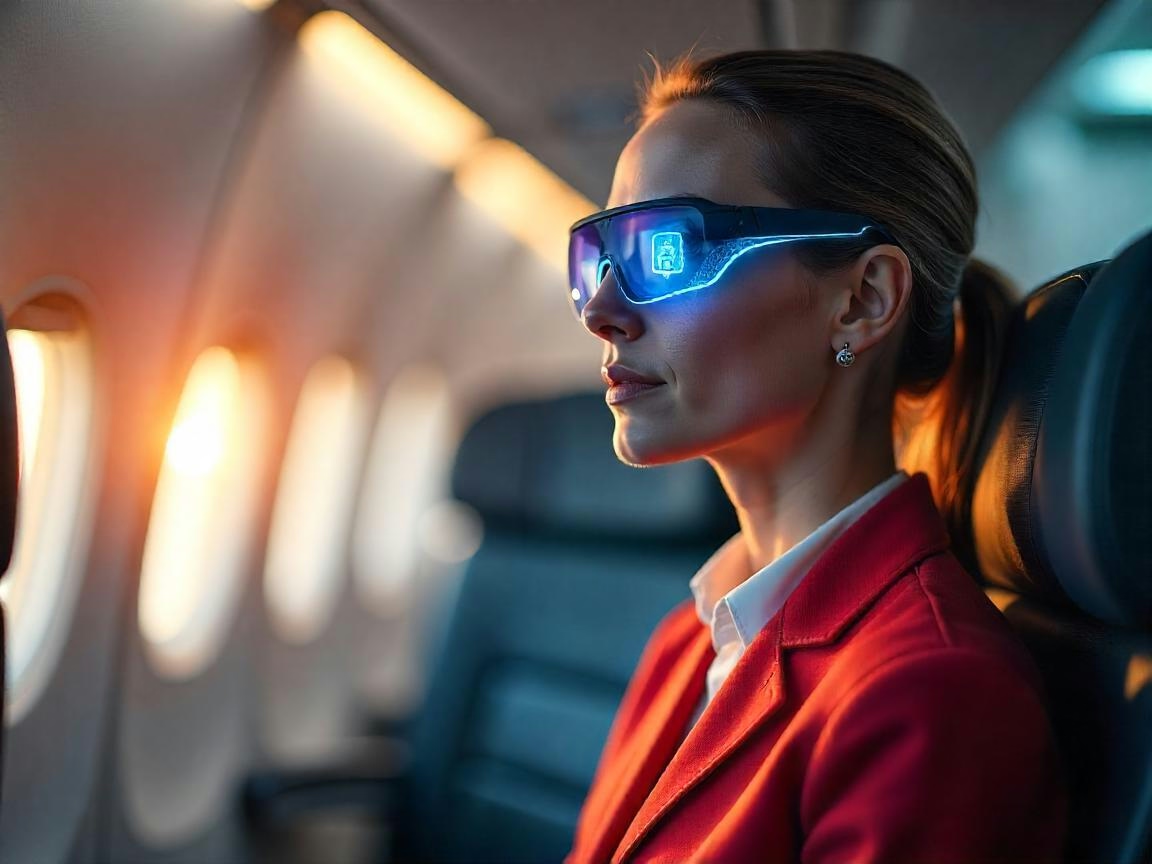
Delta Air Lines Bans Personal AI Smart Glasses for Flight Attendants
Delta Air Lines has announced a new policy prohibiting flight attendants from using personal AI-powered smart glasses while on duty. This measure, effective immediately across the airline’s global operations, underscores Delta’s commitment to safeguarding passenger privacy and maintaining operational safety amid the rapid proliferation of wearable technology. The decision reflects mounting concerns within the aviation sector regarding data security and the potential for unauthorized recording devices in the cabin environment.
Privacy and Security Concerns Amid Technological Advances
Smart glasses, including popular models such as Apple Vision Pro and Meta Ray-Ban, as well as emerging devices from companies like TDK and Xiaomi, are increasingly popular for their real-time AI assistance, voice command functionality, facial recognition, and discreet video recording capabilities. While these features offer promising enhancements to workflow and customer service, they also raise significant challenges related to privacy, data protection, and compliance with diverse international regulations. These issues are particularly acute on international flights, where legal standards vary widely.
Delta’s policy emerges as the aviation industry continues to wrestle with integrating new technologies without compromising safety or passenger trust. Although airlines such as Air New Zealand and Virgin Atlantic have experimented with augmented reality wearables to improve crew efficiency, these initiatives have not led to widespread adoption. By formally banning personal smart glasses for frontline staff, Delta positions itself as one of the first major carriers to establish a clear boundary on the use of such devices, setting a precedent for technology governance in aviation.
Balancing Innovation with Passenger Trust
The airline’s stance has sparked debate among technology advocates and industry observers. Proponents argue that smart glasses represent a significant opportunity for inflight service innovation, enabling hands-free translation, instant access to passenger information, and more efficient crew workflows. Conversely, many passengers express unease about the possibility of being recorded without their consent, raising important questions about comfort and privacy during flights. Delta’s policy seeks to navigate these competing interests by prioritizing the safety and trust of both passengers and crew members.
Market reactions to the ban have been mixed. Some industry participants view Delta’s approach as a prudent safeguard against privacy risks, while others caution that it may hinder the adoption of potentially transformative tools. Competitor airlines may respond in varied ways, either by implementing similar restrictions to address privacy concerns or by selectively embracing smart glasses to differentiate their service offerings and appeal to technology-savvy travelers.
Looking forward, Delta has indicated openness to introducing airline-approved wearable technology in the future, contingent upon strict adherence to privacy protections and regulatory requirements. As the market for smart glasses continues to expand, airlines will face the complex task of balancing the benefits of these devices with the imperative to protect passenger rights and ensure safety.
Delta’s cautious and transparent policy highlights the intricate challenges of incorporating cutting-edge technology into aviation. The airline’s decision reinforces the principle that passenger trust, privacy, and safety must remain paramount as the industry evolves.

Etihad Airways Suspends Airbus A380 Flights on Key Route

Aditya Birla Group Seeks Approval for Aircraft Leasing in GIFT City

Qatar Airways Highlights Innovation and Connectivity at Arabian Travel Market 2026

Hong Kong's Five-Year Plan Includes Andrew Fan's Aircraft Parts Processing Hub Proposal

ACIA Aero Leasing Delivers ATR72-600 to Air Nostrum

RTX Appoints Jill Albertelli as Head of Pratt & Whitney

TAT Technologies Joins Beyond Aero Hydrogen Aircraft Program

AURAK Study Highlights Barriers to Air Taxi Adoption in Emerging Economies

Xiamen Air Selects Altitude for 787 Maintenance at Heathrow

Etihad and Swissport Extend Global Partnership
