
Zet AI‑inzichten om in gerichte actie

Trending
Categories
Does the McDonnell Douglas MD-11 Require a Flight Engineer?
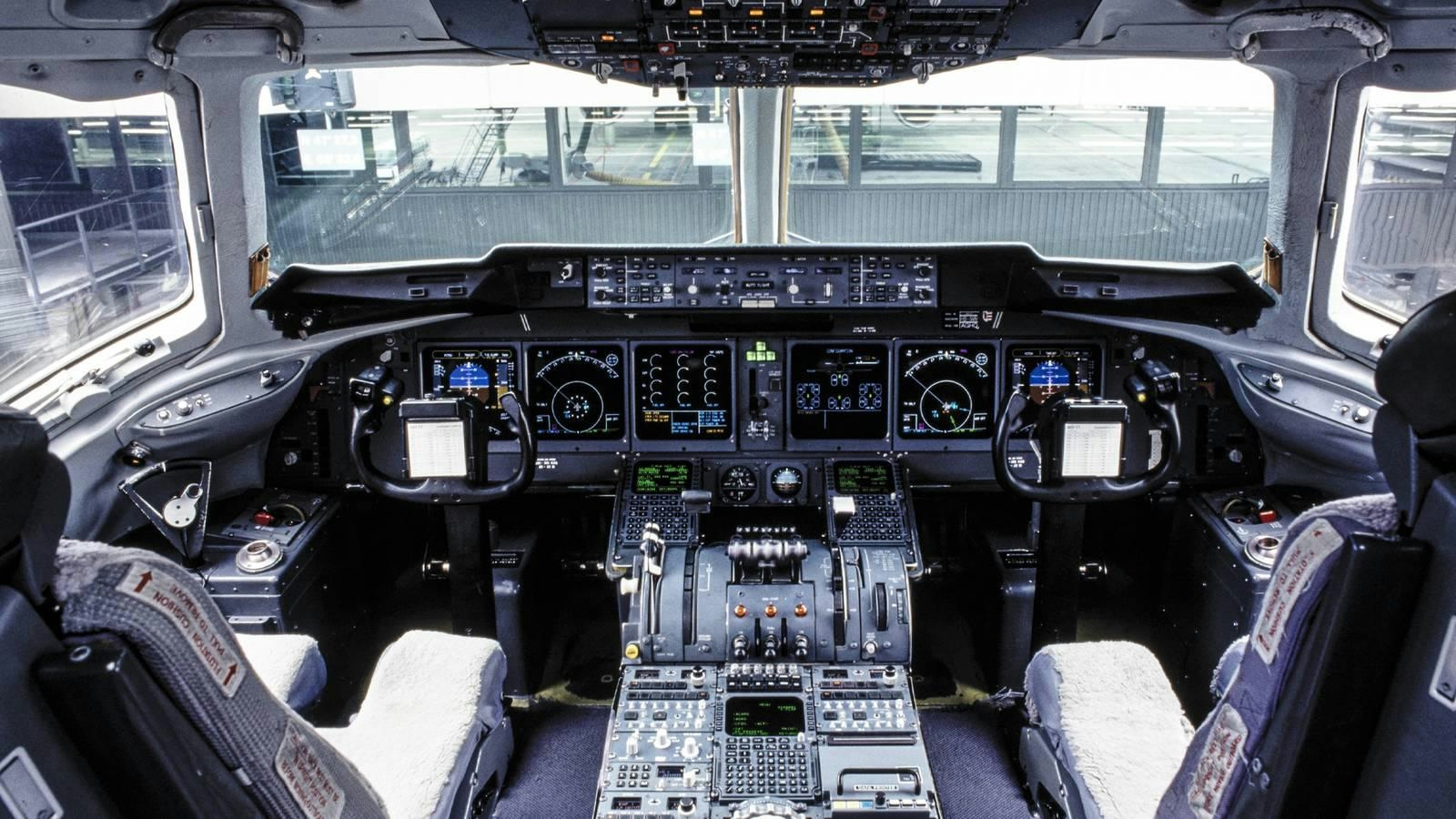
Does the McDonnell Douglas MD-11 Require a Flight Engineer?
Transition from Three-Person to Two-Person Cockpit
The McDonnell Douglas MD-11 was designed to operate with a two-person cockpit crew, a departure from its predecessor, the DC-10, which required a dedicated flight engineer. This change was made possible through the integration of advanced automation and digital systems that streamlined the monitoring and management of the aircraft’s complex systems. By eliminating the need for a flight engineer, airlines achieved significant reductions in both operating and training costs, as the cockpit crew was reduced from three to two members.
The Role of the Flight Engineer on Earlier Aircraft
On aircraft such as the DC-10, the flight engineer—also known as the Second Officer—played a critical role. Positioned at a large side-facing panel filled with numerous switches and gauges, the flight engineer was responsible for managing electrical power, hydraulic pressures, and fuel balancing. This crew member continuously monitored engine health, adjusted settings to optimize efficiency, and was essential during emergencies by reading checklists, diagnosing issues, and occasionally performing in-flight repairs. Additionally, the flight engineer controlled cabin pressurization and temperature by manually regulating engine bleed air, ensuring passenger comfort during climbs and descents. As the only crew member not directly involved in flying the aircraft, the flight engineer provided an important safety layer, often identifying errors or anomalies that pilots might overlook during periods of high workload.
Before each flight, flight engineers conducted detailed walk-around inspections to detect leaks, structural damage, or mechanical wear. They also performed complex manual calculations for takeoff weights and speeds using charts and slide rules. Pilots depended on the flight engineer for system updates and status reports, as their own visual scans could not cover the extensive array of gauges and indicators.
Automation and Digital Integration in the MD-11
The MD-11 revolutionized cockpit operations by incorporating the flight engineer’s responsibilities into automated digital systems. Its fully digital glass cockpit, equipped with six cathode-ray tube (CRT) displays, replaced the traditional wall of analog dials. Pilots gained access to comprehensive system diagrams—including fuel, hydraulics, and electrical systems—on centralized displays, eliminating the need to interpret dozens of physical gauges. The aircraft’s onboard computers not only monitored these systems but also executed many normal, abnormal, and emergency checklist functions automatically, thereby reducing pilot workload and enhancing overall safety.
The effectiveness of this automation was demonstrated by airlines such as FedEx Express, which retrofitted older DC-10s with MD-11 avionics, removing the requirement for a flight engineer even on legacy aircraft. The MD-11’s design established a new benchmark for cockpit efficiency and safety, reflecting broader trends in aviation technology.
Broader Industry Context
While the MD-11 no longer requires a flight engineer, technical challenges persist in other aircraft models. For instance, recent delays in Boeing 737 Max deliveries have been linked to wiring issues, although these problems do not affect the MD-11. The aviation industry continues to evolve globally, with emerging markets such as Brazil facing structural barriers, as noted by Azul’s CEO. Meanwhile, companies like Ascendance Flight Technologies are advancing innovative vertical takeoff and landing (VTOL) aircraft, targeting first flights by 2026. Industry observers are also closely monitoring Boeing’s stock performance, particularly in relation to 737 Max production and free cash flow, while adjacent sectors such as rapid self-healing gels are experiencing notable growth.

Etihad Airways Suspends Airbus A380 Flights on Key Route

Aditya Birla Group Seeks Approval for Aircraft Leasing in GIFT City

Qatar Airways Highlights Innovation and Connectivity at Arabian Travel Market 2026

Hong Kong's Five-Year Plan Includes Andrew Fan's Aircraft Parts Processing Hub Proposal

ACIA Aero Leasing Delivers ATR72-600 to Air Nostrum

RTX Appoints Jill Albertelli as Head of Pratt & Whitney

TAT Technologies Joins Beyond Aero Hydrogen Aircraft Program

AURAK Study Highlights Barriers to Air Taxi Adoption in Emerging Economies

Xiamen Air Selects Altitude for 787 Maintenance at Heathrow

Etihad and Swissport Extend Global Partnership
