
Zet AI‑inzichten om in gerichte actie

Trending
Categories
Drone Package Delivery Under Part 135 Regulations
Navigating Regulatory and Community Challenges in Drone Package Delivery Under Part 135
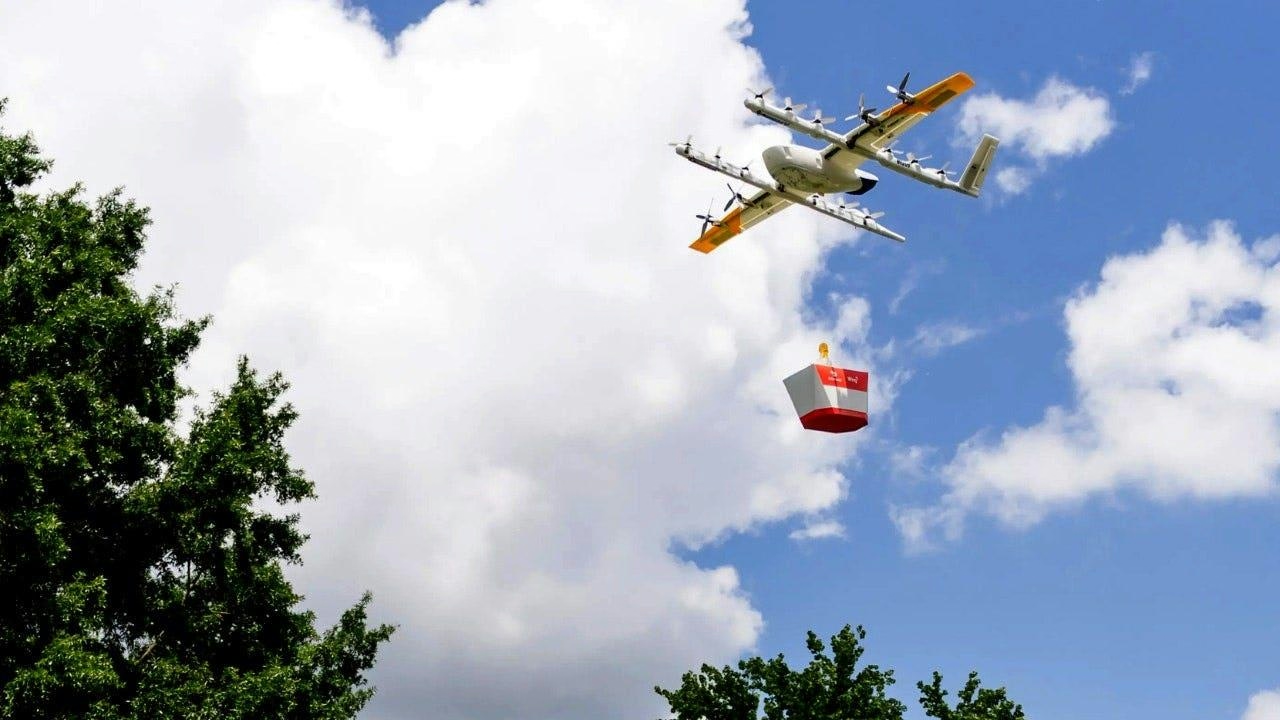
Drone package delivery in the United States operates within a multifaceted regulatory framework that requires companies to reconcile federal, state, and local mandates while addressing environmental and community concerns. Central to this framework are the Federal Aviation Administration’s (FAA) Part 135 regulations, which govern commercial air carrier operations, including those conducted by unmanned aerial systems. To legally deliver packages by drone, operators must secure a Part 135 Air Carrier Certificate, obtain necessary airspace authorizations, and comply with environmental statutes such as the National Environmental Policy Act (NEPA).
Regulatory Compliance and Certification Process
The FAA’s Part 135 certification process is rigorous and consists of five distinct phases designed to ensure operational safety and regulatory adherence. A critical component of this process involves obtaining exemptions or waivers for operations beyond visual line of sight (BVLOS), a capability essential for efficient and scalable drone delivery services. The FAA issues various types of Part 135 certificates, including Single-Pilot and Single Pilot in Command certificates, each imposing specific restrictions on pilot numbers and aircraft size. In addition to federal requirements, operators must comply with local land use regulations, zoning laws, and setback requirements, particularly those aimed at minimizing noise impacts near sensitive areas, before establishing distribution hubs.
Environmental Stewardship and Community Engagement
Environmental considerations play a pivotal role in drone delivery operations. Under NEPA, operators are obligated to assess and mitigate potential adverse effects such as noise pollution, disruption to wildlife habitats, and impacts on historic or culturally significant sites. Mitigation strategies may involve limiting flight frequency, creating buffer zones around sensitive wildlife areas—such as bald eagle nesting sites—and situating distribution hubs away from residential neighborhoods and historic districts. Even when drone noise levels fall below NEPA’s threshold for significant impact, operators are expected to proactively address community concerns.
Engagement with local communities is equally important. Operators must provide clear communication regarding proposed drone activities and respond to public inquiries. While the FAA facilitates public involvement during NEPA reviews, drone companies are also responsible for coordinating with local governments to secure necessary approvals and maintain transparency. Public acceptance remains a considerable challenge, as residents often express apprehension about increased drone traffic, noise, and potential disturbances.
Industry Challenges and Competitive Dynamics
Beyond regulatory and community hurdles, the drone delivery sector faces technological and societal challenges. The development and deployment of reliable Detect-and-Avoid systems, which are critical for safe BVLOS operations, remain ongoing and represent a significant barrier to widespread adoption. Public concerns related to privacy, noise, and safety further complicate efforts to gain broad acceptance.
The competitive landscape is intensifying, with major corporations such as Walmart and Alphabet-owned Wing expanding their drone delivery initiatives. These companies are scaling operations and investing in community outreach programs to address public concerns and foster acceptance. The rapid evolution of the market compels operators not only to meet stringent regulatory standards but also to actively engage with communities to ensure the sustainable growth of drone delivery services.
Conclusion
As drone package delivery expands under the auspices of Part 135 regulations, operators must successfully navigate a complex interplay of certification requirements, environmental responsibilities, and community relations. The future viability of this emerging sector will depend on a balanced approach that integrates regulatory compliance, technological advancement, and the cultivation of public trust.

Etihad and Swissport Extend Global Partnership

Sepehran Airlines B737 Returns to Mashhad After Tyre and Engine Issues

Etihad Deploys Widebody Fleet to Meet Strong Demand

Korean Air Finalizes $36.2 Billion Deal with Boeing

Australia’s RFDS Queensland Section Orders Six King Air 260Cs

Korean Air Finalizes Order for 103 Boeing Jets and Engines

Embraer E195-E2 Features Distinctive Engine Placement Among Regional Jets

What Passengers Can Expect on Boeing’s New 777X Jet

How Ethiopian Airlines Became Africa’s Leading Carrier Amid Gulf Competition

Joby Aviation Extends Autonomous Flight Capabilities with Cross-Country Tour
