Afbeelding

AeroGenie — Uw intelligente copiloot.

Vraag wat je wilt. Analyseer alles. Handel onmiddellijk.

Trending

Categories

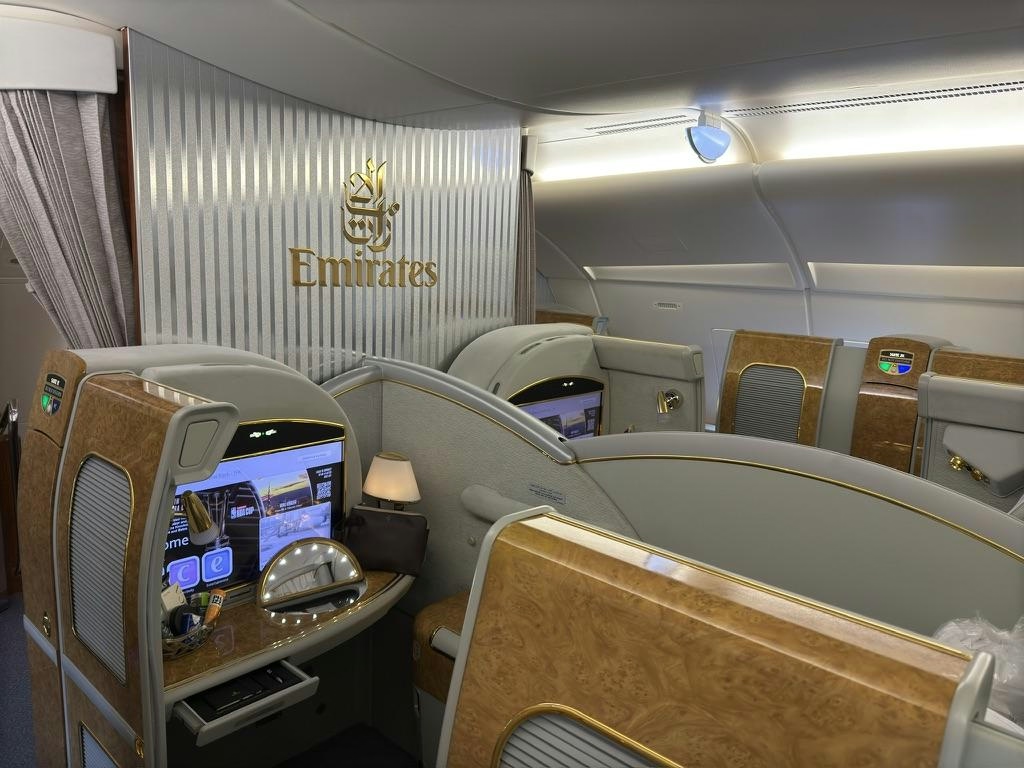
Emirates A380 Serves Five U.S. Airports
December 2, 2025By ePlane AI
Emirates A380 Serves Five U.S. Airports
0
0
Emirates
Airbus A380
U.S. Airports

Emirates A380 Expands Presence Across Five Major U.S. Airports

The Airbus A380, renowned as one of the most iconic widebody aircraft in commercial aviation, was originally designed to serve high-density, long-haul routes from major global hubs. Despite the initial enthusiasm surrounding its debut, the superjumbo’s considerable size and elevated operating costs posed challenges for many airlines, particularly as the industry shifted toward more fuel-efficient twin-engine jets. Production delays and changing market conditions led several carriers to cancel their orders, culminating in Airbus’s decision to cease A380 manufacturing in 2021. Today, only a select few airlines continue to operate the aircraft, with Emirates emerging as the largest global operator of the A380.

Emirates, the United Arab Emirates’ flag carrier, was the launch customer for the A380 program in 2000, initially ordering five aircraft with options for an additional five. Over time, the airline significantly expanded its fleet, making the A380 a central component of its long-haul network. Currently, Emirates operates 118 A380s, deploying them on high-demand routes spanning Europe, Africa, Asia, and the United States.

Emirates’ Growing U.S. A380 Network

The United States remains a vital market for Emirates, which has maintained a strong presence there for more than two decades. The airline now operates the A380 on routes from Dubai to five major U.S. airports: Washington Dulles International, Houston George Bush Intercontinental, New York John F. Kennedy International (JFK), Los Angeles International, and San Francisco International. Most of these routes feature a daily A380 departure, with New York JFK receiving two daily flights. Emirates plans to sustain these services through at least the first quarter of next year.

Emirates’ inaugural U.S. A380 flight was to JFK, which remained its sole American A380 destination until 2013, when Los Angeles was added. Houston and San Francisco followed in 2014. Notably, the Houston route is now the only daily A380 operation in a U.S. market that no longer sees regular superjumbo flights from other carriers. This service, launched in 2007 with a Boeing 777-200LR, introduced the A380 in December 2014, although the aircraft type was temporarily replaced by the 777 between 2016 and 2018.

In addition to these routes, Emirates operates a significant fifth-freedom A380 service between Milan Malpensa and New York JFK. This route has grown in commercial importance and was upgraded from a 777 to an A380 as passenger demand increased.

Competitive Dynamics and Strategic Alliances

Emirates’ expansion of A380 services in the U.S. occurs amid intensifying competition within the transatlantic market. FlyDubai has announced ambitious growth plans, while recent remarks by United Airlines’ CEO regarding American Airlines have underscored the heightened rivalry among carriers. These developments have contributed to volatility in airline sector stocks, as reflected in the Skift Travel 200 index, which monitors the financial performance of nearly 200 travel companies.

In response to these evolving market conditions, Emirates and Air Canada have extended their strategic partnership through a major multi-year expansion agreement. This collaboration includes new routes connecting Canada and the United States, further enhancing Emirates’ North American network and competitive positioning.

As Emirates continues to deploy the A380 on key U.S. routes, its strategy underscores both the enduring appeal of the superjumbo and the shifting dynamics of international air travel.

More news
Why the Boeing 777X Has Unique Wingtips Compared to Other Widebodies

Why the Boeing 777X Has Unique Wingtips Compared to Other Widebodies

Why the Boeing 777X Features Unique Folding Wingtips The Boeing 777X, while appearing as a modern evolution of the long-standing 777 family that has transported nearly four billion passengers since 1995, distinguishes itself through a singular design innovation: its folding wingtips. Unlike any other commercial widebody aircraft, the 777X’s outer wing sections fold upward when the plane is on the ground, creating a distinctive visual during taxiing and gate operations. Addressing Practical Challenges with Folding Wingtips The primary motivation behind this design lies in reconciling aerodynamic efficiency with airport infrastructure limitations. The 777X boasts the largest wingspan ever installed on a commercial airliner, measuring 235 feet (71.8 meters) when fully extended. This expansive wingspan significantly enhances aerodynamic performance by increasing lift and reducing drag, which translates into up to 20% lower fuel consumption and emissions compared to earlier models. Such improvements make the aircraft more economical and environmentally sustainable for long-haul flights. However, the increased wingspan presents a logistical challenge. Aircraft with such dimensions typically fall into a higher airport compatibility category, necessitating costly upgrades to airport gates and taxiways. To circumvent this, Boeing engineered folding wingtips that reduce the wingspan to 212 feet (64.9 meters) while on the ground. This innovation allows the 777X to utilize existing airport infrastructure designed for its predecessors and the 787 Dreamliner, facilitating a smoother integration into airline fleets without extensive facility modifications. The Folding Mechanism and Operational Integration The folding wingtip system is both elegant and functional. Each wing’s outer segment is hinged to rotate upward during ground operations. This mechanism is engaged after landing and during taxiing, effectively reducing the aircraft’s footprint and easing maneuverability on the tarmac. Prior to takeoff, the wingtips are extended and securely locked, restoring the full wingspan necessary for optimal aerodynamic performance during flight. Implications for the Aviation Industry The introduction of folding wingtips on the 777X marks a significant advancement in commercial aircraft design. While the technology adds complexity and cost to manufacturing, the anticipated benefits in fuel efficiency and operational flexibility have garnered positive responses from airlines and industry experts alike. This innovation may prompt competitors to explore similar wingtip technologies to maintain market relevance. Boeing’s pioneering approach with the 777X could establish folding wingtips as a new standard for future widebody aircraft, potentially shaping design trends and operational practices across the aviation sector.
RCAA Enhances Aviation Expertise Through Partnership with JAA TO

RCAA Enhances Aviation Expertise Through Partnership with JAA TO

RCAA Enhances Aviation Expertise Through Partnership with JAA TO Strengthening Regulatory Capacity Through International Collaboration The Romanian Civil Aeronautical Authority (RCAA) has entered into a formal training partnership with the Netherlands-based JAA Training Organisation (JAA TO) to enhance its aviation regulatory expertise and invest in the professional development of its personnel. This two-year agreement, established following a productive meeting and state visit in Bucharest in August 2025, sets the foundation for closer cooperation between the two entities. Through this collaboration, RCAA will gain structured access to JAA TO’s comprehensive portfolio of specialized training programs. These courses encompass critical areas such as Safety Oversight, Airworthiness, Aerodromes, Aviation Security, and Safety Management Systems. The agreement was signed by Nicolae Stoica, Director General of RCAA, and Paula V. de Almeida, Chief Executive Officer of JAA TO, during JAA TO’s annual High-Level Training Workshop for ECAC Member States. Paula Vieira de Almeida, CEO of JAA TO, emphasized the significance of the partnership, stating, “This new agreement with the CAA marks an important step in expanding our cooperation with Romania. Supporting States and Aviation Authorities in strengthening regulatory expertise and institutional capacity remains central to JAA TO’s mission. We look forward to working closely with CAA Romania and contributing to the continued development of its aviation oversight capabilities.” Context and Implications for the Aviation Sector This partnership emerges amid a complex global aviation landscape, where authorities face evolving market dynamics and regulatory challenges. Industry leaders, such as Azul CEO John Rodgerson, have drawn attention to structural barriers and underdeveloped aviation markets in regions like Brazil, which also contend with a disproportionate share of global passenger lawsuits. These factors highlight the critical need for robust regulatory frameworks and continuous professional development within aviation authorities. Market responses to such initiatives vary. While some investors remain cautious due to persistent structural issues in certain regions, others recognize the potential for growth that enhanced regulatory expertise can unlock. Competitors in expanding markets, particularly in countries like Brazil, may similarly seek partnerships to strengthen their aviation oversight capabilities. For Romania, the agreement with JAA TO represents a strategic commitment to advancing regulatory capacity, improving oversight, and aligning with European and international aviation standards. By prioritizing advanced training and international cooperation, RCAA aims to address both current and emerging challenges in the aviation sector, thereby safeguarding safety and maintaining competitiveness on a global scale.
China Sets Five-Year Targets for C919 Production, New Engine Development, and Reduced Foreign Dependence

China Sets Five-Year Targets for C919 Production, New Engine Development, and Reduced Foreign Dependence

China Sets Ambitious Five-Year Targets for Aviation Industry Expansion China is intensifying its efforts to expand its domestic commercial aircraft industry by setting ambitious targets for the production of its C919 narrowbody jet, the development of new engines, and the reduction of reliance on foreign suppliers. This initiative, outlined in the forthcoming national five-year plan covering 2026 to 2030, also encompasses the C909 regional jet and the C929 widebody aircraft. It forms a central component of China’s broader strategy to challenge the longstanding dominance of Boeing and Airbus in the global aviation market. Strategic Objectives and Industry Focus The upcoming five-year plan, expected to be ratified by China’s top legislative body this week, aims to guide the country’s socio-economic and industrial development with a strong emphasis on the aerospace sector. Key objectives include increasing aircraft production capacity, strengthening domestic supply chains, and accelerating the certification and deployment of the CJ-1000 high-bypass turbofan engine, which is developed entirely within China. The plan further calls for the development of specialized aircraft variants, such as a high-plateau model tailored for operations at high-altitude airports where thinner air presents challenges to engine performance and lift. Industry experts highlight the critical nature of the next five years for the success of these aircraft programs and the deepening of component localization, particularly in engine manufacturing. Brian Yang Bo, a seasoned aviation consultant, remarked, “For the C919, the key words are output and supply chains. This is a candid admission of the challenges it has faced, and thus the focus is squarely on stabilizing and growing output.” The C919, produced by the Commercial Aircraft Corporation of China (Comac), entered domestic service in May 2023 and is widely regarded as the flagship of China’s aviation ambitions. Challenges and Global Market Dynamics Despite these ambitious plans, China’s aviation sector faces significant technological and market challenges. Developing widebody jets and advanced engines that can compete on a global scale remains a formidable hurdle. Investor skepticism has been evident, with stock prices of companies involved in the sector experiencing volatility amid doubts about China’s ability to meet its production and technological targets. Meanwhile, established aerospace manufacturers in the United States and Europe are responding by intensifying research and development efforts and forging strategic partnerships to protect their market positions. The five-year plan also addresses vulnerabilities exposed by recent global disruptions and geopolitical tensions. It underscores the importance of building resilient supply chains and reducing dependence on foreign technology and components. By prioritizing innovation and self-reliance, China aims to strengthen its position in the global aerospace industry. However, the path forward will require overcoming both technical challenges and competitive pressures in the international market. As China embarks on implementing this comprehensive five-year roadmap, the coming years will be pivotal in determining its ability to realize these ambitious goals and reshape the competitive dynamics of the global aviation sector.
Louisiana Launches New Pilot Program to Advance Aviation Innovation

Louisiana Launches New Pilot Program to Advance Aviation Innovation

Louisiana Launches New Pilot Program to Advance Aviation Innovation A New Frontier in Aviation Testing Louisiana is poised to become a pivotal hub for the future of aviation with the inauguration of a pilot program at Houma-Terrebonne Airport. The Advanced Air Mobility and Electric Vertical Takeoff and Landing (eVTOL) Integration Pilot Program, recently approved by federal authorities, aims to test the transportation of cargo and personnel using advanced aircraft. These operations will extend over the Gulf of Mexico, connecting commercial facilities across Louisiana, Texas, and Mississippi. This initiative represents a significant advancement in integrating cutting-edge aviation technologies into regional transportation networks. Political Advocacy and Federal Support U.S. Senator Bill Cassidy (R-LA) was instrumental in securing Louisiana’s selection as a pilot site. He actively lobbied the Federal Aviation Administration (FAA) to designate the state for this program, emphasizing the importance of positioning Louisiana at the forefront of 21st-century aviation. Following discussions with FAA Deputy Administrator Chris Rocheleau, Cassidy expressed his support for the initiative and praised both the FAA and the U.S. Department of Transportation for their commitment to advancing aviation innovation in the region. Challenges and Industry Implications Despite the program’s promising outlook, several challenges remain. Regulatory complexities pose a significant hurdle, as the integration of eVTOL aircraft into the national airspace demands rigorous testing and the establishment of clear safety guidelines. Additionally, adapting existing airport infrastructure to accommodate these new technologies and ensuring operational reliability will require substantial effort. Public acceptance also presents a potential obstacle. Some community members and traditional aviation stakeholders have voiced skepticism regarding the adoption of advanced air mobility solutions. The market response may include resistance from established aviation companies, which could either increase investments in competing technologies or intensify lobbying efforts to influence regulatory policies in their favor. The FAA’s broader eVTOL pilot program highlights the critical need for regulatory clarity and robust safety protocols as these innovative aircraft are introduced. Louisiana’s participation in this initiative places the state at the vanguard of aviation development, navigating the complex interplay of opportunity and challenge inherent in integrating next-generation aircraft into commercial operations.
IATA Highlights Use of AI in Air Cargo Operations

IATA Highlights Use of AI in Air Cargo Operations

IATA Advances Artificial Intelligence Integration in Air Cargo Operations The International Air Transport Association (IATA) is intensifying efforts to incorporate artificial intelligence (AI) into air cargo operations through the launch of three significant initiatives. These projects are designed to enhance operational efficiency, improve safety and regulatory compliance, and foster innovation throughout the global air cargo value chain. AI SME Application and Collaborative Platforms Central to IATA’s strategy is the introduction of the AI Subject Matter Expert (AI SME), a mobile and web-based application that enables operational teams to rapidly access critical information from IATA’s cargo and safety publications. By allowing users to pose questions in natural language and receive precise answers within seconds, the AI SME facilitates quicker decision-making, reinforces compliance, and boosts efficiency in time-sensitive environments. Initially, the tool will cover the IATA Dangerous Goods Regulations (DGR) and the IATA Cargo Handling Manual (ICHM), with plans to expand its scope to encompass a wider range of IATA reference materials. Complementing this, IATA has established the Air Cargo AI Excellence Hub, a collaborative platform that unites airlines, ground handlers, freight forwarders, technology providers, and regulators. The Hub is intended to support the structured integration of AI in air cargo by promoting the exchange of best practices, the development of industry standards, and cooperation on governance and compliance matters. Enhancing Interline Operations and Industry Perspectives In addition to these initiatives, IATA and its Strategic Partners are investigating the application of AI to streamline interline air cargo operations. This effort aims to create a use case that enables airlines operating disparate IT systems to collaborate in real time on bookings, disruptions, and cancellations. By employing AI agents to facilitate system interoperability, the initiative forms part of the Data & Technology Proof of Concept (PoC) within IATA’s Strategic Partnerships Program. Brendan Sullivan, IATA’s Global Head of Cargo, underscored the transformative potential of AI in accelerating the digital evolution of air cargo. He emphasized that these initiatives will promote consistent, interoperable industry adoption aligned with global aviation standards. Sullivan also highlighted the importance of leveraging these projects to identify further opportunities where standards, technological innovation, and collaborative development can enhance safety, intelligence, and operational efficiency. Industry Challenges and Emerging Developments Despite widespread optimism about AI’s capacity to amplify performance by enabling professionals to process information more effectively, the air cargo sector continues to face challenges. Persistent delays in the manufacturing supply chain for widebody freighters constrain capacity and growth, underscoring the urgency for technological solutions that optimize existing assets. Meanwhile, competitors are advancing rapidly; logistics leader C.H. Robinson has recently deployed AI agents to reduce missed less-than-truckload (LTL) pickups, exemplifying a broader industry shift toward AI-driven operational improvements. IATA’s engagement with local authorities in Cuba, where aviation operations have been disrupted by fuel supply shortages, further illustrates the critical need for innovative approaches. In this context, AI is being explored as a strategic tool to enhance decision-making and support the resilience of the aviation ecosystem. In a related development, Bridges Air Cargo has launched operations with Europe’s first Embraer E-freighter. The aircraft completed its inaugural commercial flight from Cologne to Larnaca, transporting time-sensitive express cargo. Guy Bridges, CEO of the Bridges Group, highlighted the significance of the Embraer 190 freighter and the company’s efforts to develop customized containers and handling systems. These advancements position Bridges to deliver comprehensive network solutions for the express industry across Europe, the Middle East, and Africa.
The Challenges and Possibilities of Restarting Legacy Jet Production

The Challenges and Possibilities of Restarting Legacy Jet Production

The Challenges and Possibilities of Restarting Legacy Jet Production In the realm of commercial aviation, aircraft programs are designed for extended service lives, with many airliners operating for three to four decades and becoming emblematic within airline fleets. Jets such as the Boeing 757, Boeing 747, and Airbus A380 have earned reputations for performance and reliability, prompting ongoing speculation about the feasibility of reviving their production lines after closure. However, the process of restarting a legacy aircraft program is far more intricate than merely reopening manufacturing facilities. The Enduring Appeal of Legacy Aircraft Certain aircraft achieve a near-legendary status by fulfilling unique market demands. The Boeing 757, introduced in the early 1980s, exemplifies this by offering a rare blend of strong performance and relatively low operating costs. Its capability to operate long-haul flights from shorter runways made it indispensable for airlines serving constrained airports. With seating capacity ranging from 180 to 230 passengers, the 757 effectively bridged the gap between smaller narrowbody jets and larger widebody aircraft, enabling carriers to open new transcontinental and transatlantic routes that could not support larger planes. This operational flexibility has contributed significantly to the aircraft’s lasting appeal. Similarly, the Boeing 747 transformed long-haul travel with its unprecedented passenger capacity, earning the moniker “Jumbo Jet” and becoming a cultural icon. The Airbus A380 further extended these boundaries with its distinctive double-deck design, dominating high-capacity, hub-to-hub routes. When aircraft combine technological innovation with operational utility, their reputations endure for decades, sustaining interest in potential production restarts. Obstacles to Resuming Production Despite their popularity, legacy aircraft programs conclude for pragmatic reasons, primarily economic. Airlines continuously evaluate operating costs, including fuel efficiency, maintenance expenses, and fleet commonality. As newer, more efficient models enter the market, older designs often lose competitiveness despite remaining operationally viable. The Boeing 757, for example, ceased production in 2004 after over 1,000 units were delivered, as airlines shifted focus toward newer narrowbody aircraft with improved efficiency. Restarting production of legacy jets presents formidable challenges. High manufacturing costs, limited airline purchase commitments, and difficulties in securing financing for scaling production all serve as significant barriers. Even amid renewed market interest—such as the surge in aircraft orders observed in January 2026, which indicated growing confidence in the aerospace sector—these structural impediments persist. Industry and Market Considerations Responses within the industry to the prospect of reviving legacy jets are varied. Boeing, for instance, has recently demonstrated robust financial performance and a resurgence in free cash flow, positioning the company to potentially capitalize on shifting market dynamics. However, receptiveness to such initiatives is not uniform across all regions. Azul’s CEO has highlighted enduring structural challenges within Brazil’s aviation sector, underscoring how regional factors can complicate global efforts to restart production. While the appeal of reintroducing iconic aircraft remains strong—driven by market gaps, supply chain disruptions, and delays in next-generation programs—the reality is that reviving legacy jet production is a complex, costly, and uncertain undertaking. Given the evolving landscape of the aviation industry, the return of these legendary aircraft remains more an aspiration than an imminent development.
AIM MRO Acquires Advanced Air in West Palm Beach

AIM MRO Acquires Advanced Air in West Palm Beach

AIM MRO Expands Landing Gear Capabilities with Acquisition of Advanced Air West Palm Beach AIM MRO Holdings, LLC, a prominent supplier of engineered consumable repair products for the aerospace aftermarket, has announced the acquisition of Advanced Air West Palm Beach, Inc. (AA Bushings). AA Bushings specializes in replacement bushings, sleeves, and fasteners for landing gear applications across both commercial and defense sectors, marking a significant expansion of AIM MRO’s product portfolio. Strategic Growth Through Innovation and Expertise Founded in 1985, AA Bushings is renowned for its innovative manufacturing technology and strong in-house production capabilities, serving a diverse range of aircraft platforms. Following the acquisition, General Manager Marty Hatcher will continue to lead the company. Hatcher expressed optimism about the partnership, stating, “AIM MRO is a well-respected supplier of repair products to the aerospace aftermarket, and we are pleased to be part of the next chapter of their evolution. We see a tremendous opportunity for AA Bushings to leverage AIM MRO’s global footprint to bolster our business and are excited to join forces to accelerate our growth under their umbrella.” Scott Wandtke, CEO of AIM MRO, highlighted the strategic importance of the acquisition, describing AA Bushings as a “trailblazer in the landing gear consumables market” that combines cutting-edge manufacturing technology with robust production capabilities. He emphasized that the deal aligns with AIM MRO’s vision to build a leading aerospace and defense consumables platform, focusing on sophisticated, high-value products for critical aircraft systems. Integration and Market Implications This acquisition represents AIM MRO’s fourth add-on, following previous expansions into engineered surface coatings and the acquisition of Gerard Poly Mouldings, a specialist in masking products for aerospace and gas turbine engines. AIM MRO operates as a portfolio company of AE Industrial Partners, LP, a private investment firm with a focus on national security, aerospace, and industrial services. Bryan McElwee, Partner at AE Industrial Partners, noted that the transaction broadens AIM MRO’s portfolio of highly engineered consumable products and introduces the company to a new market segment through its enhanced landing gear capabilities. He also highlighted the potential for cross-selling opportunities between the two organizations, as well as the strategic advantage of adding a new product category to support landing gear systems. As AIM MRO undertakes the integration of AA Bushings, it faces challenges including the alignment of advanced manufacturing technologies and production processes, ensuring a seamless transition for employees, and managing potential supply chain disruptions. Despite these complexities, the acquisition is anticipated to strengthen investor confidence in AIM MRO’s capacity to diversify its offerings and penetrate new market segments. The deal occurs amid a surge in mergers and acquisitions within the aerospace industry, driven by an AI supercycle that is accelerating strategic initiatives across the sector. Industry analysts expect competitors to respond with intensified efforts to acquire similar assets or enhance their capabilities in the landing gear consumables market, as companies seek to consolidate their positions in an increasingly competitive and evolving landscape.
Archer Aviation Secures $22.5 Million in Institutional Investment

Archer Aviation Secures $22.5 Million in Institutional Investment

Archer Aviation Secures $22.5 Million in Institutional Investment On February 17, 2026, Alpine Global Management disclosed the acquisition of 2,392,026 shares of Archer Aviation (NYSE: ACHR), amounting to an estimated $22.5 million based on the quarter’s average closing price. This transaction, detailed in a recent SEC filing, increased Alpine’s total investment in Archer by $13.28 million at the end of the quarter, reflecting both the new purchase and fluctuations in share price. Portfolio Context and Market Performance Following this investment, Archer Aviation now represents 6.6% of Alpine Global Management’s assets under management, with a position valued at $35.17 million. Alpine’s portfolio also includes significant holdings in companies such as Immunovant ($66.77 million), Rivian ($51.80 million), Carvana ($18.82 million), and Ares Management ($11.07 million). Despite this institutional backing, Archer’s shares closed at $6.33 on Wednesday, marking a decline of approximately 7% over the past year. This performance contrasts sharply with the S&P 500’s 21% gain during the same period, highlighting the challenges faced by the company in a competitive market environment. Company Overview Archer Aviation is an emerging leader in the urban air mobility sector, focusing on the design, manufacture, and operation of electric vertical takeoff and landing (eVTOL) aircraft intended for urban passenger transport. The company’s business model centers on proprietary eVTOL technology development, with future revenue streams expected from aircraft sales and urban air mobility services. Archer’s target customers include urban commuters, transportation network partners, and city infrastructure stakeholders seeking efficient and sustainable mobility solutions. Financially, Archer remains in an investment phase. The company reported a net loss of $618.2 million in 2025 as it expanded manufacturing capabilities, advanced certification processes, and continued development of its electric aircraft platform. Revenue for the year was limited to $300,000, underscoring its pre-revenue status as it moves toward commercialization. Sector Dynamics and Competitive Landscape The $22.5 million institutional investment underscores continued confidence in Archer’s long-term potential but arrives amid intensifying competition within the urban air mobility sector. Rivals such as Joby Aviation are aggressively pursuing market leadership, with tensions escalating into legal disputes. Archer has accused Joby of fraud related to alleged ties to China, heightening the stakes in an already competitive field. These developments may prompt Joby and other competitors to adopt more assertive strategies to defend their market positions. Investor interest in the sector may increase following Alpine’s investment, yet Archer’s financial condition and operational progress are likely to remain under close scrutiny. The company aims to commence commercial launches of its Midnight aircraft in both the United States and the United Arab Emirates by 2026, with pilot programs serving as critical milestones for its growth trajectory. Outlook Archer Aviation’s presence in a portfolio characterized by high-risk, high-reward growth companies such as Rivian reflects investor appetite for emerging technologies with substantial long-term potential. While the company continues to navigate operational and competitive challenges, management asserts that the path toward commercialization remains on course, positioning Archer at the forefront of the evolving urban air mobility market.
Elliott Aviation promotes Parrish to expanded role

Elliott Aviation promotes Parrish to expanded role

Elliott Aviation Elevates Michael Parrish to President and CEO Elliott Aviation has announced the promotion of Michael Parrish to the combined role of president and chief executive officer, marking a significant expansion of his responsibilities in guiding the company’s strategic vision and growth. Having been appointed president earlier in January 2025, Parrish will now oversee all business units, with a focus on enhancing customer service and ensuring cohesive strategic alignment throughout the organization. A Legacy of Leadership and Expertise Founded in 1936, Elliott Aviation has established itself as a prominent leader in business aviation services, specializing in avionics, maintenance, paint and interiors, and parts. The company is widely recognized for its expertise in servicing Citation, King Air, Challenger, Hawker, and Phenom aircraft. Elliott holds the distinction of completing more Garmin G5000 and G1000 NXi retrofits than any other dealer worldwide and recently celebrated 90 years of dedicated support to aircraft owners and operators. Parrish brings to his new role over three decades of experience in the aviation industry. Beginning his career as an aviation mechanic, he holds an FAA airframe and powerplant license and has accumulated extensive expertise across aircraft parts development, business development, customer service, engineering, sales, marketing, and corporate maintenance, repair, and overhaul (MRO) services. His customer-centric approach and commitment to fostering a strong employee culture have been pivotal in reinforcing Elliott Aviation’s market position and sustaining consistent growth. In his statement, Parrish expressed his enthusiasm for the expanded role, emphasizing the company’s collective passion and expertise. “I am honored to step into the expanded role of president and CEO at such an important moment for Elliott Aviation,” he said. “Our team’s passion, expertise, and dedication continue to move this company forward. I look forward to building on our strong foundation and guiding Elliott Aviation into its next era of innovation, quality, and customer commitment.” Industry Standing and Future Outlook Elliott Aviation is recognized globally as a leading MRO provider for midsize jets and turboprops, offering a comprehensive range of maintenance, paint, and interior services. The company is also renowned for its avionics upgrade capabilities, including Garmin retrofits and Starlink WiFi installations. To date, Elliott has completed more than 450 Garmin G1000 and G1000 NXi installations in King Air aircraft, alongside nearly 100 Garmin G5000 installations in Citation 560XL and Beechjet 400A/Hawker 400XP airframes. Bob Calton, managing partner of Summit Park—the private equity firm that acquired a majority stake in Elliott Aviation in 2020—voiced strong support for Parrish’s promotion. Calton highlighted Parrish’s leadership qualities, industry knowledge, and ability to cultivate a culture of excellence as key factors in his selection. “Michael Parrish’s leadership, industry knowledge, and ability to foster a culture of excellence make him the ideal choice to guide Elliott Aviation into the future,” Calton stated. “His vision, dedication, and passion for the aviation industry align perfectly with our mission of delivering exceptional service and quality.” Industry analysts suggest that this leadership transition may herald a renewed strategic focus and enhanced operational efficiency for Elliott Aviation. As Parrish assumes his expanded role, competitors are expected to closely observe the company’s initiatives, potentially prompting shifts within the business aviation sector as firms seek to maintain their competitive positions.
Delta TechOps Achieves Full LEAP-1A/1B Certification, First in North America

Delta TechOps Achieves Full LEAP-1A/1B Certification, First in North America

Delta TechOps Achieves Full LEAP-1A/1B Certification, First in North America A Landmark Certification in Engine Maintenance ATLANTA — Delta TechOps has become the first and only airline maintenance, repair, and overhaul (MRO) provider in North America to receive full certification for both the CFM International LEAP-1A and LEAP-1B engines. This achievement marks a significant milestone amid rising global demand for next-generation narrowbody aircraft. By incorporating full overhaul capabilities for the LEAP-1A engine, Delta TechOps reinforces its status as a global leader in servicing the advanced engines that power the Airbus A320neo family and the Boeing 737-10. Alain Bellemare, executive vice president of International and newly appointed chairman of Delta TechOps, emphasized the strategic importance of this development. He noted that with LEAP engines representing a rapidly expanding segment of the global narrowbody fleet, the ability to support both LEAP-1A and LEAP-1B models positions Delta TechOps at the forefront of the market’s evolution. This certification not only enhances the company’s global relevance but also solidifies its reputation as a trusted, operator-backed MRO partner in a sector poised to shape commercial aviation for decades. Industry Standing and Market Context Delta TechOps is part of an exclusive group of CFM Premier MRO providers authorized to service the LEAP engine family, a designation that reflects CFM International’s confidence in Delta’s technical expertise and operational reliability. Other North American providers with similar status include StandardAero and MTU Maintenance Dallas. Gaël Méheust, president and CEO of CFM International, highlighted the longstanding partnership between CFM and Delta, describing the relationship as historically significant and mutually reinforcing. He underscored the shared commitment to fostering an innovative and open MRO ecosystem, with the recent certification agreement further strengthening this collaboration. The LEAP engine fleet has accumulated over 95 million flight hours and 41 million cycles globally, serving more than 150 customers. As of February 2026, more than 8,000 installed and spare LEAP engines have been delivered. Delta Air Lines has placed an order for 100 Boeing 737-10 aircraft, all powered exclusively by the LEAP-1B engine, with deliveries scheduled to commence following certification. Marc Meredith, chief commercial officer for Delta TechOps, remarked on the growing demand for LEAP engine support and Delta’s readiness to meet it. He praised the expertise of Delta’s technicians, emphasizing their commitment to quality and performance, which ensures that aircraft remain operational and reliable for customers. Competitive Landscape and Strategic Implications Delta TechOps’ certification arrives at a critical juncture as competitors such as GE and Lufthansa Technik are expected to accelerate their own certification efforts to capture a share of the expanding LEAP engine maintenance market. This development may enhance investor confidence in Delta’s maintenance operations while intensifying competition within the industry as it adapts to evolving fleet requirements. Recent leadership changes at Delta, including the retirement of longtime operations chief John Laughter, could influence the company’s strategic direction regarding its maintenance services. Nonetheless, Delta TechOps’ enduring four-decade partnership with CFM and its ongoing investment in technical capabilities position it strongly to support the continued growth of the LEAP engine fleet worldwide.
line










