Afbeelding

Zet AI‑inzichten om in gerichte actie

Meld je vandaag nog aan voor de AeroGenie-wachtlijst!

Trending

Categories

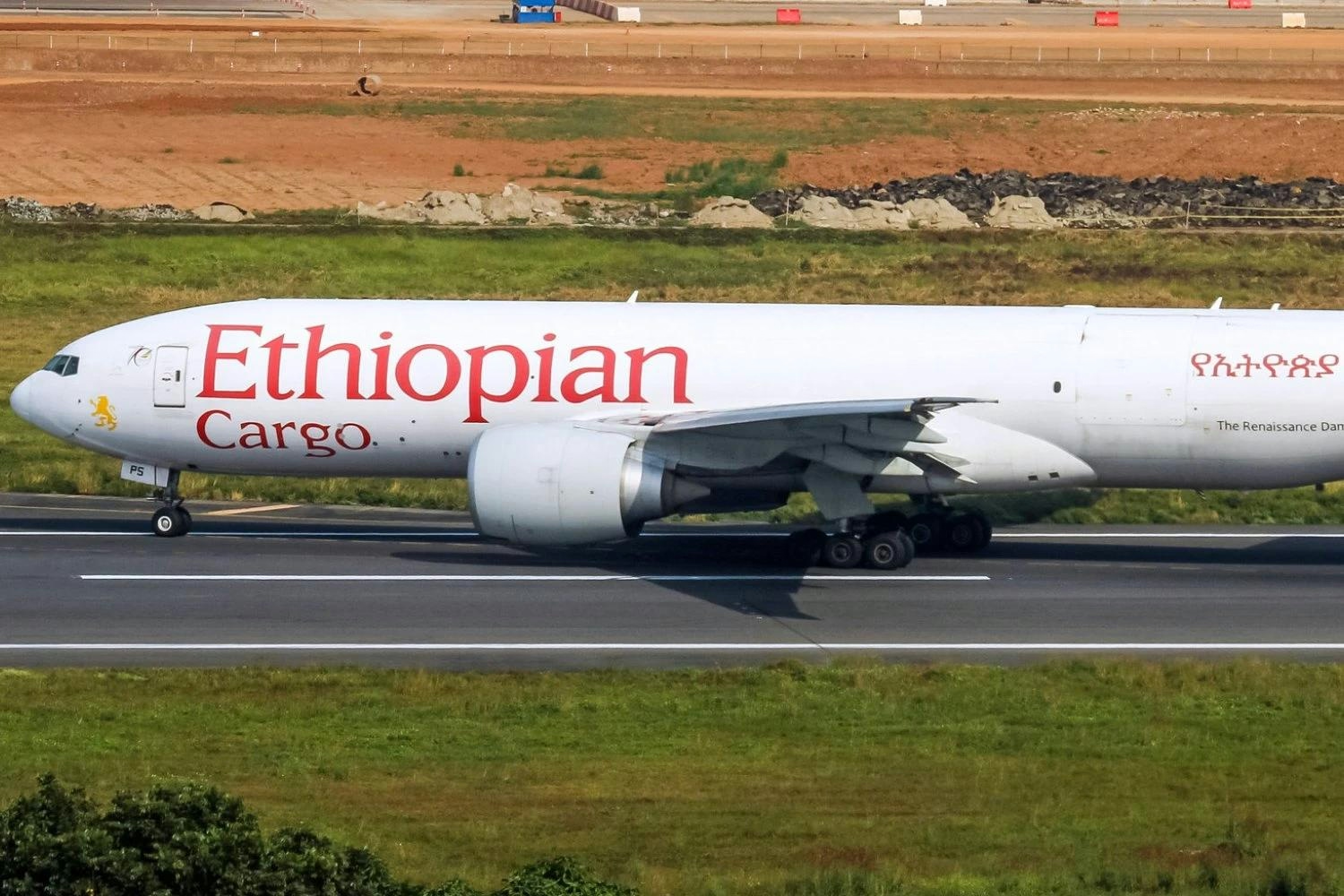
Ethiopian Airlines Finalizes Order for Ten Boeing 777 Freighters
September 4, 2026By ePlane AI
Ethiopian Airlines Finalizes Order for Ten Boeing 777 Freighters
0
0
Ethiopian Airlines
Boeing 777 Freighter
Cargo Fleet Expansion

Ethiopian Airlines Finalizes Order for Ten Boeing 777 Freighters

Ethiopian Airlines is in the final stages of securing an order for up to ten Boeing 777 widebody freighters, a transaction poised to significantly influence the African cargo aviation market and heighten competition with Gulf carriers. The agreement is expected to comprise two current-generation 777-200Fs alongside eight next-generation 777-8Fs, with the latter constituting the majority of the purchase. Including the 777-200Fs is a strategic move by Boeing to sustain production continuity amid delays in the rollout of the 777-8F model.

Challenges and Regulatory Considerations

Despite the promising scale of the order, several challenges remain. Delivery of the 777-8F freighters may face postponements, potentially disrupting Ethiopian Airlines’ fleet expansion timeline. Additionally, the completion of the deal hinges on obtaining U.S. regulatory approval that would allow Boeing to continue producing 777 freighters beyond the current 2027 production cutoff. Boeing has refrained from commenting on the ongoing negotiations, and Ethiopian Airlines has yet to release an official statement.

Fleet Expansion and Market Implications

Currently, Ethiopian Airlines operates a diverse widebody freighter fleet, including twelve 777-200Fs, two 767-300Fs, and one 767-300ER(BDSF), supplemented by four 737 narrowbody freighters. In March 2026, the airline announced a lease agreement with AerCap for two 777-300(ERSF) converted freighters, with deliveries slated for the second quarter of 2028.

The magnitude of this new order underscores Ethiopian Airlines’ ambition to consolidate its status as a leading cargo carrier in Africa and to develop a new regional logistics hub. This strategic expansion is expected to provoke competitive responses from Gulf carriers, who may recalibrate their operations to protect their market share in the region. Industry analysts also highlight the financial ramifications for both Ethiopian Airlines and Boeing, particularly as the manufacturer contends with production challenges and regulatory scrutiny.

As the transaction advances, industry observers will closely monitor how Ethiopian Airlines navigates potential delivery delays and how the evolving competitive landscape affects the cargo sectors in Africa and the Middle East.
More news
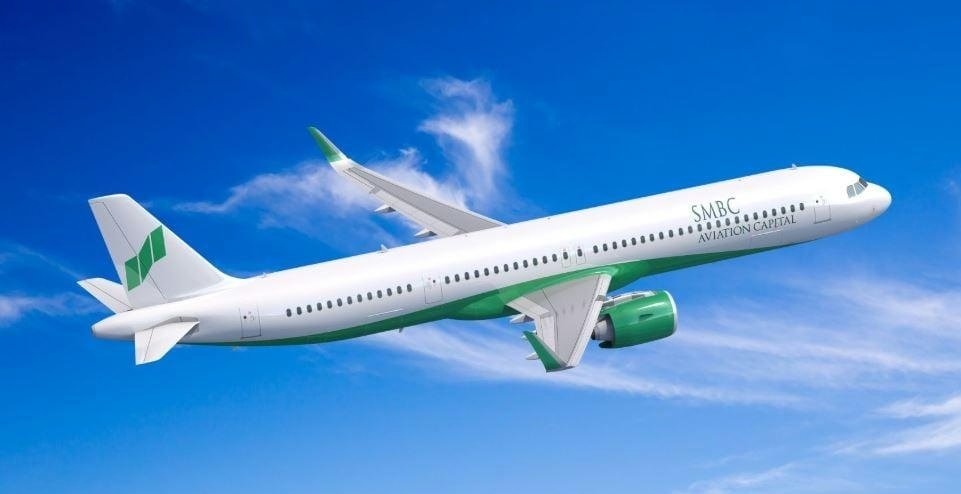
La Caisse and SMBC Expand Leasing Platform to $3 Billion

La Caisse and SMBC Expand Leasing Platform to $3 Billion

La Caisse and SMBC Expand Aircraft Leasing Platform to $3 Billion La Caisse, formerly known as CDPQ, and SMBC Aviation Capital have announced a substantial expansion of their joint aircraft financing and leasing platform, Maple Aircraft Company Holdings (MACH). Following the rapid deployment of the initial US$1.5 billion commitment, the partners will double the platform’s size to US$3 billion, extending its operations through December 2029. This expansion aims to enhance MACH’s capacity to provide airlines with flexible financing options for modern, fuel-efficient aircraft, a segment currently experiencing strong demand. Growth and Strategic Positioning Since its inception in 2024, MACH has built a portfolio comprising 21 aircraft leased to 13 airline customers across 10 markets. SMBC Aviation Capital will maintain its role in sourcing and servicing transactions for the platform. Barry Flannery, Chief Commercial Officer of SMBC Aviation Capital, emphasized the success of the partnership, noting that the expansion positions the platform to continue supporting airline customers worldwide with access to the most sought-after aircraft types. Martin Longchamps, Executive Vice-President and Head of Private Equity and Private Credit at La Caisse, highlighted the platform’s strong execution and the benefits of combining specialized aviation expertise with patient, long-term capital. He pointed to favorable long-term market dynamics and growing demand for flexible financing solutions as key factors that position MACH to expand its portfolio and capitalize on opportunities within the aviation leasing market. Market Dynamics and Challenges The expansion of MACH occurs within a competitive and evolving industry landscape. The increased scale of the platform may attract greater attention from other leasing companies, potentially altering market dynamics and prompting competitors to explore strategic responses such as alliances or capacity enhancements. Additionally, regulatory scrutiny and broader economic conditions present ongoing challenges that the platform will need to navigate as it grows. This development also reflects the enduring appeal of passive infrastructure investments in growth markets. La Caisse’s broader investment strategy, exemplified by its significant stake in Indian telecom towers, underscores the value of long-term capital in sectors characterized by stable demand and growth potential. As MACH advances, its ability to manage competitive pressures and regulatory complexities will be critical to maintaining momentum and delivering value to airline customers globally.
Harald Gloy Appointed CEO of Lufthansa Technik
Harald Gloy Appointed CEO of Lufthansa Technik

Harald Gloy to Lead Lufthansa Technik as New CEO Lufthansa Technik (LHT) has announced that Harald Gloy will take over as Chief Executive Officer starting February 1, 2027, succeeding Soeren Stark, who is preparing for retirement. The company’s Supervisory Board has appointed Gloy, an engineering graduate with extensive leadership experience, to guide the global aircraft maintenance provider for a five-year term. Extensive Experience Within the Lufthansa Group Harald Gloy brings a wealth of experience from various senior roles within the Lufthansa Group. Since 2022, he has served on Lufthansa Technik’s Executive Board as Chief Operating Officer, where he has been responsible for overseeing all operational processes and information technology. Prior to this, Gloy managed human resources as Labour Relations Director. His leadership journey within the group began in 2019 when he joined the Executive Board of Lufthansa Cargo AG as Chief Operating Officer, later expanding his portfolio to include Chief Human Resources Officer and Labour Relations Director in 2021. Grazia Vittadini, Chairwoman of Lufthansa Technik’s Supervisory Board, emphasized Gloy’s deep understanding of the company and the broader aviation maintenance market. She highlighted his significant role in the company’s strong performance and his familiarity with customers, employees, and industry dynamics. Vittadini expressed full confidence in Gloy’s ability to steer Lufthansa Technik through its next phase, implement strategic objectives, and reinforce its position as a global industry leader. Challenges Ahead and Leadership Transition Gloy’s appointment comes at a critical juncture for Lufthansa Technik, which faces several industry challenges. The company must contend with ongoing margin pressures resulting from global geopolitical conflicts, inflation-driven cost increases, and the effects of US tariffs. While the market’s immediate response to the leadership change has not been publicly detailed, industry analysts anticipate that competitors may adjust their strategies in response to maintain their standing in the aviation maintenance sector. The formal confirmation of Gloy’s appointment is expected in early 2027. Soeren Stark, who has served as Chairman of the Executive Board since 2022, will remain in his role until Gloy assumes office. Stark’s career with the Lufthansa Group began in 2001, encompassing various leadership positions including oversight of Lufthansa Technik Logistik Services and the company’s aircraft overhaul division. He also held the position of Chief Operating Officer at Lufthansa Cargo before returning to Lufthansa Technik in 2019. Vittadini acknowledged Stark’s significant contributions to Lufthansa Technik and the wider Lufthansa Group, noting his leadership in setting a clear strategic direction, strengthening customer relationships, and driving substantial growth. She affirmed the Supervisory Board’s commitment to ensuring a smooth transition and continuity during the handover period between Stark and Gloy.
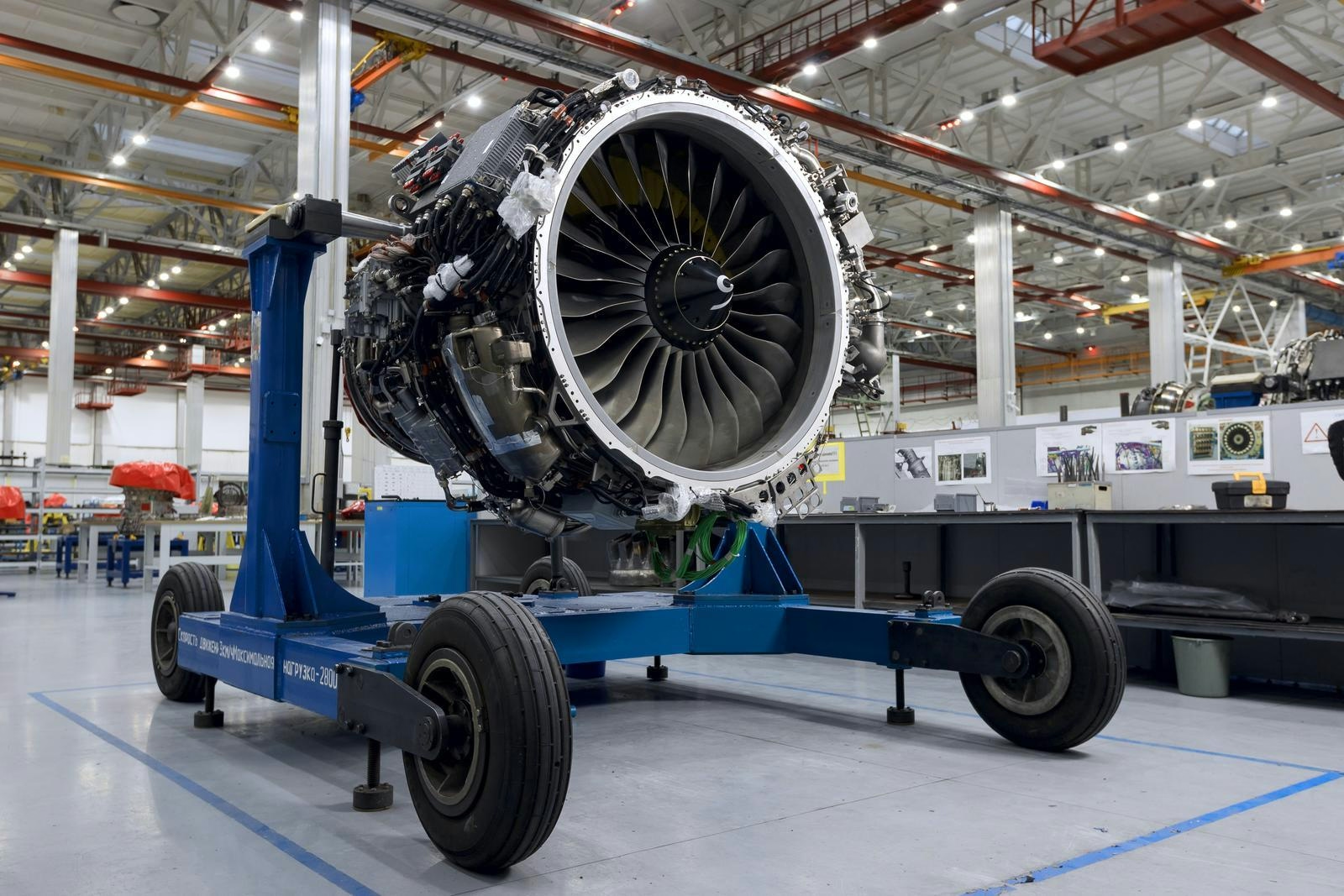
PD-8 Engine Not Related to French SaM146
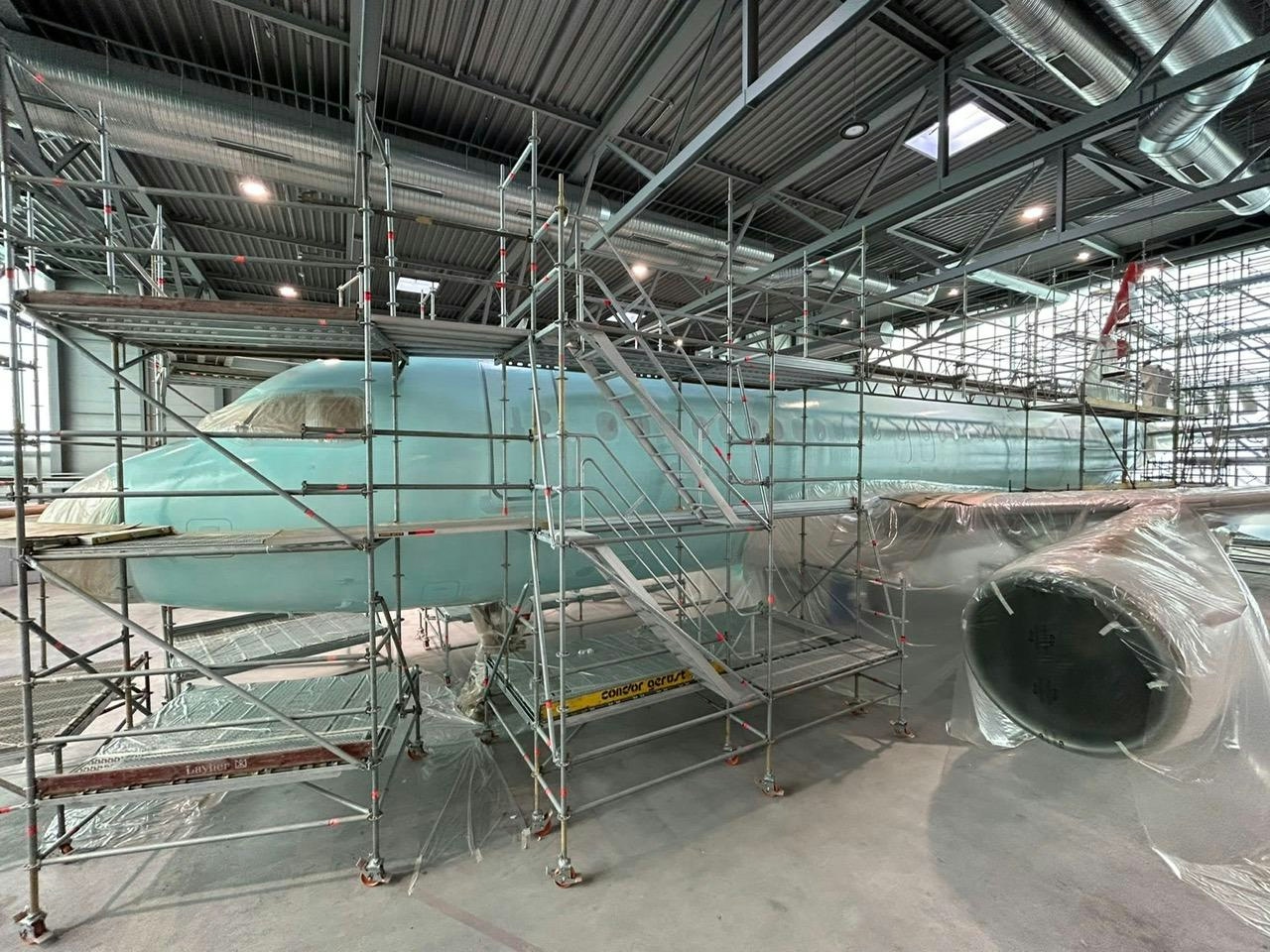
PD-8 Engine Not Related to French SaM146

PD-8 Engine Development Unrelated to French SaM146, Experts Clarify Contrary to widespread assumptions, Russia’s newly developed PD-8 aircraft engine is not a derivative of the Franco-Russian SaM146, aviation experts have confirmed. Although both engines belong to the same class, their underlying designs differ fundamentally. Roman Gusarov, an aviation analyst, emphasized in an interview with *Pervy Tekhnichesky* that the PD-8’s development did not draw upon the technical solutions employed in the SaM146. He stated unequivocally, “Nothing was taken at all. It’s completely different,” highlighting that even the hot section—previously not manufactured in Russia—could not have been replicated. Gusarov further noted that the PD-8’s development commenced prior to 2022, distancing it further from any direct connection to the SaM146. The engine’s progress reflects Russia’s broader ambition to establish an independent technological and operational foundation for its aircraft engines. Certification Challenges and Market Implications Despite receiving initial approval in June, the PD-8 has yet to achieve full certification, raising concerns about the timeline for its integration into the import-substituted SJ-100 twinjet program. This delay may invite increased scrutiny from aviation regulators and could potentially affect the SJ-100’s entry into the market. Industry observers remain uncertain about the economic justification for replacing the SaM146 with the PD-8. Andrey Patrakov, a former Airbus auditor and head of flight safety at RunAvia, pointed out that the advantages of re-engining existing aircraft with the PD-8 are still under debate, underscoring the complexity of the transition. Meanwhile, the PD-8’s development and certification process are being closely monitored by global competitors. Leading engine manufacturers such as Safran and GE Aviation are observing the PD-8’s performance and market acceptance, with their assessments likely to influence future product strategies and competitive dynamics within the regional jet engine sector. Earlier reports by *Pervy Tekhnichesky* provided a detailed comparison of the PD-8 and SaM146, outlining the respective strengths and weaknesses of each engine. As the PD-8 advances toward certification, its progress remains a critical point of interest for both domestic and international stakeholders in the aviation industry.
Nayak Aircraft Services Assumes Control of LAS Maintenance

Nayak Aircraft Services Assumes Control of LAS Maintenance

Nayak Aircraft Services Acquires Majority Stake in LAS Maintenance Nayak Aircraft Services has secured a controlling interest in Portugal’s LAS Group, encompassing LAS Maintenance, LAS Training, and SLOT-Human Resources. João Louro, the founder of LAS, will retain a shareholding and continue to serve as Chief Executive Officer of LAS Maintenance, ensuring leadership continuity and operational stability. Strategic Expansion and Cultural Synergy This acquisition represents a significant expansion of Nayak’s footprint in Europe, particularly enhancing its presence in Southern Europe. By integrating LAS Group into its operations, Nayak aims to bolster its capacity to provide high-quality, customer-centric aviation services while preserving LAS’s established management, operational frameworks, and brand identity. Marco Smit, CEO of Nayak Aircraft Services, highlighted the cultural alignment between the two organizations as a key factor in the acquisition’s strength. He noted that LAS Group not only brings robust technical expertise but also shares a pragmatic, customer-focused, and collaborative approach that complements Nayak’s own values. João Louro underscored the importance of maintaining continuity for clients, stating that preserving the existing management structure will ensure consistent service quality. He emphasized that clients will benefit from the combined strengths of LAS’s trusted service and Nayak’s broader European platform, with growth driven by a commitment to quality, safety, and customer satisfaction. Challenges and Industry Implications While the integration promises enhanced maintenance support and access to greater resources for airline customers, Nayak faces several challenges. These include navigating complex regulatory compliance across multiple jurisdictions, harmonizing operational processes, and addressing potential resistance from existing staff. Additionally, evolving regulatory frameworks and shifting market dynamics within the European aviation sector may impact the integration timeline and stakeholder responses. Industry analysts anticipate that the acquisition will attract close scrutiny from aviation authorities and other stakeholders, given the strategic significance of maintenance operations. Competitors are expected to monitor Nayak’s activities closely and may adjust their strategies in response to the company’s growing influence in the region. Despite these hurdles, both Nayak and LAS express confidence in their shared vision and the opportunities the partnership presents. The combined entity intends to leverage local expertise alongside the resources of a larger group to achieve sustainable growth, maintaining a steadfast focus on quality, safety, and customer satisfaction.
Joby Aviation Invests $450 Million to Nearly Double Revenue

Joby Aviation Invests $450 Million to Nearly Double Revenue

Joby Aviation Invests $450 Million to Nearly Double Revenue Amid Market Skepticism Shares of Joby Aviation (NYSE: JOBY) have been trading below $7, approaching their 52-week low and down approximately two-thirds from a peak near $20. Investor confidence appears to be waning as the anticipated promise of electric air taxis has yet to yield substantial revenue. In response, Joby announced on August 11 a significant strategic move: a $500 million agreement to acquire Resonant Sciences, a defense technology firm, for $450 million in cash and $50 million in stock. This acquisition is projected to nearly double Joby’s revenue base. Strategic Shift Toward Defense Technology Resonant Sciences, headquartered in Dayton, Ohio, specializes in radio frequency and mission systems for U.S. national security clients, focusing on low-observability technology that enhances military aircraft’s ability to detect threats while avoiding detection. Over the past twelve months, Resonant generated more than $100 million in revenue, marking a 40% year-over-year increase, and achieved positive adjusted EBITDA. Demand for its products is accelerating rapidly; in the first half of 2026, Resonant secured over three times the new business compared to the previous year, with its backlog more than doubling. Joby’s own revenue guidance for 2026, updated in August, forecasts between $115 million and $125 million for the full year. Resonant’s trailing revenue is nearly equivalent to Joby’s entire expected revenue for 2026. However, the acquisition is not anticipated to close until the first half of 2027, pending regulatory approval, meaning Resonant’s financial results are not yet incorporated into Joby’s statements. Financial Position and Market Response Joby’s balance sheet appears robust enough to support the acquisition. As of June, the company held approximately $2.3 billion in cash and short-term investments. Management expects to deploy between $385 million and $415 million of this amount in the second half of 2026 alone. The $450 million cash payment for Resonant represents roughly one-fifth of Joby’s cash reserves. Earlier this year, Joby raised $576 million through a stock offering and $670 million via convertible notes, indicating that the company is utilizing investor capital rather than internally generated funds. Considering the planned cash expenditures and the Resonant acquisition, about $850 million of Joby’s June cash balance is already committed. The $50 million in stock issued as part of the deal will have a minimal dilutive effect, increasing the share count by less than 1%. Additionally, Joby announced a program to raise up to $750 million through new stock sales over time. Despite the company’s financial preparedness, the market reacted cautiously. Joby’s stock declined approximately 3% following the announcement, reflecting skepticism about the company’s pivot toward defense technology rather than concentrating on scaling its core air taxi business. Some analysts have expressed concerns that this strategic shift could divert focus from Joby’s primary mission, especially as competitors such as New Horizon Aircraft, which targets the helicopter replacement market, may capitalize on any perceived strategic vulnerabilities. Outlook and Future Prospects Currently, nearly all of Joby’s revenue is derived from sources other than electric air taxis, yet the company remains optimistic about its prospects. Its 2026 revenue guidance is underpinned by partnerships with global vertiports, airlines, and its existing Blade passenger service. Whether the acquisition of Resonant Sciences will accelerate Joby’s journey toward profitability or dilute its strategic focus remains uncertain. Nonetheless, the company is making a substantial bet on diversification as a means to drive future growth.
AELF Expands Global Commercial Team

AELF Expands Global Commercial Team

AELF Expands Global Commercial Team to Strengthen International Presence AELF, a prominent US-based commercial aircraft leasing and financing firm, has announced the expansion of its global commercial team through two significant international appointments: Yong Kang "YK" Tay and Kevin Phelan. This strategic initiative is designed to enhance AELF’s presence across Asia, the Middle East, and Africa, positioning the company for accelerated growth in these rapidly evolving markets. Strategic Appointments to Drive Regional Growth Yong Kang "YK" Tay has joined AELF as Senior Vice President, Marketing – Asia, and will be based in Singapore. Tay brings a wealth of experience from his previous role at Aircastle, where he served as Senior Vice President of Marketing for Asia-Pacific. His expertise encompasses business development, airline partnerships, and structuring commercial transactions. Tay’s academic credentials include a Master of Science in Global Finance from NYU Stern and a Bachelor of Engineering in Mechanical Engineering from the National University of Singapore. Prior to Aircastle, he also provided advisory services to aviation clients at ICF. Kevin Phelan has been appointed Vice President, Marketing – Middle East & Africa, operating from Dublin. Phelan’s background includes extensive experience in aircraft and engine transactions, particularly involving Japanese equity investors across the EMEA region, gained during his tenure at Clover Aviation Capital. He has also held positions at GTLK Europe and Goshawk, where he managed lease portfolios and cultivated airline relationships. Phelan holds a Diploma in Aviation Leasing and Finance from the Law Society of Ireland and a Bachelor of Law degree from University College Cork. Joe Cirillo, President and Chief Commercial Officer at AELF, emphasized the importance of these appointments, stating, “With a strong capital markets base in place, we are primed to expand our deal origination capability while continuing to execute on the strategies that have built our success to date. We took great care in finding the right candidates to match our needs, culture, and vision for the future. We couldn’t be happier to welcome YK and Kevin to our team and add depth to our presence in key regions around the world.” Navigating Opportunities and Challenges in a Competitive Market AELF’s expansion occurs amid a highly competitive global landscape. The company, which has operated for over a decade, continues to grow its portfolio of commercial aircraft and engines—primarily A330 and 737 models—by acquiring leased assets and revitalizing dormant or stub-leased aircraft through comprehensive maintenance and re-marketing programs. Despite these opportunities, AELF faces significant challenges, including navigating diverse regulatory frameworks, managing cultural differences, and competing with well-established industry players. These challenges are particularly pronounced in regions characterized by complex market dynamics. Furthermore, the company’s expansion coincides with robust growth projections in the global apparel market, which is expected to increase from USD 1,749.67 billion in 2025 to USD 2,307.04 billion by 2034 at a compound annual growth rate of 3.52%. This broader economic growth signals an intensifying competitive environment, prompting heightened investor interest in aggressive expansion strategies and potential countermeasures from competitors, such as intensified marketing efforts and new strategic alliances. AELF’s recent appointments underscore its commitment to addressing these complexities and leveraging emerging opportunities worldwide. The company’s continued success will depend on its ability to adapt to diverse markets and maintain strong partnerships with airlines, thereby sustaining its growth trajectory. For further information, visit www.aelfinc.com and www.expeditionpartnersllc.com.
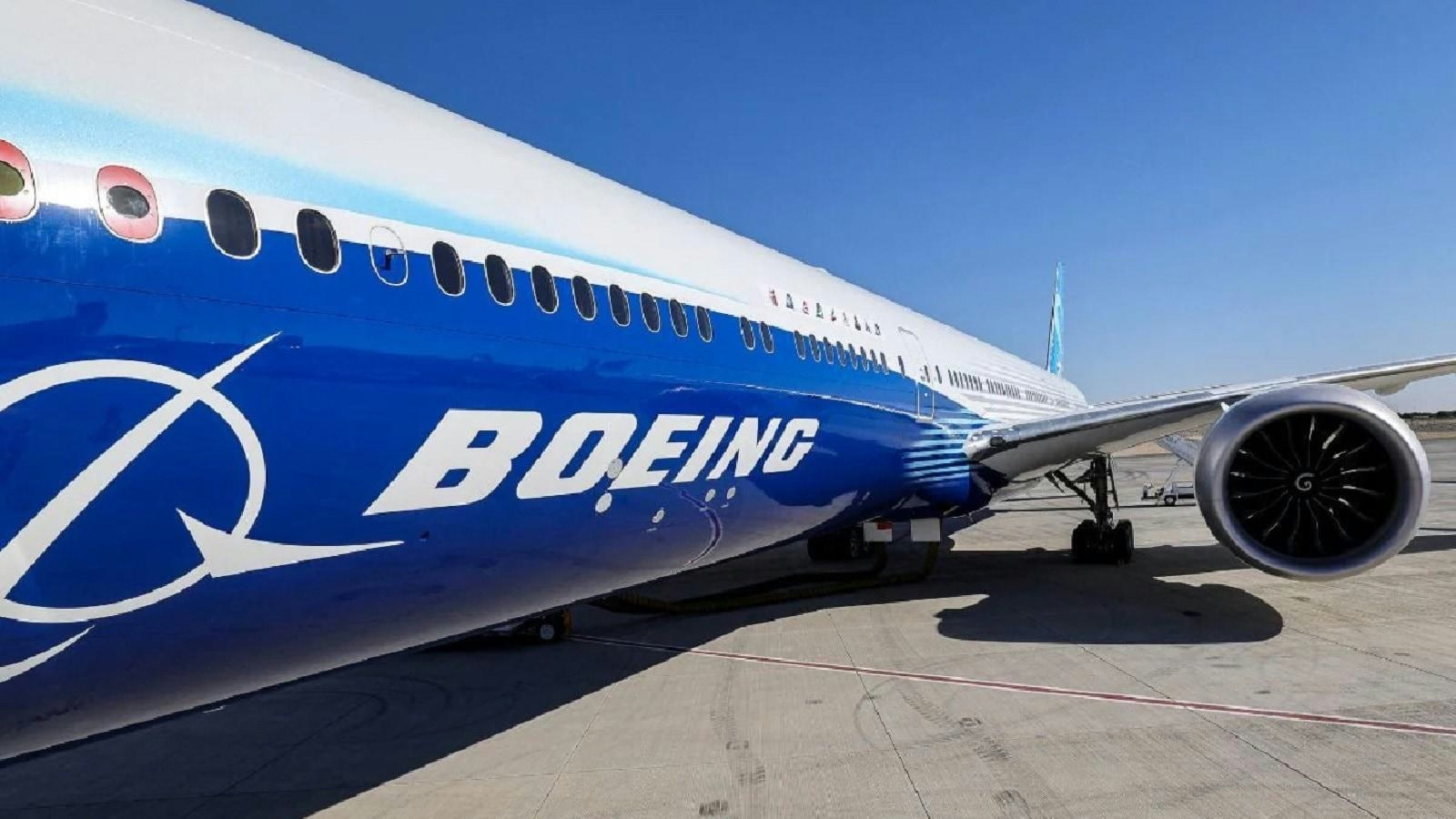
Boeing Faces FAA Fine Amid Ongoing Delivery Challenges
Boeing Faces FAA Fine Amid Ongoing Delivery Challenges

Boeing Faces FAA Fine Amid Ongoing Delivery Challenges Boeing is once again under intense regulatory scrutiny after agreeing to settle a fine imposed by the Federal Aviation Administration (FAA) this week. The penalty follows a series of safety violations, including those connected to a recent midair emergency involving an Alaska Airlines flight. In addition to the fine, the FAA has mandated inspections for cracks in Boeing 737 aircraft, heightening concerns about the company’s quality control standards. These developments arrive as Boeing continues to grapple with persistent delivery delays and increased oversight from aviation authorities. Regulatory Pressure and Market Impact The aerospace giant, which closed at $210.51 per share on Thursday, remains a central focus for investors amid a resurgence in commercial jet demand and expanding defense budgets among allied nations. Nevertheless, the recent regulatory actions have cast doubt on Boeing’s operational reliability and may contribute to further postponements in aircraft deliveries. This uncertainty has been reflected in a temporary decline in Boeing’s stock price, signaling investor apprehension regarding the company’s capacity to resolve ongoing safety and production challenges. Boeing’s competitors, notably Airbus, are poised to leverage these difficulties by emphasizing their own delivery performance and safety records. The FAA’s recent approval of the 737-7 MAX model has also attracted criticism, given the prevailing concerns about Boeing’s quality assurance. Such scrutiny threatens to undermine Boeing’s reputation and its competitive position in the global aviation market. Operational Developments Amid Challenges Despite these obstacles, Boeing is advancing several key initiatives. The company recently completed the transfer of the final three mPOWER satellites to SES, marking a significant achievement for its space and communications division. In the commercial aviation sector, Boeing is accelerating production of its narrow-body jet family, aiming to restore delivery momentum after years of regulatory constraints. The manufacturer has indicated plans to further increase build rates as it works through a substantial backlog of orders for both passenger and freighter aircraft. Boeing’s defense, space, and security segment remains active, providing military and government clients with a diverse portfolio that includes fixed-wing aircraft, rotorcraft, and autonomous systems. Its global services division continues to support airlines worldwide through maintenance, training, and logistics solutions. A recent strategic initiative involves an expanded partnership with the Civil Aviation Authority of Thailand, introducing a competency-based training and assessment framework for regional carriers. This effort highlights Boeing’s commitment to extending its influence beyond hardware manufacturing, focusing on pilot development and fostering a stronger safety culture. Industry Context and Future Outlook Within the broader industrial landscape, manufacturers face challenges such as supply chain normalization, labor negotiations, and increased investment in technology. For Boeing, these sector-wide pressures are compounded by intensified regulatory scrutiny and the urgent need to rebuild confidence among customers and regulators. As Boeing endeavors to address its quality control issues and meet delivery commitments, the coming months will be pivotal in determining whether the company can sustain its leadership role in the global aerospace industry amid mounting competition and regulatory demands.
Preliminary Probe of Air India Phuket Flight Confirms Hydraulic Pressure Loss, Recommends Action on Pilot Drug Use
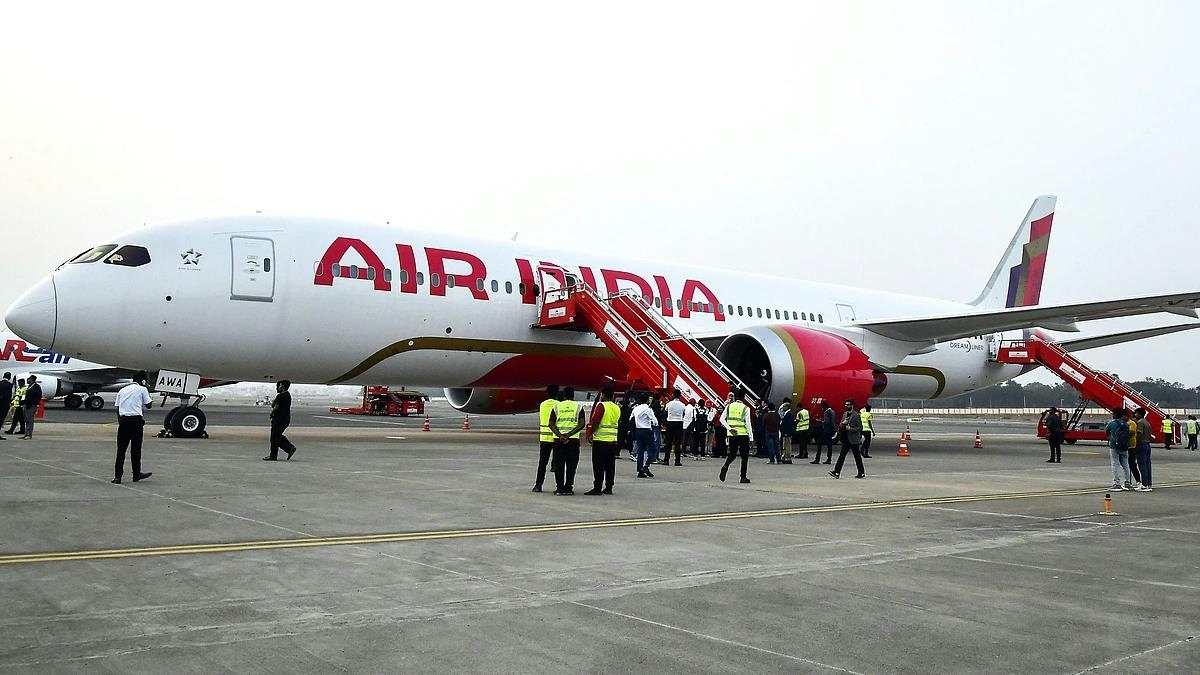
Preliminary Probe of Air India Phuket Flight Confirms Hydraulic Pressure Loss, Recommends Action on Pilot Drug Use

Preliminary Probe Confirms Hydraulic Failure on Air India Phuket Flight, Raises Concerns Over Pilot Drug Use A preliminary investigation into the Air India flight from Phuket to Delhi last month has confirmed that the aircraft experienced a temporary loss of control due to failures in its hydraulic systems. The incident resulted in injuries to 24 passengers and crew members. The Aircraft Accident Investigation Bureau (AAIB) report further revealed that the 34-year-old captain tested positive for marijuana, raising significant concerns about pilot drug use and prompting urgent calls for regulatory intervention. Incident Overview and Flight Response Flight AI 2379, carrying 137 passengers, was cruising at 36,000 feet when the aircraft’s flight-control system detected a loss of pressure in the green hydraulic system. Within seconds, the blue and yellow hydraulic systems also lost pressure, causing the autopilot to disengage and triggering a stall warning. The aircraft experienced a sudden altitude upset, climbing 372 feet before descending 292 feet from its assigned flight level. During the event, the co-pilot, who was initially flying the aircraft, responded to the situation before the pilot-in-command assumed control. With seat-belt signs off at the time, passengers and crew were thrown about the cabin, resulting in 24 individuals—20 passengers and four crew members—requiring medical attention upon landing in Delhi. While most sustained minor injuries and were discharged, four passengers with serious injuries were hospitalized. The cabin also suffered damage to ceiling panels, passenger-service units, overhead-bin doors, and other fixtures. Despite the severity of the incident, the flight crew elected to continue to Delhi rather than divert. They requested medical priority clearance from air traffic control and landed safely at Indira Gandhi International Airport at 11:00 AM IST, taxiing to the parking bay under the aircraft’s own power. Weather conditions at the time were reported as clear, although forecasts had indicated possible thunderstorms later in the day. The aircraft was operating with an existing Minimum Equipment List (MEL) item related to its Power Transfer Unit, but no new technical discrepancies were noted prior to departure. Pilot Drug Use and Regulatory Response A critical finding of the AAIB’s preliminary report was the captain’s positive test for marijuana. Initial screening for psychoactive substances conducted after the incident was followed by confirmatory testing, which verified the presence of marijuana. The report described this as a “serious concern” and recommended that the aviation regulator take “appropriate actions on priority.” In response to the findings, Air India has introduced a voluntary self-declaration process for psychoactive substance use among its employees. The Ministry of Civil Aviation has summoned Air India’s CEO to address the incident, which has also intensified scrutiny of the airline’s broader safety protocols and maintenance practices. Ongoing Investigation and Safety Implications The AAIB’s preliminary report has not yet determined the root cause of the hydraulic failure, and the investigation remains ongoing. Regulators and the airline face mounting pressure to enhance safety oversight and address the issues highlighted by this incident, particularly concerning pilot fitness and aircraft maintenance standards.
AFCOM Holdings Signs Letter of Intent to Acquire Up to Four Boeing 777-8F Freighters

AFCOM Holdings Signs Letter of Intent to Acquire Up to Four Boeing 777-8F Freighters

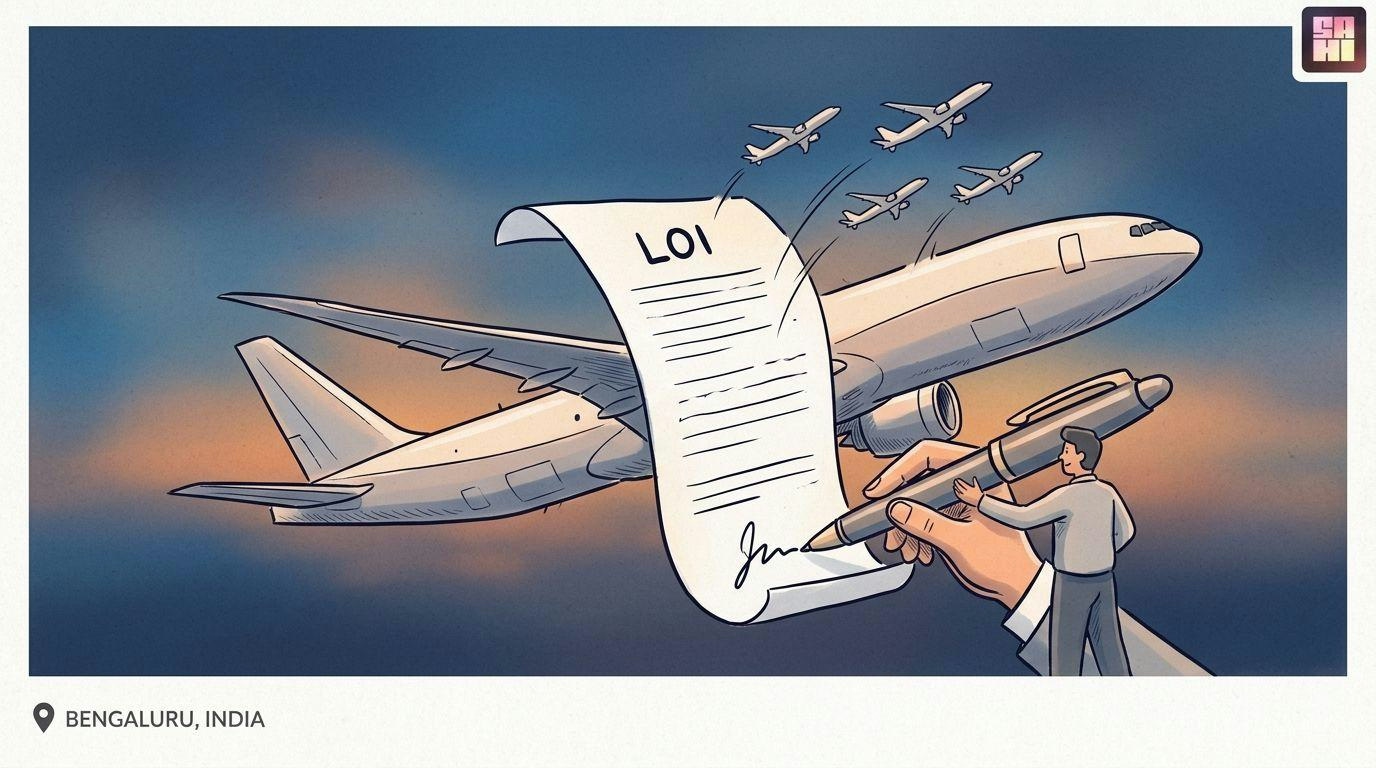
AFCOM Holdings Signs Letter of Intent to Acquire Up to Four Boeing 777-8F Freighters AFCOM Holdings Limited has entered into a Letter of Intent (LOI) with The Boeing Company to acquire up to four Boeing 777-8F wide-body freighter aircraft. This preliminary agreement marks a pivotal development in AFCOM’s fleet expansion strategy, positioning the company to penetrate the long-haul international cargo market, particularly targeting routes with flight durations of 10 to 12 hours or more. Fleet Expansion and Operational Strategy The planned acquisition of up to four Boeing 777-8F freighters represents a significant enhancement in AFCOM’s cargo capacity. Each aircraft offers approximately five times the cargo volume of the company’s existing Boeing 737-800 narrow-body fleet. The new wide-body freighters will be based in Chennai, serving critical long-haul sectors including routes to the Far East and Africa. This initiative marks AFCOM’s inaugural entry into wide-body operations, substantially elevating its competitive stance on international corridors. Financial Performance and Capital Position AFCOM’s fleet expansion is supported by strong financial performance and recent capital raising efforts. On May 5, 2026, the company completed a Qualified Institutional Placement (QIP), securing ₹199.85 crore to finance its fleet upgrade. In the first quarter of fiscal year 2027, AFCOM reported standalone revenue of ₹176.1 crore, reflecting a 48.12% year-on-year increase, while net profit rose by 86.06% to ₹39.24 crore. For the full fiscal year 2026, the company achieved revenue of ₹583.1 crore, a remarkable 144.28% increase compared to the previous year, alongside a net profit surge of 230.35% to ₹121.9 crore. Strategic Implications and Market Positioning The transition to wide-body freighters is a transformative step for AFCOM, enabling the company to scale its operations on an international level and compete directly with established global cargo carriers. The anticipated fivefold increase in per-flight cargo capacity is expected to enhance margins significantly, contingent upon achieving optimal load factors and efficient route management. Furthermore, this expansion has the potential to establish Chennai as a major regional cargo hub, thereby reinforcing India’s strategic position in the global air logistics network. Challenges and Market Considerations Despite the promising outlook, AFCOM faces several challenges in executing this expansion. Financing the acquisition of up to four Boeing 777-8F aircraft will require prudent capital management. The company must also address regulatory compliance related to the introduction of new aircraft types and ensure seamless integration with its existing operational infrastructure. Market response has been largely positive, with investors recognizing the strategic value of enhanced long-haul capabilities. Nonetheless, competition is expected to intensify as rival cargo airlines pursue similar fleet upgrades to safeguard their market shares. Outlook and Future Developments The acquisition remains contingent upon the finalization of definitive agreements with Boeing, with pricing and delivery schedules yet to be confirmed. Key factors to monitor include the execution of purchase contracts, sustained high utilization rates on new routes, and stabilization of international jet fuel prices. With robust operational momentum and recent capital infusion, AFCOM is well-positioned for medium-term growth. However, disciplined execution will be essential to maintain profitability and fully realize the benefits of its wide-body fleet expansion.
FAA Expands Drone Program and UAS Workforce Initiatives

FAA Expands Drone Program and UAS Workforce Initiatives

FAA Expands BEYOND Drone Program and UAS Workforce Initiatives The Federal Aviation Administration (FAA) is set to significantly expand its BEYOND program, a pivotal effort aimed at integrating advanced drone operations into the United States airspace. The program will double in size, with up to eight additional state, local, tribal, and territorial entities joining as lead participants. This expansion is expected to broaden the program’s scope and enhance its impact on the development of routine drone operations. Advancing Drone Integration Through BEYOND Originally launched in 2020, the BEYOND program builds upon an earlier drone integration pilot by employing real-world operations to evaluate how drones can safely operate under standard aviation regulations, moving away from the previous reliance on case-by-case waivers. During its initial phase, participants completed over 70,000 flights, including more than 48,000 beyond visual line of sight (BVLOS) operations, where drones operate beyond the direct view of the pilot. These BVLOS flights are critical for scaling drone applications such as delivery services, infrastructure inspections, and public safety missions. However, they also present new safety and regulatory challenges that the FAA aims to address. The second phase of BEYOND will not only increase the number of participating organizations but will also focus on more complex operational environments. These include public safety missions, airport operations, and expanded BVLOS flights. FAA Administrator Bryan Bedford highlighted the importance of this phase, stating that it will “expand the partnerships and operations needed to address remaining challenges in beyond visual line of sight operations, public safety missions, on-airport operations and other complex airspace environments.” This expansion coincides with the FAA’s ongoing efforts to finalize new BVLOS regulations and establish performance-based standards for drone operations. These regulatory frameworks are designed to facilitate the broader integration of drones and emerging aviation technologies into the National Airspace System, which encompasses the country’s airspace, airports, navigation services, and operational infrastructure. Industry Response and Workforce Development The announcement has been met with positive reactions from the commercial sector. Companies such as Uber, Zipline, and Amazon Prime Air are actively expanding their drone delivery networks, anticipating that streamlined regulations will accelerate the deployment of commercial drone services. The program’s growth is also expected to stimulate competition and innovation within the industry by lowering barriers and encouraging domestic development and testing of new aviation technologies, thereby helping to maintain the United States’ leadership in this sector. In parallel with regulatory advancements, workforce development has emerged as a critical focus. In Minnesota, the State Transportation Center of Excellence is spearheading the creation of a statewide unmanned aircraft systems (UAS) Community of Practice. This initiative seeks to connect higher education institutions, industry stakeholders, and workforce development organizations to ensure that training programs align with the evolving demands of the drone sector. Executive Director Shawn Haag emphasized the Center’s mission to advance UAS workforce development and foster collaboration across education, training, and industry. Haag, who also leads Minnesota’s three-year, $1.5 million NASA Aerospace Skilled Technical project, underscored the necessity of preparing a skilled workforce to support the rapid expansion of drone technologies. The Center works closely with Minnesota State colleges and universities, K-12 education systems, industry partners, and government agencies to ensure that educational and training programs keep pace with technological advancements. As the FAA expands the BEYOND program and workforce initiatives gain momentum, the United States is positioning itself to lead in the safe and routine integration of drones into national airspace, balancing innovation with safety and workforce readiness.
line