
Zet AI‑inzichten om in gerichte actie

Trending
Categories
Eve Schedules First eVTOL Transition Flights Amid Certification Delays
Eve Schedules First eVTOL Transition Flights Amid Certification Delays
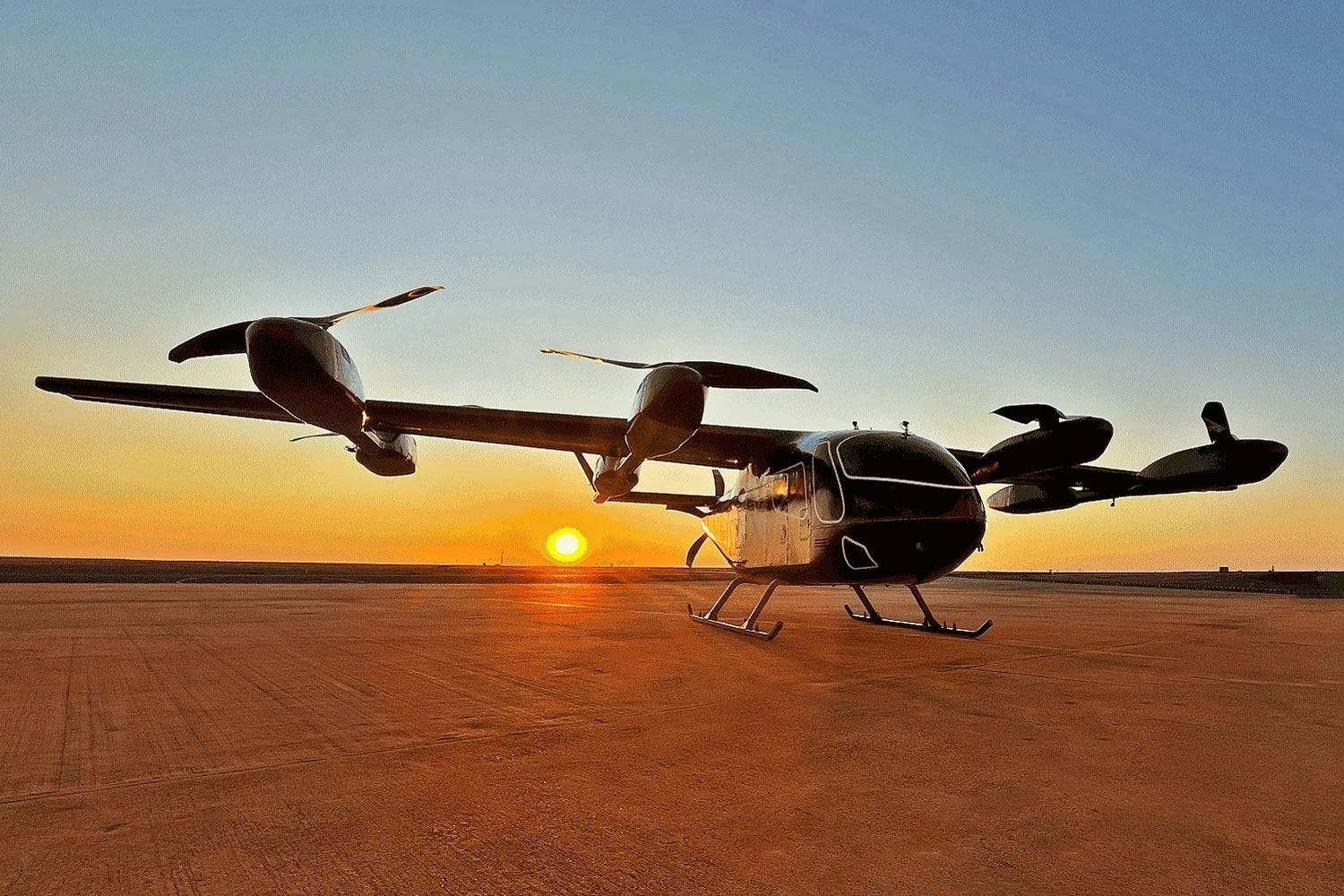
Eve Air Mobility has announced significant progress in the development of its electric vertical take-off and landing (eVTOL) aircraft, despite ongoing challenges related to certification delays and broader industry obstacles. Having completed 59 test flights to date, the company is now targeting its initial transition flights for the third quarter of 2026, with full aircraft certification anticipated by 2028.
The Critical Transition Phase
The transition flight phase represents a pivotal milestone in eVTOL development, involving the shift from vertical lift generated by rotors to horizontal, wing-borne flight. During a recent investor call, Eve’s CEO Johann Bordais outlined the planned approach, explaining that the process will commence with partial transitions, gradually increasing speed. Bordais stated, “We will start with a partial transition, progressively increasing speed. The lifters will be engaged to provide the aircraft with the necessary vertical support. At the end of this phase, we plan to accelerate the aircraft to a full transition speed above 85 knots.” At full transition, the aircraft will rely solely on its wings for lift, with the lifter motors disengaged, enabling efficient cruise flight before returning to vertical mode for landing.
This phase is widely recognized as the most formidable engineering challenge for eVTOLs. The aircraft must navigate a low-speed aerodynamic “grey zone” where neither rotor nor wing lift is fully dominant, necessitating advanced flight-control software to maintain stability. Eve is currently updating its control software and conducting ground evaluations in preparation for these critical transition flights.
Industry-Wide Challenges and Competitive Landscape
Eve’s timeline faces inherent risks amid certification delays that have affected the entire eVTOL sector. UK-based Vertical Aerospace is encountering similar obstacles with its Valo aircraft, experiencing delays in transition flights and exercising cautious financial management despite securing $850 million in funding. Meanwhile, Joby Aviation, regarded as a technical frontrunner in the Western eVTOL market, completed its first manned transition flight in April 2025 and has since conducted hundreds of successful flights, including recent demonstrations between New York JFK Airport and downtown Manhattan. Nevertheless, Joby continues to grapple with challenges such as FAA certification, the establishment of reliable charging infrastructure, and gaining public acceptance.
These complexities highlight the uncertainties confronting all eVTOL developers. As Eve advances, it must navigate not only technical milestones but also regulatory and market challenges that could influence its projected timelines.
Despite these hurdles, Eve remains steadfast in its commitment to progressing its eVTOL program, with the goal of delivering safe, efficient, and certified urban air mobility solutions in the near future.

Etihad Airways Suspends Airbus A380 Flights on Key Route

Aditya Birla Group Seeks Approval for Aircraft Leasing in GIFT City

Qatar Airways Highlights Innovation and Connectivity at Arabian Travel Market 2026

Hong Kong's Five-Year Plan Includes Andrew Fan's Aircraft Parts Processing Hub Proposal

ACIA Aero Leasing Delivers ATR72-600 to Air Nostrum

RTX Appoints Jill Albertelli as Head of Pratt & Whitney

TAT Technologies Joins Beyond Aero Hydrogen Aircraft Program

AURAK Study Highlights Barriers to Air Taxi Adoption in Emerging Economies

Xiamen Air Selects Altitude for 787 Maintenance at Heathrow

Etihad and Swissport Extend Global Partnership
