Afbeelding

Zet AI‑inzichten om in gerichte actie

Meld je vandaag nog aan voor de AeroGenie-wachtlijst!

Trending

Categories

FACC Invests €350 Million to Expand Capacity and Innovation
March 17, 2026By ePlane AI
FACC Invests €350 Million to Expand Capacity and Innovation
0
0
FACC
Aerostructures Manufacturing
Aviation Innovation

FACC Invests €350 Million to Expand Capacity and Innovation

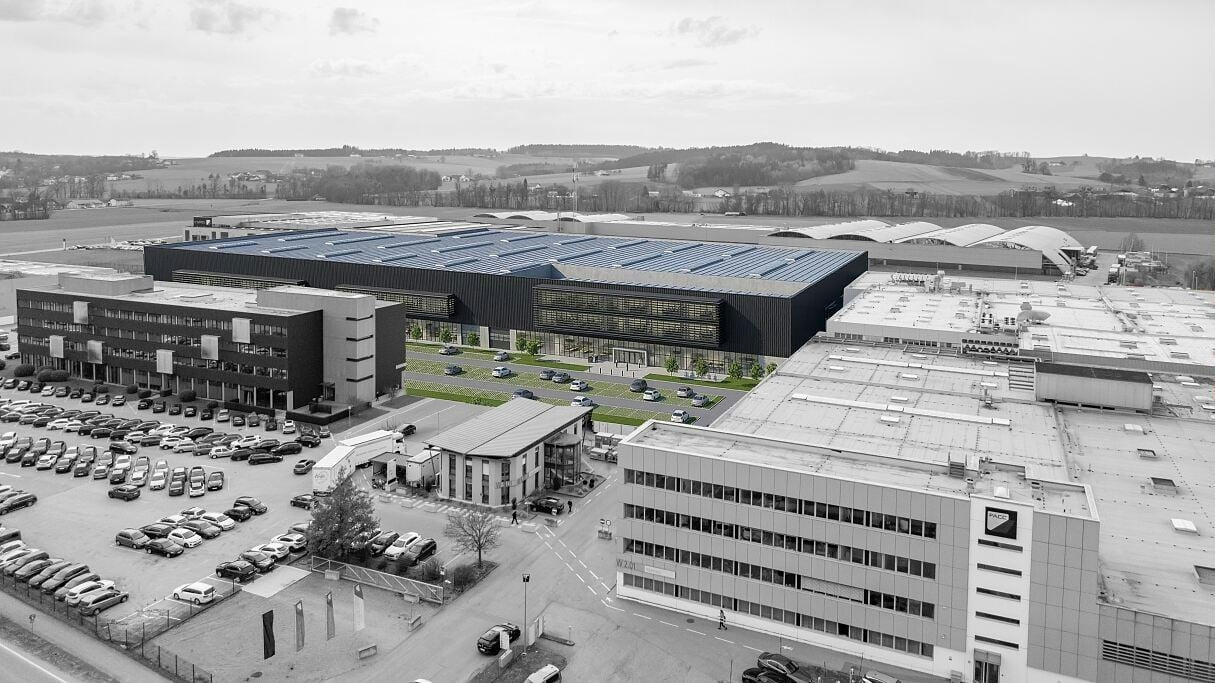
FACC has announced a substantial investment of approximately €350 million to enhance its technological capabilities and expand its global operations. This strategic move is designed to support sustained growth through 2030, aligning with prevailing market forecasts. At the heart of this initiative is the development of a new high-tech manufacturing facility in St. Martin im Innkreis, Upper Austria, which will reinforce the company’s regional footprint and production capabilities.

Expansion of Production and Research Facilities

The forthcoming plant, covering 20,000 square meters, is set to significantly increase FACC’s capacity to produce large-scale structural components for passenger aircraft, including elevators and ailerons. Upon completion, the facility will double the aerostructures production capacity at the site. In addition to manufacturing, the project incorporates a dedicated research area aimed at advancing manufacturing processes and technologies for next-generation commercial aircraft. FACC plans to allocate around €120 million specifically for this new facility, with construction slated to begin at the end of 2026 and operations expected to commence by mid-2028. The full expansion is targeted for completion by the end of 2029.

The new plant will be seamlessly integrated with FACC’s existing Plant 3, facilitating operational efficiency and synergy. The expansion is anticipated to generate approximately 300 new jobs at the Upper Austria site by 2030, representing a significant contribution to the local economy.

Strategic Significance and Industry Context

Chief Executive Officer Robert Machtlinger described the investment as a landmark decision, underscoring FACC’s long-term commitment to the region. He emphasized that the expansion will strengthen the company’s position as an innovative partner to international aerospace customers, supporting both ongoing programs and the development of future aircraft technologies.

This ambitious expansion occurs amid intensifying competition within the aerospace sector. Competitors such as ABB have recently announced significant investments, including a $75 million commitment to expand manufacturing and research and development operations in India. Similarly, companies like Karas Plating have invested in automation and capacity upgrades, exemplified by a £1.5 million automated silver-plating line, to enhance their competitive standing. These developments reflect a broader industry trend of strategic investments aimed at capturing future growth opportunities.

Market analysts suggest that FACC’s considerable investment will attract heightened scrutiny regarding cost control and operational efficiency. As competitors pursue parallel strategies, maintaining an innovative edge and ensuring that investments yield measurable performance improvements will be critical for FACC’s continued success.

With this latest investment, FACC aims to consolidate its role as a leading supplier in the global aerospace industry, navigating the challenges and opportunities presented by a rapidly evolving market landscape.
More news
US, UK, and China Integrate AI in Aviation Amid Flight Disruptions

US, UK, and China Integrate AI in Aviation Amid Flight Disruptions

US, UK, and China Integrate AI in Aviation Amid Flight Disruptions As major global airports grapple with severe flight disruptions and operational chaos, leading economies including the United States, the United Kingdom, and China are accelerating the adoption of artificial intelligence (AI) within their aviation and tourism sectors. This strategic shift aims to stabilize passenger flows, reduce operational failures, and reshape the future landscape of international travel. AI as a Response to Aviation Challenges The aviation industry is currently facing unprecedented delays and cancellations, prompting governments and aviation authorities to turn to AI as a critical tool for managing these challenges. Advanced AI systems are being deployed to enhance operational efficiency, alleviate terminal overcrowding, and improve the overall passenger experience. Cities such as New York, London, and Tokyo, where airlines are contending with significant logistical bottlenecks, exemplify the urgent need for smarter and more resilient travel infrastructure. Leading Nations in AI-Driven Aviation Innovation In the United States, AI adoption is at the forefront of transforming tourism infrastructure. Airports in New York, Los Angeles, Chicago, and Atlanta are utilizing predictive flight scheduling, sophisticated delay management, and AI-powered pricing models to streamline passenger movement and reduce wait times. Additionally, AI-driven security protocols and personalized travel recommendations are enhancing both operational efficiency and customer satisfaction. China has developed a comprehensive AI travel ecosystem that integrates smart technology throughout the entire travel experience. From super-app booking platforms to AI-enabled hotel and transportation services, cities like Beijing, Shanghai, and Shenzhen showcase highly connected, data-driven tourism environments. The use of facial recognition for immigration and real-time demand forecasting further cements China’s position as a global leader in smart tourism innovation. The United Kingdom is emphasizing sustainable AI tourism development through the deployment of intelligent transport systems and data-driven planning tools. Despite its strengths in AI research and manufacturing, the UK faces challenges in scaling beyond pilot projects, which risks slowing its pace of adoption relative to international competitors. Opportunities and Challenges in AI Integration While AI holds significant promise for revolutionizing aviation by reducing carbon emissions, enhancing efficiency, and personalizing services, its integration presents notable challenges. Airlines and airports must carefully balance the advantages of automation with the imperative to maintain customer trust and protect sensitive data. Market responses reveal a mixture of enthusiasm for AI’s potential and concern over the complexities of implementation, including the risk of disrupting established distribution channels. Competitors are increasingly adopting AI to optimize operations and improve customer service, yet the substantial investments required can strain liquidity, particularly for carriers already under financial pressure. In the UK, the risk of falling behind in AI adoption highlights the critical need to transition from experimental pilots to comprehensive, large-scale deployment. Toward a Transformed Global Aviation Industry As AI becomes deeply embedded across aviation, hospitality, and destination management, the industry stands on the brink of fundamental transformation. The integration of intelligent systems in the US, UK, and China signals a future in which digital ecosystems supplant the unpredictability of modern air travel, offering passengers a more seamless, efficient, and sustainable journey.
AirBorneo to Review Maintenance Contracts Amid Service Disruptions

AirBorneo to Review Maintenance Contracts Amid Service Disruptions

AirBorneo to Review Maintenance Contracts Amid Service Disruptions AirBorneo (MY, Kuching) has announced a thorough review of its maintenance and parts-supply contracts in response to a series of service disruptions affecting its network. The airline intends to engage additional and alternative partners to secure faster access to critical components, with the goal of accelerating maintenance processes and restoring normal operations promptly. Operational Challenges and Regulatory Pressure This decision follows increasing scrutiny over flight cancellations and delays since AirBorneo took over operations from MASwings in January 2026. The Civil Aviation Authority of Malaysia has emphasized the airline’s responsibility to minimize passenger disruption, underscoring the urgency of addressing these operational challenges. Currently, AirBorneo depends on Firefly Maintenance and Repair Organisation and MAB Engineering for its maintenance, repair, and overhaul (MRO) requirements, according to ch-aviation data. However, the airline’s efforts to enhance reliability are unfolding amid a difficult environment for the global aviation maintenance sector. Industry-Wide Maintenance Pressures Industry analysts, including those from Oliver Wyman, highlight that the MRO market is experiencing an extended maintenance ‘super cycle,’ with global spending expected to approach $140 billion this year. This surge is driven by persistent labor and material shortages, geopolitical instability, and tariffs, all contributing to increased costs and longer turnaround times for airlines seeking maintenance services. These challenges are further exacerbated by elevated oil prices. Ryanair CEO Michael O’Leary has cautioned that sustained high fuel costs could precipitate additional airline failures. The Association of Asia Pacific Airlines has also identified ongoing fuel crises and supply chain disruptions as significant risks for carriers in the region, including AirBorneo. As AirBorneo undertakes its review of maintenance contracts, it must navigate these broader industry pressures. The airline has reaffirmed its commitment to minimizing disruptions and restoring reliable service for its passengers.
China Approves Air Taxis as U.S. Faces Regulatory Delays

China Approves Air Taxis as U.S. Faces Regulatory Delays

China Advances Air Taxi Commercialization Amid U.S. Regulatory Challenges China has taken a decisive lead in the commercialization of air taxis by granting full certification to two Advanced Air Mobility (AAM) designs: EHang’s multirotor vehicle and AutoFlight’s winged multirotor. This development starkly contrasts with the United States, where the Federal Aviation Administration (FAA) has yet to approve any AAM aircraft beyond experimental use. The divergence highlights a growing regulatory gap between the two nations in the emerging field of urban and regional air transportation. Regulatory Hurdles and Industry Challenges in the United States The FAA faces significant challenges in certifying powered-lift aircraft, including electric vertical takeoff and landing (eVTOL) vehicles, which do not fit neatly into existing categories for airplanes or helicopters. The agency is therefore compelled to adapt its regulatory framework in real time. This process is further complicated by the Biden administration’s ambitious goal to demonstrate commercial AAM operations at the 2028 Los Angeles Olympics, a timeline that conflicts with the FAA’s typical five- to nine-year certification process for new aircraft types. To date, no AAM vehicle has received full FAA certification. Compounding these regulatory delays are ongoing legal disputes among leading U.S. AAM companies such as Joby Aviation, Archer Aviation, and Vertical Aerospace. These conflicts threaten to slow certification efforts and undermine investor confidence. Meanwhile, the FAA has approved Honda’s all-electric air taxi, despite its limited 15-minute endurance, underscoring persistent industry-wide challenges related to battery technology and energy storage. A recent Congressional Research Service (CRS) report underscores the complexity of certifying AAM aircraft in the United States, arriving as Chinese regulatory agencies move swiftly to bring air taxis to market. The report also highlights a critical gap in the FAA’s delegation structure: none of the leading U.S. AAM developers currently hold Organization Designation Authorization, a key program designed to streamline certification processes. Legislative and Strategic Frameworks for Advanced Air Mobility In 2022, Congress formally defined Advanced Air Mobility through the Advanced Air Mobility Coordination and Leadership Act, envisioning a transportation system that leverages advanced technologies—including electric and hybrid aircraft—to move people and goods across urban and regional routes. The FAA’s Innovate28 plan, released in July 2023, targets initial AAM operations by 2028. That same month, the agency updated air carrier regulations to permit passenger and cargo operations using powered-lift aircraft, followed by further regulatory changes scheduled for November 2024 and the establishment of a temporary Special Federal Aviation Regulation set to remain in force until 2035. The FAA Reauthorization Act of 2024 introduced additional mandates, requiring the agency to publish a special final rule for AAM operations and to establish a powered-lift advisory committee. Recommendations from this committee are expected to influence future certification rules for electric, hybrid, and hydrogen propulsion systems. In December 2025, the Department of Transportation released a national AAM strategy outlining infrastructure and airspace management needs through 2036. Despite these initiatives, a recent Government Accountability Office (GAO) report highlights ongoing uncertainty regarding the timeline for electric aircraft to enter commercial service in the United States. The four leading American companies—Archer, Beta Technologies, Joby, and Wisk Aero—are pursuing various certification pathways, with Wisk aiming to develop a fully autonomous, four-passenger aircraft. Global Implications and the Pace of Innovation While the U.S. regulatory environment remains in flux, China’s rapid approvals have established a new global benchmark in the AAM sector. This contrast is further reflected in the electric vehicle industry, where Tesla recently launched its "Full Self-Driving" capabilities in China after years of delays, whereas local Chinese EV manufacturers have already introduced proprietary self-driving technologies. These developments underscore China’s accelerating momentum in advanced mobility technologies, positioning the country at the forefront of the evolving transportation landscape.
The Economics Behind Reviving British Airways’ Retired Boeing 747-400 Fleet

The Economics Behind Reviving British Airways’ Retired Boeing 747-400 Fleet

The Economics Behind Reviving British Airways’ Retired Boeing 747-400 Fleet After British Airways retired its final 31 Boeing 747-400 aircraft in 2020, many viewed this as the definitive end of an iconic chapter in aviation history. These quadjets, once a symbol of long-haul travel, were subsequently stored in arid locations such as Victorville, California, and Teruel, Spain. The airline’s strategic shift towards more fuel-efficient twin-engine models like the Boeing 787 and Airbus A350—offering approximately 25% greater fuel efficiency per seat—was widely regarded as a prudent response to escalating environmental concerns and financial pressures. Capacity Constraints and Market Realities The post-pandemic aviation environment, however, has challenged these assumptions. A global shortage of new widebody aircraft, caused by ongoing production delays at Boeing and Airbus, has left airlines struggling to satisfy a surge in passenger demand. This shortage is especially pronounced at slot-restricted international hubs, where regulatory limits prevent airlines from simply increasing flight frequencies. In such markets, maximizing passenger capacity per departure has become critical. With delivery schedules for new aircraft extending several years into the future, airlines face the risk of forfeiting billions in potential revenue if they cannot expand capacity. This scarcity has altered the economics of fleet management. While modern jets remain more fuel-efficient and cost-effective in daily operations, the urgent need to deploy available seats has shifted priorities. In the current high-demand context, the financial penalty of operating less efficient aircraft like the 747-400 may be offset by the revenue losses incurred from canceled or curtailed services. Challenges of Reactivating the 747-400 Fleet Reactivating the retired 747s, however, presents significant challenges. Although British Airways stored these aircraft in controlled environments to minimize corrosion, returning them to operational status would require extensive engineering work, involving thousands of labor hours per plane. This process is a complex industrial endeavor rather than routine maintenance. Furthermore, the economic viability of such a move is uncertain. Fuel prices remain volatile, and industry forecasts indicate that rising fuel costs could reduce airline profits by up to 50% by 2026. Passing these increased costs onto consumers is difficult in a competitive market, and it is unclear whether passengers would be willing to pay a premium for the experience of flying on a 747. Industry Trends and Competitive Dynamics The broader aviation industry continues to move away from older, less efficient aircraft. Airlines such as KLM are accelerating the retirement of their quadjet fleets, citing not only fuel inefficiency but also noise restrictions and capacity limitations at major airports. This trend reflects mounting regulatory pressures and a growing market preference for quieter, more sustainable aircraft. In light of these factors, any decision by British Airways to reactivate its 747-400 fleet would constitute a calculated risk. While the current capacity shortage makes the prospect more conceivable than before, the high operational costs, uncertain consumer acceptance, and evolving industry standards present formidable obstacles. For now, the economics of reviving the Queen of the Skies remain firmly grounded in practical considerations.
New F-47 Engine Design May Extend Range Beyond China’s J-36

New F-47 Engine Design May Extend Range Beyond China’s J-36

New F-47 Engine Design May Extend Range Beyond China’s J-36 Online rankings of fighter jets often emphasize individual attributes such as speed, range, payload, or radar cross-section. However, such comparisons can be misleading, as fighter aircraft are tailored to specific missions, operational environments, and the strategic needs of their respective operators. This distinction is particularly relevant when examining the emerging Chinese J-36 and the US F-47 next-generation fighters. While these aircraft share some overlapping requirements, they are being developed with different strategic objectives in mind. Strategic Importance of Range in the Asia-Pacific Theater Range is a critical factor for both the J-36 and F-47, given the vast distances characteristic of the Asia-Pacific region. The ability to conduct operations far from home bases is essential for maintaining air superiority and projecting power. Reliable information on these aircraft remains limited. Details about the J-36 are largely speculative, derived from limited imagery and unofficial sources, as China has released minimal official data. Conversely, most insights into the F-47 come from statements by the US Air Force and industry reports, with no official images available and some public renderings suspected to be deliberately misleading. F-47 and the Next Generation Air Dominance Program The United States is developing the F-47 as part of the Next Generation Air Dominance (NGAD) program, aiming to produce a dedicated air superiority fighter to succeed the F-22 Raptor. The F-47 is designed to restore a decisive technological advantage, often described as a “silver bullet,” to ensure continued US air dominance amid emerging threats. These threats include new adversary fighters and advanced radar systems that challenge the F-22’s current supremacy. The NGAD program also encompasses the development of Collaborative Combat Aircraft (CCAs), which will operate in conjunction with the manned F-47 to enhance combat effectiveness. A paramount requirement for the F-47 is an extended unrefueled combat radius, with the US Air Force targeting a range exceeding 1,000 nautical miles (approximately 1,852 kilometers). This capability is driven by the necessity to operate at greater distances as China’s J-20 and other long-range systems increasingly threaten high-value support aircraft and forward bases. The operational environment is further complicated by the proliferation of ballistic missiles and one-way attack drones, elevating range as a top priority. Boeing, the lead contractor for the F-47, is reportedly developing a new engine design that could significantly extend the aircraft’s range, potentially surpassing that of China’s J-36. This advancement occurs amid strong demand for advanced fighters, as evidenced by Boeing’s F-15EX production line being effectively sold out through 2034-2035. The competition in the fighter market is intensifying as both US and Chinese manufacturers race to deliver next-generation capabilities. China’s Aerospace Advancements and the Competitive Landscape China is rapidly advancing its aerospace propulsion technologies. The Aero Engine Corporation of China (AECC) recently announced the maiden flight test of a new 600-kgf engine designed for unmanned aerial vehicles, signaling progress that may have broader implications for future fighter engines. Additionally, China’s Mega Engine Technology has achieved significant test time on a high-pressure oxygen-rich staged-combustion engine, underscoring the country’s commitment to developing indigenous high-performance propulsion systems. These developments illustrate a competitive landscape in which both Boeing and Chinese engine manufacturers are pushing technological boundaries. As both nations strive to enhance the range and performance of their next-generation fighters, the outcome will play a crucial role in shaping the balance of air power in the Asia-Pacific region for years to come.
Comparing the Size of the Boeing 777-300ER and 787 Dreamliner

Comparing the Size of the Boeing 777-300ER and 787 Dreamliner

Comparing the Size of the Boeing 777-300ER and 787 Dreamliner At first glance, the Boeing 777-300ER and the Boeing 787 Dreamliner appear to fulfill similar roles within global aviation. Both are twin-engine, widebody jets manufactured by Boeing and widely employed by major airlines for long-haul routes. However, a closer examination reveals that these aircraft are designed with distinct purposes in mind and occupy different positions within Boeing’s product lineup. The 777-300ER was developed to transport large numbers of passengers over extended distances, effectively replacing older four-engine aircraft such as the Boeing 747-400 and Airbus A340. In contrast, the 787 Dreamliner was engineered to prioritize efficiency, flexibility, and reduced operating costs, particularly on long routes with lower passenger demand. These differing design philosophies are evident in their size, capacity, and operational roles. Overall Size and Dimensions The most immediate distinction between the two aircraft lies in their physical dimensions. The Boeing 777-300ER measures approximately 242 feet (73.9 meters) in length, making it longer than any variant of the 787, including the stretched 787-10, which is about 224 feet (68.3 meters) long. The smallest Dreamliner, the 787-8, is significantly shorter at 186 feet (56.7 meters). Wingspan further accentuates this disparity: the 777-300ER spans roughly 212 feet (64.8 meters), compared to the 787’s 197 feet (60.1 meters). While the 787’s wings incorporate advanced composite materials and optimized aerodynamics, the larger wings of the 777 are necessary to support its heavier airframe. In terms of height, the 777-300ER stands approximately 61 feet (18.5 meters) tall, whereas the 787 measures around 56 feet (17 meters). When positioned side by side, the 777-300ER’s larger presence is unmistakable. Passenger Capacity Passenger capacity serves as a key indicator of an aircraft’s size and market role. The 777-300ER typically accommodates between 350 and 370 passengers in a two-class configuration, with some high-density layouts capable of seating over 400. In all-economy arrangements, the aircraft can carry up to 550 passengers, underscoring its role as a long-haul workhorse. Emirates, the largest operator of the 777-300ER, configures its fleet to seat between 324 and 421 passengers depending on route demand. By comparison, the 787 Dreamliner is designed to serve smaller markets. The 787-9, the most popular variant, generally seats around 296 passengers in a two-class layout. This emphasis on efficiency and right-sizing has made the Dreamliner a preferred choice for airlines seeking to open new, thinner long-haul routes. Market and Industry Context Market responses to these aircraft have varied over time. Despite its technological advancements, the 787 Dreamliner experienced initial production delays and quality control issues that affected its reputation. Safety concerns have occasionally emerged, such as the recent nose gear collapse of a Lufthansa 787 at Frankfurt Airport. Meanwhile, the 777-300ER has established itself as a reliable mainstay on high-demand routes. Competition in the long-haul widebody market remains intense. Airbus’s A350 directly challenges both Boeing models, and recent supply chain disruptions have delayed A350-1000 deliveries to Qantas, impacting plans for nonstop flights to London and New York. On the Boeing side, Riyadh Air recently took delivery of its first 787-9 Dreamliners, while Boeing anticipates securing extended-range twin operations (ETOPS) approval for the upcoming 777-9 model in 2027.
Safran Revises Pricing for LEAP Jet Engine Program

Safran Revises Pricing for LEAP Jet Engine Program

Safran Revises Pricing for LEAP Jet Engine Program Safran has recently announced a revision in the pricing of its LEAP turbofan engine program, a development that has drawn renewed attention to the engine’s operational efficiency, maintenance profile, and strategic significance for airlines managing narrowbody fleets. The LEAP engine, a product of the CFM International partnership between Safran and General Electric (GE), powers the Boeing 737 MAX and Airbus A320neo families, making it a cornerstone of Safran’s commercial aviation portfolio. Technological Advancements and Variants Positioned as the next-generation successor to the widely deployed CFM56 engine, the LEAP offers up to 15% reductions in fuel consumption and CO₂ emissions under comparable operating conditions. These improvements are achieved through a combination of advanced technologies, including a higher overall pressure ratio, a sophisticated 3D-aero compressor design, and a two-stage high-pressure turbine. Noise reduction has also been a key focus, with the incorporation of a large-diameter composite fan and an optimized nacelle design that meets the latest regulatory standards. The LEAP family comprises several variants tailored to specific aircraft models. The LEAP-1A is designed for the Airbus A320neo, the LEAP-1B serves exclusively on the Boeing 737 MAX, and the LEAP-1C powers the COMAC C919. Despite differences in application, all variants share a common architecture featuring a single-stage fan, a three-stage low-pressure compressor, a ten-stage high-pressure compressor, a two-stage high-pressure turbine, and a five-stage low-pressure turbine. Notably, the LEAP-1A’s fan diameter measures approximately 78 inches, while the LEAP-1B’s slightly smaller fan accommodates the Boeing 737 MAX’s ground clearance requirements. Materials Innovation and Manufacturing Techniques Central to the LEAP’s performance are innovations in materials and manufacturing. The use of 3D-woven carbon-fiber composites for fan blades and cases reduces engine weight while enhancing resistance to foreign-object damage. In the engine’s hot section, ceramic-matrix composite (CMC) components enable higher operating temperatures, which in turn improve efficiency and durability. Additive manufacturing techniques are employed for certain fuel nozzle components, allowing for part consolidation that enhances reliability and streamlines production processes. Economic Impact and Market Position From an airline economics perspective, the LEAP’s fuel efficiency translates into significantly lower operating costs per seat, particularly on high-utilization, short-haul routes. Industry analyses suggest that the double-digit percentage gains in fuel efficiency can result in millions of dollars in annual savings for carriers operating large fleets of 737 MAX or A320neo aircraft. This cost advantage has contributed to a substantial order backlog for the LEAP family across Airbus, Boeing, and COMAC programs, despite recent challenges related to delivery schedules and certification. Safran’s recent pricing revision has sparked discussions within the industry regarding potential market reactions and challenges. Competitors, including GE Aerospace, have expressed confidence in the LEAP’s durability, emphasizing ongoing design and component enhancements aimed at achieving reliability comparable to the CFM56. The competitive landscape is further influenced by Safran’s joint venture with SIA Engineering, which provides global maintenance, repair, and overhaul (MRO) services for LEAP engines, reflecting growing demand for engine support. Additionally, Safran’s investment in precision navigation sensors in France highlights its commitment to advancing critical engine technologies. As airlines evaluate new contracts and operational expenditures, the LEAP program’s combination of efficiency, durability, and comprehensive support services continues to play a pivotal role in the evolving narrowbody aircraft market.
Airbus Shares Rise to Four-Week High Following New Helicopter Order

Airbus Shares Rise to Four-Week High Following New Helicopter Order

Airbus Shares Reach Four-Week High Amid Significant Helicopter Orders Airbus SE shares climbed to a four-week peak on June 15, 2026, rising more than 3% during European trading and establishing the aerospace giant as one of the leading performers in the EuroStoxx 50 index. By late morning, the stock was trading near EUR 186 on Xetra, marking an approximate 3.8% increase from the previous close of around EUR 179. This upward movement follows a series of favorable developments, including substantial new helicopter orders and easing geopolitical tensions that have contributed to a decline in oil prices. Strong Demand for Helicopters Bolsters Market Confidence The recent surge in Airbus shares was driven primarily by a framework order from Avincis, a prominent European aerial services provider, for up to 15 Airbus H145 helicopters. This order forms part of a larger procurement strategy, with Avincis also acquiring up to 30 helicopters from both Airbus and Leonardo. Further reinforcing Airbus’s position in the rotary-wing market, the Czech Republic announced an order for 11 H145 helicopters to enhance its law enforcement fleet. These transactions highlight robust demand for Airbus’s helicopter offerings and strengthen the company’s foothold in the European helicopter sector. Technical analysis has also played a role in the stock’s momentum. Chart experts observed that Airbus triggered a new four-week high signal on June 15, a development regarded as positive for the ongoing upward trend. According to Finanzen.net data, the stock’s intraday peak reached EUR 186.08, representing a 3.8% gain and extending its five-day performance to over 5%. Despite this recent strength, Airbus shares remain approximately 6% below their level at the start of the year. Market analysts note that the current price range in the mid-EUR 180s is approaching short-term resistance levels seen in recent weeks. A sustained break above these thresholds could indicate renewed upward momentum. However, experts caution that technical indicators alone do not guarantee future performance, particularly for U.S. retail investors who may be exposed to oversimplified interpretations circulating on social media platforms. Ongoing Challenges and Strategic Initiatives While the helicopter orders provide a near-term boost, Airbus continues to face operational challenges. The company is managing delays in deliveries of its A350 widebody aircraft and grappling with uncertainty regarding the potential early launch of a larger A220 jet, amid muted interest from leasing companies. Concurrently, Airbus is exploring a partnership with Canada to develop a next-generation medium-class military helicopter targeted at European customers, reflecting its ongoing efforts to expand its defense portfolio. For U.S. investors, Airbus remains accessible through over-the-counter trading in U.S. dollars, although its primary listing is denominated in euros on European exchanges. As Airbus navigates a complex landscape of new opportunities and persistent challenges, the recent rally in its share price reflects a combination of technical momentum and renewed confidence in its helicopter business.
The Role of Informal Pilot Conversations in Aircraft Maintenance and Safety

The Role of Informal Pilot Conversations in Aircraft Maintenance and Safety

The Role of Informal Pilot Conversations in Aircraft Maintenance and Safety The Importance of Informal Communication In aviation maintenance, informal conversations between pilots and maintenance personnel serve as a crucial element in ensuring aircraft safety. Beyond formal logbooks and technical reports, pilots often share valuable insights drawn from their extensive experience during casual exchanges, typically occurring at the end of a demanding day. These spontaneous dialogues allow maintainers to detect subtle indicators of potential issues that might otherwise remain unnoticed. For maintenance teams, attentively listening to pilots recount their flights is more than a social courtesy; it is a professional obligation. Within these narratives, pilots may casually mention minor anomalies—phrases such as “Oh yeah, I noticed…”—which can be pivotal in identifying underlying mechanical or structural problems. Such seemingly trivial details often lead to early detection and resolution of maintenance concerns, thereby enhancing overall safety. Communication, Relationships, and Industry Challenges The effectiveness of these informal interactions hinges on the strength of the relationships between pilots and maintainers. Clear and open communication is essential, as poor dialogue or a toxic workplace environment can elevate the risk of human error and compromise safety. This issue is particularly pressing given the current challenges facing the aviation maintenance sector, including labor shortages, rising material costs, and declining operational performance, as noted by industry analysts at Oliver Wyman. These pressures intensify the need for transparent communication channels to maintain rigorous safety standards. However, the informal nature of these conversations can sometimes create ambiguity regarding authority and responsibility. Risk specialists at Hiscox caution that such uncertainty may lead to misunderstandings about the scope of work and agreements, potentially resulting in liability disputes. This concern is not confined to aviation; similar risks have been identified in maritime operations, where unclear operational ownership under stressful conditions can jeopardize safety, as highlighted in The Maritime Executive. Illustrative Examples and Industry Implications A recent incident exemplifies the critical role of informal pilot-maintainer dialogue. After a pilot casually mentioned noticing a minor water drip following heavy rainfall, a maintainer conducted an inspection and applied additional sealant. Subsequently, another pilot reported increased cockpit air noise during routine conversation. These small observations, gathered through informal exchanges, triggered a comprehensive inspection during scheduled heavy maintenance. The investigation uncovered a partial debonding of the windshield from the airframe—a serious defect that might have gone undetected without such attentive communication. The aviation industry has repeatedly witnessed the consequences of unclear communication in high-risk situations. The Federal Aviation Administration’s investigation into a near-miss involving a JetBlue flight near Fort Lauderdale airport underscores the indispensable role of clear and decisive communication in safeguarding flight operations. Ultimately, informal conversations between pilots and maintainers remain an invaluable troubleshooting mechanism. As the adage reminds us, “God gave us two ears and only one mouth, so we can listen twice as much as we speak.” In today’s complex and demanding aviation environment, careful listening and prompt action based on these informal exchanges are fundamental to maintaining safety and reliability.
Hong Kong's Metrojet Adds Bombardier Global 8000 to Fleet

Hong Kong's Metrojet Adds Bombardier Global 8000 to Fleet

Hong Kong’s Metrojet Integrates Bombardier Global 8000 into Fleet Metrojet, a prominent business aviation company based in Hong Kong, has announced the addition of Asia’s first Bombardier Global 8000 to its managed fleet. This acquisition represents a significant advancement for the company, introducing a new standard of long-range private travel to the region. The Global 8000 is widely recognized for its superior performance capabilities and luxurious cabin environment, positioning Metrojet at the forefront of business aviation innovation. Operational Excellence and Industry Impact Dave Yip, CEO of Metrojet, described the milestone as a defining moment for the company. He emphasized that the arrival of the Global 8000 highlights Metrojet’s capacity to provide world-class management solutions for some of the most sophisticated aircraft in the industry. Yip noted a growing interest from other Bombardier owners, expressing confidence that Metrojet’s established Bombardier maintenance expertise will enable the company to deliver consistent excellence and assurance. Captain Stewart Borg, Director of Flight Operations at Metrojet, underscored the operational achievement involved in integrating the technologically advanced Global 8000 into the fleet. He praised the precision, collaboration, and expertise required to manage the aircraft, attributing the success to the professionalism of the Operations team. Borg affirmed that this integration reinforces Metrojet’s commitment to safety and operational excellence. Challenges and Competitive Landscape Despite the promising prospects, the introduction of the Global 8000 presents notable challenges. The aircraft’s cutting-edge technology and supersonic capabilities entail substantial operational and maintenance costs, representing a significant investment for Metrojet. As the business aviation sector in Asia continues to grow—fueled in part by increasing regional traffic from China—Metrojet’s strategic move is expected to intensify competition among regional operators. Industry analysts anticipate that competitors may respond with fleet upgrades or strategic partnerships to maintain market share and meet escalating client demands for performance and luxury. The addition of the Global 8000 not only expands Metrojet’s expertise in managing aircraft from leading manufacturers but also reinforces the company’s dedication to maintaining its leadership position in the region. Navigating the operational complexities and heightened competition will require Metrojet to continue delivering premium management and maintenance solutions to sustain its competitive edge.
line