
Zet AI‑inzichten om in gerichte actie

Trending
Categories
FedEx Signs Agreement with Chinese Airline to Expand Air Cargo Network
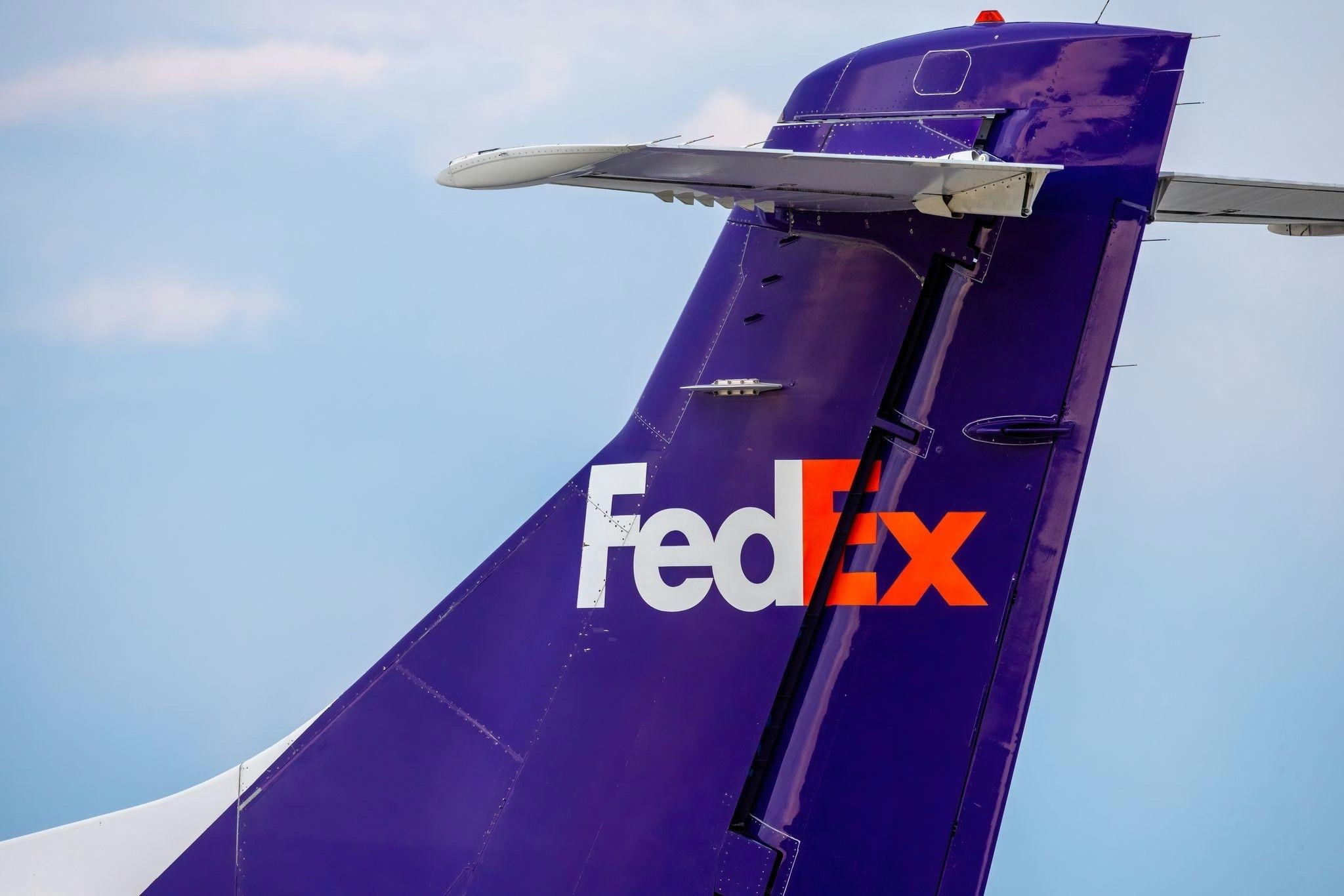
FedEx Signs Agreement with Chinese Airline to Expand Air Cargo Network
Strategic Partnership to Enhance Global Connectivity
FedEx has entered into a Strategic Memorandum of Understanding (MOU) with China Southern Air Logistics, marking a significant step toward expanding their global air cargo network. Announced on June 2, the agreement focuses on enhancing supply chain efficiency and route connectivity by sharing resources across five critical areas: cargo space, routes, fleet, operations, and digitalization. This collaboration is intended to create a more agile and resilient air logistics ecosystem, particularly serving the cross-border logistics needs of shippers based in China.
Central to this partnership is the reinforcement of Guangzhou, China, as a major international air cargo hub. FedEx’s existing operations at Guangzhou Baiyun International Airport (CAN) already play a pivotal role in the company’s intra-Asia and international express shipments, with a sorting capacity of 36,000 packages per hour. Poh-Yian Koh, President of FedEx China, emphasized the goal of building a smarter logistics network through this alliance. Industry experts, such as Derek Lossing of Cirrus Global Advisors, view the partnership as a logical progression for FedEx, given China Southern’s established fleet, reliable schedules, and strong local presence at CAN.
Market Context and Operational Implications
This strategic move aligns with broader industry practices, where global integrators like DHL Express have long utilized block space agreements with carriers on key international routes. Analysts suggest that FedEx may similarly integrate its operations with China Southern’s by purchasing blocks of capacity, thereby ensuring dependable transit times and connections. This is particularly relevant for shipments originating in the United States and destined for Southeast Asia, which are likely to transit through the combined FedEx and China Southern hub in Guangzhou.
The MOU arrives amid FedEx’s ongoing efforts to adapt its air cargo network to evolving market conditions. In 2023, the company introduced its “Tricolor” network redesign, segmenting operations to better match capacity with demand. FedEx has also signaled a strategic shift toward greater reliance on third-party providers for less time-sensitive shipments, while concentrating its own fleet resources on priority volumes. These adjustments included a reduction in air cargo capacity between Asia and the Americas, encompassing both owned and third-party capacity.
Challenges and Competitive Landscape
Despite the potential benefits, the partnership with China Southern Air Logistics presents several challenges. Regulatory and logistical complexities, particularly in the context of ongoing geopolitical tensions, may complicate efforts to integrate and expand the joint network. Furthermore, the air cargo sector remains fiercely competitive. FedEx faces pressure from rivals such as UPS, which may respond by recalibrating their own strategies to protect market share. Additionally, FedEx Freight’s stock has experienced volatility, influenced in part by Amazon’s growing presence in trucking services, which poses a threat to traditional carriers.
As FedEx and China Southern advance their collaboration, the global air cargo industry is poised for intensified competition and continued transformation, driven by shifting market dynamics and regulatory developments.

Etihad Deploys Widebody Fleet to Meet Strong Demand

Korean Air Finalizes $36.2 Billion Deal with Boeing

Australia’s RFDS Queensland Section Orders Six King Air 260Cs

Korean Air Finalizes Order for 103 Boeing Jets and Engines

Embraer E195-E2 Features Distinctive Engine Placement Among Regional Jets

What Passengers Can Expect on Boeing’s New 777X Jet

How Ethiopian Airlines Became Africa’s Leading Carrier Amid Gulf Competition

Joby Aviation Extends Autonomous Flight Capabilities with Cross-Country Tour
Strengthening Europe's Aviation Supply Chain Amid Uncertainty
The Evolution of the Aircraft Maintenance Engineer Role
