
Zet AI‑inzichten om in gerichte actie

Trending
Categories
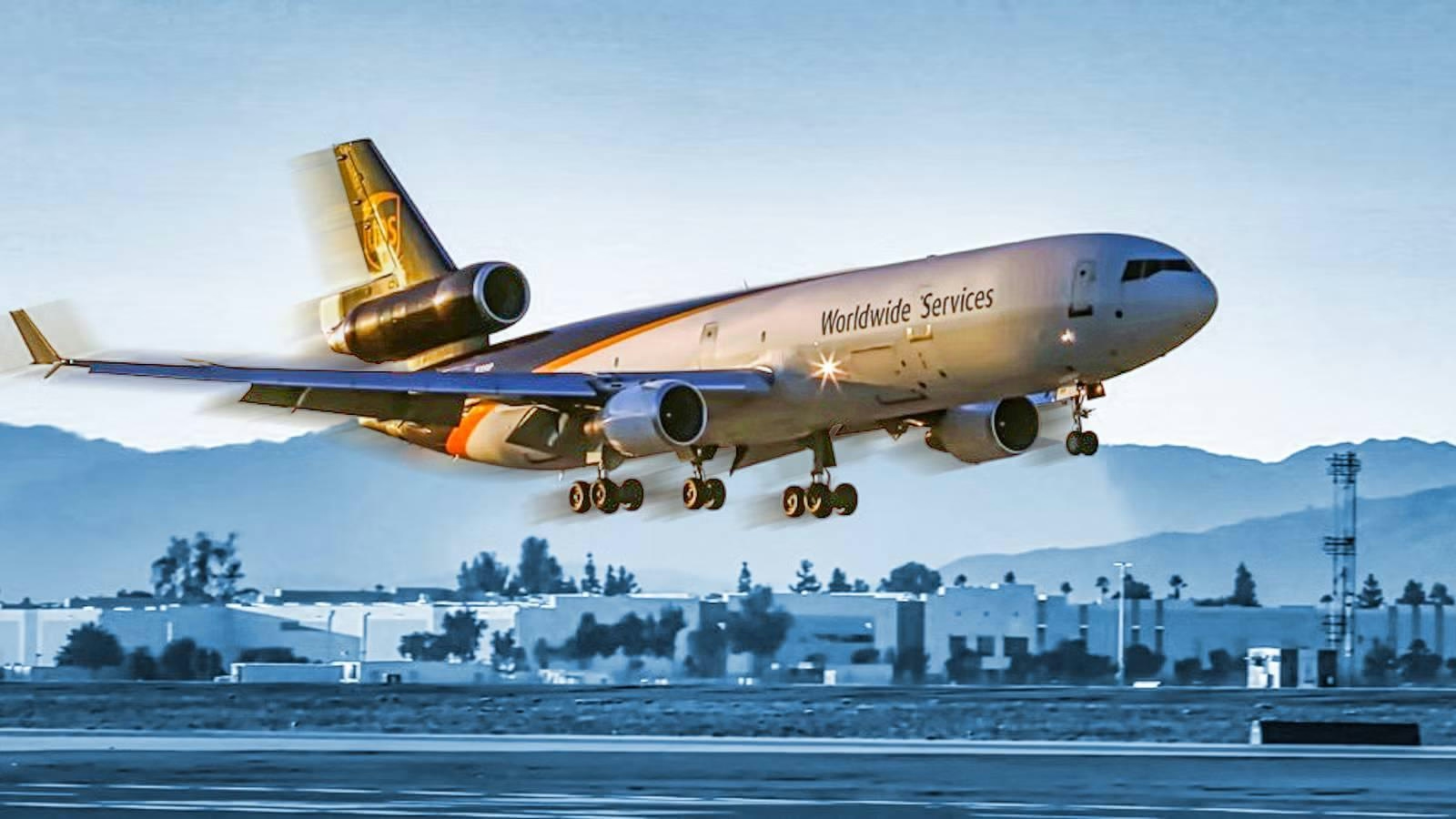
Five McDonnell Douglas Aircraft That Shaped Commercial Aviation
Five McDonnell Douglas Aircraft That Shaped Commercial Aviation
The Douglas Aircraft Company was a dominant force in commercial aviation both before and after World War II, celebrated for its iconic DC-3 and a succession of successful airliners including the DC-4, DC-6, and DC-7. The company’s transition into the Jet Age was marked by the introduction of the DC-8, a capable jetliner that, despite being outsold by the Boeing 707, played a crucial role in establishing jet travel as the standard for air transportation. Following the DC-8, the DC-9 emerged as a reliable short-range aircraft, though the financial pressures from both the DC-8 and DC-9 programs placed significant strain on Douglas’s resources.
In parallel, McDonnell Aircraft, primarily a military contractor, faced challenges due to the cyclical nature of defense spending and lacked a substantial presence in the civilian market. The 1967 merger of the two companies formed McDonnell Douglas, which rapidly became the world’s second-largest commercial aircraft manufacturer and a major military supplier. While McDonnell Douglas is often best remembered for military aircraft such as the C-17 Globemaster III and the F-15 Eagle, its commercial jets left an enduring legacy prior to the company’s eventual merger with Boeing in 1997.
DC-8: Pioneering the Jet Age
The DC-8 was Douglas’s first jet-powered airliner and, alongside the Boeing 707, was instrumental in ushering in the era of jet travel. Initially, the DC-8 trailed the 707 in market share due to fewer fuselage options, but the introduction of the Super 60 series—with extended range and new fuselage lengths—significantly enhanced its appeal. Although production ceased in 1972, the DC-8’s operational life was extended well beyond that point. In the late 1970s, airlines sought more fuel-efficient and quieter engines to comply with emerging noise and emissions regulations. This demand led to the re-engining of over 100 DC-8s with the CFM56 high-bypass turbofan, creating the ‘Super 70’ series. This upgrade not only prolonged the DC-8’s service but also helped establish the CFM56 as the most successful commercial jet engine in aviation history.
MD-80: Challenging the 727’s Dominance
During the 1960s and 1970s, the Boeing 727 dominated short- to medium-range routes, with the DC-9 and early Boeing 737 models serving as alternatives. The MD-80, an evolution of the DC-9, emerged as a formidable competitor by offering improved efficiency and greater passenger capacity. Its success marked a significant shift in the market, laying the groundwork for the modern single-aisle jets that now dominate commercial aviation worldwide.
Navigating Modern Challenges
The legacy of McDonnell Douglas’s aircraft is now considered within the context of a rapidly evolving industry. Intense competition from emerging markets, particularly in China and the United States, is driving the development of next-generation aircraft powered by zero-emission and hybrid technologies. European initiatives aimed at decarbonizing aviation, supported by legislative frameworks encouraging innovation, are accelerating the transition toward sustainable solutions. Meanwhile, competitors such as Embraer are increasing production and adapting to supply chain challenges, and new entrants are focusing on electric regional aircraft. Notably, MD Aircraft’s battery-swapping design represents a potential breakthrough that could redefine regional aviation.
As the commercial aviation industry continues to evolve, the pioneering spirit embodied by McDonnell Douglas’s aircraft remains influential, underscoring the enduring importance of innovation and adaptability in shaping the future of air travel.

Hong Kong's Five-Year Plan Includes Andrew Fan's Aircraft Parts Processing Hub Proposal

ACIA Aero Leasing Delivers ATR72-600 to Air Nostrum

RTX Appoints Jill Albertelli as Head of Pratt & Whitney

TAT Technologies Joins Beyond Aero Hydrogen Aircraft Program

AURAK Study Highlights Barriers to Air Taxi Adoption in Emerging Economies

Xiamen Air Selects Altitude for 787 Maintenance at Heathrow

Etihad and Swissport Extend Global Partnership

Sepehran Airlines B737 Returns to Mashhad After Tyre and Engine Issues

Etihad Deploys Widebody Fleet to Meet Strong Demand

Korean Air Finalizes $36.2 Billion Deal with Boeing
