
Zet AI‑inzichten om in gerichte actie

Trending
Categories
Flight Delays Reveal $34 Billion Crisis in Global Aviation
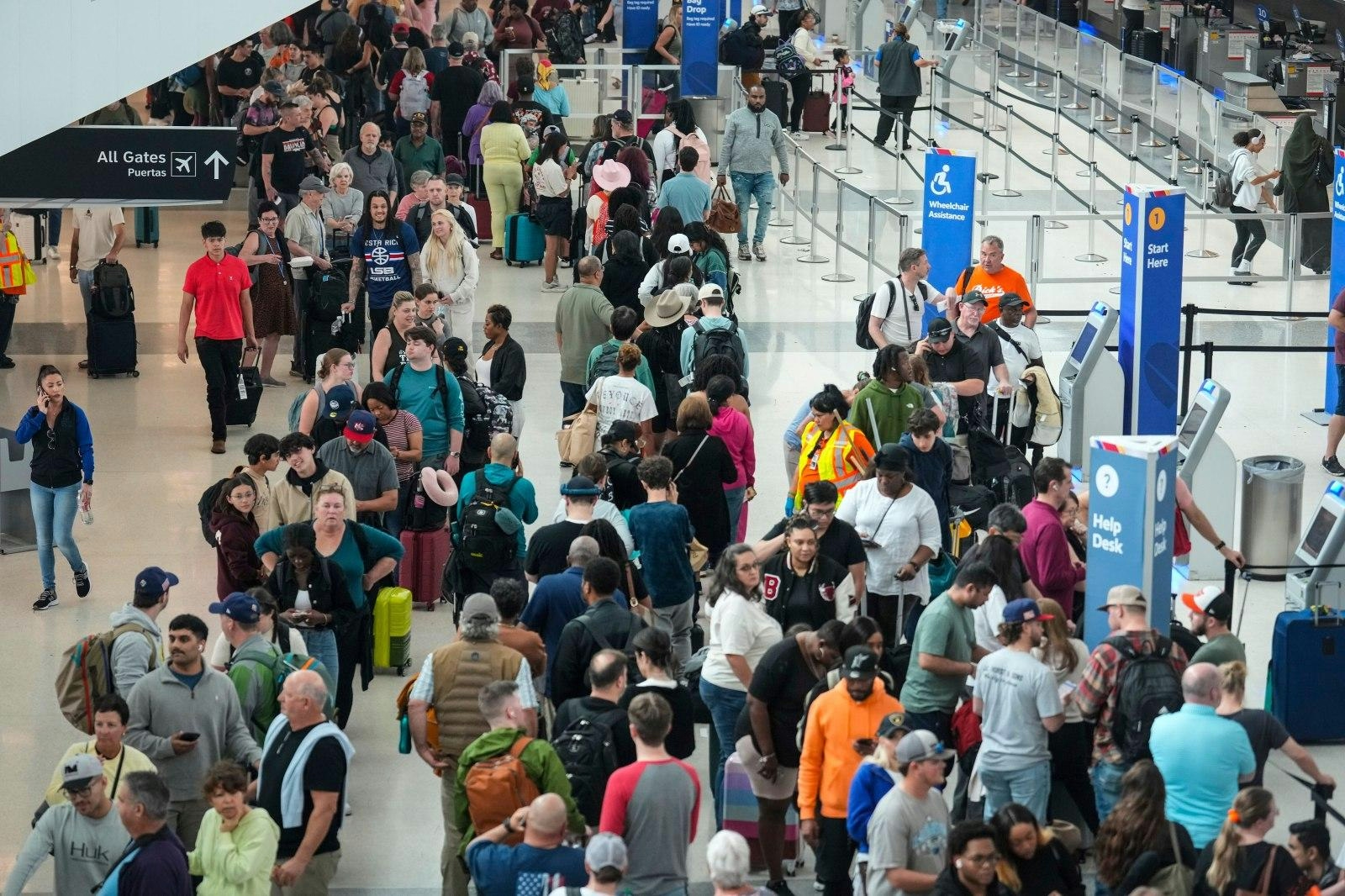
Flight Delays Reveal $34 Billion Crisis in Global Aviation
Flight disruptions, once regarded as occasional inconveniences during peak travel periods, have now exposed a profound and costly crisis within the global aviation industry. Recent analyses indicate that delays and cancellations in the United States alone impose an economic burden of up to $34 billion annually. This staggering figure underscores the extensive scale of the problem and its wide-ranging implications for the sector and the broader economy.
Economic and Operational Challenges
Research supported by both industry and government entities reveals that flight delays and cancellations in the U.S. generate an economic impact estimated between $30 billion and $34 billion each year. This assessment encompasses direct costs borne by airlines, including passenger compensation, rebooking expenses, and lost time, as well as secondary effects on related sectors such as hotels, car rentals, and local businesses.
In the aftermath of the pandemic, air travel demand has rebounded strongly, with passenger volumes in some markets surpassing pre-2019 levels. However, the capacity of fleets, crews, airspace, and airport infrastructure has not expanded correspondingly. This imbalance has rendered the system increasingly fragile, where even minor disruptions can cascade into widespread operational gridlock. For travelers, this translates into heightened risks of missed connections, extended airport layovers, and lost baggage. Airlines and airports face shrinking profit margins as they contend with the costs of contingency staffing, spare aircraft positioning, and compensation claims, all of which steadily erode operational resilience. The $34 billion figure highlights that flight disruption has evolved into a central economic and operational challenge for the aviation industry.
Environmental and Regulatory Pressures
Beyond economic costs, flight disruptions carry significant environmental consequences. Studies submitted to U.S. regulators estimate that delays and cancellations contribute millions of additional tons of carbon emissions annually. These emissions result from aircraft being rerouted, held in holding patterns, or repositioned empty to maintain schedules. This environmental toll complicates airlines’ efforts to meet climate commitments and raises concerns about the sector’s capacity to achieve long-term decarbonization goals amid persistent operational challenges.
The crisis is further exacerbated by supply chain constraints and aging aircraft fleets. A joint analysis by the International Air Transport Association (IATA) and industry consultants projects that supply chain disruptions will add over $11 billion in extra costs for airlines in 2025 alone. Delays in aircraft and engine deliveries, driven by shortages of skilled labor, specialized materials, and critical components, are forcing airlines to extend the service life of older, less fuel-efficient jets. IATA reports a record backlog exceeding 17,000 commercial aircraft orders, which delays anticipated improvements in fuel efficiency and contributes to rising operational costs.
Market Dynamics and Consumer Impact
The structural vulnerabilities of the aviation industry are also influencing global travel patterns. The sector’s heavy reliance on a limited number of major carriers has intensified the risk of widespread disruption. This concentration has attracted increased scrutiny from competition and consumer protection authorities, alongside ongoing regulatory investigations into potential anti-competitive practices by dominant players.
In response to escalating costs, airlines have raised airfares, while travelers contend with longer security lines and potential delays caused by staffing shortages at agencies such as the Transportation Security Administration. Meanwhile, competitors are pursuing expansion and new partnerships in an effort to mitigate the impact of delays and disruptions. Despite these efforts, the underlying challenges remain formidable.
As the aviation sector confronts these interconnected pressures, flight disruption has transcended its status as a temporary inconvenience to become a defining challenge for the industry’s future.

Etihad Airways Suspends Airbus A380 Flights on Key Route

Aditya Birla Group Seeks Approval for Aircraft Leasing in GIFT City

Qatar Airways Highlights Innovation and Connectivity at Arabian Travel Market 2026

Hong Kong's Five-Year Plan Includes Andrew Fan's Aircraft Parts Processing Hub Proposal

ACIA Aero Leasing Delivers ATR72-600 to Air Nostrum

RTX Appoints Jill Albertelli as Head of Pratt & Whitney

TAT Technologies Joins Beyond Aero Hydrogen Aircraft Program

AURAK Study Highlights Barriers to Air Taxi Adoption in Emerging Economies

Xiamen Air Selects Altitude for 787 Maintenance at Heathrow

Etihad and Swissport Extend Global Partnership
