
Zet AI‑inzichten om in gerichte actie

Trending
Categories
GE Confident Leap Turbofans Can Match CFM56 Durability
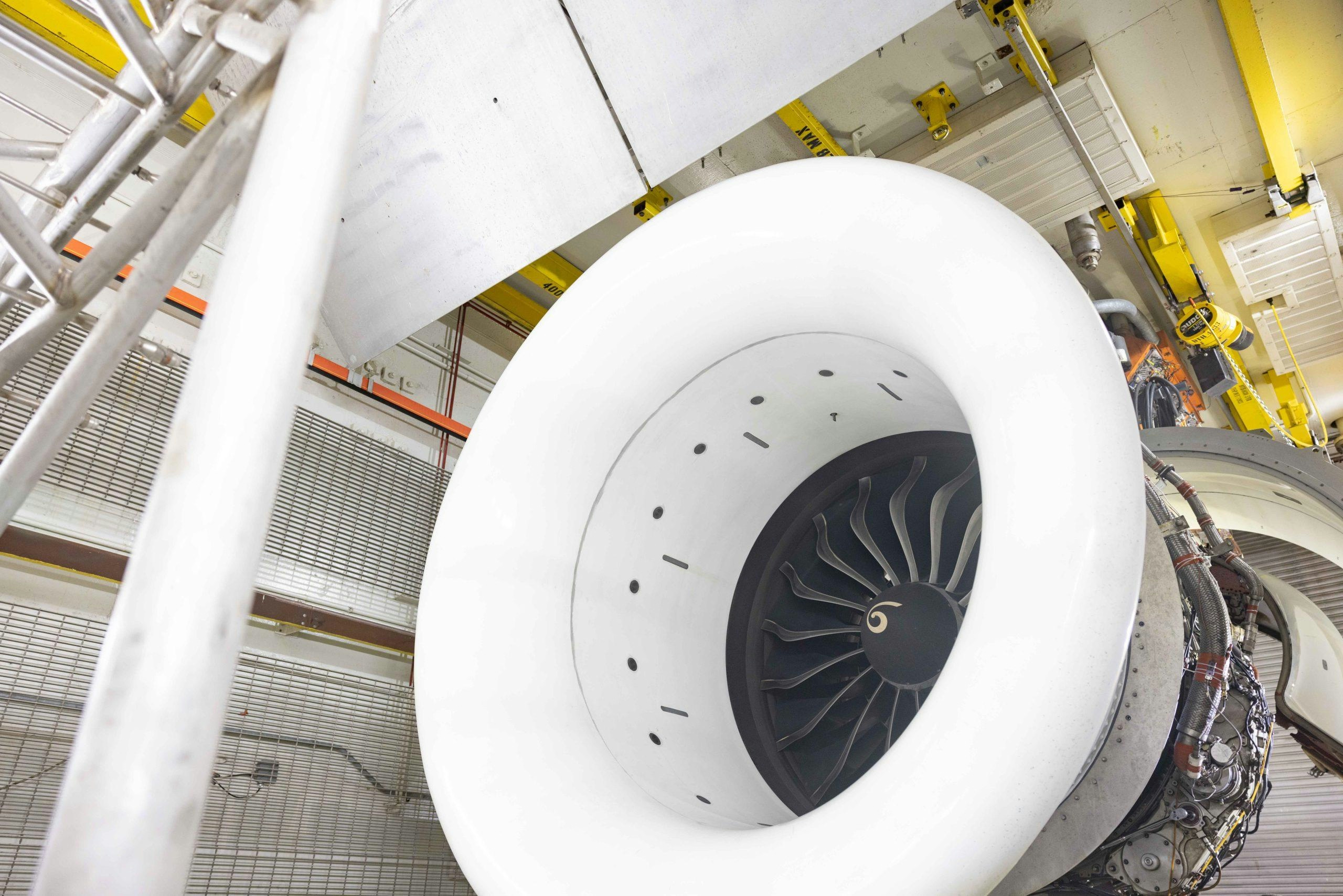
GE Confident Leap Turbofans Can Match CFM56 Durability
Design Enhancements Target Durability Challenges
GE Aerospace has expressed strong confidence that its Leap turbofan engines will ultimately achieve the long-term durability standards set by the widely respected CFM56 engines. This assurance follows a series of design improvements and component upgrades aimed at addressing heat-related durability issues. GE, which co-owns CFM International with Safran Aircraft Engines, is currently implementing high-pressure turbine (HPT) updates for the Leap-1A model, which powers the Airbus A320neo family, and is preparing similar enhancements for the Leap-1B, the exclusive engine for the Boeing 737 Max.
These updates respond to operational challenges, particularly in hot and dusty environments such as the Middle East, where operators have had to overhaul Leap engines sooner than expected. In 2024, GE introduced a durability improvement package for the Leap-1A, which the company claims will double the time between required overhauls. Despite these initial hurdles, GE delivered 640 Leap engines in the first quarter of 2026, marking a 50% increase year-on-year. CFM International anticipates delivering over 2,000 Leap engines throughout 2026, even as it contends with rising raw material costs and ongoing supply chain pressures.
Addressing Technical and Operational Concerns
Mohamed Ali, GE’s commercial engines and services chief executive, highlighted the evolutionary nature of engine development during a recent briefing at GE’s Evendale, Ohio facility. He noted that the CFM56 itself underwent multiple generations before reaching its current level of reliability and expressed no doubt that the Leap will follow a similar trajectory. This milestone is particularly important as operators have raised concerns about the reliability of new-generation engines, including both the Leap and Pratt & Whitney’s competing PW1000G geared turbofans. Some industry observers have speculated that the higher core temperatures in these modern engines could limit their longevity compared to established models like the CFM56.
Carlos Perez, GE vice-president of product safety, quality, and engineering, elaborated on the technical challenges involved. The high-pressure turbine, a critical component, is exposed to air temperatures reaching approximately 1,650°C (3,000°F), several hundred degrees hotter than in previous engine models. While advanced cooling systems protect metallic parts, the complex geometry of the air paths—with tolerances as fine as a human hair—makes achieving consistent durability difficult. Perez explained that unexpectedly high temperatures in the field can cause a phenomenon known as creep, a form of plastic deformation in turbine blades that can eventually lead to blade loss.
Ali further emphasized that improvements in engine durability are typically realized over time. He cited the GE90 engines, which initially faced skepticism but now maintain on-wing times of 5,000 to 6,000 cycles. Similarly, the GEnx engines used on the Boeing 787 and 747-8 experienced significant durability gains following early operational setbacks.
Market Outlook and Regulatory Scrutiny
Despite these technical advancements, concerns persist regarding regulatory responses to recent Leap engine smoke incidents. A Department of Transportation inspector has called for more decisive action from the Federal Aviation Administration (FAA) in addressing these issues. Meanwhile, Safran remains optimistic about the commercial aviation market, reporting a high volume of shop visits in the first quarter of 2026.
With ongoing technical refinements and a strong delivery pipeline, GE and Safran are confident that the Leap engine will ultimately match the CFM56’s longstanding reputation for durability and reliability.

Etihad Airways Suspends Airbus A380 Flights on Key Route

Aditya Birla Group Seeks Approval for Aircraft Leasing in GIFT City

Qatar Airways Highlights Innovation and Connectivity at Arabian Travel Market 2026

Hong Kong's Five-Year Plan Includes Andrew Fan's Aircraft Parts Processing Hub Proposal

ACIA Aero Leasing Delivers ATR72-600 to Air Nostrum

RTX Appoints Jill Albertelli as Head of Pratt & Whitney

TAT Technologies Joins Beyond Aero Hydrogen Aircraft Program

AURAK Study Highlights Barriers to Air Taxi Adoption in Emerging Economies

Xiamen Air Selects Altitude for 787 Maintenance at Heathrow

Etihad and Swissport Extend Global Partnership
