
Zet AI‑inzichten om in gerichte actie

Trending
Categories
GE Continues Work on GE9X Mid-Seal Issue, Says 777-9 Delivery Remains on Track
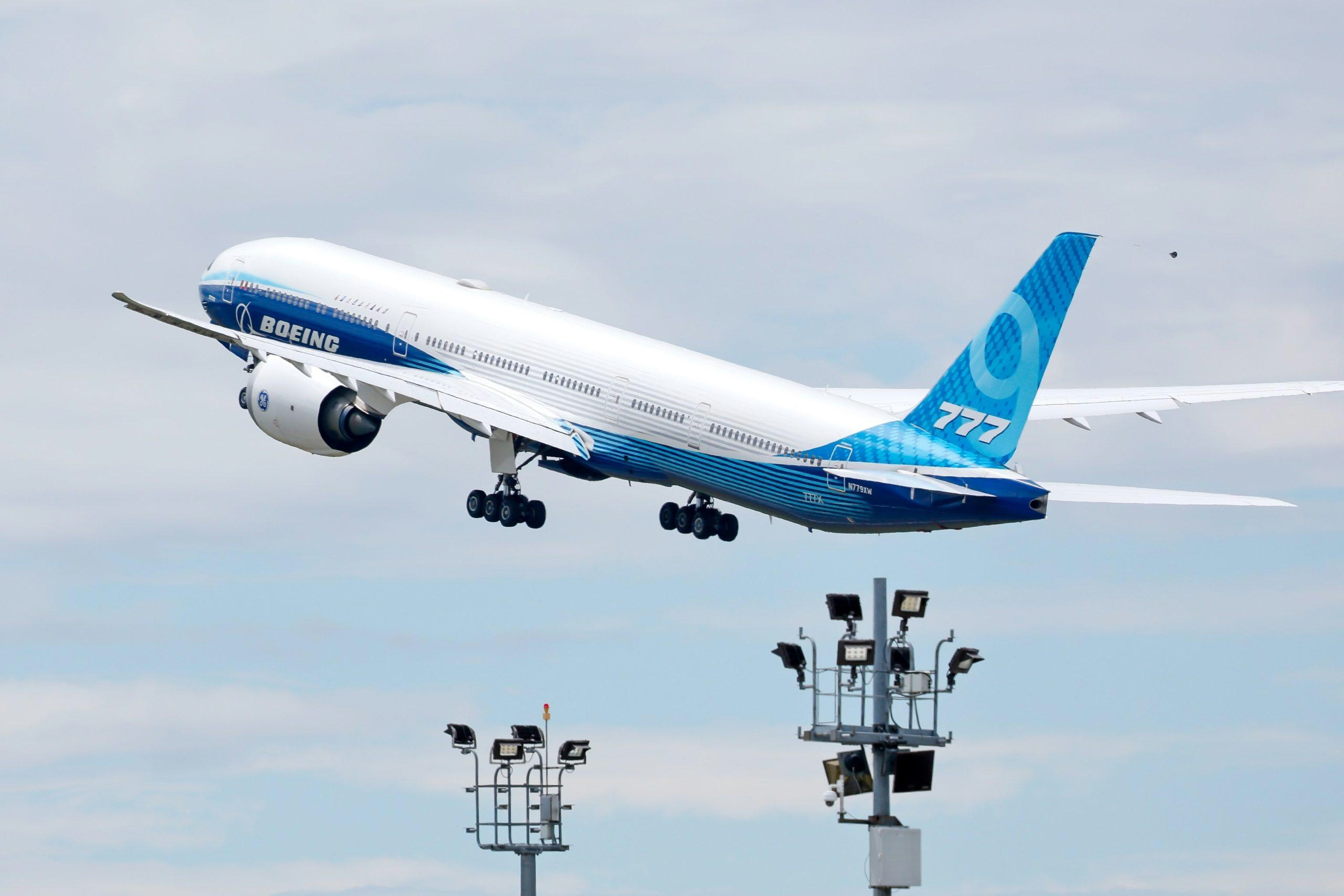
GE Advances GE9X Mid-Seal Repair, Confirms 777-9 Delivery Schedule
GE Aerospace is progressing with a targeted modification to resolve a durability issue affecting the mid seal of its GE9X engine, assuring that this challenge will not disrupt Boeing’s delivery timeline for the long-delayed 777-9 aircraft. The problem, which became public in February following the discovery of a crack in a GE9X engine used in Boeing’s 777-9 test program, has prompted a concentrated engineering effort from GE.
During GE’s first-quarter earnings call, CEO Larry Culp stated that the company believes it has identified the root cause of the mid-seal crack and is in the process of finalizing a corrective modification. “The crack that we uncovered during a shop visit, which is part of a flight-test engine, is something we’ve seen before. We think we are at root cause, and we’re finalising the modification as we speak,” Culp explained. He further noted that GE is updating its tooling and increasing supplier readiness for the revised component.
Despite this setback, GE delivered some GE9X engines in the first quarter, although fewer than initially planned. The company anticipates ramping up deliveries in the second half of the year and does not expect the issue to affect its full-year delivery targets. Culp emphasized GE’s transparency with Boeing and the Federal Aviation Administration (FAA), affirming that the company remains aligned with the certification plan communicated to customers.
Boeing continues to express confidence in its schedule for the 777-9, targeting certification and the commencement of deliveries in 2027. The manufacturer is also advancing certification efforts for its new 737 Max variants, including the Max 10 and Max 7, with deliveries expected to begin next year.
Technical Challenges and Broader Aerospace Efforts
The GE9X engine, certified by the FAA in 2020 with a thrust rating of 134,300 pounds (597 kN), has encountered several technical challenges throughout its development. Prior to certification, GE paused testing to address a durability issue involving stator vanes in the high-pressure compressor, which caused excessive exhaust gas temperatures and premature component wear. In 2022, Boeing temporarily suspended 777-9 flight testing after GE identified another temperature-related concern during a borescope inspection.
Beyond commercial aviation, GE Aerospace is accelerating development of its T901 engine for the U.S. Army amid uncertain defense budgets. The Army is also advancing its Black Hawk engine upgrade program, highlighting GE’s broader commitment to enhancing durability and performance across its engine portfolio, particularly for operations in demanding environments.
GE’s ongoing efforts to modify the GE9X mid seal underscore its dedication to resolving technical issues without jeopardizing critical aircraft programs. Both GE and Boeing maintain that the 777-9 remains on track for its planned entry into service, supported by continued transparency and collaboration with regulatory authorities.

Etihad Airways Suspends Airbus A380 Flights on Key Route

Aditya Birla Group Seeks Approval for Aircraft Leasing in GIFT City

Qatar Airways Highlights Innovation and Connectivity at Arabian Travel Market 2026

Hong Kong's Five-Year Plan Includes Andrew Fan's Aircraft Parts Processing Hub Proposal

ACIA Aero Leasing Delivers ATR72-600 to Air Nostrum

RTX Appoints Jill Albertelli as Head of Pratt & Whitney

TAT Technologies Joins Beyond Aero Hydrogen Aircraft Program

AURAK Study Highlights Barriers to Air Taxi Adoption in Emerging Economies

Xiamen Air Selects Altitude for 787 Maintenance at Heathrow

Etihad and Swissport Extend Global Partnership
