
Zet AI‑inzichten om in gerichte actie

Trending
Categories
Global Aviation Expands in First Quarter Despite Middle East Conflict
Global Aviation Expands in First Quarter Despite Middle East Conflict
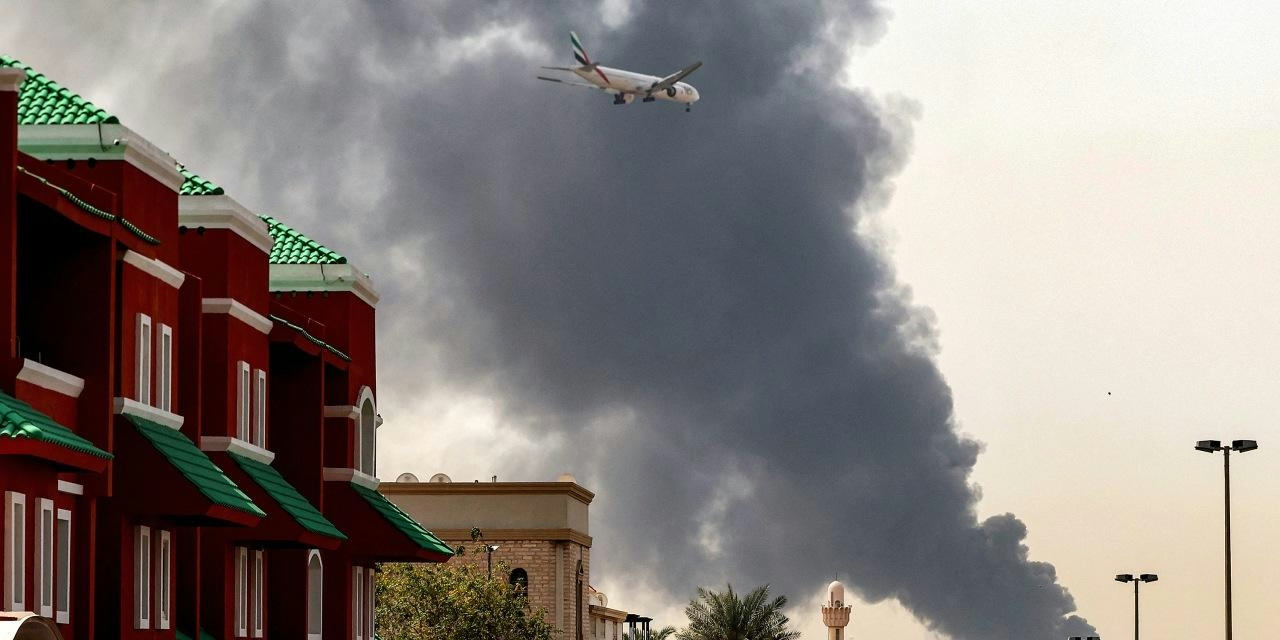
Global airline passenger capacity increased by 2.4% year-on-year in the first quarter of 2026, according to aviation consultancy IBA. This growth underscores the sector’s resilience amid ongoing conflict and operational disruptions in parts of the Middle East. The region experienced a significant 14% decline in capacity, primarily due to airspace closures and reduced international flights. Business aviation in the Middle East also remained subdued, with Gulfstream reporting a slowdown in order intake and production delays linked to the conflict. Nevertheless, these effects were relatively contained, and global business aviation activity overall exceeded 2025 levels, particularly along the Africa-Asia corridor.
Regional Performance and Market Dynamics
Most other regions recorded robust growth during the quarter. Capacity in Asia, Europe, Latin America, and Africa rose between 4% and 8% compared to the same period last year. North America saw more modest expansion, with capacity increasing by 1.2% year-on-year to 611 billion available seat kilometres (ASKs), reflecting slower growth in mature markets. Domestic travel continued to drive the sector’s recovery, with domestic capacity rising 3.3% year-on-year, outpacing the 1.7% growth observed in international markets. Compared to pre-pandemic levels, domestic capacity is now 20% higher than in 2019, while international capacity remains 9.5% above the same benchmark, indicating a more gradual rebound in long-haul travel.
China remained a key contributor to global growth, with capacity up 9% from the first quarter of 2025 and 25% above pre-pandemic levels. This expansion was fueled by strong domestic demand alongside a steady recovery in international services.
Supply Constraints and Industry Outlook
Aircraft supply constraints continued to limit overall capacity growth. During the quarter, only 271 aircraft were delivered, representing a 3% decline year-on-year and 22% below 2018 levels. Narrowbody deliveries accounted for 215 aircraft, down 5% from the previous year. Production of the Airbus A320neo family averaged 27 aircraft per month, while Boeing delivered 38 737 MAX aircraft monthly.
Despite these challenges, industry sentiment remains largely positive. Safran, a major aerospace supplier, reported no significant slowdown in the commercial aviation market and noted a high volume of shop visits in the first quarter. Meanwhile, BAA & Partners introduced a new framework designed to assist airlines in managing operational challenges arising from the Middle East conflict.
Overall, the global aviation sector demonstrated continued expansion in early 2026, with strong growth across most regions and market segments offsetting the localized impact of geopolitical disruptions.

Etihad Airways Suspends Airbus A380 Flights on Key Route

Aditya Birla Group Seeks Approval for Aircraft Leasing in GIFT City

Qatar Airways Highlights Innovation and Connectivity at Arabian Travel Market 2026

Hong Kong's Five-Year Plan Includes Andrew Fan's Aircraft Parts Processing Hub Proposal

ACIA Aero Leasing Delivers ATR72-600 to Air Nostrum

RTX Appoints Jill Albertelli as Head of Pratt & Whitney

TAT Technologies Joins Beyond Aero Hydrogen Aircraft Program

AURAK Study Highlights Barriers to Air Taxi Adoption in Emerging Economies

Xiamen Air Selects Altitude for 787 Maintenance at Heathrow

Etihad and Swissport Extend Global Partnership
