
Zet AI‑inzichten om in gerichte actie

Trending
Categories
Ground Staff Strike at Mumbai Airport Delays AI Passengers for Three Hours
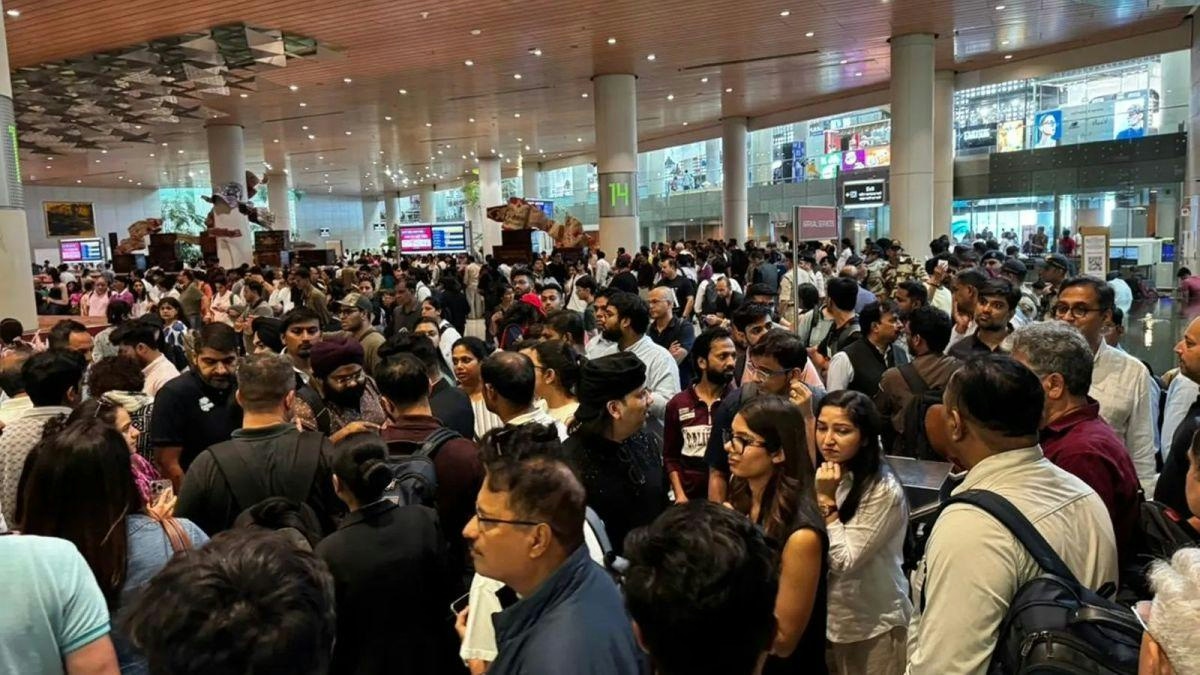
Ground Staff Strike at Mumbai Airport Causes Major Delays for Air India Passengers
On Monday, Mumbai Airport experienced significant operational disruptions as an unscheduled strike by ground staff led to delays of up to three hours for thousands of passengers flying with Air India, Air India Express, and several international carriers. The protest, initiated by employees of AI Airport Services Ltd (AIASL)—a government-owned ground handling company—affected airport operations between 10 a.m. and 1 p.m., resulting in widespread inconvenience.
Impact on Flight Operations and Passenger Experience
The strike caused delays for 31 departing flights and disrupted the parking of five arriving aircraft. Baggage handling was severely affected, with delays reported for six international and 33 domestic flights. Critical services such as check-in, cargo handling, and baggage delivery were hampered, leading to mounting frustration among travelers and raising concerns about the reliability of airline services. Notably, passengers on a Delhi-Mumbai flight were forced to remain seated onboard for nearly two hours after landing due to the absence of ground staff. Flights departing to destinations including Delhi, Chandigarh, Udaipur, Kolkata, and Bhuj were among those delayed.
AIASL’s role as the primary ground handling provider for the Air India group and 37 foreign airlines meant that the strike’s impact extended beyond Air India and Air India Express, affecting other carriers and freight operators as well. Airport authorities, including the Central Industrial Security Force (CISF), local police, terminal operations, and airside teams, coordinated efforts to maintain operational continuity and mitigate passenger inconvenience. Nevertheless, the incident exposed vulnerabilities in ground operations and highlighted the potential for increased regulatory scrutiny and passenger dissatisfaction.
Union Demands and Management Response
The strike was organized by workers affiliated with the Akhil Bhartiya Kamgar Karmachari Sangh (ABKKS), who issued a “final ultimatum” to management over longstanding grievances. The union’s demands included permanent employment status for contract workers with over five years of service, implementation of a wage revision pending since 2017, equal pay for equal work, improved transport and canteen facilities, a transparent promotion policy, reimbursement of salary deductions made during the Covid-19 period, compensation for retiring employees, enhanced medical and accident insurance, and a cessation of recruitment of retired staff.
Following the protest near the airport premises, the union reported that management had provided written assurances to address these issues. The ABKKS had previously warned that failure to resolve these demands could lead to further industrial action under the Industrial Disputes Act.
An Air India spokesperson acknowledged the disruption, stating, “Industrial action by employees of a third-party ground handling agency at Mumbai airport is impacting the operations of Air India Express and Air India. Our airport teams are working closely with all stakeholders to minimise inconvenience to guests and restore normal operations at the earliest. We appreciate the understanding and patience of our guests during this time.”
George Abraham, general secretary of the Aviation Industry Employees Guild, expressed solidarity with the striking workers, describing their demands as “100% justified.”
Broader Implications for Air India and the Aviation Sector
Beyond the immediate operational challenges, the strike has raised broader concerns regarding Air India’s service reliability. Industry observers suggest that such disruptions may prompt passengers to consider alternative carriers, while competitors could leverage the situation to emphasize their own operational stability. The episode places additional pressure on Air India to resolve underlying labor issues promptly and restore passenger confidence amid heightened regulatory attention.

Etihad Airways Suspends Airbus A380 Flights on Key Route

Aditya Birla Group Seeks Approval for Aircraft Leasing in GIFT City

Qatar Airways Highlights Innovation and Connectivity at Arabian Travel Market 2026

Hong Kong's Five-Year Plan Includes Andrew Fan's Aircraft Parts Processing Hub Proposal

ACIA Aero Leasing Delivers ATR72-600 to Air Nostrum

RTX Appoints Jill Albertelli as Head of Pratt & Whitney

TAT Technologies Joins Beyond Aero Hydrogen Aircraft Program

AURAK Study Highlights Barriers to Air Taxi Adoption in Emerging Economies

Xiamen Air Selects Altitude for 787 Maintenance at Heathrow

Etihad and Swissport Extend Global Partnership
