
Zet AI‑inzichten om in gerichte actie

Trending
Categories
GS-ASI Autonomous Jet Successfully Completes Simulated Shoot-Down Demo
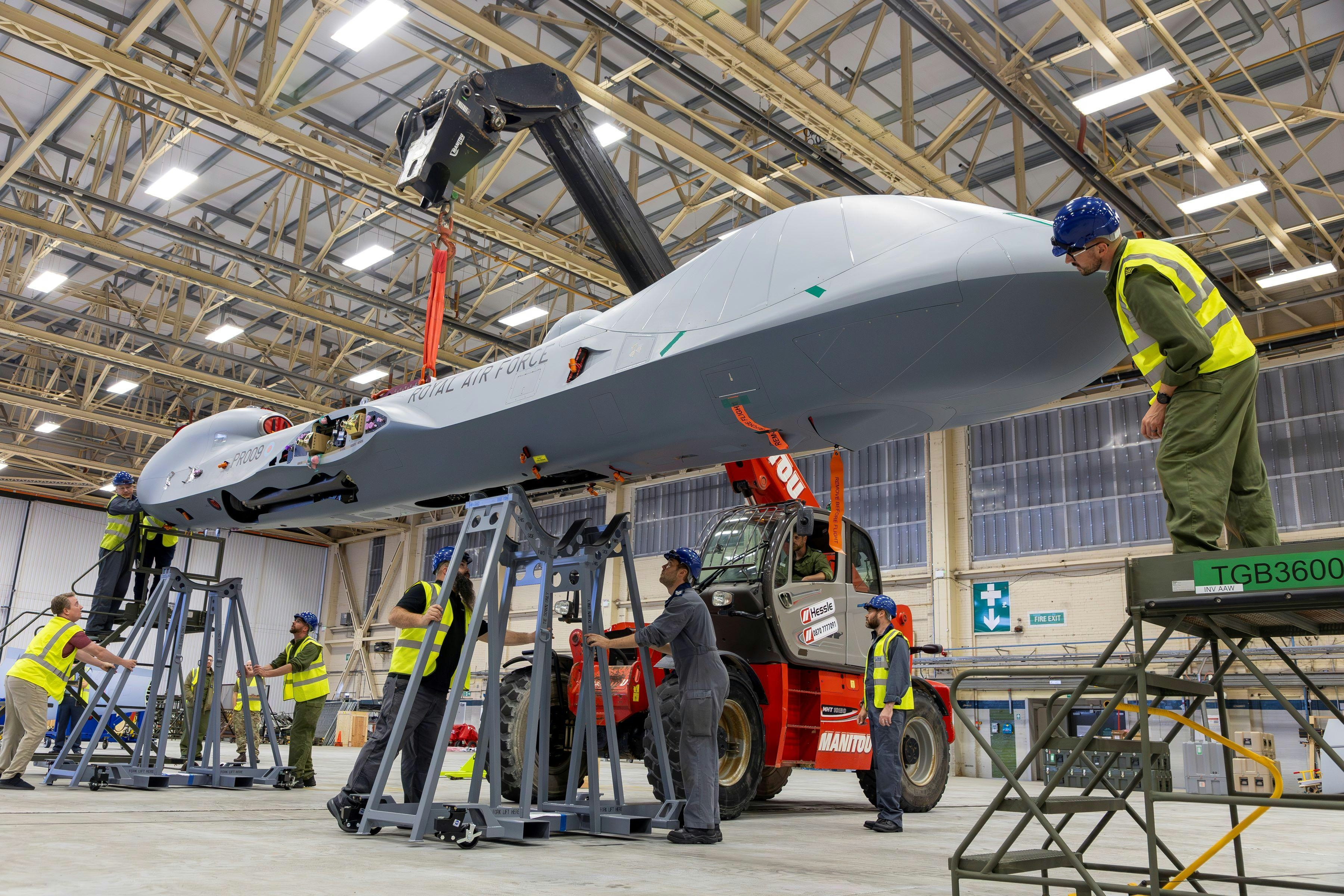
GS-ASI Autonomous Jet Successfully Completes Simulated Shoot-Down Demonstration
General Atomics Aeronautical Systems, Inc. (GA-ASI) has achieved a significant milestone in autonomous military aviation with the successful test of its MQ-20 Avenger unmanned jet. On June 11, the MQ-20 executed a simulated autonomous shoot-down during a complex exercise involving multiple live and virtual aircraft. This demonstration integrated both government reference autonomy software and Shield AI’s Hivemind system, highlighting the jet’s advanced autonomous capabilities.
Demonstration Highlights and Technological Integration
The exercise showcased the MQ-20’s ability to autonomously marshal and maintain dynamic midair station-keeping alongside other real aircraft, patrol a simulated combat zone, make independent tactical decisions, and collaborate effectively with human command-and-control operators. The operation culminated in a simulated missile strike against live targets, underscoring the maturity and operational potential of current autonomous technologies for future defense platforms.
A key feature of the test was the seamless mid-flight transition from government-supplied autonomy software to Shield AI’s Hivemind system, which occurred without any disruption to aircraft stability or mission continuity. This interoperability was made possible through adherence to standardized government reference architectures, enabling rapid integration of diverse software solutions. This approach has been likened to an “app store” for autonomy features, allowing the Department of Defense to leverage a broad vendor ecosystem. Such modularity fosters ongoing innovation and accelerates the deployment of new capabilities.
Michael Atwood, vice president of Advanced Programs at GA-ASI, emphasized the importance of this flexibility, stating, “This event reflects the kind of interoperability and adaptability we believe is essential for future autonomy efforts. Being able to rapidly integrate and test autonomy elements from multiple vendors helps ensure the most effective capabilities are available to the warfighter, regardless of origin.”
Industry Implications and Future Challenges
The successful demonstration is expected to attract increased interest from defense contractors and investors as autonomous solutions become a growing priority within the defense sector. Nevertheless, significant challenges remain, including regulatory hurdles, integration with existing military systems, and ensuring the reliability of autonomous technologies under real-world combat conditions.
The competitive landscape is intensifying as rival defense firms accelerate their development of autonomous systems, pursue new partnerships, and intensify lobbying efforts for defense contracts. Recent advancements in the broader autonomous vehicle sector, such as the autonomous flight of the AW139 helicopter by Near Earth and Honeywell, further illustrate the rapid pace of innovation and the mounting competition in this field.
GA-ASI’s test underscores how standardized architectures can reduce integration timelines, prevent vendor lock-in, and enable flexible, scalable autonomy solutions that evolve with mission requirements. As the defense industry increasingly embraces autonomy, the capacity to swiftly incorporate and deploy new technologies will be crucial to maintaining a competitive advantage.

Etihad Airways Suspends Airbus A380 Flights on Key Route

Aditya Birla Group Seeks Approval for Aircraft Leasing in GIFT City

Qatar Airways Highlights Innovation and Connectivity at Arabian Travel Market 2026

Hong Kong's Five-Year Plan Includes Andrew Fan's Aircraft Parts Processing Hub Proposal

ACIA Aero Leasing Delivers ATR72-600 to Air Nostrum

RTX Appoints Jill Albertelli as Head of Pratt & Whitney

TAT Technologies Joins Beyond Aero Hydrogen Aircraft Program

AURAK Study Highlights Barriers to Air Taxi Adoption in Emerging Economies

Xiamen Air Selects Altitude for 787 Maintenance at Heathrow

Etihad and Swissport Extend Global Partnership
