
Zet AI‑inzichten om in gerichte actie

Trending
Categories
HAL Receives Three Additional GE F404 Engines for Tejas Mk1A, Total Now Ten
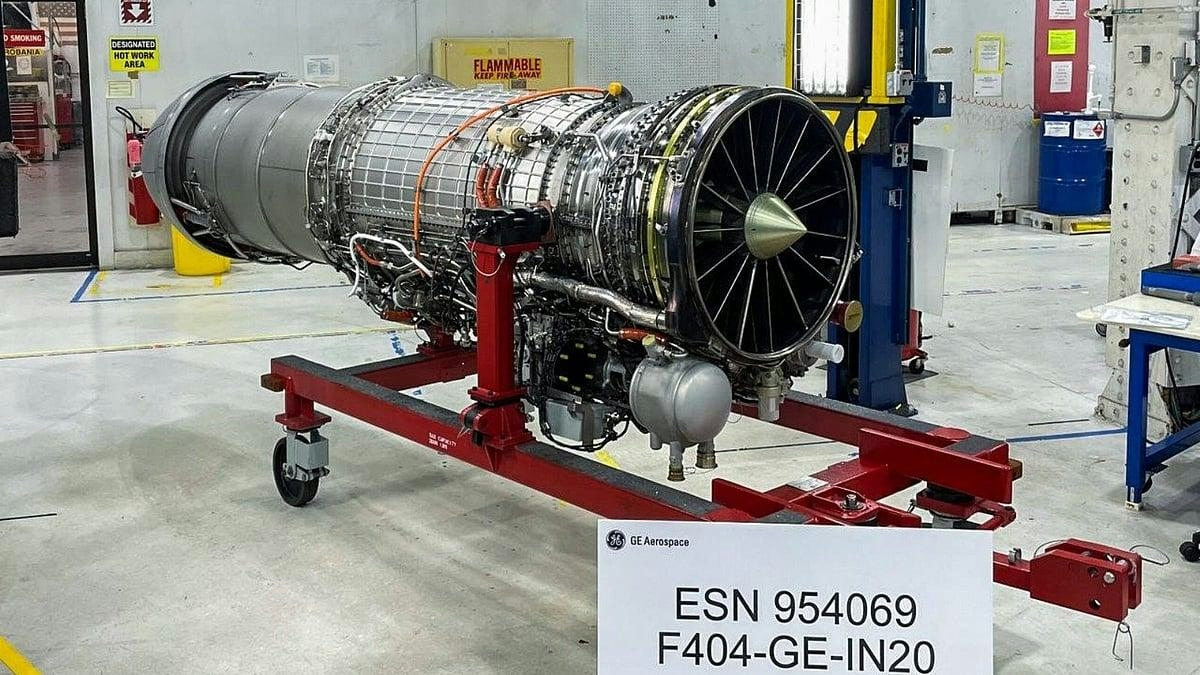
HAL Receives Three Additional GE F404 Engines for Tejas Mk1A, Total Now Ten
US defense contractor GE Aerospace has delivered three more F404-IN20 engines to Hindustan Aeronautics Limited (HAL) for India’s Light Combat Aircraft (LCA) Tejas Mk1A program, increasing the total number of engines supplied to ten. This latest shipment, completed in August, forms part of a broader contract to provide 99 engines for the indigenous fighter fleet.
The F404-IN20 Engine and Its Significance
The F404 engine, regarded by GE Aerospace as one of the most successful military aviation powerplants globally, powers thousands of combat aircraft. The F404-IN20 variant is specifically designed for India’s single-engine Tejas, offering the highest thrust within the F404 family. It features a higher-flow fan, unique single-crystal turbine blades, and several specialized components tailored to the aircraft’s operational requirements.
While HAL’s production line for the Tejas Mk1A is operational, the pace of aircraft deliveries has been constrained by delays in engine supply. Engine availability remains a critical bottleneck, prompting HAL to impose contractual penalties on GE for late deliveries. HAL officials confirmed that the contract includes provisions for liquidated damages should GE fail to meet delivery schedules, with penalties being enforced accordingly.
Production Commitments and Challenges Ahead
Former HAL Chairman DK Sunil has indicated that GE has committed to delivering 20 F404 engines between June and December 2026. The Indian Air Force’s order of 180 LCA Mk1A aircraft underscores the urgency of timely engine deliveries to meet operational demands.
GE Aerospace had previously fulfilled an earlier commitment by delivering 65 F404-IN20 engines by 2016. Following a pause in orders, production was halted. However, the 2021 contract with HAL, valued at ₹5,375 crore, led GE to restart the F404-IN20 production line after a five-year hiatus and to re-engage its global supply chain.
Despite recent deliveries, HAL continues to face challenges in securing additional engines. Industry analysts highlight that production delays and quality control issues—concerns also raised by the U.S. Air Force regarding current jet engine manufacturing—could further affect the Tejas program’s timeline. These difficulties arise amid intensifying competition in the military engine market. Notably, French manufacturer Safran is collaborating with HAL to develop a new turboshaft engine, indicating potential shifts in future procurement strategies.
Market observers anticipate that these developments may prompt rival engine manufacturers to intensify efforts to secure defense contracts and enhance their technological offerings to meet evolving military requirements. As HAL and GE Aerospace maintain their partnership, overcoming supply chain obstacles remains critical to ensuring the timely induction of the Tejas Mk1A into the Indian Air Force.

Etihad Airways Suspends Airbus A380 Flights on Key Route

Aditya Birla Group Seeks Approval for Aircraft Leasing in GIFT City

Qatar Airways Highlights Innovation and Connectivity at Arabian Travel Market 2026

Hong Kong's Five-Year Plan Includes Andrew Fan's Aircraft Parts Processing Hub Proposal

ACIA Aero Leasing Delivers ATR72-600 to Air Nostrum

RTX Appoints Jill Albertelli as Head of Pratt & Whitney

TAT Technologies Joins Beyond Aero Hydrogen Aircraft Program

AURAK Study Highlights Barriers to Air Taxi Adoption in Emerging Economies

Xiamen Air Selects Altitude for 787 Maintenance at Heathrow

Etihad and Swissport Extend Global Partnership
