
Zet AI‑inzichten om in gerichte actie

Trending
Categories
Hawaiian Airlines Introduces Electric Aircraft on Runway
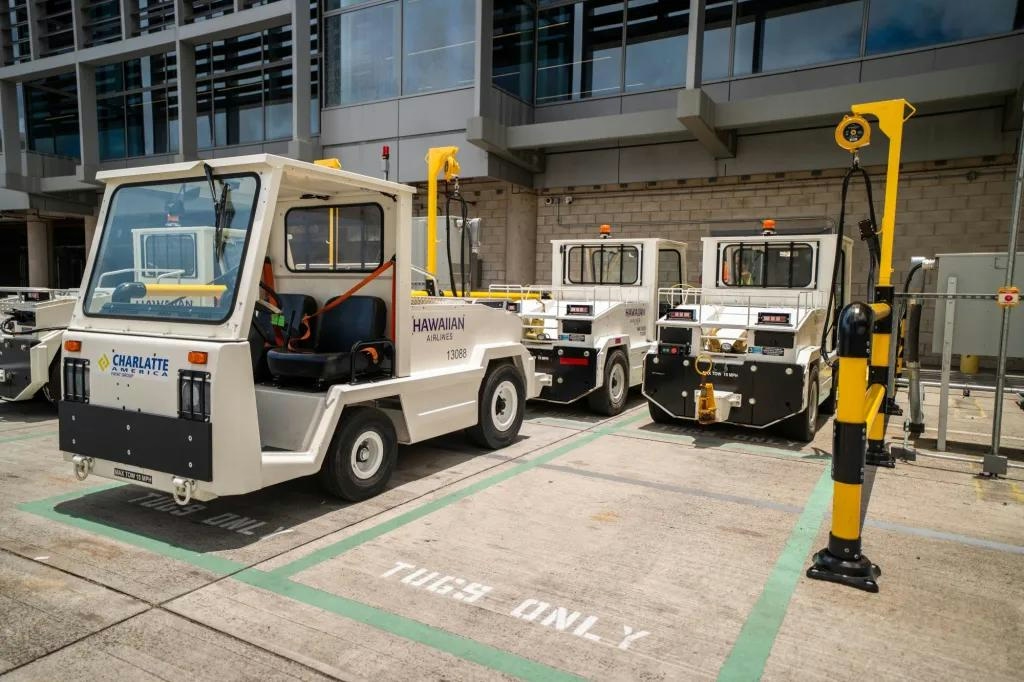
Hawaiian Airlines Launches Electric Ground Fleet at Honolulu Airport
Hawaiian Airlines has introduced a new fleet of electric ground support equipment at Honolulu International Airport, replacing 116 diesel and propane-powered vehicles in a significant stride toward sustainability. The lithium battery-powered fleet, which includes baggage tractors, belt loaders, and aircraft pushback tractors, now constitutes 73% of the airline’s ground support equipment at its Honolulu hub.
Advancing Sustainability and Operational Efficiency
This transition is expected to eliminate fossil fuel consumption for ground operations, substantially reducing greenhouse gas emissions, engine noise, fumes, and the risk of fuel spills. Hawaiian Airlines anticipates that the investment will also lower maintenance costs, enhance operational efficiency, and create a safer, more comfortable working environment for ramp personnel. The airline’s ground teams manage over 8,500 checked bags daily and support approximately 180 arrivals and departures each day at Honolulu.
To support this shift, the Hawai‘i Department of Transportation (HDOT) has installed 30 charging stations with 60 charging ports across the airport, with an additional four stations and eight ports under construction, scheduled to open by late 2026. HDOT is providing Hawaiian Airlines and other carriers complimentary access to this charging infrastructure for two years, encouraging broader adoption of electric ground equipment.
State officials have hailed the project as a critical step toward enhancing Hawai‘i’s long-term energy security and advancing its clean energy goals. The initiative forms part of Hawai‘i’s US$7 billion airport modernization program, which includes substantial investments in electrical infrastructure and cleaner energy solutions aimed at improving airport efficiency and reducing energy costs.
Challenges and Industry Response
While the introduction of electric ground equipment marks a major milestone, Hawaiian Airlines acknowledges several challenges ahead. The high initial costs, the need for extensive infrastructure, and the integration of new technology require significant investment in training and logistics. Moreover, the limited range and operational differences of electric vehicles compared to traditional equipment may present hurdles during the transition.
Market reactions have been largely positive, with growing interest from environmentally conscious travelers. However, some traditional stakeholders remain cautious, expressing concerns about reliability and long-term costs. In response to evolving industry trends, competitors such as Alaska Air Group and Vertical Aerospace are accelerating their own development of electric and hybrid ground fleets.
Hawaiian Airlines emphasizes that adopting electric ground support equipment reflects its commitment to sustainable airport operations and aligns with the state’s environmental and energy objectives. As the aviation sector faces increasing pressure to reduce its carbon footprint, the airline’s initiative positions it at the forefront of cleaner, more efficient airport operations in Hawai‘i.

Etihad Airways Suspends Airbus A380 Flights on Key Route

Aditya Birla Group Seeks Approval for Aircraft Leasing in GIFT City

Qatar Airways Highlights Innovation and Connectivity at Arabian Travel Market 2026

Hong Kong's Five-Year Plan Includes Andrew Fan's Aircraft Parts Processing Hub Proposal

ACIA Aero Leasing Delivers ATR72-600 to Air Nostrum

RTX Appoints Jill Albertelli as Head of Pratt & Whitney

TAT Technologies Joins Beyond Aero Hydrogen Aircraft Program

AURAK Study Highlights Barriers to Air Taxi Adoption in Emerging Economies

Xiamen Air Selects Altitude for 787 Maintenance at Heathrow

Etihad and Swissport Extend Global Partnership
