
Zet AI‑inzichten om in gerichte actie

Trending
Categories
Highlights from the Flying Vehicle Expo
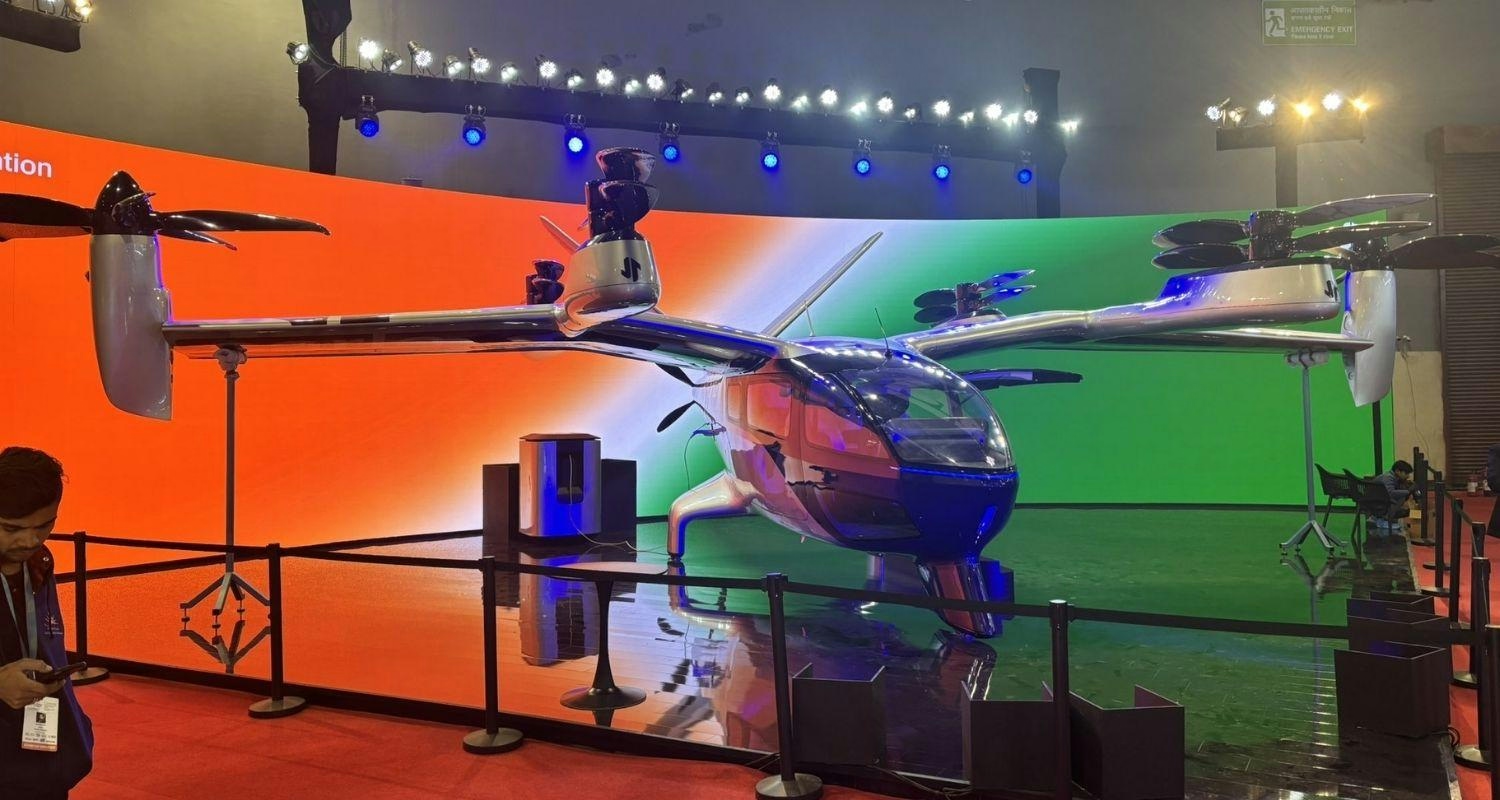
Highlights from the Flying Vehicle Expo
The International Advanced Air Mobility Expo held in Shanghai on Wednesday showcased a diverse range of next-generation flying vehicles, drawing significant attention from industry professionals and the public alike. The event underscored both the rapid pace of innovation in the sector and the complex challenges that lie ahead for widespread adoption.
Innovations in Hybrid and Electric Vertical Takeoff Vehicles
Among the most notable exhibits was a dual-mode vehicle developed by Nanjing-based Tianlu Flying-Auto, which combines terrestrial and aerial capabilities. This hybrid model attracted considerable interest as a glimpse into the future of personal mobility. Nearby, Shanghai-based Inflync presented its electric vertical takeoff and landing (eVTOL) aircraft, a technology that has become central to investor and regulatory focus worldwide.
The expo also featured a 1:3 scale model of a five-seater eVTOL aircraft, the product of a collaboration between battery manufacturer Contemporary Amperex Technology Co. Ltd. and Shanghai Autoflight Co. Ltd. This partnership exemplifies a broader industry trend toward strategic alliances aimed at overcoming technological and regulatory obstacles.
Unmanned Aerial Vehicles and Industry Challenges
Unmanned aerial vehicles (UAVs) were prominently displayed, with China Post Group Co. Ltd. unveiling a delivery drone capable of carrying payloads up to 260 kilograms. This highlights the expanding role of drones in logistics and commercial sectors. Attendees had the opportunity to engage with advanced avionics systems and various models, reflecting the expo’s appeal to both specialists and the general public.
Despite the enthusiasm surrounding these innovations, significant challenges remain. Regulatory uncertainty continues to be a major concern. The U.S. eVTOL Panel recently commended the White House for its support of the sector but stressed the urgent need for clear regulatory frameworks. Meanwhile, the Federal Aviation Administration (FAA) has proposed stricter rules for drone operations above 400 feet, a development that could significantly impact both commercial and recreational drone markets.
Market responses to these emerging technologies have been cautious. High development costs and persistent safety concerns have tempered investor enthusiasm and consumer interest. In response, companies are accelerating development schedules and forging new partnerships. Notable examples include Joby Aviation’s hydrogen-electric uncrewed aircraft and ongoing discussions regarding large-scale acquisitions of Bombardier Global and Challenger business jets.
The expo highlighted that the flying vehicle industry stands at a critical juncture. While technological advancements continue to inspire, the future of these vehicles will depend heavily on addressing regulatory, safety, and integration challenges in the coming years.

Etihad Airways Suspends Airbus A380 Flights on Key Route

Aditya Birla Group Seeks Approval for Aircraft Leasing in GIFT City

Qatar Airways Highlights Innovation and Connectivity at Arabian Travel Market 2026

Hong Kong's Five-Year Plan Includes Andrew Fan's Aircraft Parts Processing Hub Proposal

ACIA Aero Leasing Delivers ATR72-600 to Air Nostrum

RTX Appoints Jill Albertelli as Head of Pratt & Whitney

TAT Technologies Joins Beyond Aero Hydrogen Aircraft Program

AURAK Study Highlights Barriers to Air Taxi Adoption in Emerging Economies

Xiamen Air Selects Altitude for 787 Maintenance at Heathrow

Etihad and Swissport Extend Global Partnership
