
Zet AI‑inzichten om in gerichte actie

Trending
Categories
How Companies Are Preparing for the Future of eVTOL Aircraft
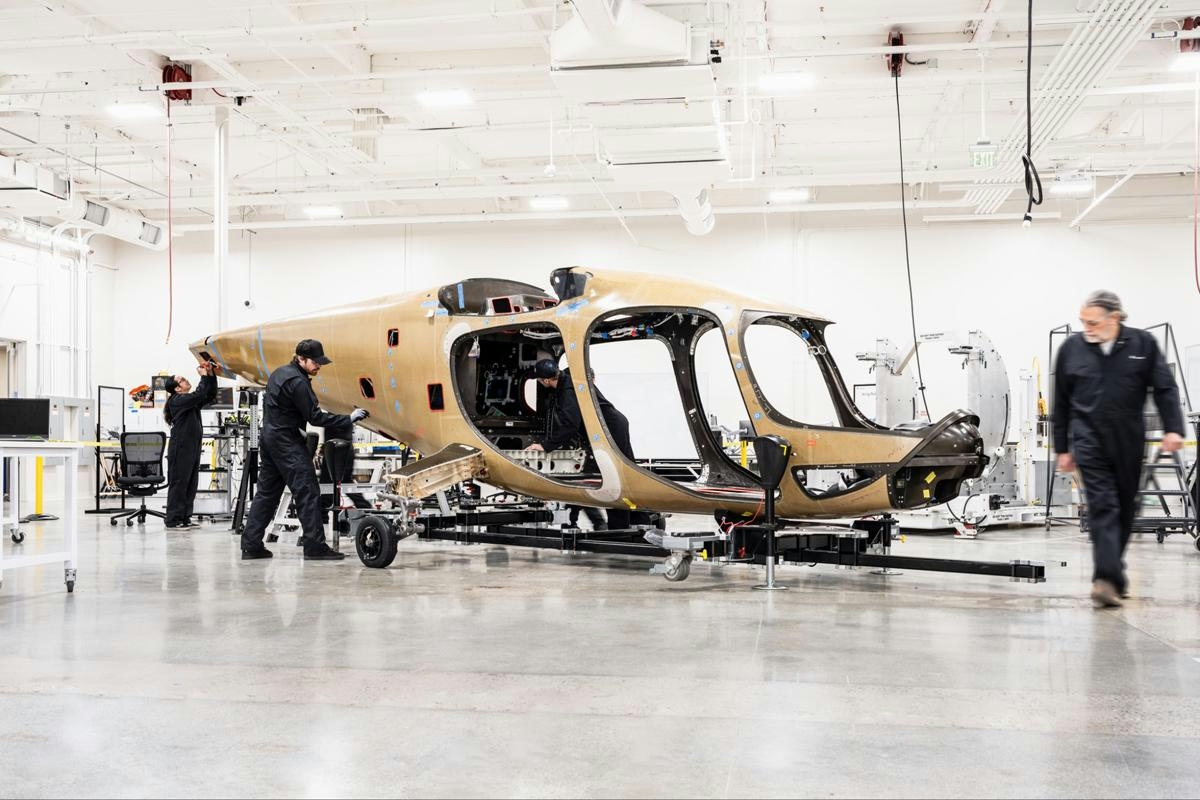
How Companies Are Preparing for the Future of eVTOL Aircraft
Advancements in Infrastructure and Urban Integration
Advanced air mobility (A.A.M.) marked a pivotal milestone in July with the unveiling of the world’s first purpose-built eVTOL vertiport in Dubai. Developed through a collaboration between Skyports Infrastructure and Dubai’s Roads and Transport Authority, the 33,400-square-foot facility includes a passenger terminal, flight operations center, two takeoff-and-landing pads, and Joby Aviation’s Global Electric Aviation Charging System. Designed to handle 170,000 passengers and 42,000 aircraft movements annually, the vertiport is poised to commence electric air taxi operations imminently. Dubai’s broader vision for A.A.M. encompasses the construction of three additional vertiports throughout the city, underscoring its commitment to large-scale infrastructure development.
While Dubai pursues ambitious new builds, many industry leaders advocate for a more incremental approach, focusing on upgrading existing helicopter facilities with charging capabilities. Rob Wiesenthal, founder and CEO of Blade Air Mobility, identifies select heliports in dense urban centers such as Manhattan and Los Angeles, as well as resort destinations like the South of France, as prime candidates for early adoption. These locations, where road congestion and challenging terrain make short air hops particularly advantageous, are expected to attract affluent travelers willing to pay a premium for time savings.
The initial wave of eVTOL passengers is anticipated to be predominantly high-end customers. However, the long-term vision extends to purpose-built vertiports featuring private security, baggage handling, lounges, and even rooftop facilities integrated into luxury developments. An early example is the Park Elm Residences at Century Plaza in Los Angeles, which is converting an existing heliport into a Joby vertiport complete with a dedicated Blade lounge. Jordana Yechiel, director of residential design at Reuben Brothers, emphasizes that residents seek more than just housing—they desire a comprehensive lifestyle experience.
Challenges and Competitive Dynamics in the eVTOL Market
The race to establish eVTOL infrastructure is gaining momentum globally. Florida has already constructed two vertiports at its SunTrax testing campus and is planning a statewide network. Meanwhile, the Federal Aviation Administration (FAA) and Department of Transportation have initiated construction of an A.A.M. research facility in Oklahoma City to explore the integration of electric air taxis into the national airspace system.
Despite these advances, companies preparing for the eVTOL future confront significant challenges. Regulatory hurdles, particularly the certification of advanced flight-control software, can delay approvals by two to three years. The market remains highly fragmented, with no single company commanding more than a 15% share, intensifying competition. Firms such as Vertical Aerospace are responding by forging partnerships with established aerospace leaders and prioritizing the development of advanced, safe eVTOL technologies.
A shortage of qualified software assessors has compelled regulators to depend on external consultants, further prolonging the approval process. Market strategies vary widely: some companies are integrating eVTOL ticketing into existing airline booking systems to facilitate short-distance travel, while others struggle with cost overruns, limited battery range, inadequate charging infrastructure, and stringent safety requirements. These challenges have already led some ventures toward bankruptcy.
If the industry can surmount these obstacles, the next critical competition may shift from aircraft manufacturing to the strategic placement of landing facilities. For the foreseeable future, modern vertiports are likely to evolve from upgraded helipads with modest lounges, while Dubai’s expansive new terminal stands as a testament to the potential scale and promise of electric aircraft transport.

Etihad Airways Suspends Airbus A380 Flights on Key Route

Aditya Birla Group Seeks Approval for Aircraft Leasing in GIFT City

Qatar Airways Highlights Innovation and Connectivity at Arabian Travel Market 2026

Hong Kong's Five-Year Plan Includes Andrew Fan's Aircraft Parts Processing Hub Proposal

ACIA Aero Leasing Delivers ATR72-600 to Air Nostrum

RTX Appoints Jill Albertelli as Head of Pratt & Whitney

TAT Technologies Joins Beyond Aero Hydrogen Aircraft Program

AURAK Study Highlights Barriers to Air Taxi Adoption in Emerging Economies

Xiamen Air Selects Altitude for 787 Maintenance at Heathrow

Etihad and Swissport Extend Global Partnership
