
Zet AI‑inzichten om in gerichte actie

Trending
Categories
How the Airbus A350 Was Designed to Prevent Failure
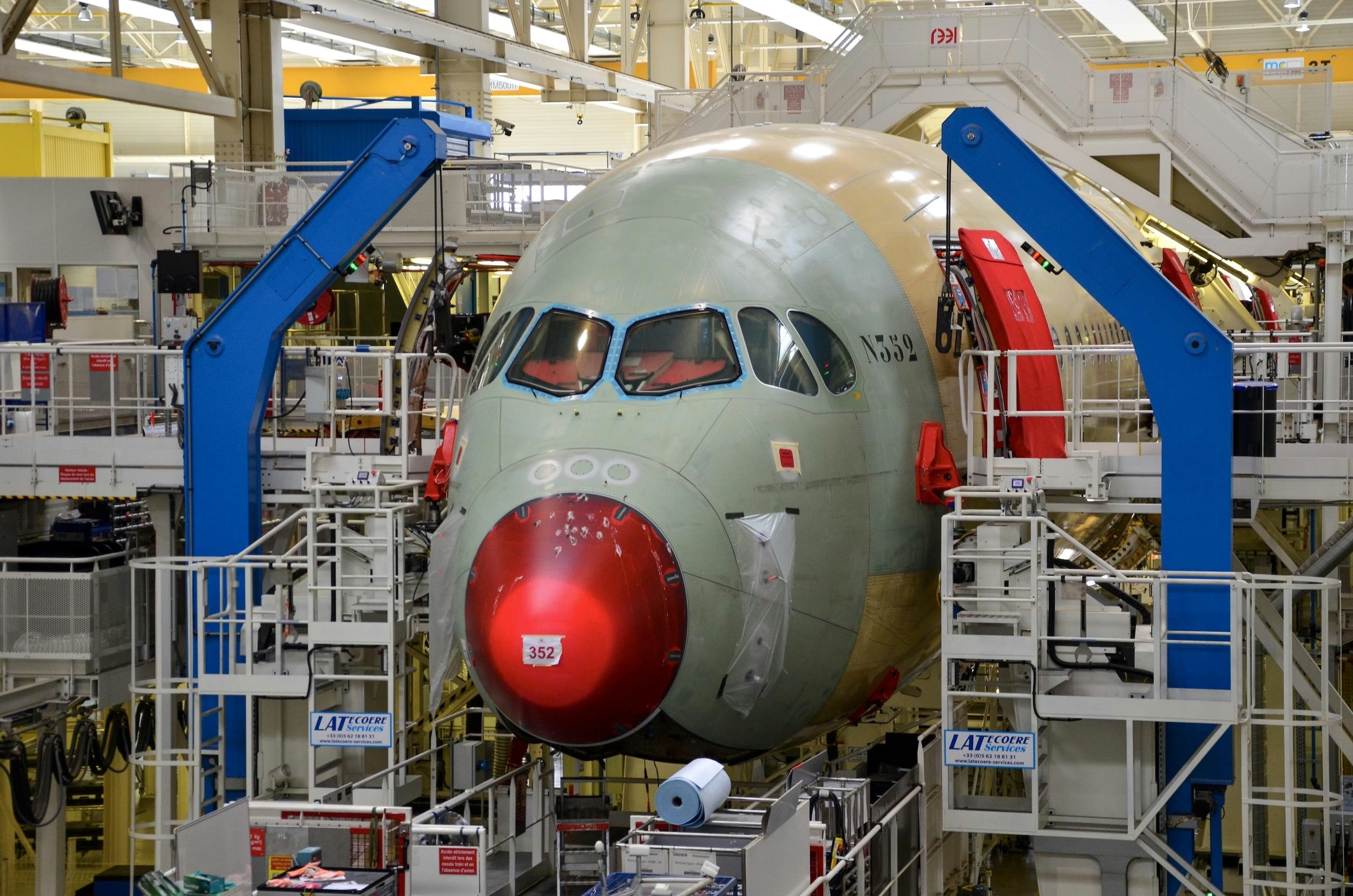
How the Airbus A350 Was Designed to Prevent Failure
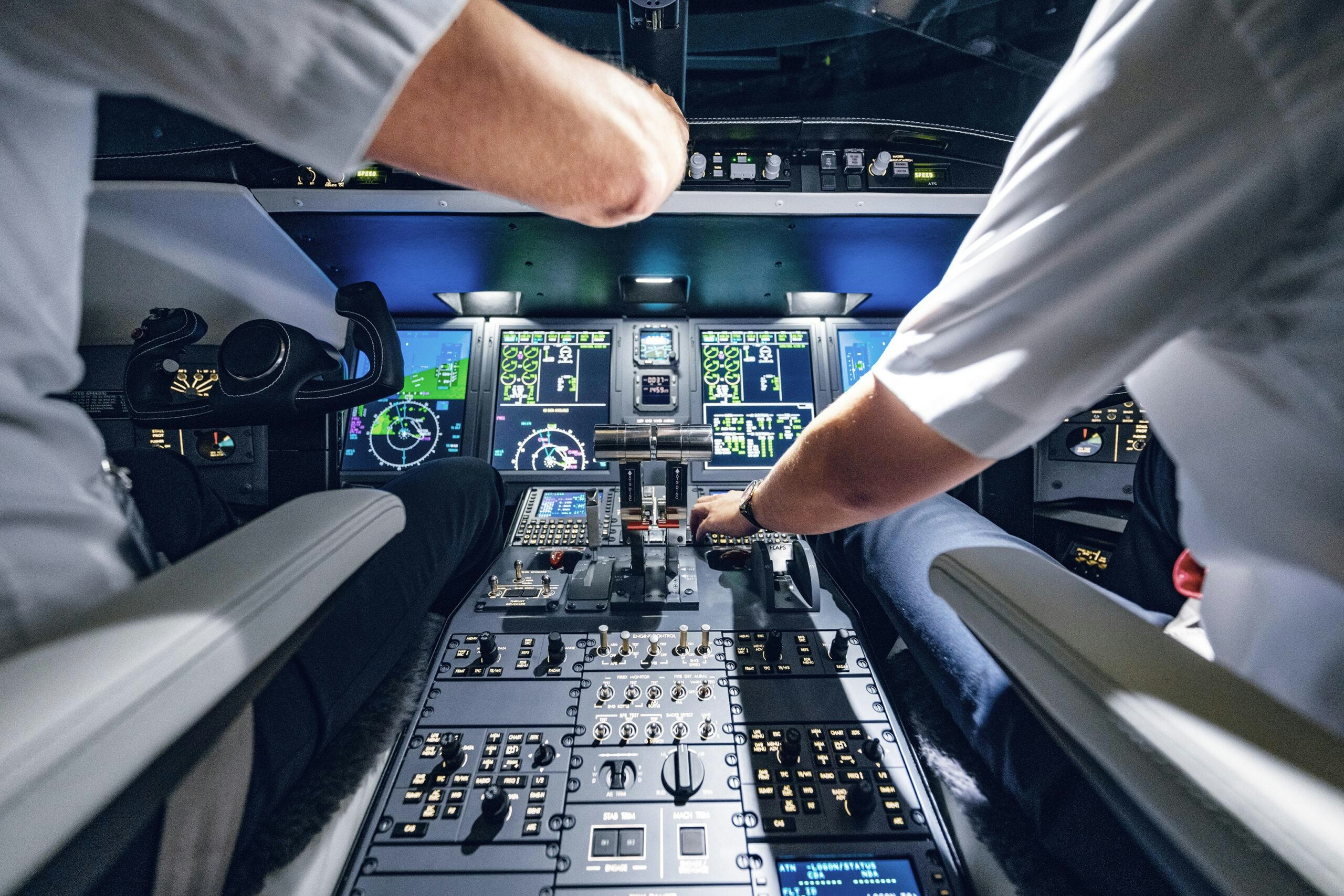
The Airbus A350 embodies decades of aerospace innovation, integrating technologies refined through both the superjumbo A380 and the military-grade A400M. This next-generation widebody aircraft incorporates a range of advancements, from the extensive use of composite materials to some of the most resilient and redundant avionics systems ever installed in a commercial airliner. Central to the A350’s design philosophy is the prioritization of safety and reliability, achieved through stringent production standards and equipping pilots with advanced operational tools.
Advanced Composite Materials and Structural Design
A hallmark of the A350 Xtra Wide Body is its unprecedented use of carbon fiber reinforced plastic (CFRP), which constitutes 53% of the aircraft’s weight—surpassing any other commercial jet currently in production. This durable yet lightweight material was developed through Airbus’s prior experience with the A400M tactical airlifter and the A380. The extensive stress data and safety margins established during the development of these earlier aircraft provided a solid foundation for the A350’s airframe and systems.
Airbus’s transition from traditional metal to composite structures was a gradual process. While the A380 introduced CFRP in key structural components, the A400M’s rigorous military testing environment pushed the boundaries of composite technology. The A400M test fleet endured extreme operational conditions, including rough tactical airfield landings, allowing engineers to analyze how CFRP, reinforced with epoxy resin, responded to intense structural stress. These findings informed the development of interlayer-toughened epoxy for the A350, significantly reducing the risk of delamination and micro-cracking.
In terms of fuselage construction, Airbus adopted a four-panel design for the A350, diverging from Boeing’s single-piece barrel approach used in the 787 Dreamliner. This design enables tailored panel thickness, with the top and bottom panels reinforced to withstand vertical loads while the side panels remain lighter. Manufacturing innovations such as Automated Tape Laying and Liquid Resin Transfer Molding have further enhanced production precision and efficiency.
Operational Challenges and Industry Impact
Despite its advanced engineering, the A350 has encountered operational challenges. A recent incident involving a China Eastern Airlines A350-900 saw total brake failure during taxiing, resulting in a collision with a passenger airbridge. The flight crew successfully brought the aircraft to a stop using reverse thrust, underscoring the critical role of redundant safety systems and the reality that even the most sophisticated designs can experience failures.
Delivery delays have also affected airlines dependent on the A350. Qantas, for instance, postponed its Project Sunrise ultra-long-haul flights between Australia, London, and New York due to delays in receiving its specially modified A350-1000 aircraft. Airbus has informed other customers of further delivery postponements later this decade, contributing to a recent decline in the company’s share value.
Balancing Innovation with Reliability
The Airbus A350 represents a significant milestone in the aerospace industry’s quest for safer and more efficient air travel. By leveraging lessons from both commercial and military programs, Airbus has developed a jetliner that sets new benchmarks for structural integrity and operational safety. Nonetheless, recent incidents and delivery setbacks highlight the ongoing challenges inherent in introducing cutting-edge technology to the market while maintaining reliability at scale.
Embraer Delivers 2,000th E-Jet as Airbus A220 Seeks Market Share
iniBuilds Releases Second In-Depth A380 Video
Ryanair and Alaska Airlines Apply AI to Operational Decision-Making

Digital Payments, AI, and Aviation Strengthen Philippines-India Relations
PlaneSense Suspends PC-12 Jet Card Sales
How AI Could Transform Bird-Strike Prevention for Business Aviation
American Airlines and Boeing Complete First 737 MAX Landing Gear Swap

Vietjet and Thales sign major MRO and AI deals in Paris
Etihad CEO Cites Aircraft Capacity as Limiting Factor Amid Growth in China and Africa
Artificial Intelligence Enters the Cockpit
