
Zet AI‑inzichten om in gerichte actie

Trending
Categories
Indian Aerospace Manufacturers Respond to India-US Tariff Agreement Amid Ongoing Uncertainty
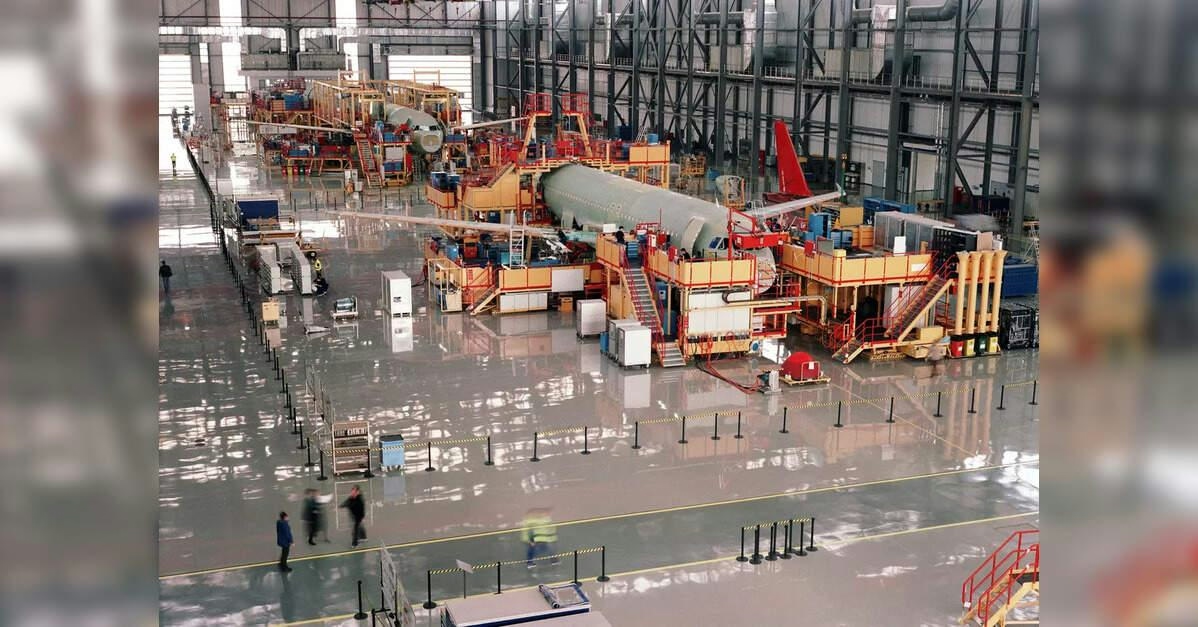
Indian Aerospace Manufacturers Respond to India-US Tariff Agreement Amid Ongoing Uncertainty
Trade Agreement and Industry Implications
A recent trade agreement between India and the United States, which reduces US tariffs on Indian goods from 50% to 18%, has generated cautious optimism across Indian industries. This significant tariff reduction is expected to benefit approximately 60% of India’s exports to the US, providing much-needed relief to sectors previously constrained by high duties. Although India is not yet a major exporter of aerospace parts and components to the US, it has steadily advanced its position within the global aviation and aerospace supply chain, primarily through private sector initiatives.
A report by Nomura highlights that the new agreement could lead India to make purchase commitments involving US aerospace components and Boeing aircraft over the next five years, paralleling similar arrangements the US has established with Malaysia and other Asian countries. These commitments may also extend beyond aerospace to include sectors such as liquefied natural gas (LNG), coal, telecommunications, semiconductors, and data center equipment.
Government Support and Industry Perspectives
The Indian government’s support for the aerospace sector was further reinforced in Finance Minister Nirmala Sitharaman’s Union Budget for 2026-27, announced on February 1. The budget exempts basic customs duty on components and parts used in the manufacture of civilian aircraft, as well as on raw materials required for maintenance, repair, and overhaul (MRO) activities within defense public sector units. Given that the US remains the world’s largest exporter of aerospace parts and components, the tariff reduction holds particular significance for Indian manufacturers seeking to deepen their engagement with the US market.
Industry experts emphasize the potential transformative impact of the tariff cut on India’s MRO sector. Anurag Gupta, Partner at Deloitte India, noted that the reduction could lead to increased production of locally manufactured rotables, consumables, and spares. This would reduce turnaround times, lower inventory costs, and improve fleet availability, thereby enhancing operational efficiency.
Companies with substantial exposure to the US market, such as Jeh Aerospace and Aequs, have welcomed the agreement. Aravind Melligeri, Executive Chairman and CEO of Aequs Ltd, remarked that with China’s tariff at 30%, Vietnam’s at 19%, and India now the lowest in the region at 18%, the reduction represents a significant boost for the Indian aerospace sector. He highlighted that the lower tariff improves pricing flexibility, strengthens customer confidence, and encourages a rebalancing of supply chains toward India. Jeh Aerospace, a manufacturer of aero and engine structures founded by former Tata Group aviation executives, also expressed optimism. A company spokesperson described the easing of tariffs under the evolving India-US trade framework as an encouraging development, particularly given the company’s substantial business ties to the US market.
Challenges and Strategic Considerations
Despite the positive reception, the tariff reduction introduces new challenges. Lower tariffs may increase competition from US firms, compelling Indian companies to accelerate efforts to diversify their supplier base beyond the US, potentially toward European or other international partners. This strategy aligns with India’s broader goals of industrial sovereignty and its ongoing pursuit of free trade agreements with various countries. Such diversification aims to reduce dependence on the US market and mitigate the impact of future trade uncertainties.
As the global aerospace landscape continues to evolve, Indian manufacturers are navigating a complex environment of opportunities and risks. They must balance the immediate advantages of tariff relief with the imperative to build long-term strategic resilience in an increasingly competitive international market.

Eight Aboard Twin-Engine Cessna Crash in Remote Alaska
American Airlines Plans to Receive New Aircraft Deliveries in 2026
Delta Flight Returns to Atlanta Airport Due to Engine Trouble

Samoa Airways Recovers Damaged DHC-6-300 Aircraft

Man Ingested by Frontier Airlines Engine Marks Denver’s Sixth Airfield Security Breach in Three Years

The Advantages and Disadvantages of Owning Versus Leasing a Private Jet

Former Spirit Employees Express Concerns Over AI Partnership With Google
China Certifies Pilotless Air Taxi for Export; Sri Lanka First Buyer

US Pilot Hourly Pay Ranges from $90 for Regional to $465 for Widebody Flights

NASA Chooses University Teams to Support Aviation Research
