Afbeelding

Zet AI‑inzichten om in gerichte actie

Meld je vandaag nog aan voor de AeroGenie-wachtlijst!

Trending

Categories

Indonesia to Receive First KF-21 Fighter Jet from South Korea
April 9, 2026By ePlane AI
Indonesia to Receive First KF-21 Fighter Jet from South Korea
0
0
KF-21 Boramae
Indonesia Air Force
Fighter Jet Transfer

Indonesia to Receive First KF-21 Fighter Jet from South Korea

Milestone in Joint Fighter Development Program

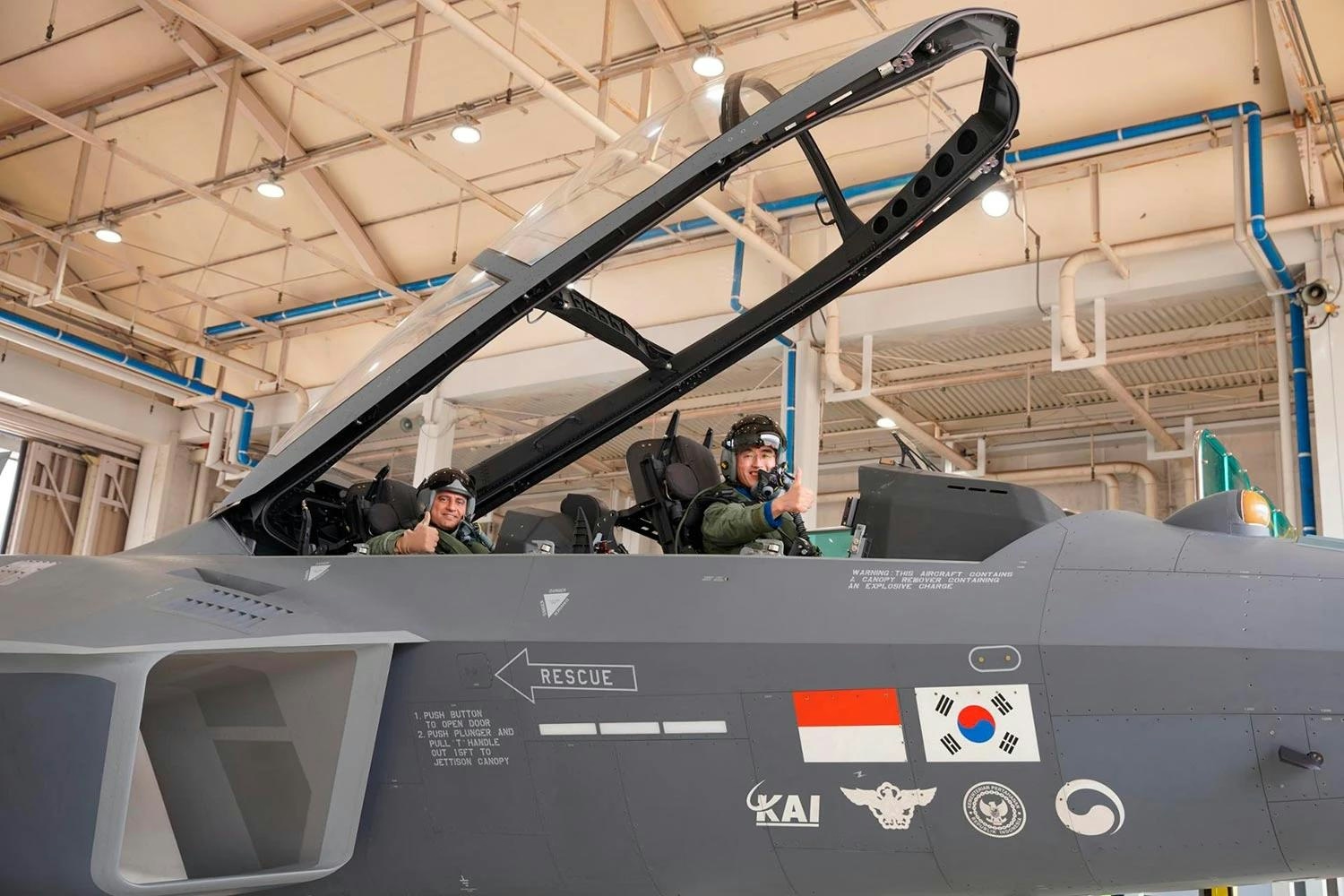
South Korea and Indonesia have reached a significant milestone in their collaborative fighter jet development program with the impending transfer of Indonesia’s first KF-21 Boramae prototype. This handover, contingent upon Indonesia completing its outstanding payment, marks a critical transition from the development phase to production. It underscores the commitment of both nations to modernize their air forces and enhance their defense capabilities.

The aircraft designated for transfer is the fifth single-seat KF-21 prototype, which has successfully passed essential verification tests, including aerial refueling, confirming its readiness for operational use. Indonesian officials will receive a flight-tested platform, facilitating further training, evaluation, and eventual integration into the Indonesian Air Force.

Financial and Diplomatic Challenges

The agreement, finalized during working-level talks in February and confirmed by South Korea’s Defense Acquisition Program Administration (DAPA), reflects a revised financial arrangement. Indonesia has paid 536 billion won of its 600 billion won commitment, with the remaining balance due by June, coinciding with the scheduled conclusion of the KF-21 development phase. This adjustment reduces Indonesia’s financial share while covering the aircraft, development costs, and technical documentation.

Despite this progress, the program has encountered significant challenges. Disputes over development costs and allegations of stolen data have strained relations between Jakarta and Seoul at various points, resulting in protracted negotiations and modifications to financial obligations and technology transfer expectations. Nonetheless, both countries have maintained momentum, demonstrating a shared interest in advancing the project.

Strategic and Market Implications

Launched by South Korea in 2015, the KF-21 Boramae program aims to develop a supersonic multirole fighter to replace aging F-4 and F-5 fleets and to strengthen the domestic aerospace industry. Indonesia joined as a development partner under a cost-sharing agreement, seeking to bolster its own defense capabilities.

The progress of the KF-21 has attracted increased international attention to South Korea’s aerospace sector, reflecting the country’s growing ambitions as a global defense exporter. However, Indonesia continues to explore contracts with other suppliers, including Dassault Aviation and Turkish Aerospace, potentially diversifying its future fighter fleet.

Looking ahead, discussions are underway for Indonesia to purchase 16 production KF-21 fighters, which could constitute the first export order for the Boramae. Officials from both countries remain optimistic about finalizing a production contract that would enhance Indonesia’s air force with advanced avionics, twin engines, and multirole capabilities.

The transfer of the KF-21 prototype not only advances Indonesia’s military modernization but also highlights the strategic importance of industrial and defense partnerships in the Indo-Pacific region. As the KF-21 moves toward mass production, South Korea’s position in the global aerospace market is poised to strengthen, even as both partners navigate ongoing challenges and competitive pressures.

More news
Seven Aircraft Poised to Transform Aviation by 2035

Seven Aircraft Poised to Transform Aviation by 2035

Seven Aircraft Poised to Transform Aviation by 2035 Aviation stands on the threshold of a profound transformation, the most significant since the advent of the jet age. After decades of gradual improvements, a new generation of aircraft is emerging that promises to redefine air travel. Supersonic airliners aim to halve journey times, hydrogen-powered planes offer emissions limited to water vapor, blended-wing designs propose substantial fuel savings, and electric aircraft are already taking to the skies. What was once confined to the realm of science fiction is now materializing through active development, rigorous testing, and initial operational flights. Supersonic Flight: A New Era The return of commercial supersonic travel marks a pivotal moment in aviation history, coming more than two decades after the Concorde’s retirement in 2003. Two prominent programs are spearheading this revival, each addressing the challenge of supersonic speeds without the disruptive sonic booms that previously limited overland routes. Boom Supersonic’s XB-1 demonstrator achieved a milestone on January 28, 2025, by reaching Mach 1.12 at 35,290 feet over the Mojave Desert. This flight represented the first privately developed civil supersonic jet to break the sound barrier without government support. Crucially, it demonstrated “boomless cruise” capability, employing Mach cutoff physics to prevent sonic booms from reaching the ground. The company’s full-scale Overture model is designed to cruise at Mach 1.7 at 60,000 feet, accommodating 64 to 80 passengers in an all-business-class configuration over distances up to 4,250 nautical miles. This would enable transatlantic flights, such as New York to London, in approximately four hours. Boom has secured around 130 orders and options from major airlines including United, American, and Japan Airlines. The first Overture prototype is expected by 2027, with Federal Aviation Administration (FAA) certification targeted between 2029 and 2030. However, industry analysts caution that this timeline may be optimistic, particularly given the need for extensive certification of Boom’s in-house Symphony engine. Consequently, commercial service may be delayed into the 2030s. In a strategic development, Boom announced in December 2025 that its supersonic engine technology would also be adapted to power artificial intelligence data centers. The company’s Superpower turbine, a 42-megawatt natural gas engine designed for waterless operation, has already attracted a $1.25 billion order from Crusoe, an AI infrastructure firm, illustrating the broader applications of aviation-derived engineering. Meanwhile, NASA’s X-59 QueSST completed its inaugural flight in October 2025, reaching Mach 1.4 at 55,000 feet. Its distinctive elongated nose and specialized fuselage are engineered to produce a soft “thump” rather than a disruptive sonic boom. If this technology proves successful, it could lead regulators to lift the longstanding 50-year ban on supersonic flight over land, thereby opening the majority of global air routes to supersonic travel. Challenges and the Path Forward Despite these promising advances, significant challenges remain. Regulatory frameworks must evolve to accommodate emerging technologies, as exemplified by the UK Civil Aviation Authority’s roadmap for hydrogen flight operations by 2035. The integration of cutting-edge systems will require rigorous attention to safety, efficiency, and environmental compliance. Market acceptance will depend heavily on airlines’ willingness to adopt these innovations and on meeting stringent certification standards. The competitive landscape is also shifting. China’s COMAC C919, for instance, seeks to challenge the Boeing-Airbus duopoly but continues to rely on foreign components and has yet to secure certification from major Western regulators. This underscores the complexities involved in entering the global aviation market. As these seven transformative aircraft advance toward 2035, their ultimate success will depend not only on technological breakthroughs but also on overcoming regulatory, operational, and market barriers. The coming decade will be decisive in determining whether these ambitious visions can truly take flight.
Why Widebody Pilots Lose Speed Authority Over Oceanic Airspace

Why Widebody Pilots Lose Speed Authority Over Oceanic Airspace

Why Widebody Pilots Lose Speed Authority Over Oceanic Airspace The Federal Aviation Administration (FAA) affirms that the pilot in command holds ultimate responsibility and authority over the operation of an aircraft. This principle is vital during emergencies; however, in routine flight operations, pilots must adhere to a comprehensive framework of rules, regulations, and, importantly, clearances issued by air traffic control (ATC). This regulatory environment is particularly stringent in remote and oceanic airspace, such as the expansive regions above the North Atlantic, where pilots are required to maintain assigned speeds and follow strict procedures, even when operational considerations might suggest otherwise. Navigating Without Radar Over vast oceanic expanses and remote areas, conventional radar coverage is often unavailable. The absence of ground-based radar infrastructure means that ATC cannot continuously monitor and separate aircraft as they do over land. The North Atlantic, one of the busiest oceanic corridors, saw over 460,000 flights crossing in 2012 alone, a figure that has continued to rise. Despite this heavy traffic, much of the flight occurs beyond radar reach and with limited communication capabilities. In such conditions, predictability is paramount for maintaining safety. To manage this, ATC assigns each aircraft a specific cruise speed, expressed as a true Mach number, enabling controllers to accurately estimate the position of each plane at any given time. This method, known as the Mach number technique, is fundamental to ensuring safe separation between aircraft in oceanic airspace where real-time tracking is not feasible. The Importance of Speed Assignments The assignment of precise speeds by ATC facilitates the management of both horizontal and vertical separation between aircraft. Horizontal separation ensures that planes flying at the same altitude maintain adequate distance from one another, while vertical separation involves assigning different flight levels to prevent conflicts. The Mach number technique guarantees that aircraft positions remain predictable, significantly reducing the risk of midair collisions in areas lacking continuous surveillance. Emerging Challenges and Operational Impacts The restriction on speed authority extends beyond routine procedure and poses notable challenges for widebody pilots, especially as global airspace becomes increasingly complex. Recent incidents illustrate these difficulties. For example, in the Oceanic Flight Information Region near New Zealand, a US Air Force flight bound for Antarctica was redirected following a missile launch warning issued by Russia. Such events highlight the additional complexities pilots encounter when operating in regions affected by heightened space activity or military operations. These developments carry broader implications for airlines and the aviation industry at large. In response to elevated risks or warnings, airlines may be compelled to revise flight paths and update safety protocols, potentially resulting in increased operational costs and delays. Competitors may adopt similar safety measures or collaborate with international aviation authorities to strengthen airspace safety standards, reflecting a collective effort to address emerging challenges. Conclusion While pilots maintain ultimate responsibility for their aircraft, the operational realities of oceanic flight necessitate strict compliance with ATC-assigned speeds and procedures. As airspace becomes busier and more complex—particularly in regions influenced by geopolitical tensions or space activity—the imperative for predictability and coordination intensifies. This dynamic shapes not only pilot operations but also the strategic responses of airlines and regulators confronting evolving risks.
Antonov An-22: The Largest Turboprop Ever Built

Antonov An-22: The Largest Turboprop Ever Built

Antonov An-22: The Largest Turboprop Ever Built Standing beside the Antonov An-22 as its engines ignite is an experience that transcends mere sound; it is a visceral sensation. Powered by four colossal Kuznetsov NK-12 turboprop engines, each driving a pair of contra-rotating propellers with blades measuring over six meters in diameter—larger than many houses—the aircraft emits a deep, resonant roar often described as a buzz-saw scream. Nearly six decades after its inaugural flight, the An-22 Antei remains the largest turboprop-powered aircraft ever constructed, a monumental Soviet creation engineered to transport tanks, missiles, and other outsized cargo across vast distances. A Giant Unveiled The Antonov Design Bureau was commissioned in 1962 to develop a strategic airlifter of unprecedented size and capability. Within three years, the prototype was completed, and its public debut at the 1965 Paris Air Show left Western observers astonished. At the time, no Western aircraft could match the An-22’s scale or payload capacity. The Soviets aptly named the aircraft Antei, after the mythological giant Antaeus, symbolizing its formidable strength and earth-shaking presence. The defining feature of the An-22 is its quartet of powerful engines, each paired with two massive, counter-rotating propellers. This configuration not only delivers extraordinary thrust but also produces a distinctive and thunderous sound that has become legendary among aviation enthusiasts worldwide. Record-Breaking Performance and Enduring Service Beyond its sheer size, the An-22 distinguished itself as a record-breaking aircraft. Throughout its operational history, it set 41 world records, including a remarkable feat in 1967 when it lifted 100 tonnes to an altitude of nearly 7,900 meters. Its innovative double-deck fuselage and rear loading ramp enabled it to carry outsized cargo that no other propeller-driven aircraft could accommodate. Approximately 66 units were produced between 1965 and 1976 in Tashkent. While most have since been retired, a select number remain active within the Russian military transport fleet, underscoring the aircraft’s durability and unique operational capabilities. Challenges in a Modern Era Despite its historic achievements, the An-22 faces significant challenges in the contemporary aviation landscape. Its 1960s-era technology is increasingly obsolete, and modernization efforts are complex and costly. Although developments such as Klimov’s new turboprop demonstrator for the An-2 suggest potential avenues for propulsion advancements, the An-22 would require extensive upgrades to remain competitive against today’s more efficient and technologically advanced cargo aircraft. The market response to the An-22’s continued relevance is mixed. While its unparalleled payload capacity among turboprops remains a distinct advantage, newer aircraft like Embraer’s KC-390 Millennium and industry trends toward fleet consolidation—exemplified by the unification of the Tu-204 type certificate—reflect a shift toward more versatile and modern platforms. Additionally, the uncertain future of alternative propulsion technologies, including hydrogen power, adds further complexity to the An-22’s prospects. Legacy of a Giant Despite these uncertainties, the Antonov An-22 endures as one of the most imposing achievements in aviation history. Its limited but ongoing service serves as a testament to the enduring value of this propeller-driven giant, demonstrating that even in an age dominated by jet engines, the An-22’s unique capabilities continue to move mountains.
Centre Approves Aviation University Expansion, Directs UP Government to Provide Land

Centre Approves Aviation University Expansion, Directs UP Government to Provide Land

Centre Approves Expansion of Rajiv Gandhi National Aviation University The Indian government has granted approval for a significant expansion of the Rajiv Gandhi National Aviation University (RGNAU) located in Fursatganj, Amethi. This development will enable the university to extend its aerospace activities over an additional 500 acres of land. The Uttar Pradesh government has been instructed to facilitate the provision of this land, according to statements from RGNAU Vice Chancellor B N Singh. Singh confirmed that the Centre has formally approved the expansion proposal and forwarded it to the Uttar Pradesh administration for implementation. A land survey is currently underway to identify suitable parcels, and Singh recently met with Uttar Pradesh Chief Minister Yogi Adityanath, who pledged the state government’s support to expedite the process. Plans for Development and Challenges Ahead Following the acquisition of land, RGNAU intends to establish a centre of excellence equipped with cutting-edge laboratories, research facilities, and advanced infrastructure. The expansion is designed to enhance higher education, research, and innovation in aviation, aerospace, and related disciplines. The university aims to increase its student capacity dramatically, from the current 595 to 17,000 by 2033. Founded in 2013 under the Ministry of Civil Aviation, RGNAU remains India’s sole university dedicated exclusively to aviation and aerospace education. The institution is also pursuing affiliations with other educational bodies nationwide, thereby broadening its influence and reach. Despite the ambitious vision, the expansion faces several potential challenges. These include securing adequate infrastructure, ensuring sufficient funding, and navigating complex regulatory requirements. The directive for the Uttar Pradesh government to provide land may also encounter bureaucratic and logistical difficulties during execution. Implications for Aviation Education and Regional Development The expansion is expected to have significant repercussions for the aviation education sector in India. Industry analysts suggest that RGNAU’s growth could intensify competition, prompting existing institutions to upgrade their programs to maintain relevance. This competitive environment may drive improvements in educational quality and foster greater innovation across the sector. On a regional level, the expansion is anticipated to boost the local economy by generating employment opportunities and attracting investment in the aviation industry. The development of advanced research and training facilities could establish Amethi as a prominent hub for aerospace education and industry collaboration. As RGNAU advances with its expansion plans, the university is poised to play a crucial role in shaping the future landscape of aviation education and research in India.
Delta 737-900ER Returns to Atlanta After Engine Issue

Delta 737-900ER Returns to Atlanta After Engine Issue

Delta 737-900ER Returns to Atlanta Following Engine Malfunction A Delta Air Lines Boeing 737-900ER was compelled to return to Hartsfield-Jackson Atlanta International Airport (ATL) on the evening of Thursday, August 20, after encountering a mechanical issue shortly after departure. The flight, DL1518, was en route to Raleigh–Durham International Airport (RDU) with 173 passengers on board when the problem arose. The aircraft landed safely back in Atlanta, where passengers were transferred to a replacement plane to continue their journey. Incident Details and Response Flight DL1518 departed ATL at 7:42 PM, approximately eight minutes behind schedule. Within 20 minutes of takeoff, the flight crew identified a malfunction in the aircraft’s right engine and promptly decided to return to Atlanta. The plane, registered as N938DZ, touched down at ATL around 8:00 PM without incident. Passengers disembarked and were accommodated on a substitute aircraft, which departed at 10:53 PM and arrived in Raleigh at 11:54 PM, roughly three hours later than originally planned. Delta confirmed that the issue involved the right engine, which has since been removed from service for repairs. The airline issued a statement emphasizing its commitment to safety, stating, “Nothing is more important than the safety of our people and customers. We apologize to our customers for this disruption in their travels.” Aircraft Background and Operational Implications The affected aircraft, N938DZ, is a 14.5-year-old Boeing 737-900ER originally delivered to Lion Air in 2012 before joining Delta’s fleet in September 2022. Configured with 12 First Class, 24 Delta Comfort+, and 137 Main Cabin seats, the aircraft is powered by two CFMI CFM56-7B27 engines. During the incident, the plane did not exceed an altitude of 4,000 feet before the decision to return was made. The replacement flight was operated by a similar aircraft, N939DZ. This event underscores several operational challenges for Delta. The crew’s swift communication with air traffic control was critical to ensuring a safe return amid the congested Atlanta airspace. The incident may also trigger heightened regulatory scrutiny and prompt reviews of Delta’s maintenance and safety procedures. Market reactions could include temporary pressures on Delta’s stock price as investors weigh concerns over safety and reliability. Competitors such as American Airlines may leverage this incident to highlight their own safety records and operational efficiency. Meanwhile, the aviation sector is currently facing increased demand for older engine models, which has led to extended maintenance periods. This trend could further complicate Delta’s efforts to expedite repairs and return affected aircraft to service. N938DZ is expected to resume scheduled operations on Saturday, August 22, with a planned nonstop flight to Pensacola (PNS) as flight DL2807, contingent upon the completion of all necessary repairs and safety inspections.
Demand for Widebody Aircraft Increases

Demand for Widebody Aircraft Increases

Demand for Widebody Aircraft Surges in China Airbus projects a sustained increase in China’s demand for widebody aircraft over the next five years, driven by growth in international passenger travel and expanding air freight requirements. This trend is underscored by recent significant orders from major Chinese carriers as airlines modernize their fleets and extend long-haul networks. In June, China Eastern Airlines committed to purchasing 25 A330neo passenger jets, followed by Air China’s July order for 15 A350-900s. Additionally, Air China Cargo expanded its order for the yet-to-be-delivered A350F freighter to 10 aircraft in May. Troy Wang, Airbus senior vice-president and head of commercial at Airbus China, emphasized the country’s strategic importance during a recent press conference in Beijing. He highlighted a shift in fleet planning strategies, noting that Chinese airlines are moving away from reliance on a single flagship aircraft and instead tailoring specific models to distinct market segments. “China is not only Airbus’ largest single-country market, but it also has enormous development potential,” Wang stated. Alignment with China’s Aviation Development Goals This optimistic outlook aligns closely with China’s civil aviation development plan for 2026-2030, which prioritizes enhanced international connectivity, the establishment of a world-class aviation hub network, and the expansion of international air cargo routes. According to the Civil Aviation Administration of China, international passenger traffic surpassed 40 million in the first half of 2026, marking a 5.7 percent year-on-year increase. Meanwhile, international cargo and mail volumes rose by 13.9 percent to 2.32 million metric tons, reflecting robust growth in air freight. The resurgence of international routes coincides with a new cycle of widebody aircraft replacement. Li Min, senior marketing director at Airbus China, noted that China’s current A330ceo fleet numbers nearly 200 aircraft, with more than half aged between 11 and 20 years. Many airlines are planning to upgrade to newer, more fuel-efficient models, with Airbus estimating that approximately 170 widebody aircraft in China will require replacement between 2030 and 2035. China Eastern’s order for 25 A330neo aircraft, scheduled for delivery between 2029 and 2033, aims to support new intercontinental routes and increase flight frequencies from Shanghai Pudong International Airport. The airline plans to retire at least 10 of its existing A330ceos during this period. Similarly, Air China’s order for 15 A350-900s, expected to be delivered between 2030 and 2032 pending shareholder and regulatory approval, will partially replace older jets. Growing Importance of Air Cargo Air cargo demand is a significant factor driving widebody aircraft orders, fueled by the global expansion of Chinese manufacturers, cross-border e-commerce, and high-tech exports. Zhang Hanguang, marketing director at Airbus China, observed a fundamental shift in the air cargo market, with passenger and cargo development now progressing in parallel rather than cargo being secondary. Dedicated freighters have become essential to maintaining the stability of international supply chains. Although air freight accounts for less than 1 percent of global trade by weight, it represents nearly one-third of trade value, underscoring its critical role in transporting high-value, time-sensitive goods. Global Context and Industry Challenges The surge in widebody demand is not confined to China. Globally, airlines such as Israir have obtained regulatory approval to operate widebody services, signaling broader expansion in operational capabilities. Boeing anticipates that completing certifications for its 737 Max variants and the 777-9 will accelerate the development of future aircraft models. Airbus also sees potential for additional A400M tactical transport orders through NATO’s pooled procurement initiatives. However, the industry faces challenges in delivering new premium cabin offerings. Lengthy approval processes for bespoke cabin designs have caused delays in premium seat deliveries, complicating efforts by airlines to enhance passenger experience amid rising demand.
The Dawn of Aviation Over Madras

The Dawn of Aviation Over Madras

The Dawn of Aviation Over Madras The history of aviation in Madras is marked by pioneering achievements and a spirit of innovation that laid the foundation for the city’s enduring connection to the skies. The city’s initial encounter with air travel dates back to 1910, when D’Angelis conducted flights from his hangar in Pallavaram. This milestone was immortalized by the poet Subramania Bharathi, who highlighted that the aircraft’s engine was assembled by Tamil workers at the Simpsons factory, underscoring the local contribution to this early feat. The following year, Jules Tyck captivated Madras residents with demonstration flights over Island Grounds, offering them their first aerial views of George Town and Mount Road. By 1914, J.W. Madeley was utilizing aviation for practical purposes, flying over the Red Hills reservoir to survey public works—a notable accomplishment for a figure better remembered for his involvement in the city’s subway system than for his aerial exploits. Early Aviation Enthusiasm and the Madras Flying Club While military and commercial aviation would later dominate the city’s airspace, private initiative played a crucial role in Madras’s early aviation history. The Madras Flying Club (MFC), established in 1930 under the leadership of William Maurice Browning of Burmah Shell, quickly became a focal point for aviation enthusiasts. The club’s activities were elevated by figures such as Sir Gerald Hodgson of Parry’s, who famously undertook an unannounced flight from Madras to Cuddalore, surprising the local population. His adventures, including a memorable incident involving a goat that repeatedly charged his landing aircraft, became part of local lore. The MFC also served as a nurturing ground for Indian aviators. Notable members included Rm. Avudaiyappa Chettiar, S.A.A. Annamalai Chettiar, and Solaiyappa Chettiar. Among them, Capt. V. Sundaram distinguished himself as the first Indian to earn a pilot’s license, while his wife, Usha Sundaram, became India’s first woman pilot. Together, they set a remarkable record with a 27-hour flight from London to Madras in a de Havilland Dove, symbolizing the couple’s pioneering spirit and the club’s role in advancing Indian aviation. Personal narratives from this era further illustrate the daring nature of early aviators. In the 1930s, Steve Maritz and M.J. Edwards of Parry’s undertook a challenging round-trip flight to Cuddalore. Their return journey, conducted late at night, required navigation by the lights of the Perambur Railway Workshop and Mount Road, culminating in a tense but successful landing at Meenambakkam. Commercial Ventures and Contemporary Challenges Madras’s aviation ambitions extended beyond private clubs and individual flights. In 1933, The Hindu announced the launch of the Madras Air Taxi Service, founded by I.V. Krishna Rao and I.V. Bhujanga Rao. Operating from Narayan Baugh near Anna Salai, the service offered single-, two-, and three-seater aircraft for hire to various destinations across India. This initiative was particularly bold given the nascent state of civil aviation regulations at the time. These early ventures faced numerous challenges, including navigating emerging regulatory frameworks and competing with established operators. Similar dynamics continue to shape the aviation industry today. Airlines contend with rising operational costs, exemplified by increased charges at major airports such as London Heathrow. The competitive landscape is also evolving, with new entrants like the Adani Group exploring airline ventures that could disrupt the longstanding duopoly of Air India and IndiGo. Additionally, technological developments present fresh obstacles; for instance, steep price increases in satellite internet services like Starlink have imposed higher costs on private jet operators, prompting some to absorb these expenses while others have expressed criticism. From its earliest flights to the complex realities of modern aviation, Madras’s journey through the skies reflects a legacy of innovation, resilience, and adventurous spirit that continues to influence its role in India’s broader aviation narrative.
Delta Air Lines CEO Says AI Could Boost Profits by 50%

Delta Air Lines CEO Says AI Could Boost Profits by 50%

Delta Air Lines CEO Projects AI Could Increase Profits by 50% Delta Air Lines is intensifying its focus on artificial intelligence (AI) as a key driver of future profitability and operational efficiency. CEO Ed Bastian has projected that AI could boost the airline’s profits by up to 50%, potentially raising its operating margin from the current 10% to 15%. This ambitious target reflects Delta’s commitment to integrating AI across multiple facets of its business, including airfare pricing, flight upgrades, crew management, fuel optimization, back-office operations, and maintenance. Strategic Implementation and Workforce Impact Bastian, who prefers the term “augmented intelligence” to describe AI, highlighted the technology’s role in enabling faster and more informed decision-making. By delivering timely data and clearer insights, AI is expected to enhance operational opportunities and make Delta’s workforce more effective. Importantly, the CEO emphasized that AI will not lead to immediate job cuts; rather, it will allow employees to focus on higher-value tasks. Delta has reiterated that there are no current plans for layoffs, underscoring the ongoing importance of maintaining a strong and capable workforce. The airline is currently piloting AI technology in partnership with Fetcherr, a platform that aggregates purchasing data, forecasts demand, and analyzes thousands of variables to recommend pricing adjustments. This initiative aims to improve market competitiveness and increase sales without resorting to individualized pricing strategies. Delta has been clear in rejecting any use of AI for discriminatory or predatory fare targeting, affirming its zero-tolerance policy on such practices and its commitment to full regulatory compliance. Challenges and Market Considerations Despite the promising outlook, Delta’s AI ambitions face several challenges. The implementation of advanced AI systems demands substantial upfront investment, and there is an inherent risk that automation could eventually lead to workforce reductions, potentially affecting employee morale. Additionally, if AI-driven pricing results in higher fares, the airline risks alienating price-sensitive customers, which could impact demand. Investor sentiment is likely to be mixed. While some market participants may welcome the prospect of enhanced long-term profitability, others could be wary of short-term disruptions and the costs associated with AI integration. Competitors are expected to respond by accelerating their own AI adoption or refining existing technologies to protect market share. Regulatory scrutiny remains a significant concern, particularly around fare differentiation and data privacy. Delta has proactively addressed misinformation by clarifying that its AI tools support analysts in making pricing recommendations based on aggregated data rather than targeting individual consumers. Ticket prices will continue to be influenced by market dynamics and competition, not personalized algorithms. Future Outlook Looking ahead, Delta plans to broaden AI integration beyond pricing to support reservations specialists and other team members through AI-driven knowledge tools. The airline envisions AI as a means to empower its workforce and enhance operational efficiency while carefully balancing technological progress with employee welfare, customer interests, and regulatory obligations.
Aircraft Engine Company Leases Miami-Dade Headquarters Amid Industrial Growth

Aircraft Engine Company Leases Miami-Dade Headquarters Amid Industrial Growth

Aircraft Engine Company Leases Miami-Dade Headquarters Amid Industrial Growth Powerhouse Engines, a prominent aviation services firm specializing in engine repairs, maintenance, leasing, and investments, has secured a 10-year lease for a new headquarters in Miami-Dade County. The new facility, nearly four times larger than its current location, will encompass 90,000 square feet across two industrial buildings within Hamilton Development’s Tamiami Logistics Center in West Kendall, situated at 14100 Southwest 136th Street. Expansion Reflects Industrial Sector Momentum This strategic relocation aligns with the robust expansion of Miami-Dade’s industrial sector, which has witnessed a surge in large-scale leases indicative of growing tenant confidence in long-term operations. Data from CBRE underscores this trend, highlighting how companies like Powerhouse Engines are positioning themselves to leverage the region’s expanding industrial market. The Tamiami Logistics Center, developed by Nashville-based Hamilton with local leadership from partner Hayne Hamilton, commenced construction last year and is now 96 percent leased. Only 7,000 square feet remain available in the fully completed third building. The site, acquired by Hamilton from Baptist Health South Florida for $12.3 million last year, spans nearly seven acres. Plans filed for the development include 113,900 square feet of industrial space distributed across three buildings. This project replaced a 45-year-old, 45,000-square-foot office building, while Baptist Health continues to operate an adjacent 11,000-square-foot emergency room facility. Powerhouse Engines is expected to transition from its current 25,000-square-foot headquarters in the first quarter of next year. The South Dade submarket, encompassing the new location, reported 19.2 million square feet of warehouse and distribution space in the second quarter, maintaining a low vacancy rate of 3.4 percent. Additionally, 112,924 square feet were under construction, with 265,318 square feet delivered recently. Average asking rents in the area reached $17.39 per square foot, according to Colliers. Industrial Market Dynamics and Regional Significance Recent industrial sales in Miami-Dade further illustrate the sector’s vitality. Noteworthy transactions include Longpoint Partners’ $38.8 million acquisition of a 146,700-square-foot portfolio in Medley, Woodhill Real Estate’s $32 million purchase of a 10-building portfolio in East Hialeah, and Longpoint’s $24.6 million acquisition of a 90,000-square-foot warehouse in Miami. The proximity of these properties to major airports continues to attract logistics, distribution, and aviation-related tenants, intensifying competition within the market. Despite the sector’s strength, challenges persist. Companies such as Lufthansa Technik have experienced margin pressures despite revenue growth, reflecting the competitive environment that Powerhouse Engines will encounter. Moreover, the booming Miami-Dade real estate market, as reported by the New York Post, may contribute to rising operational costs even as it enhances market visibility. Miami-Dade’s strategic position as the “Gateway to Latin America” further amplifies demand for industrial space. South Florida serves as a critical hub for goods entering and exiting the United States. The ongoing e-commerce boom, coupled with favorable tax policies such as the One Big Beautiful Bill Act—which reinstates accelerated depreciation—has stimulated investment in the region. Avison Young reports that the industrial sector was South Florida’s strongest commercial real estate asset class in the first half of the year, with 193 deals totaling $3.3 billion, marking a 130.5 percent increase from the previous year. Capitalization rates for investment sales ranged from 4.12 to 4.64 percent, with transactions occurring between $230 and $340 per square foot. As Powerhouse Engines prepares to relocate, the company stands to benefit from Miami-Dade’s industrial growth while navigating the complexities of a dynamic and increasingly competitive market.
Adobe Warns AI-Driven Trip Planning Challenges Travel Sites

Adobe Warns AI-Driven Trip Planning Challenges Travel Sites

Adobe Warns AI-Driven Trip Planning Challenges Travel Sites The Rise of AI in Travel Planning When Jesse Middleton, a venture capitalist at Flybridge Capital, needed to arrange travel from New York City to Cancun for a wedding, he bypassed traditional travel websites such as Expedia, Travelocity, Kayak, and airline portals. Instead, an AI agent managed the entire process—searching flights across all NYC airports, utilizing unused JetBlue credits, and booking his family’s reservation, ultimately saving him money. Middleton’s experience exemplifies a growing trend as artificial intelligence increasingly transforms how travelers research and book trips. New research from Adobe reveals a significant surge in AI-driven traffic to travel websites, with a 119 percent year-over-year increase recorded in July 2026. Although this growth is somewhat lower than the 194 percent spike observed in May, it highlights the rapid adoption of AI tools in the travel sector. Travelers primarily use large language models (LLMs) for research and inspiration, each accounting for 43 percent of usage, followed by transportation planning at 41 percent and itinerary creation at 34 percent. Importantly, 84 percent of respondents reported that AI enhanced their overall travel experience. Shifting Conversion Dynamics and Industry Readiness The influence of AI extends beyond traffic volume to conversion rates. In May, AI-generated visits converted at a rate 28 percent lower than non-AI sources, but by July, this gap had narrowed dramatically to just one percent. Visits driven by LLMs are now nearly as valuable as those originating from traditional channels such as search engines or email campaigns. Despite these promising trends, Adobe cautions that many U.S. travel and retail websites remain inadequately prepared for the AI-driven shift. A significant portion of these sites are not machine-readable, limiting their visibility in AI-powered search results across platforms including Microsoft Copilot, OpenAI’s ChatGPT, Anthropic’s Claude, Perplexity, and Google’s Gemini. Adobe’s AI Content Visibility Checker found that hotel homepages scored an average readability of 71 percent, cruise lines 70 percent, car rental services 64 percent, and airlines only 42 percent. Product pages generally fared better, with cruise itineraries at 76 percent, car rental options at 73 percent, and airline fare pages at 59 percent. Hotels were an exception, with product pages scoring lower than their homepages. This challenge is not confined to travel alone. Adobe also reported a 62 percent year-over-year increase in AI traffic to U.S. retail sites in July 2026, underscoring a broader shift in consumer behavior driven by AI. In response, companies such as Booking and Airbnb have reported positive returns on AI investments, noting significant reductions in support costs and improved issue resolution rates without human intervention. Industry Response and the Future of Travel Search Competition within the travel sector is intensifying as companies race to integrate AI capabilities. Expedia recently acquired the AI trip-planner Layla to enhance its suite of specialized AI agents, while Travellers Choice is preparing to launch an AI-driven search engine. These developments reflect the industry’s urgent need to adapt as AI becomes central to customer engagement and operational efficiency. For years, travel organizations have invested heavily in search engine optimization to secure prominent positions in traditional search results. Now, with 95 percent of AI tool users expressing trust in AI-generated answers comparable to conventional search results, according to Adobe, the pressure on travel brands to ensure their content is machine-accessible has never been greater. Failure to do so risks losing visibility and bookings to competitors better equipped for the AI era.
line









