
Zet AI‑inzichten om in gerichte actie

Trending
Categories
Inside the Boeing 777X Pilot and Crew Rest Area
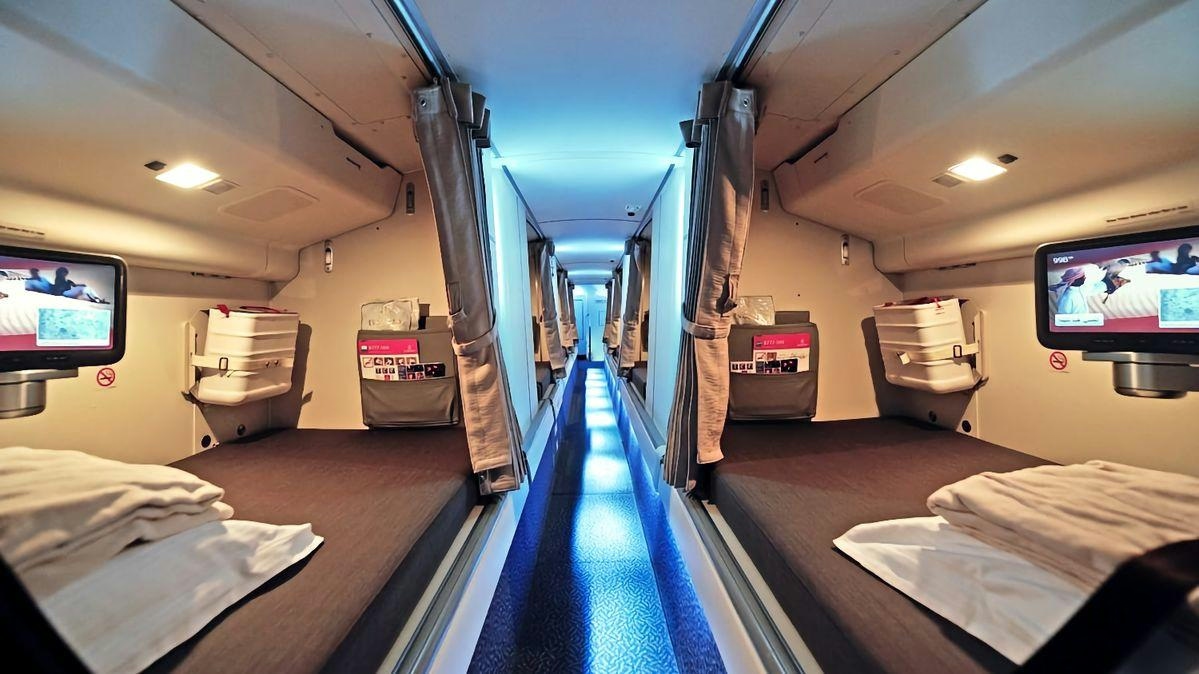
Inside the Boeing 777X Pilot and Crew Rest Area
The Boeing 777X represents a significant advancement in long-haul aviation, combining cutting-edge engineering with a strong emphasis on both passenger and crew comfort. While much attention has been given to its folding wingtips and powerful GE9X engines, one of the aircraft’s most innovative yet less visible features is its concealed upper-deck crew rest area. This design element is intended to enhance operational efficiency on ultra-long-haul flights, addressing the critical needs of crew welfare during extended journeys.
A New Approach to Crew Comfort
As the latest iteration of Boeing’s successful 777 family, the 777X is available in two primary variants—the 777-8 and 777-9—offering improvements in fuel efficiency, range, and passenger capacity. Its folding wingtip system allows for a larger wingspan to optimize aerodynamics while maintaining compatibility with standard airport gates. The cabin design draws inspiration from the 787 Dreamliner, incorporating larger windows, enhanced air quality, and advanced lighting systems to improve passenger experience.
Distinct from these visible innovations is the aircraft’s upper-deck crew rest area, which is uniquely reserved for crew operations rather than passengers. Situated in the crown of the aircraft above the main cabin, this space includes separate rest facilities for pilots and cabin crew. Equipped with sleeping bunks, adjustable lighting, ventilation, and communication systems, the rest area is classified as a Class 1 crew rest facility. This classification ensures compliance with stringent regulatory standards, providing horizontal sleeping arrangements that are essential for maintaining crew well-being and safety on flights that can exceed 14 hours in duration.
Operational and Market Implications
By relocating crew rest areas to the upper deck, Boeing effectively maximizes the available space within the main cabin for passengers and cargo, thereby enhancing airline revenue potential. This design reflects a broader industry trend that integrates operational efficiency with human factors, ensuring that crew needs are met without compromising passenger comfort.
However, the introduction of the 777X’s innovative rest area coincides with notable challenges within the aviation industry. Boeing currently faces a significant backlog of 777X orders, particularly from Gulf carriers, which may affect delivery schedules and airline fleet planning. Market responses have included scrutiny regarding the efficiency and practicality of the new crew rest design, especially as airlines adjust to evolving operational models and increasing competitive pressures.
Competitors may capitalize on their established crew rest configurations to attract customers or improve their own operational efficiencies, intensifying competition in the wide-body aircraft market. Meanwhile, Boeing’s broader financial outlook remains mixed. Despite positive indicators such as accelerating 737 MAX production and projected free cash flow improvements by 2026, risks persist, including negative free cash flow margins and ongoing pressures on operating margins.
Meeting the Demands of Ultra-Long-Haul Travel
Dedicated crew rest facilities are critical on ultra-long-haul routes, where regulatory requirements mandate augmented crews and effective rest solutions. The 777X’s concealed upper-deck rest area is a practical response to these demands, balancing operational efficiency, crew welfare, and airline profitability. This feature underscores Boeing’s commitment to addressing the complex challenges of modern aviation within a highly competitive global market.
Comments

Etihad Airways Suspends Airbus A380 Flights on Key Route

Aditya Birla Group Seeks Approval for Aircraft Leasing in GIFT City

Qatar Airways Highlights Innovation and Connectivity at Arabian Travel Market 2026

Hong Kong's Five-Year Plan Includes Andrew Fan's Aircraft Parts Processing Hub Proposal

ACIA Aero Leasing Delivers ATR72-600 to Air Nostrum

RTX Appoints Jill Albertelli as Head of Pratt & Whitney

TAT Technologies Joins Beyond Aero Hydrogen Aircraft Program

AURAK Study Highlights Barriers to Air Taxi Adoption in Emerging Economies

Xiamen Air Selects Altitude for 787 Maintenance at Heathrow

Etihad and Swissport Extend Global Partnership
