
Zet AI‑inzichten om in gerichte actie

Trending
Categories
J-36 Designers Raise Concerns Over Military AI Hallucinations
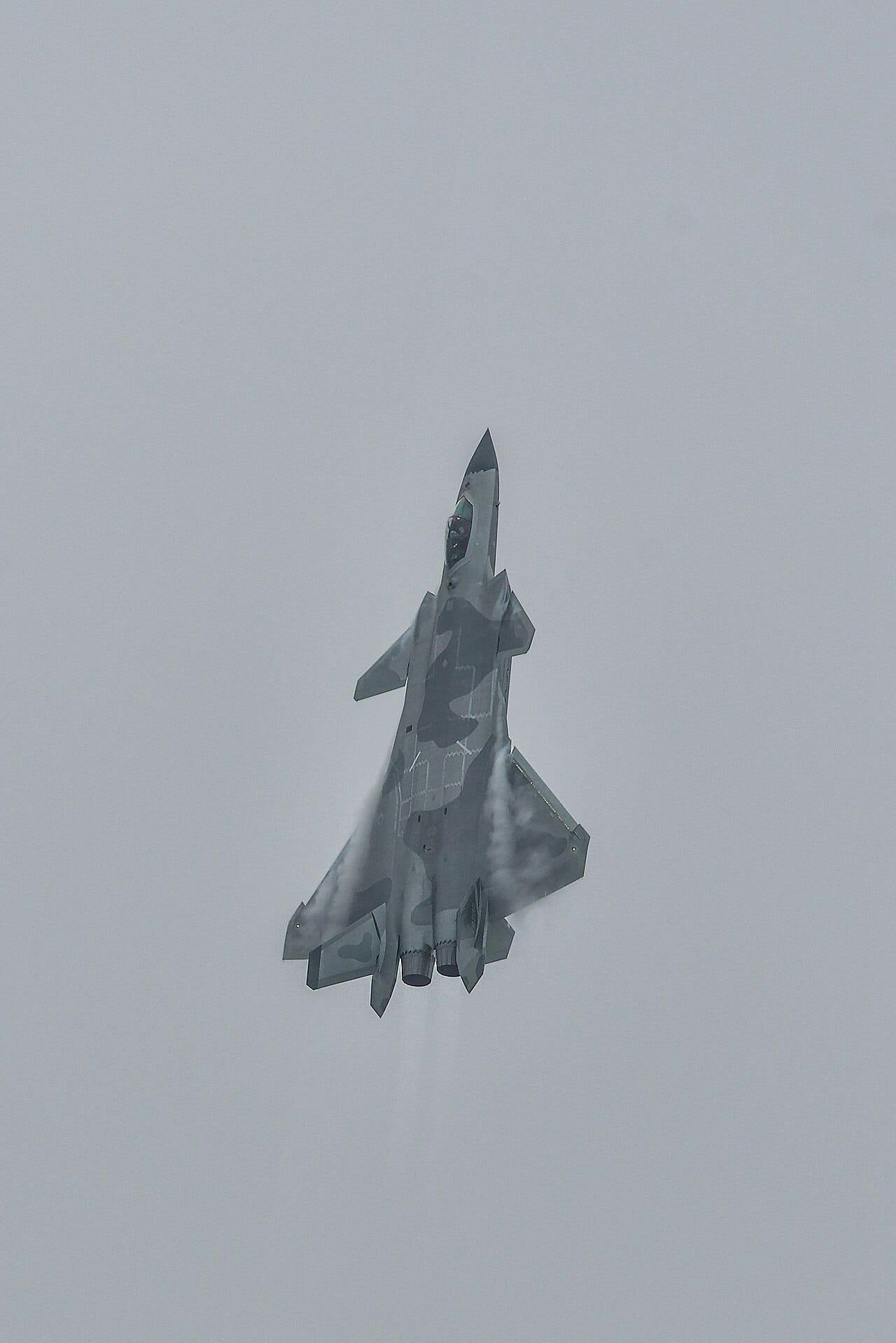
J-36 Designers Raise Concerns Over Military AI Hallucinations
The Risks of AI-Generated Intelligence in Defense
When queried about the combat radius of a foreign fighter jet, large language models often provide confident and detailed responses, frequently presented as factual. However, these answers can be entirely fabricated. While such inaccuracies may be inconvenient in academic contexts, they pose significant risks in military applications, particularly in the design of stealth fighters that rely on accurate assessments of enemy radar capabilities.
Engineers at the AVIC Chengdu Aircraft Research and Design Institute, the team responsible for China’s J-20 and the forthcoming J-36 stealth fighters, have publicly voiced these concerns. In a paper published on June 20, 2026, in Information Studies: Theory & Application—a journal affiliated with state arms manufacturer Norinco—engineer Zhang Xianzhe highlights the propensity of AI models to invent critical specifications. These include aircraft dimensions, payload capacities, speeds, combat radii, and radar parameters such as scan ranges and frequency bands.
Strategic Implications of AI Hallucinations
The paper underscores the dual nature of large language models in defense intelligence. While these AI systems excel at data mining and weapons performance analysis—tasks that traditionally demanded extensive analyst effort—their tendency to generate plausible yet false information, known as the “hallucination effect,” introduces a unique and dangerous vulnerability. Zhang warns that such errors could lead to severe consequences, including strategic miscalculations in a domain where precision is paramount.
For fighter aircraft designers, the initial phase of any project hinges on a thorough understanding of adversary capabilities: the extent of radar coverage, the frequency bands employed, and potential detection gaps. These factors directly influence the design of the airframe, stealth coatings, sensor suites, and operational tactics. An erroneous assumption—such as optimizing stealth features for an incorrect radar frequency—could compromise the aircraft’s survivability, with such flaws potentially only becoming apparent in combat scenarios.
Industry Response and Broader Market Concerns
The candid nature of this warning is particularly significant given its origin within a leading Chinese military design institute and its publication through a state-backed outlet. This disclosure arrives amid China’s vigorous promotion of military AI technologies, highlighting both the promise and inherent risks of rapid AI integration.
Concerns about the reliability of military AI systems are intensifying, as designers grapple with preventing hallucinations that could result in operational failures or regulatory violations. These apprehensions resonate beyond defense circles, influencing broader market sentiment. Despite SK Hynix’s record profits, investor skepticism persists regarding the sustainability of accelerated AI-related expenditures.
Internationally, competitors and regulators are taking note. The White House, for example, is collaborating with AI companies to develop confidential safety protocols, reflecting a global movement toward enhanced oversight and compliance in military AI deployment.
A Shift Toward Transparency and Caution
The AVIC Chengdu team’s forthright publication marks a notable shift in discourse surrounding military AI. As the integration of AI into defense systems accelerates, the risk of strategic errors stemming from AI hallucinations has moved from theoretical possibility to tangible concern. For those engaged in designing the next generation of stealth fighters, ensuring the accuracy and dependability of AI-generated intelligence has become a critical national security imperative.

Etihad Airways Suspends Airbus A380 Flights on Key Route

Aditya Birla Group Seeks Approval for Aircraft Leasing in GIFT City

Qatar Airways Highlights Innovation and Connectivity at Arabian Travel Market 2026

Hong Kong's Five-Year Plan Includes Andrew Fan's Aircraft Parts Processing Hub Proposal

ACIA Aero Leasing Delivers ATR72-600 to Air Nostrum

RTX Appoints Jill Albertelli as Head of Pratt & Whitney

TAT Technologies Joins Beyond Aero Hydrogen Aircraft Program

AURAK Study Highlights Barriers to Air Taxi Adoption in Emerging Economies

Xiamen Air Selects Altitude for 787 Maintenance at Heathrow

Etihad and Swissport Extend Global Partnership
