
Zet AI‑inzichten om in gerichte actie

Trending
Categories
Jeju Air Seeks Control of Asiana’s Gimpo Maintenance Hangar
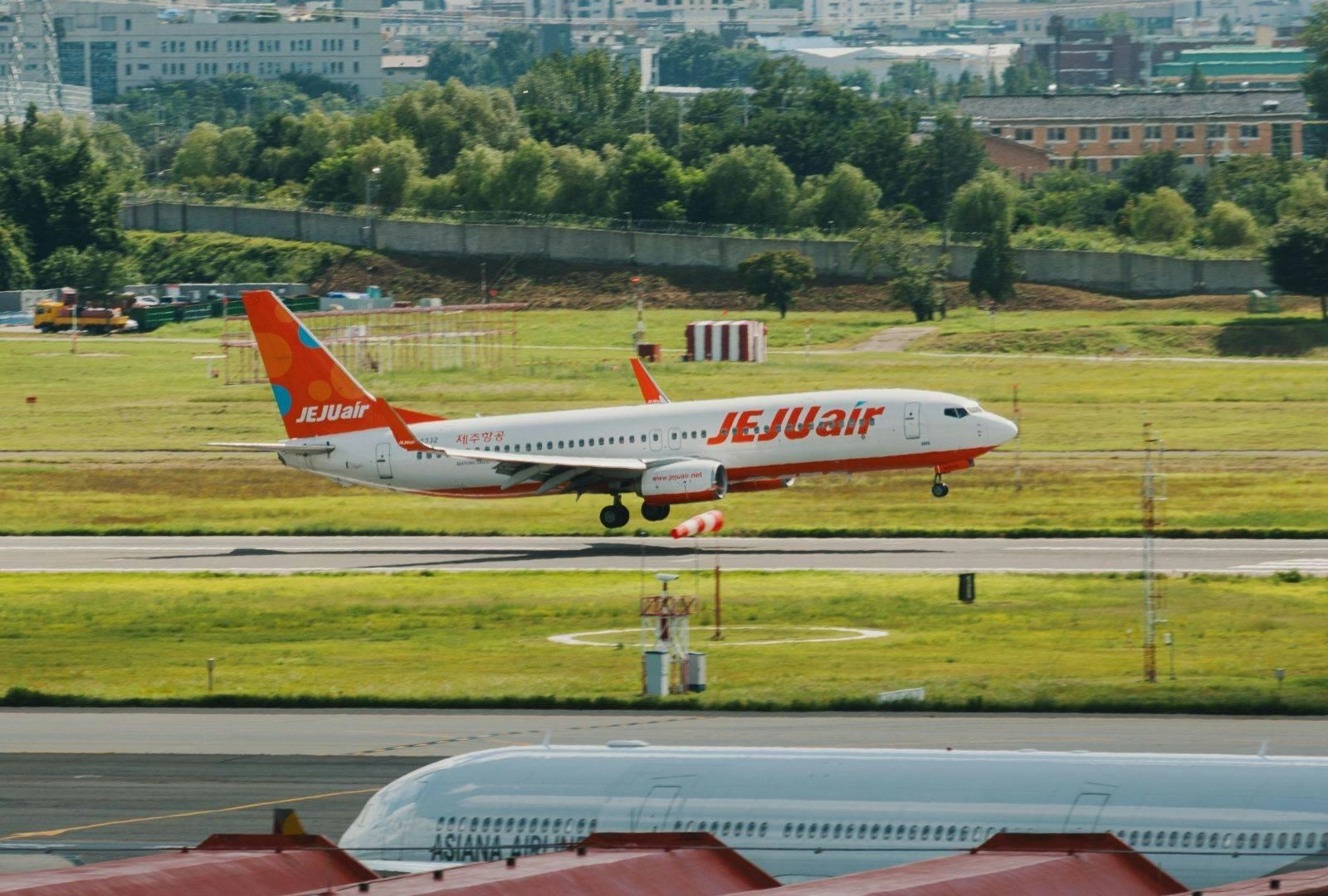
Jeju Air Pursues Control of Asiana’s Gimpo Maintenance Hangar Amid Industry Consolidation
Jeju Air has expressed interest in acquiring Asiana Airlines’ maintenance hangar at Seoul Gimpo International Airport, a strategic move aimed at enhancing its in-house aircraft maintenance capabilities. This development occurs against the backdrop of significant consolidation within South Korea’s airline industry, as Asiana prepares for full integration into Korean Air—a process poised to transform the nation’s aviation sector.
Transition at Gimpo and Strategic Implications
The Gimpo maintenance hangar, currently operated by Asiana under a lease agreement with Korea Airports Corporation, is set to become available when Asiana’s lease expires in December 2026. Korea Airports Corporation, which manages Gimpo International Airport, has initiated a tender process to select a new operator for the facility. Jeju Air has confirmed its submission of an expression of interest, though no final decision has been reached and the tender remains ongoing.
Asiana Airlines has maintained operations at the Gimpo hangar since 1991, and its impending departure will conclude nearly 35 years of presence at the site. An Asiana spokesperson confirmed the company’s plan to return the facility upon lease expiration. The airline’s withdrawal aligns with the broader consolidation following Korean Air’s acquisition of a controlling stake in Asiana in December 2024. While the two carriers continue to operate independently during the transition, full operational integration is scheduled for December 17, 2026, when the Asiana brand will be retired and its operations absorbed into Korean Air. Maintenance activities are expected to increasingly shift to Korean Air’s facilities at Incheon International Airport.
Jeju Air’s potential acquisition of the Gimpo hangar is intended to establish a dedicated maintenance base to support the modernization and expansion of its Boeing 737 fleet. For low-cost carriers, access to in-house maintenance infrastructure is becoming increasingly critical, allowing them to reduce dependence on third-party providers, enhance aircraft availability, and exercise greater control over maintenance costs and scheduling.
Market Dynamics and Regulatory Considerations
The competition for the Gimpo hangar unfolds at a pivotal moment for South Korea’s airline sector. Jeju Air’s bid may attract regulatory scrutiny, particularly given the broader context of the Korean Air-Asiana merger. Industry analysts suggest that the outcome could influence competition within the country’s low-cost carrier segment, potentially prompting rival airlines to adjust fares or improve services in response.
Beyond airline competition, alternative transportation modes such as KTX high-speed rail and express buses continue to exert pressure on airline pricing and operational strategies. As carriers expand their fleets and increase aircraft utilization, securing dedicated maintenance capacity emerges as a strategic priority to maintain operational reliability and cost efficiency.
Korea Airports Corporation is currently reviewing bids to determine the successor to Asiana at the Gimpo hangar. The forthcoming decision is expected to significantly impact the maintenance infrastructure landscape for South Korea’s low-cost carriers in the coming years.

Etihad Airways Suspends Airbus A380 Flights on Key Route

Aditya Birla Group Seeks Approval for Aircraft Leasing in GIFT City

Qatar Airways Highlights Innovation and Connectivity at Arabian Travel Market 2026

Hong Kong's Five-Year Plan Includes Andrew Fan's Aircraft Parts Processing Hub Proposal

ACIA Aero Leasing Delivers ATR72-600 to Air Nostrum

RTX Appoints Jill Albertelli as Head of Pratt & Whitney

TAT Technologies Joins Beyond Aero Hydrogen Aircraft Program

AURAK Study Highlights Barriers to Air Taxi Adoption in Emerging Economies

Xiamen Air Selects Altitude for 787 Maintenance at Heathrow

Etihad and Swissport Extend Global Partnership
