
Zet AI‑inzichten om in gerichte actie

Trending
Categories
Jeju Island Introduces Air Taxis to Enhance Tourism and Reduce Emissions
Jeju Island Introduces Air Taxis to Enhance Tourism and Reduce Emissions
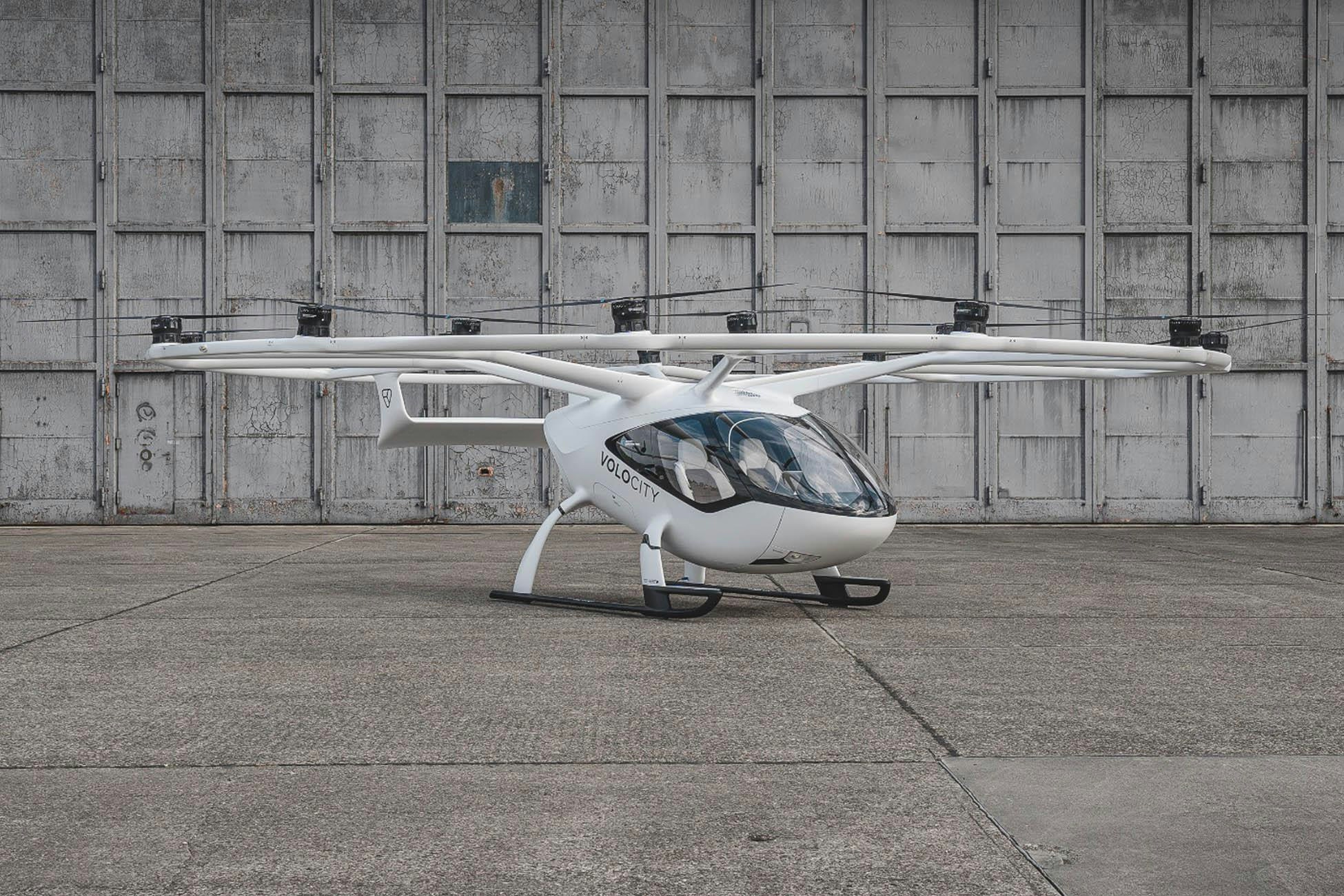
Jeju Island is poised to become South Korea’s inaugural regional hub for Urban Air Mobility (UAM), embarking on an ambitious project to integrate air taxis into its transportation network. This initiative, spearheaded by the Ministry of Land, Infrastructure and Transport, aims to revolutionize travel for both visitors and residents while advancing the island’s commitment to sustainable tourism and environmental preservation. By adopting air taxis, Jeju seeks to reduce carbon emissions and protect its renowned natural landscapes.
Pioneering Sustainable Urban Air Mobility
As the global UAM market is forecasted to reach an estimated US$8 trillion by 2050, Jeju is strategically positioning itself at the forefront of this emerging sector. Governor Oh Young-hun has articulated a comprehensive strategy that leverages air taxi services to bolster the local economy and enhance environmental conservation efforts. The initiative intends to shift a portion of ground transportation to aerial routes, thereby minimizing the ecological footprint associated with conventional travel and supporting Jeju’s broader sustainability objectives.
Infrastructure Development and Strategic Locations
Central to Jeju’s master plan is a substantial investment of KRW 85 billion dedicated to the construction of “vertiports,” specialized facilities designed for the takeoff and landing of air taxis. These vertiports will be established at three key sites: Jeju International Airport, which will facilitate seamless connections for international travelers; the Jungmun International Convention Center, catering to business and event attendees; and Seongsan Port, providing access to the iconic Sunrise Peak. The Korea Airports Corporation is collaborating with technology partners to complete these infrastructures by 2028, with commercial air taxi operations anticipated to commence shortly thereafter. This network is expected to offer travelers swift and scenic aerial transit options, effectively reducing reliance on lengthy car journeys across the island’s varied terrain.
Enhancing Tourism and Environmental Goals
Industry experts predict that the introduction of air taxis will attract a new demographic of affluent tourists eager to experience Jeju’s UNESCO World Heritage sites from a unique vantage point. The technology promises to improve accessibility to remote areas without necessitating additional road construction, thereby preserving the island’s forests and coastal serenity. The Jeju Tourism Organization anticipates increased demand for luxury, eco-conscious travel experiences, as the air taxis are engineered to operate quietly and emit zero emissions, aligning with the island’s environmental commitments.
Challenges Amidst Global Competition
Despite its forward-looking vision, Jeju faces considerable challenges within the competitive and nascent air taxi market. Established international players such as China’s EHang and U.S.-based companies Archer and Joby are rapidly advancing their flying taxi technologies, intensifying global competition. Market analysts have expressed reservations regarding the economic feasibility of air taxis, citing the high costs of development and the extensive infrastructure required. Competitors are likely to respond with increased investments and strategic alliances, potentially raising the standards Jeju must meet to succeed.
Furthermore, integrating air taxis into Jeju’s tourism framework will necessitate overcoming regulatory complexities, securing public acceptance, and ensuring the availability of sustainable energy sources to fulfill emission reduction targets. These factors will be critical in determining the project’s long-term viability.
Looking Ahead
As Jeju Island prepares to implement its air taxi program, it stands at a critical juncture where innovation intersects with tourism and environmental stewardship. The success of this initiative will depend not only on technological and infrastructural advancements but also on garnering public support and delivering on sustainability promises. If successful, Jeju’s model could establish a new benchmark for eco-friendly travel within the region and potentially influence global urban air mobility strategies.
Comments

Etihad Airways Suspends Airbus A380 Flights on Key Route

Aditya Birla Group Seeks Approval for Aircraft Leasing in GIFT City

Qatar Airways Highlights Innovation and Connectivity at Arabian Travel Market 2026

Hong Kong's Five-Year Plan Includes Andrew Fan's Aircraft Parts Processing Hub Proposal

ACIA Aero Leasing Delivers ATR72-600 to Air Nostrum

RTX Appoints Jill Albertelli as Head of Pratt & Whitney

TAT Technologies Joins Beyond Aero Hydrogen Aircraft Program

AURAK Study Highlights Barriers to Air Taxi Adoption in Emerging Economies

Xiamen Air Selects Altitude for 787 Maintenance at Heathrow

Etihad and Swissport Extend Global Partnership
