
Zet AI‑inzichten om in gerichte actie

Trending
Categories
Jet Fuel Shortages Raise Concerns Over Flight Disruptions in Europe
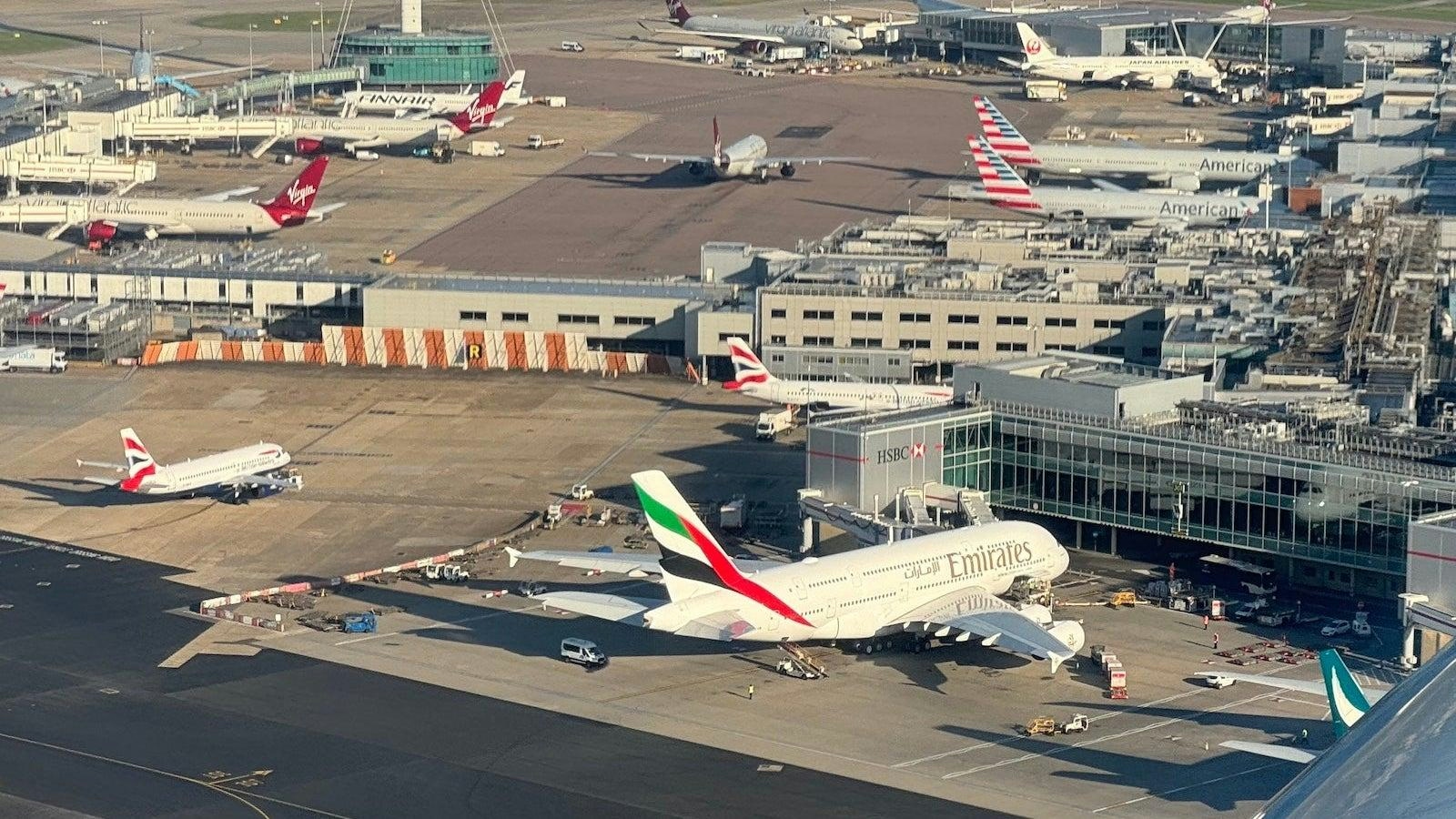
Jet Fuel Shortages Raise Concerns Over Flight Disruptions in Europe
Growing Supply Constraints Amid Rising Travel Demand
Jet fuel supplies are tightening across multiple regions, raising significant concerns within the aviation sector as airlines prepare for potential disruptions and operational challenges in Europe. With travel demand surging ahead of the peak summer season, industry leaders are closely monitoring the situation, wary that limited fuel availability could affect flight schedules, route capacity, and the overall stability of airline networks.
Recent analyses from the International Energy Agency (IEA) indicate that several European countries may face jet fuel shortages within the next six weeks if ongoing disruptions to fuel supplies from the Middle East continue. Although the issue is global in nature, early signs of strain have already appeared in parts of Asia, where restricted fuel access has led to flight cancellations and operational adjustments. These developments are being viewed as potential harbingers of broader instability in global aviation fuel markets.
Implications for European Airlines and Operational Responses
The timing of these supply constraints is particularly critical for Europe, as airlines prepare for one of the busiest travel periods of the year. Strong passenger volumes are expected on both short-haul and long-haul routes, and any reduction in fuel availability during this period could immediately disrupt airline schedules. Potential consequences include delays, reduced flight frequencies, and network restructuring. Furthermore, the prospect of jet fuel shortages is likely to increase operational costs for carriers, costs that may ultimately be passed on to passengers through higher airfares.
In response, airlines and fuel suppliers are actively seeking to secure more resilient supply arrangements. Efforts are underway to identify alternative sourcing options and to strengthen logistical pathways to maintain operational continuity. However, the complexity of global fuel distribution networks means that rapid adjustments may prove difficult if supply constraints deepen or spread across multiple regions.
Market reactions are already emerging, with airlines potentially forced to adjust schedules, seek alternative fuel sources, or raise ticket prices to offset rising fuel costs. The risk of flight cancellations and broader travel disruptions is especially acute during the summer vacation season, when demand peaks and operational flexibility is limited.
Calls for Coordinated Industry and Government Action
Industry stakeholders are urging aviation authorities and governments to develop coordinated contingency strategies to manage the evolving crisis. Such plans would need to address allocation priorities, communication protocols, and decision-making frameworks across airports and airlines to efficiently handle disruptions should shortages escalate. A key concern is the possibility of fuel rationing in severe scenarios, which could compel authorities to allocate fuel selectively to specific routes or categories of flights. This would force airlines to make difficult decisions regarding which services to maintain and which to suspend temporarily.
Effective coordination and clear communication between airlines, airports, and regulators will be essential to prevent confusion and ensure orderly operational adjustments. Without such collaboration, even limited supply constraints could trigger widespread disruptions across interconnected flight networks.
Additionally, airport slot management has become a significant issue. Airlines are generally required to operate a minimum proportion of their allocated slots to retain them for future scheduling periods. In the event of fuel shortages, strict enforcement of these rules could place further pressure on carriers already struggling to maintain normal operations, prompting calls for temporary adjustments or slot relief measures.
As the situation continues to develop, the aviation industry faces a critical test of its resilience and adaptability amid tightening jet fuel supplies and mounting travel demand.

Etihad Airways Suspends Airbus A380 Flights on Key Route

Aditya Birla Group Seeks Approval for Aircraft Leasing in GIFT City

Qatar Airways Highlights Innovation and Connectivity at Arabian Travel Market 2026

Hong Kong's Five-Year Plan Includes Andrew Fan's Aircraft Parts Processing Hub Proposal

ACIA Aero Leasing Delivers ATR72-600 to Air Nostrum

RTX Appoints Jill Albertelli as Head of Pratt & Whitney

TAT Technologies Joins Beyond Aero Hydrogen Aircraft Program

AURAK Study Highlights Barriers to Air Taxi Adoption in Emerging Economies

Xiamen Air Selects Altitude for 787 Maintenance at Heathrow

Etihad and Swissport Extend Global Partnership
