
Zet AI‑inzichten om in gerichte actie

Trending
Categories
Kenya Airways Returns Boeing 777-300ER to Turkish Airlines After Lease Ends
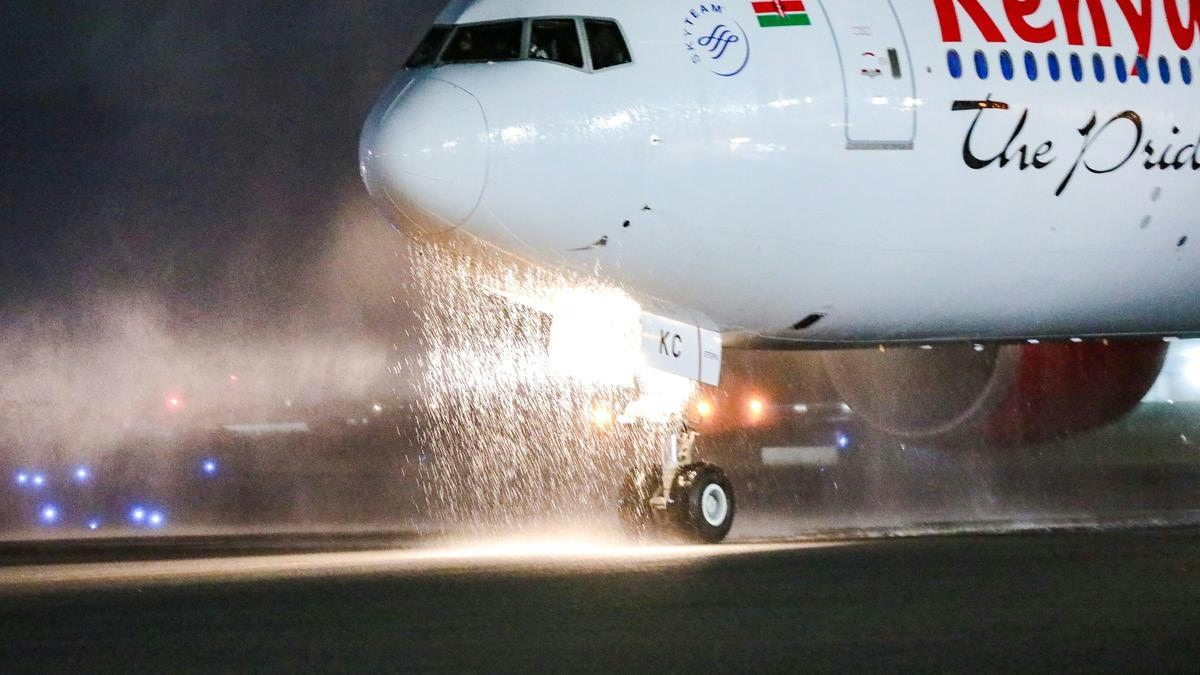
Kenya Airways Returns Boeing 777-300ER to Turkish Airlines as Lease Ends
Kenya Airways has returned its Boeing 777-300ER aircraft, registered 5Y-KZZ, to Turkish Airlines following the conclusion of a wet lease agreement. This move marks the end of a partnership that enabled the Kenyan carrier to generate revenue from an underutilized asset amid shifting market dynamics. The aircraft has now been repositioned to Nairobi as Kenya Airways reevaluates its fleet deployment strategy in response to evolving post-pandemic travel patterns and a changing route network.
Wet lease agreements, which involve providing an aircraft along with crew, maintenance, and insurance to another airline, have become a common tool for carriers seeking operational flexibility. For Kenya Airways, leasing the 777-300ER to Turkish Airlines was a strategic measure to optimize fleet utilization and alleviate financial pressures. The 777-300ER, a key component of Kenya Airways’ long-haul operations, typically services major intercontinental routes connecting Nairobi with Europe, Asia, and North America.
Challenges and Strategic Implications
The return of the aircraft introduces significant challenges for Kenya Airways as it seeks to maintain its fleet size and operational capacity. The airline faces scrutiny over its ability to secure new leases or purchase agreements for comparable wide-body aircraft amid a competitive landscape. Rivals such as Emirates and China Southern Airlines are expanding their fleets by converting 777-300ERs into freighters, intensifying competition in both cargo and passenger sectors.
Operational reliability has also come under increased examination following a recent incident involving a diverted flight due to malfunctioning flight controls. Such events may affect Kenya Airways’ reputation and influence market perceptions, complicating strategic decisions related to fleet management and route planning.
Financially, Kenya Airways continues to contend with mounting debt and operational losses, prompting government intervention and ongoing restructuring efforts. The airline’s turnaround strategy emphasizes fleet optimization, route rationalization, and cost reduction measures aimed at restoring profitability. The decision to reclaim the 777-300ER may reflect confidence in the recovery of passenger traffic and the potential for network expansion, particularly on international routes to Europe and Asia as travel demand rebounds.
Meanwhile, Turkish Airlines remains one of the fastest-growing global carriers, frequently leveraging lease agreements to supplement capacity during peak periods or maintenance cycles. The broader aviation industry has witnessed a surge in leasing activity as airlines prioritize flexibility over long-term aircraft acquisitions, enabling rapid adjustments to fluctuating demand.
Industry observers are closely monitoring Kenya Airways’ plans for redeploying the returned 777-300ER. The airline’s forthcoming decisions regarding its wide-body fleet will serve as critical indicators of its recovery trajectory and long-term competitiveness within the East African aviation market. This development also highlights the ongoing interplay of cooperation and competition between African and Middle Eastern carriers, as airlines from both regions compete for connecting traffic across continents. Kenya Airways’ Nairobi hub continues to face intense competition from Gulf carriers and Turkish Airlines, underscoring the strategic importance of its fleet management choices.

Hong Kong's Five-Year Plan Includes Andrew Fan's Aircraft Parts Processing Hub Proposal

ACIA Aero Leasing Delivers ATR72-600 to Air Nostrum

RTX Appoints Jill Albertelli as Head of Pratt & Whitney

TAT Technologies Joins Beyond Aero Hydrogen Aircraft Program

AURAK Study Highlights Barriers to Air Taxi Adoption in Emerging Economies

Xiamen Air Selects Altitude for 787 Maintenance at Heathrow

Etihad and Swissport Extend Global Partnership

Sepehran Airlines B737 Returns to Mashhad After Tyre and Engine Issues

Etihad Deploys Widebody Fleet to Meet Strong Demand

Korean Air Finalizes $36.2 Billion Deal with Boeing
