
Zet AI‑inzichten om in gerichte actie

Trending
Categories
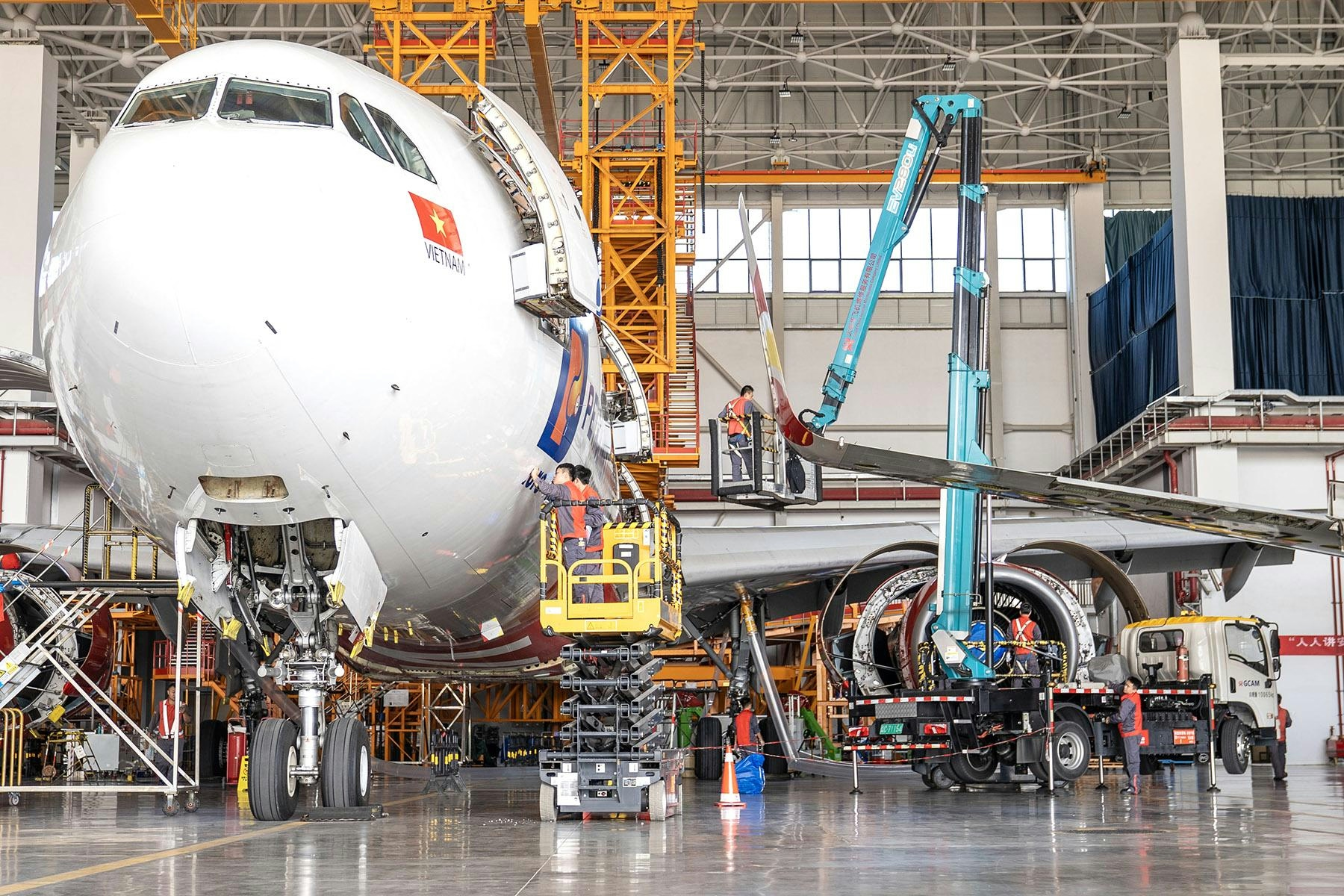
Korea Customs Service Advances Regulatory Innovation to Support Aircraft MRO Growth
Korea Customs Service Advances Regulatory Innovation to Support Aircraft MRO Growth
Streamlining Regulations to Boost Competitiveness
The Korean government is undertaking significant regulatory reforms to strategically nurture the aircraft maintenance, repair, and overhaul (MRO) industry. On April 3, the Korea Customs Service announced the implementation of a revised “Notice on the Management of Goods Imported and Exported to and from Free Trade Zones (FTZ),” effective from April 6. This regulatory overhaul aims to simplify operational procedures and enhance the competitiveness of domestic MRO providers.
A pivotal change introduced by the new rules is the establishment of a comprehensive approval process that permits companies to import thousands of aircraft parts into FTZs under a single authorization. This replaces the previous system, which required separate approvals for each individual part. The reform is expected to substantially reduce administrative burdens and expedite supply chains, thereby facilitating more efficient maintenance and repair operations.
National Strategy and Economic Implications
This regulatory update forms part of a broader national strategy to transform FTZs into dynamic hubs for high value-added industries, including aircraft MRO, while bolstering the export capabilities of Korean firms. The global aircraft MRO market is projected to reach 172 trillion won by 2034, highlighting the urgency for Korea to establish a competitive presence in this rapidly expanding sector.
Under the new framework, MRO companies will benefit from a streamlined, one-stop import process that allows for faster modification and repair of aircraft parts with deferred taxation. The Korea Customs Service estimates that retrofitting aging aircraft could generate approximately 500 jobs annually and contribute 168 billion won in added value during the initial phase.
Plans are also underway to develop an MRO cluster within the Advanced Aviation Complex FTZ at Incheon International Airport, spanning 510,000 square meters by 2040. This initiative is designed to stimulate related industries and facilitate the entry of domestic companies into the global MRO market.
Expanded Operational Flexibility and Industry Challenges
The revised regulations further extend “autonomous management benefits” to outstanding manufacturers operating within FTZs. Companies will now be permitted to utilize foreign raw materials outside of regular working hours—including nights and holidays—and report their usage the following day. This provision supports continuous, year-round operations. Additional measures include exemptions from annual inventory checks and simplified procedures for importing and exporting sample goods valued under $10,000, eliminating the need for bonded transport.
Despite these advancements, the industry faces challenges such as ensuring regulatory compliance, workforce development, and the integration of emerging technologies. The evolving regulatory environment may also intensify competition among MRO providers. Leading global players like Ryanair and Airbus are expanding their MRO operations through investments in new facilities, technology hubs, and strategic acquisitions to maintain market share and operational efficiency.
Commissioner Lee Myunggu of the Korea Customs Service underscored the significance of the reforms, stating, “The revised regulation is focused on boldly breaking down outdated regulatory frameworks that have hindered the growth of advanced industries such as aircraft MRO. The Korea Customs Service will continue to pursue regulatory innovation to foster new technologies and industries, thereby supporting domestic companies in creating new sources of growth in the global market.”

Etihad Airways Suspends Airbus A380 Flights on Key Route

Aditya Birla Group Seeks Approval for Aircraft Leasing in GIFT City

Qatar Airways Highlights Innovation and Connectivity at Arabian Travel Market 2026

Hong Kong's Five-Year Plan Includes Andrew Fan's Aircraft Parts Processing Hub Proposal

ACIA Aero Leasing Delivers ATR72-600 to Air Nostrum

RTX Appoints Jill Albertelli as Head of Pratt & Whitney

TAT Technologies Joins Beyond Aero Hydrogen Aircraft Program

AURAK Study Highlights Barriers to Air Taxi Adoption in Emerging Economies

Xiamen Air Selects Altitude for 787 Maintenance at Heathrow

Etihad and Swissport Extend Global Partnership
