
Zet AI‑inzichten om in gerichte actie

Trending
Categories
Lilium Phoenix eVTOL Prototypes Donated to Museum
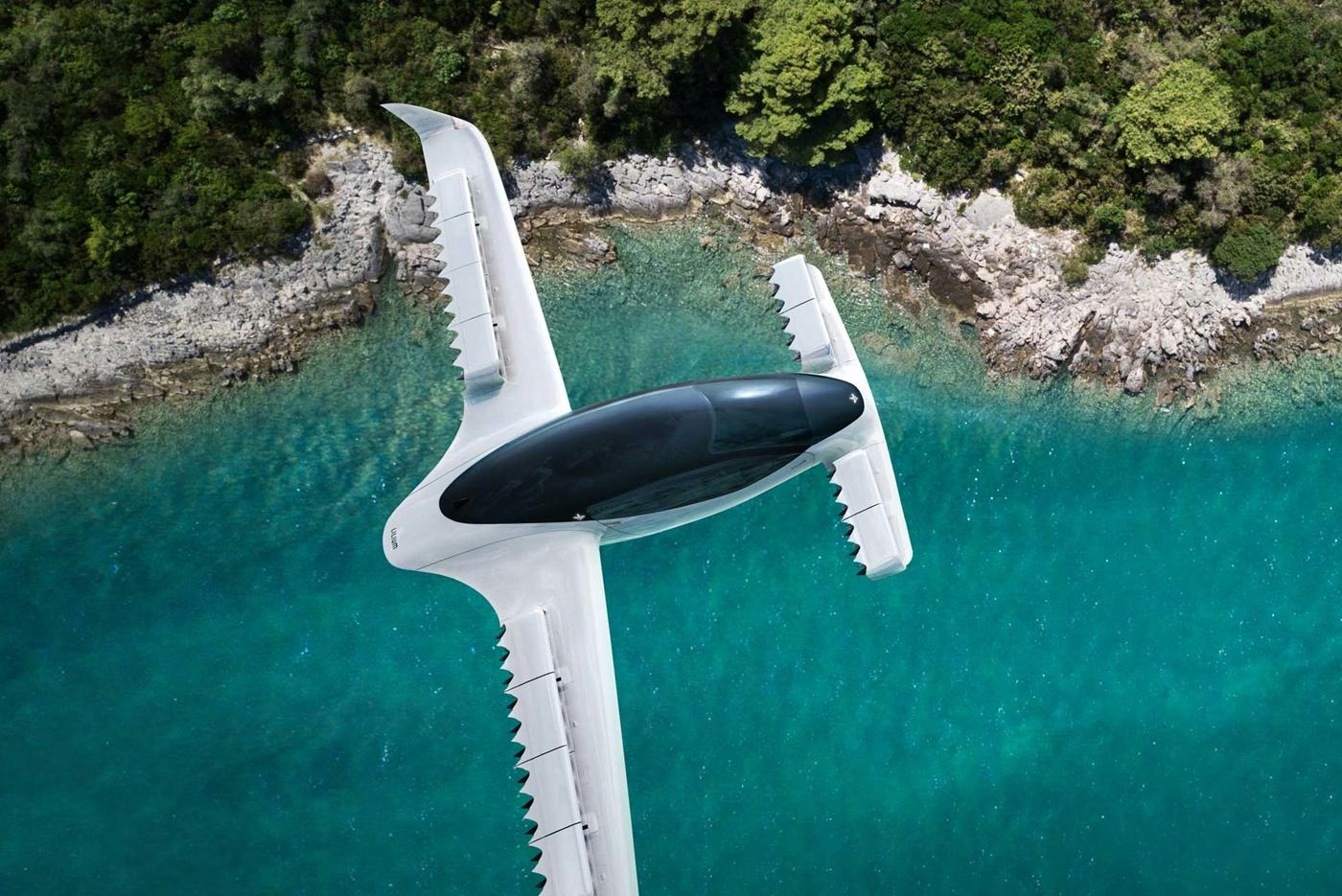
Lilium Phoenix eVTOL Prototypes Donated to German Museums
The ambitious vision of Lilium, a Munich-based start-up, was to develop an electric vertical takeoff and landing (eVTOL) jet capable of transporting passengers between cities in near silence. The aircraft was designed to lift off vertically from rooftops and cruise efficiently on wings equipped with dozens of small electric ducted fans. Despite raising over a billion dollars to realize this concept, Lilium succumbed to insolvency in 2024. Rather than being dismantled or scrapped, the company’s two pioneering prototypes—the Phoenix 2 and Phoenix 3—have been preserved and donated to prominent German museums.
Innovative Design and Flight Achievements
The Phoenix 2 and Phoenix 3 served as uncrewed technology demonstrators that validated Lilium’s unique approach to eVTOL propulsion. Unlike many competitors who favored a few large open rotors, Lilium embedded numerous small ducted fans within the wings and forward canards. These fans could tilt downward for vertical hover and transition forward for wing-borne flight, allowing the aircraft to operate like a conventional airplane at higher speeds. This complex design was successfully demonstrated in 2022 when the Phoenix 2 became, according to Lilium, the first full-size electric jet to transition from vertical hover to winged flight. During subsequent tests in southern Spain, the prototype surpassed speeds of 250 km/h (155 mph). Phoenix 2 alone accumulated nearly 200 flight hours before the company’s financial collapse.
From Financial Collapse to Preservation
Lilium’s downfall was driven not by technical failure but by financial challenges. Years of substantial expenditure depleted the company’s resources, and when the German government declined to provide a rescue loan in 2024, insolvency became inevitable. With no buyers for its assets, the Phoenix prototypes faced the grim prospect of being scrapped, marking a somber end to one of Europe’s most ambitious clean-aviation projects. This outcome also highlights broader market skepticism regarding the tangible progress of electric air taxis despite billions of dollars invested globally.
Crowdfunding and Museum Acquisition
In an unexpected turn, grassroots support played a crucial role in preserving Lilium’s legacy. A crowdfunding campaign raised approximately €10,000 to prevent the destruction of the Phoenix demonstrators. Subsequently, the aircraft were transferred to the Deutsches Technikmuseum in Berlin and the Luftfahrtmuseum Wernigerode in Saxony-Anhalt, where they are currently being reassembled for public exhibition. This donation presents challenges in preserving the technology in a manner that future generations can fully appreciate its significance, while also balancing the need to foster ongoing innovation within the electric aviation sector.
Industry Implications and Reactions
Lilium’s transition from active development to historical preservation has drawn attention within the eVTOL industry. Some competitors have used this moment to accelerate their own projects, seeking to capitalize on Lilium’s absence and maintain a competitive advantage. Meanwhile, the company’s shift has prompted scrutiny regarding its strategic focus, raising questions about the balance between honoring legacy achievements and pursuing commercialization. The Phoenix prototypes now stand as both a symbol of technical innovation and a cautionary example of the challenges inherent in transforming visionary concepts into sustainable realities in the evolving field of electric aviation.

Etihad Airways Suspends Airbus A380 Flights on Key Route

Aditya Birla Group Seeks Approval for Aircraft Leasing in GIFT City

Qatar Airways Highlights Innovation and Connectivity at Arabian Travel Market 2026

Hong Kong's Five-Year Plan Includes Andrew Fan's Aircraft Parts Processing Hub Proposal

ACIA Aero Leasing Delivers ATR72-600 to Air Nostrum

RTX Appoints Jill Albertelli as Head of Pratt & Whitney

TAT Technologies Joins Beyond Aero Hydrogen Aircraft Program

AURAK Study Highlights Barriers to Air Taxi Adoption in Emerging Economies

Xiamen Air Selects Altitude for 787 Maintenance at Heathrow

Etihad and Swissport Extend Global Partnership
