Afbeelding

Zet AI‑inzichten om in gerichte actie

Meld je vandaag nog aan voor de AeroGenie-wachtlijst!

Trending

Categories

Lufthansa Supports Philippines’ Efforts to Develop MRO Hub
June 17, 2026By ePlane AI
Lufthansa Supports Philippines’ Efforts to Develop MRO Hub
0
0
Lufthansa Technik Philippines
Clark International Airport
MRO Facility Development

Lufthansa Supports Philippines’ Efforts to Develop MRO Hub

Strengthening German-Philippine Economic Ties

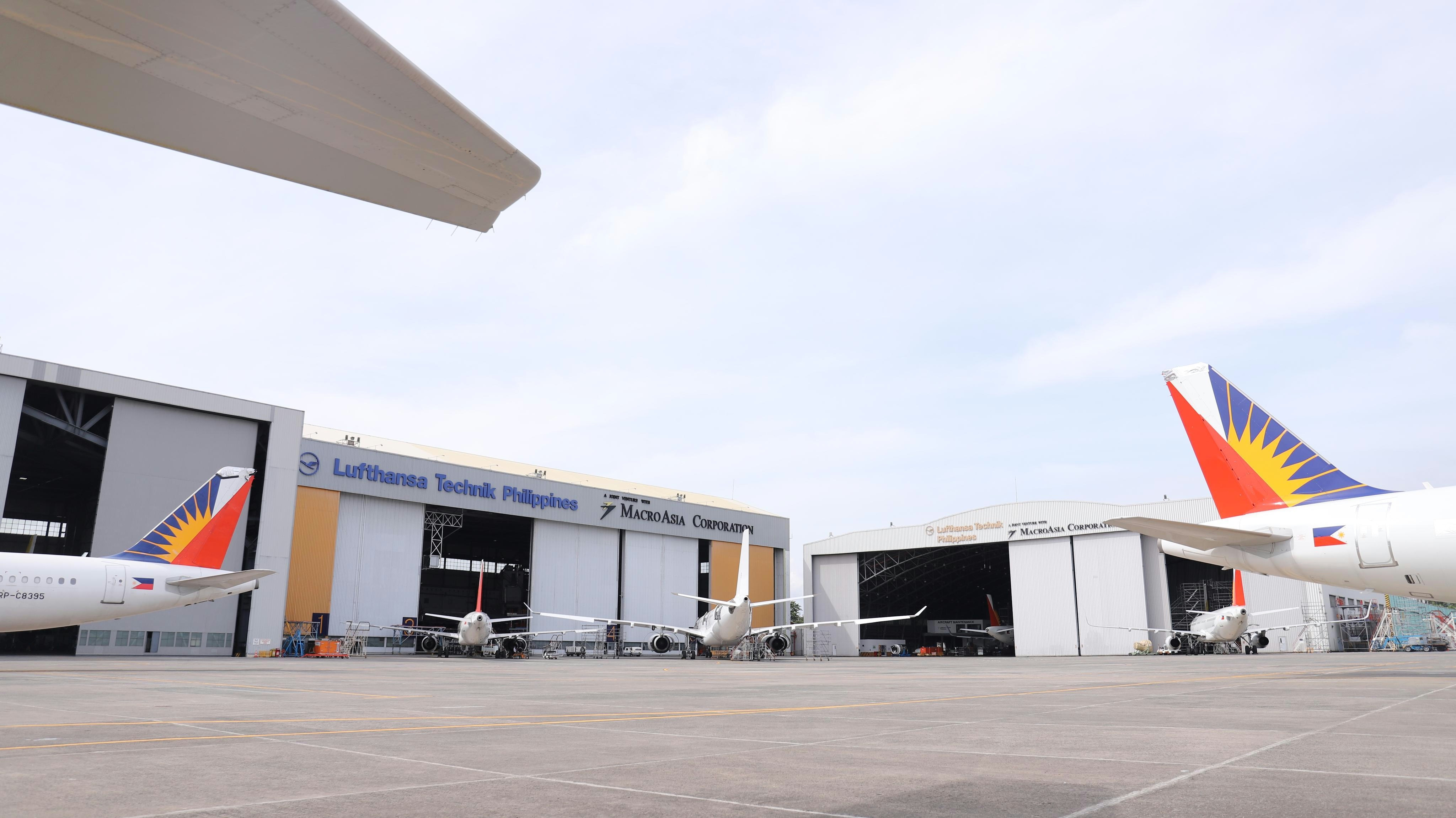
On June 16, 2026, German President Frank-Walter Steinmeier and Philippine President Ferdinand Marcos Jr. convened at Malacañan Palace, marking a significant advancement in bilateral economic cooperation. Central to their discussions was Lufthansa Technik Philippines’ initiative to establish a cutting-edge aircraft maintenance, repair, and overhaul (MRO) facility at Clark International Airport. President Marcos emphasized the importance of the partnership, noting that the collaboration with Germany spans multiple sectors and has consistently contributed to the Philippines’ national development.

Lufthansa Technik Philippines, a joint venture between Lufthansa Technik AG and MacroAsia Corporation, plans to invest several million dollars in the new Clark facility. The expansive 157,000-square-meter site is designed to accommodate up to nine widebody aircraft and is projected to commence operations by 2028. This development is expected to create approximately 1,200 highly skilled jobs for Filipinos, complementing Lufthansa Technik’s established presence in Manila, where it has operated for over 25 years.

Economic Impact and Strategic Significance

The investment aligns closely with the Marcos administration’s broader strategy to attract strategic foreign capital, generate quality employment, and stimulate regional economic growth through the cultivation of globally competitive industries. Finance Secretary Frederick D. Go described the project as a clear indicator of rising international confidence in the Philippine economy and workforce. He highlighted that Lufthansa Technik’s expansion would not only create quality jobs but also enhance local capabilities, facilitate technology transfer, and deepen the country’s integration into global aviation and supply chains.

Holger Beck, CEO of Lufthansa Technik Philippines, underscored the company’s long-term commitment to positioning the Philippines as a strategic aviation hub within the Asia-Pacific region. He noted that the new base maintenance facility in Clark would significantly expand Lufthansa Technik’s network in the country, with the Manila and Clark sites serving as complementary pillars for future growth.

The Bases Conversion and Development Authority (BCDA), responsible for overseeing the Clark growth corridor, also recognized the project’s potential to advance Clark as a center for aviation, logistics, and high-value industries. BCDA President Joshua M. Bingcang described Lufthansa Technik’s expansion as a strong endorsement of the Philippines’ workforce and the strategic advantages offered by Clark as an investment destination.

Challenges and Regional Implications

Despite the promising outlook, the development of the MRO hub faces several challenges. Regulatory complexities, competition from established MRO centers across Asia, and the necessity for substantial investments in infrastructure and skilled labor present potential obstacles. The project is anticipated to attract increased interest from Asia-Pacific airlines seeking maintenance services at Clark, while competitors may respond by expanding their own regional operations to safeguard market share.

Lufthansa Technik’s broader strategic initiatives, including recent ventures into defense activities and collaboration with Airbus on AeroShark riblet technology, suggest a wider ambition that could further influence the company’s MRO operations in the Philippines and the surrounding region.
More news
Airline Updates — June 17, 2026

Airline Updates — June 17, 2026

Airline Industry Developments — June 17, 2026 Vietnam Airlines Launches Direct Hanoi-Amsterdam Service Vietnam Airlines has commenced its first nonstop flight connecting Hanoi and Amsterdam, marking a historic milestone as the first Vietnamese carrier to establish a direct link between Vietnam and the Netherlands. The inaugural flight, VN83, departed Noi Bai International Airport at 3:50 AM on June 16, carrying nearly 300 passengers aboard an Airbus A350. After a journey exceeding 12 hours, the aircraft arrived at Amsterdam Schiphol Airport. The return flight, VN82, left Amsterdam for Hanoi at 2:00 PM local time the same day. The airline plans to operate three round-trip flights weekly on Tuesdays, Thursdays, and Saturdays, utilizing Airbus A350 aircraft. This new route represents a significant step in Vietnam Airlines’ international expansion strategy, enhancing direct connectivity between Vietnam and Europe and providing passengers with improved access to destinations across the continent. Global Aviation Faces Economic Pressures Amid Expansion The launch of new routes such as Vietnam Airlines’ comes at a time when the global airline industry is confronting considerable challenges. The International Air Transport Association (IATA) projects that industry profitability will be halved this year, largely due to ongoing disruptions in the Middle East and persistently high fuel prices. These factors are compelling airlines to reevaluate their route networks and operational efficiencies as they pursue international growth. In the United Kingdom, Pegasus Airlines has expanded its footprint with the introduction of a direct summer service between London Gatwick and Istanbul Sabiha Gökçen International Airport, inaugurated on June 15. This route complements Pegasus’s existing daily flights from London Stansted, offering travelers in London and the Southeast enhanced flexibility for travel between the UK and Türkiye. Operating through its Istanbul hub, Pegasus connects passengers to 160 destinations across 56 countries, including 39 cities within Türkiye such as Antalya, Bodrum, and Dalaman. London Gatwick now stands as the sixth UK airport served by Pegasus, underscoring the airline’s ongoing investment in a key market. However, as carriers expand, they face logistical complexities and heightened competition, illustrated by new routes like Riyadh Air’s service to Manchester and Air New Zealand’s seasonal flights to Queenstown. Expanding Connectivity in India and Industry Maintenance Developments In India, Air India Express has inaugurated direct flights between Pune and Amritsar, with the first service departing Pune on June 15. This new connection facilitates travel for leisure passengers, pilgrims, students, and business travelers. Amritsar, famed for the Golden Temple and its cultural heritage, is now more accessible from Pune. Air India Express currently operates approximately 105 weekly flights from Pune, linking the city to 12 destinations including Abu Dhabi. From Amritsar, the airline offers 24 weekly flights to Delhi, Dubai, Pune, and Sharjah. Simultaneously, Akasa Air, India’s fastest-growing airline, has commenced operations from Noida International Airport, further enhancing domestic connectivity. Alongside network expansion, the aviation industry is witnessing increased activity in maintenance, repair, and overhaul (MRO) sectors. Advances in aviation materials support and asset management are influencing maintenance strategies and cost structures. In the United States, the Federal Aviation Administration (FAA) has awarded substantial infrastructure grants to several airports, which are expected to affect airline operations and maintenance schedules in the near future. Despite the ongoing economic and operational challenges, airlines worldwide continue to invest in new routes and infrastructure, striving to improve connectivity and passenger convenience within a rapidly evolving global aviation environment.
Japan’s First Airbus ACH130 Aston Martin Edition Helicopter Takes Flight

Japan’s First Airbus ACH130 Aston Martin Edition Helicopter Takes Flight

Japan’s First Airbus ACH130 Aston Martin Edition Helicopter Takes Flight Japanese hospitality company NOT A HOTEL has taken delivery of the country’s first Airbus ACH130 Aston Martin Edition helicopter, marking a significant advancement in Japan’s luxury aviation sector. With a second unit already on order, this acquisition underscores NOT A HOTEL’s commitment to redefining high-end guest experiences and mobility across the nation. Integration into Exclusive Mobility Service The ACH130 Aston Martin Edition will be incorporated into NOT A HOTEL’s exclusive “NOT A GARAGE” mobility service, which connects guests to premier destinations such as Nasu, Kita-Karuizawa, and Minakami within an hour. This initiative aims to transform travel by offering seamless and scenic journeys that elevate the hospitality experience beyond conventional transportation methods. Hiromune Eto, Co-CEO of NOT A HOTEL, emphasized the company’s innovative approach, stating, “NOT A HOTEL has consistently proposed new lifestyles through its unique architecture. Our mobility service ‘NOT A GARAGE’ received over 200 inquiries on its first day. The ACH130 Aston Martin Edition fractional ownership slots have already sold out, reflecting strong customer demand. This helicopter, blending Airbus technology with Aston Martin aesthetics, enables guests to share beautiful architecture and breathtaking scenery from above. We are working towards launching this new form of luxury in September.” Design and Industry Significance The ACH130 Aston Martin Edition distinguishes itself through bespoke interior and exterior design elements crafted by Aston Martin and meticulously applied by Airbus Helicopters’ team in Oxford, UK. This model appeals to aviation enthusiasts who value both the exhilaration of flight and the refinement associated with high-end sports cars. Jean-Luc Alfonsi, Managing Director of Airbus Helicopters in Japan, remarked, “We are delighted to welcome NOT A HOTEL into the Airbus family with the delivery of Japan’s first ACH130 Aston Martin Edition. This milestone reflects the extraordinary appeal of a helicopter that marries Airbus engineering excellence with Aston Martin’s iconic design. The ACH130 sets a new standard for safety, comfort, and efficiency, perfectly aligning with NOT A HOTEL’s vision for luxury hospitality.” Market Challenges and Competitive Landscape Despite the enthusiasm surrounding the ACH130 Aston Martin Edition, its introduction into the Japanese market faces regulatory challenges. Authorities continue to evaluate safety and operational standards for luxury helicopter services, which remain a critical hurdle. Furthermore, competition within the sector is intensifying. Domestic companies such as Honda are advancing their electric vertical takeoff and landing (eVTOL) projects, while firms like SkyDrive are developing next-generation urban air mobility solutions. The market’s reception of ultra-luxury helicopters will be closely monitored, as growing consumer interest in premium aviation services may prompt competitors to enhance their offerings or adjust pricing strategies. As NOT A HOTEL prepares to launch its new mobility service, the ACH130 Aston Martin Edition is positioned to set a new benchmark for luxury travel in Japan, potentially reshaping expectations within both the hospitality and private aviation industries.
Airbus Confirms Cancellation of AirAsia X Order for 15 A330-900 Jets

Airbus Confirms Cancellation of AirAsia X Order for 15 A330-900 Jets

Airbus Confirms Cancellation of AirAsia X Order for 15 A330-900 Jets Airbus has officially confirmed the cancellation of AirAsia X’s order for 15 A330-900 aircraft, a decision reached through mutual agreement as the airline revises its fleet strategy. An Airbus spokesperson conveyed to Bernama that the cancellation was consensual, while AirAsia X has chosen not to comment on the matter. Shift in AirAsia Group’s Fleet Strategy The cancellation reflects a broader strategic shift within the AirAsia Group towards long-range narrowbody aircraft. Earlier this year, the group placed an order for 50 Airbus A321XLR jets, signaling a preference for more versatile and fuel-efficient models to support its network expansion. The A330-900, part of Airbus’s A330neo family, was originally intended to facilitate non-stop services to Europe, including routes between Kuala Lumpur and London. This change underscores the airline’s evolving operational priorities in response to market demands. Market Context and Industry Challenges This development occurs amid a complex market environment for Airbus. Despite the cancellation by AirAsia X, Airbus CEO Guillaume Faury has emphasized that there are no widespread signs of jet order cancellations, even as the industry contends with persistent fuel price pressures. Nonetheless, Airbus faces other significant challenges. The company’s shares recently declined following reports of delays in A350 aircraft deliveries. Additionally, supply chain disruptions have affected key customers such as Qantas, which has postponed plans for non-stop flights to London and New York. While Airbus’s A320-family orders have surpassed 20,000 units, the loss of the AirAsia X order highlights the competitive pressures and shifting preferences within the aerospace sector. Airlines are increasingly favoring flexible, long-range narrowbody jets over larger widebody models, a trend that is influencing manufacturers’ order books and strategic planning. The cancellation thus illustrates both the changing priorities of airlines in a dynamic aviation landscape and the ongoing challenges faced by aircraft manufacturers as they navigate evolving market conditions and supply chain constraints.
Airbus Opens 10th A320 Assembly Line at Former A380 Facility

Airbus Opens 10th A320 Assembly Line at Former A380 Facility

Airbus Opens 10th A320 Assembly Line at Former A380 Facility Airbus has reached a pivotal milestone with the inauguration of its 10th global A320 Family Final Assembly Line (FAL) at the Toulouse manufacturing center in southern France. This new assembly line is situated within the Jean-Luc Lagardère complex, a facility originally constructed for the now-discontinued A380 superjumbo program. Rather than building a new plant, Airbus chose to repurpose this iconic site, reflecting the rapid transformation of the commercial aircraft market. Transition from A380 to A320 Production The shift from the A380 era, which focused on large aircraft transporting passengers between major hubs such as London Heathrow, Dubai International, Singapore Changi, and Frankfurt, to the current emphasis on fuel efficiency and point-to-point connectivity is clearly illustrated by this change. The A320 Family, particularly the larger A321neo and the long-range A321XLR variants, has become central to airline fleet strategies worldwide. Airbus aims to leverage its expanded industrial network to achieve an ambitious production target of 70 to 75 A320 Family aircraft per month by the end of 2027. However, CEO Guillaume Faury has acknowledged significant challenges in scaling up production amid ongoing global supply chain disruptions and increasing regulatory costs in Europe. These factors may complicate efforts to meet delivery schedules and maintain profitability, especially as Airbus also contends with market concerns over potential delays in A350 deliveries and the necessity for cost-cutting measures in response to global uncertainties. The Jean-Luc Lagardère Facility: A Symbol of Airbus’s Evolution The Jean-Luc Lagardère site holds a prominent place in Airbus’s history. Built between 2002 and 2004 for the A380 program, the complex covers approximately 124 acres (50 hectares) and features a central hangar measuring 490 meters in length, 250 meters in width, and 46 meters in height—an internal space comparable to 500 tennis courts. The cessation of A380 production left the future of this vast facility uncertain, as market demand shifted toward smaller, more versatile aircraft. Adapting the site for A320 Family production involved more than a simple change of aircraft type. The assembly of narrowbody jets requires a significantly faster manufacturing pace and higher output, necessitating a comprehensive redesign of production systems, logistics, and manufacturing technologies. The revamped facility now prioritizes efficiency and flexibility, aligning with Airbus’s broader global production strategy. “This facility provides the necessary flexibility and capacity to meet strong market demand, especially for the A321neo, and supports our production ramp-up trajectory towards 75 A320 Family aircraft a month,” Faury stated. “Operating in coordination with our assembly sites in Hamburg, Mobile, and Tianjin, this advanced line is part of our commitment to deliver aircraft of the highest quality standards to our customers globally.” Competitive Landscape and Industry Implications As Airbus expands its A320 Family manufacturing footprint, competitors are closely monitoring its progress. Embraer, for example, may seek to capitalize on any delays or strategic shifts by Airbus, particularly if the European manufacturer hesitates to develop a larger variant of the A220. This evolving competitive environment highlights the high stakes and dynamic nature of the commercial aviation industry’s future.
Rest and Sleep Facilities for Cabin Crew on the Airbus A350-1000

Rest and Sleep Facilities for Cabin Crew on the Airbus A350-1000

Rest and Sleep Facilities for Cabin Crew on the Airbus A350-1000 Dedicated Crew Rest Areas on Ultra-Long-Haul Flights On ultra-long-haul flights, the rest arrangements for cabin crew extend far beyond simply occupying an empty passenger seat. Modern widebody aircraft such as the Airbus A350-1000 are specifically designed with dedicated rest compartments for crew members. These facilities enable staff to rotate through scheduled breaks, ensuring they remain alert and effective in both service delivery and emergency response during flights that can exceed 18 hours in duration. These rest areas are deliberately concealed from passengers. On the A350-1000, crew rest compartments are typically accessed through unmarked doors located near or within the rear galley. Rather than entering at aisle level, crew members ascend a compact staircase into a compartment situated above the passenger cabin, commonly known as the “crown area.” This vertical separation provides a quiet and private environment without compromising valuable cabin space. Design and Functionality of Crew Rest Compartments Inside the rest area, the environment is functional and subdued, featuring a series of bunks separated by curtains, basic lighting, climate controls, and essential safety equipment such as seatbelts and oxygen masks. The design adheres to stringent safety regulations that govern everything from bunk dimensions to emergency access protocols. Notably, these compartments contain no avionics and serve no flight control functions. The proximity of these rest areas to the galley is strategically chosen for operational efficiency. Crew members can seamlessly hand over their duties, take their scheduled rest, and return to service discreetly, without passengers becoming aware of their absence. The doors to these compartments are intentionally plain, preserving the illusion that no additional space lies behind them. Passengers passing by are unlikely to suspect the presence of a hidden sleep area just steps away. Variations and Operational Challenges The configuration of crew rest facilities on the A350-1000 varies among airlines. Some place bunks above the main cabin, while others locate them below deck, accessible via ladders or stairs. This flexibility allows airlines to customize the layout according to their operational requirements and service models. The integration of advanced crew rest facilities presents certain challenges. The A350-1000’s luxury-focused cabins, which include first-class suites with private bathrooms, underscore the increasing emphasis on passenger comfort but also raise questions about balancing space allocation for crew welfare. Airlines such as Emirates have expressed interest in incorporating similar amenities for their crews; however, operational difficulties persist. Emirates, for example, is currently contending with engine durability issues on the A350-1000, which have delayed both the aircraft’s adoption and the introduction of new crew rest features. Similarly, Qantas’s Project Sunrise, an ambitious initiative to launch nonstop ultra-long-haul flights, has encountered repeated delays due to supply chain disruptions affecting the delivery of specially modified A350-1000 aircraft. These setbacks directly impact the rollout of enhanced crew rest areas, highlighting the complexities involved in integrating such amenities while maintaining aircraft reliability and adhering to delivery schedules. The concealed rest facilities on the Airbus A350-1000 exemplify the delicate balance between operational efficiency, crew welfare, and passenger experience—a dynamic challenge as airlines continue to expand the frontiers of ultra-long-haul travel.
Nigeria’s Aircraft Leasing Company to Receive Tax Holidays

Nigeria’s Aircraft Leasing Company to Receive Tax Holidays

Nigeria’s Aircraft Leasing Company to Benefit from Tax Holidays Efforts to Reduce Air Travel Barriers in Africa Nigeria’s Minister of Aviation and Aerospace Development, Festus Keyamo, has called for the removal of obstacles impeding air travel across the African continent. Speaking at the inaugural African Air Transport Conference in Lomé, Keyamo urged governments to lower taxes and charges on air tickets, emphasizing that reducing travel costs would significantly enhance accessibility for millions of Africans. He also advocated for a visa-free Africa, highlighting that easier cross-border movement would foster greater connectivity, stimulate trade, and boost tourism throughout the region. Launch of a Government-Backed Aircraft Leasing Company In a major policy announcement, Keyamo revealed that Nigeria is establishing a government-supported aircraft leasing company designed to facilitate the renewal of airline fleets. This initiative will provide tax holidays and other incentives to attract investors, thereby alleviating the financial pressures faced by local carriers. The move aims to encourage domestic airlines to modernize their fleets and reduce dependence on foreign leasing firms, potentially transforming Nigeria’s aviation landscape. Challenges and Market Implications Despite the promising outlook, the success of Nigeria’s aircraft leasing company hinges on overcoming several significant challenges. Securing adequate private capital and development bank financing remains a critical obstacle, alongside navigating the complex regulatory environment. Furthermore, the company must carve out a competitive position in the global aircraft leasing market, which is currently dominated by established international players such as Azorra, known for its recent expansion of the Embraer E195-E2 orderbook. The announcement has generated increased interest among Nigerian airlines, which stand to benefit from more accessible leasing options and potentially reduced costs. Conversely, international competitors are expected to intensify their efforts to maintain market share within Africa. Keyamo’s statements and the leasing company initiative underscore Nigeria’s broader strategy to strengthen its aviation sector, enhance regional connectivity, and assert itself as a leading force in African air transport.
How the Airbus A350 Was Designed to Prevent Failure

How the Airbus A350 Was Designed to Prevent Failure

How the Airbus A350 Was Designed to Prevent Failure The Airbus A350 embodies decades of aerospace innovation, integrating technologies refined through both the superjumbo A380 and the military-grade A400M. This next-generation widebody aircraft incorporates a range of advancements, from the extensive use of composite materials to some of the most resilient and redundant avionics systems ever installed in a commercial airliner. Central to the A350’s design philosophy is the prioritization of safety and reliability, achieved through stringent production standards and equipping pilots with advanced operational tools. Advanced Composite Materials and Structural Design A hallmark of the A350 Xtra Wide Body is its unprecedented use of carbon fiber reinforced plastic (CFRP), which constitutes 53% of the aircraft’s weight—surpassing any other commercial jet currently in production. This durable yet lightweight material was developed through Airbus’s prior experience with the A400M tactical airlifter and the A380. The extensive stress data and safety margins established during the development of these earlier aircraft provided a solid foundation for the A350’s airframe and systems. Airbus’s transition from traditional metal to composite structures was a gradual process. While the A380 introduced CFRP in key structural components, the A400M’s rigorous military testing environment pushed the boundaries of composite technology. The A400M test fleet endured extreme operational conditions, including rough tactical airfield landings, allowing engineers to analyze how CFRP, reinforced with epoxy resin, responded to intense structural stress. These findings informed the development of interlayer-toughened epoxy for the A350, significantly reducing the risk of delamination and micro-cracking. In terms of fuselage construction, Airbus adopted a four-panel design for the A350, diverging from Boeing’s single-piece barrel approach used in the 787 Dreamliner. This design enables tailored panel thickness, with the top and bottom panels reinforced to withstand vertical loads while the side panels remain lighter. Manufacturing innovations such as Automated Tape Laying and Liquid Resin Transfer Molding have further enhanced production precision and efficiency. Operational Challenges and Industry Impact Despite its advanced engineering, the A350 has encountered operational challenges. A recent incident involving a China Eastern Airlines A350-900 saw total brake failure during taxiing, resulting in a collision with a passenger airbridge. The flight crew successfully brought the aircraft to a stop using reverse thrust, underscoring the critical role of redundant safety systems and the reality that even the most sophisticated designs can experience failures. Delivery delays have also affected airlines dependent on the A350. Qantas, for instance, postponed its Project Sunrise ultra-long-haul flights between Australia, London, and New York due to delays in receiving its specially modified A350-1000 aircraft. Airbus has informed other customers of further delivery postponements later this decade, contributing to a recent decline in the company’s share value. Balancing Innovation with Reliability The Airbus A350 represents a significant milestone in the aerospace industry’s quest for safer and more efficient air travel. By leveraging lessons from both commercial and military programs, Airbus has developed a jetliner that sets new benchmarks for structural integrity and operational safety. Nonetheless, recent incidents and delivery setbacks highlight the ongoing challenges inherent in introducing cutting-edge technology to the market while maintaining reliability at scale.
Digital Matter Launches Griffin Air for Air Cargo Supply Chain Tracking

Digital Matter Launches Griffin Air for Air Cargo Supply Chain Tracking

Digital Matter Launches Griffin Air to Transform Air Cargo Supply Chain Tracking Australia-based Internet of Things (IoT) hardware specialist Digital Matter has unveiled the Griffin Air, a rugged GPS asset tracker engineered to enhance visibility and regulatory compliance within air freight and global logistics operations. Designed specifically for high-value and condition-sensitive cargo, the Griffin Air integrates airline-compliant flight detection, multi-year battery life, and Bluetooth 5.2 gateway functionality into a single, deploy-once device. Its robust design ensures seamless operation across air, road, warehouse, and storage environments, addressing longstanding challenges in air cargo tracking. Addressing Challenges in Air Freight Tracking Air freight tracking has historically been hindered by stringent aviation regulations, limited in-flight connectivity, and fragmented data continuity across different transport stages. Existing solutions often compel operators to compromise between regulatory compliance, battery longevity, and comprehensive visibility throughout the supply chain. Ilan Gluck, Executive Vice President and Head of Go-To-Market for North America at Digital Matter, highlighted this dilemma: “Air freight tracking has historically forced organisations to choose between compliance, visibility, and operational practicality.” He emphasized that the Griffin Air’s combination of intelligent flight-aware tracking, extended battery life, and rugged design offers logistics operators a scalable solution to maintain end-to-end asset visibility without increasing operational complexity. The Griffin Air automatically detects when it is airborne and suspends radio transmissions to comply with airline regulations, while continuing to log sensor and event data. Upon landing, the device resumes connectivity and transmits stored information, providing retrospective insight into in-transit conditions. It holds DO-160 certification and is approved for use by major global carriers, eliminating the need for additional per-shipment certification. Powered by user-replaceable AA batteries, the tracker can operate for up to seven years depending on configuration, with tracking modes optimized for long-term deployments. Versatility Beyond Aviation and Integration Challenges Beyond its aviation applications, Digital Matter positions the Griffin Air as a lifecycle asset tracker capable of continuous operation throughout complex logistics networks. The device supports GPS, Wi-Fi scanning, and cellular triangulation for both indoor and outdoor positioning, complemented by 4G Cat 1bis connectivity with 2G fallback. Additionally, it functions as a Bluetooth gateway, capturing data from connected BLE sensors for critical applications such as pharmaceutical cold chain monitoring, aerospace equipment tracking, and management of returnable transport items. Configurable impact, tip, and rotation alerts further enhance its ability to flag potential handling issues during transit. Despite its advanced capabilities, integrating the Griffin Air into existing supply chain systems presents challenges. The complexity of such integration may lead to operational disruptions and necessitate significant investment in training and infrastructure. Market responses are expected to be mixed; while some investors may welcome the promise of improved efficiency and transparency, others could express caution regarding initial costs and potential risks. Competitors may respond by adopting similar technologies, enhancing their own offerings, or forming strategic partnerships to counter Digital Matter’s innovation. Furthermore, regulatory compliance and data security remain critical considerations for widespread adoption. Gluck underscored the device’s unique positioning in the market: “Most air freight tracking devices were designed either for compliance or for short-term shipment visibility, but not for long-term operational deployment. The Griffin Air was built specifically to bridge that gap.”
Dubai Airports Recognized for AI-Driven Safety and Inclusive Travel Initiatives

Dubai Airports Recognized for AI-Driven Safety and Inclusive Travel Initiatives

Dubai Airports Recognized for AI-Driven Safety and Inclusive Travel Initiatives Dubai Airports has solidified the United Arab Emirates’ position as a pioneer in the aviation sector by winning two distinguished Ideas Arabia International Awards for 2025-2026. These honors acknowledge the operator’s significant progress in digitized health and safety protocols and its commitment to accessible travel for People of Determination at both Dubai International (DXB) and Dubai World Central airports. The awards underscore a transformative shift in the global airport industry, where success is increasingly defined by digital innovation, safety, and inclusivity rather than solely by infrastructure or capacity. For airlines, ground handlers, travel agencies, and tourism stakeholders, Dubai Airports’ achievements herald a new era characterized by AI-enhanced safety measures, virtual training programs, inclusive design principles, and more efficient passenger experiences at one of the world’s busiest aviation hubs. Advancing Safety Through AI and Promoting Inclusive Travel The first accolade recognizes Dubai Airports’ comprehensive integration of artificial intelligence within its health and safety framework. The airport has developed a fully digital risk-management ecosystem that employs AI to detect, monitor, and mitigate safety risks with greater precision. This system incorporates AI-driven refresher training and virtual reality modules, transforming safety education from static, periodic sessions into dynamic, continuous learning experiences. Employees benefit from simulated real-world scenarios in controlled digital environments, enhancing their preparedness for routine operations and emergency situations alike. The second award highlights Dubai Airports’ dedication to fostering accessible and inclusive travel for People of Determination. By embedding accessibility into its core operational strategies, the airport sets a new benchmark for inclusivity, ensuring that all passengers enjoy smoother and more dignified journeys. Industry Implications and Emerging Challenges These advancements redefine the criteria for world-class airports within the broader B2B travel industry. Airlines, tour operators, mobility partners, and government agencies are increasingly prioritizing how effectively and inclusively airports manage passenger flow through complex environments, moving beyond traditional metrics such as route networks and terminal size. Nonetheless, the rapid adoption of AI technologies introduces new challenges. Maintaining customer trust while advancing technological innovation is paramount, particularly amid growing concerns over data security and potential operational disruptions. These issues were prominently discussed at the 2026 Skift Data + AI Summit, where industry leaders emphasized the necessity of implementing robust safeguards alongside accelerated AI deployment. Market responses are already apparent, with competitors like Sierra and Amadeus developing proprietary AI solutions to sustain their competitive advantage. As more travel companies race to incorporate advanced technologies, the competitive landscape intensifies, driving the entire sector toward smarter, more resilient operational models. Strategic Evolution in Aviation Dubai Airports’ dual recognition represents more than symbolic achievement; it signals a strategic evolution within the UAE’s aviation sector. By prioritizing digital safety, adaptive training, and inclusive travel, Dubai is enhancing passenger confidence while establishing new global standards. As the industry grapples with the complexities of AI integration and mounting competition, Dubai Airports’ approach offers a valuable blueprint for balancing innovation with operational integrity and customer trust.
Rolls-Royce Developed a Jet Engine That Prompted Airbus to Redesign Its Aircraft

Rolls-Royce Developed a Jet Engine That Prompted Airbus to Redesign Its Aircraft

Rolls-Royce Engine Innovations Prompt Airbus Aircraft Redesigns Amid Industry Challenges Rolls-Royce’s role in modern aviation extends well beyond the provision of engines, significantly influencing aircraft design and performance. When Airbus embarked on the development of the A380, the world’s largest passenger aircraft, the British manufacturer’s Trent 900 engine was a fundamental component from the very beginning. The engine’s considerable power output shaped critical design decisions, affecting the wing structure, braking systems, noise reduction measures, and fuel efficiency. This close integration effectively embedded the Trent 900 into the superjumbo’s core engineering framework. As the aviation sector confronts increasing pressure to reduce carbon emissions, Rolls-Royce is applying insights gained from the Trent engine family to develop the UltraFan, a next-generation engine designed to deliver lower fuel consumption, quieter operation, and compatibility with sustainable aviation fuels. This innovation is particularly significant given that aviation accounted for 2.5% of global energy-related carbon dioxide emissions in 2023, according to the International Energy Agency (IEA). Engineering That Shapes Aircraft The Airbus A380 stands as a remarkable engineering achievement, measuring 239 feet in length with a wingspan approaching 262 feet, and capable of accommodating over 850 passengers in an all-economy layout. Meeting the thrust requirements for such a massive aircraft necessitated powerful engines. The A380 can be equipped with either four Rolls-Royce Trent 900 engines or four Engine Alliance GP7000s. Rolls-Royce asserts that the Trent 900 offers the lowest lifetime fuel burn for the A380, with incremental efficiency improvements of up to 1.6% since its launch. While these gains may appear modest, they translate into substantial fuel savings and emissions reductions over the course of long-haul operations. The development of the A380 and Trent 900 was a highly coordinated effort. Rather than adapting the aircraft to accommodate an unexpectedly powerful engine, Airbus and Rolls-Royce collaborated closely, developing the airframe and engine in parallel with the anticipation of a very large thrust class. The engine’s size and the aircraft’s weight influenced every aspect of the design, including the wing and pylon structures, as well as cooling and hydraulic systems. Notably, Airbus chose to install thrust reversers only on the two inboard engines, relying instead on advanced carbon brakes and wing spoilers to provide stopping power, particularly on wet or contaminated runways. New Engines, New Challenges Rolls-Royce’s influence on aircraft design continues with the Airbus A350-1000, where the introduction of a new Rolls-Royce engine has necessitated a redesign of the long-haul jet to meet airlines’ demands for enhanced efficiency and durability. Emirates, for instance, has expressed concerns regarding the Trent XWB-97 engine’s performance under the hot and sandy conditions prevalent in the Gulf region, underscoring the operational challenges associated with new engine technologies. At the same time, United Airlines CEO Scott Kirby has criticized the industry’s dependence on single engine suppliers, highlighting issues such as engine shortages and a contract dispute with Rolls-Royce that resulted in the cancellation of a significant A350 order. Despite these challenges, Rolls-Royce reports notable fuel-burn savings from its Trent XWB-84 EP engine, which is now offered as an option for the Airbus A350-900. Supply-chain disruptions have further complicated matters, delaying high-profile projects such as Qantas’s ambitious plans for nonstop flights from Australia to London and New York. Airbus has struggled to deliver A350-1000 aircraft on schedule, impacting the airline’s expansion strategy. The Path Forward With aviation emissions surpassing one billion tons of CO₂ in 2023—reaching over 90% of pre-pandemic levels—the IEA emphasizes the urgent need for low-carbon fuels, improved engine and airframe designs, and enhanced operational efficiencies. Given the extended lifespans of commercial aircraft, incremental technological advances like those pioneered by Rolls-Royce remain vital to the industry’s transition toward a more sustainable future.
line