
Zet AI‑inzichten om in gerichte actie

Trending
Categories
Lufthansa to Retire Quadjets Earlier Than Planned
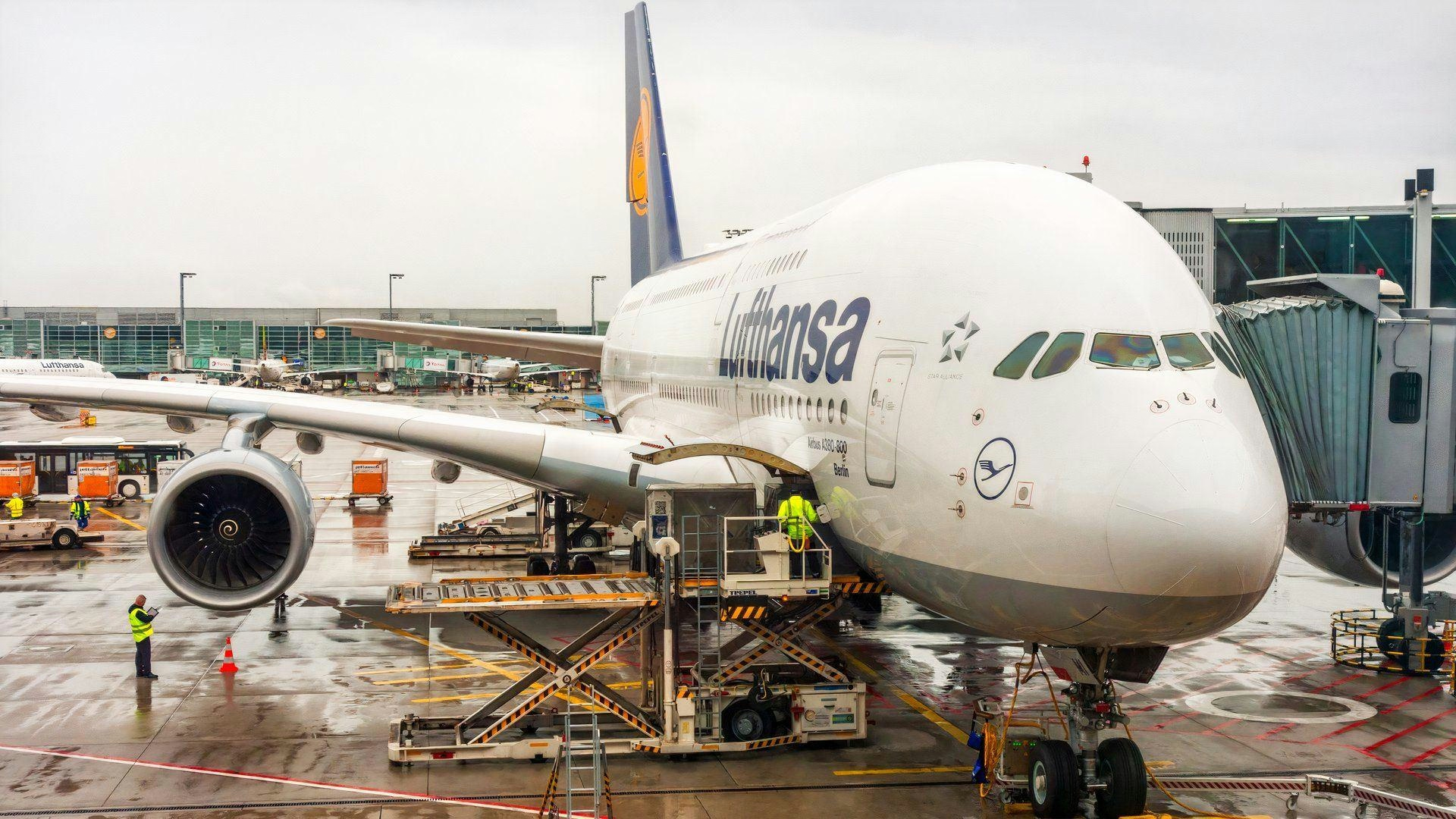
Lufthansa to Accelerate Retirement of Quadjets Amid Economic Pressures
Lufthansa has announced an expedited phase-out of its four-engine aircraft, signaling a significant shift in its long-haul fleet strategy in response to escalating economic challenges. For many years, quadjets such as the Airbus A340 and Boeing 747 were emblematic of intercontinental air travel, prized for their range, redundancy, and prestige. At its operational peak, Lufthansa maintained a fleet of over 60 quadjets, positioning it among the world’s largest operators of these aircraft. However, evolving market conditions have rendered their continued use increasingly untenable, prompting the airline to hasten their retirement.
Economic and Operational Drivers Behind the Shift
The primary impetus for this accelerated retirement is the sharp increase in jet fuel prices, which now constitute up to 35% of Lufthansa’s operating costs. Fuel prices have been further driven upward by renewed geopolitical tensions, notably the ongoing conflict involving Iran and instability in the Strait of Hormuz. These factors have exerted considerable pressure on the airline’s financial performance. In response, Lufthansa is reducing its overall capacity by approximately 1% through October, a move that includes the cessation of Lufthansa CityLine operations and the grounding of its remaining Airbus A340-600s alongside five additional aircraft. This strategy is projected to yield fuel savings exceeding 40,000 metric tons.
Compounding these challenges are labor disputes within Lufthansa’s German operations and persistent supply chain disruptions, which have constrained the airline’s ability to rely on long-term fleet planning. Initially, the retirement of quadjets such as the A340-600 and Boeing 747-400 was slated for the late 2020s. The revised timeline now anticipates the A340-600’s exit by October 2026, several years ahead of schedule, while the 747-400 is being gradually phased out, with full retirement expected by 2027. Several aircraft have already been parked or are seeing reduced utilization, underscoring the urgency of this transition.
Implications for Lufthansa’s Fleet and Network
Traditionally, widebody aircraft are operated for 25 to 30 years to maximize their economic value. Many of Lufthansa’s A340-600s, delivered in the early 2000s, have not yet reached the end of their service life. Nonetheless, the rising costs associated with fuel, maintenance, and operations now outweigh the benefits of continued use, even if this necessitates absorbing financial write-downs.
This fleet transformation will be most apparent on routes departing from Lufthansa’s primary hubs in Frankfurt and Munich, where quadjets have long been a defining feature of the airline’s long-haul identity. These aircraft will be replaced by newer, more fuel-efficient twin-engine models such as the Airbus A350 and Boeing 787 Dreamliner, with the Boeing 777X expected to join the fleet in due course. These aircraft offer enhanced fuel efficiency, reduced operating costs, and greater operational flexibility, marking a definitive end to the era of four-engine dominance in Lufthansa’s long-haul operations.
While Lufthansa is scaling back capacity and retiring older aircraft within its German operations, it is concurrently expanding its route network at other hubs, including Brussels, Vienna, and Zurich. This strategic realignment reflects the airline’s broader efforts to adapt to a high-cost, high-uncertainty environment by prioritizing efficiency and resilience amid the ongoing challenges confronting global aviation.

Etihad Airways Suspends Airbus A380 Flights on Key Route

Aditya Birla Group Seeks Approval for Aircraft Leasing in GIFT City

Qatar Airways Highlights Innovation and Connectivity at Arabian Travel Market 2026

Hong Kong's Five-Year Plan Includes Andrew Fan's Aircraft Parts Processing Hub Proposal

ACIA Aero Leasing Delivers ATR72-600 to Air Nostrum

RTX Appoints Jill Albertelli as Head of Pratt & Whitney

TAT Technologies Joins Beyond Aero Hydrogen Aircraft Program

AURAK Study Highlights Barriers to Air Taxi Adoption in Emerging Economies

Xiamen Air Selects Altitude for 787 Maintenance at Heathrow

Etihad and Swissport Extend Global Partnership
