Afbeelding

AeroGenie — Uw intelligente copiloot.

Vraag wat je wilt. Analyseer alles. Handel onmiddellijk.

Trending

Categories

Luxair Receives First Embraer E195-E2 Aircraft
December 1, 2025By ePlane AI
Luxair Receives First Embraer E195-E2 Aircraft
0
0
Luxair
Embraer E195-E2
Fleet Modernization

Luxair Receives First Embraer E195-E2 Aircraft

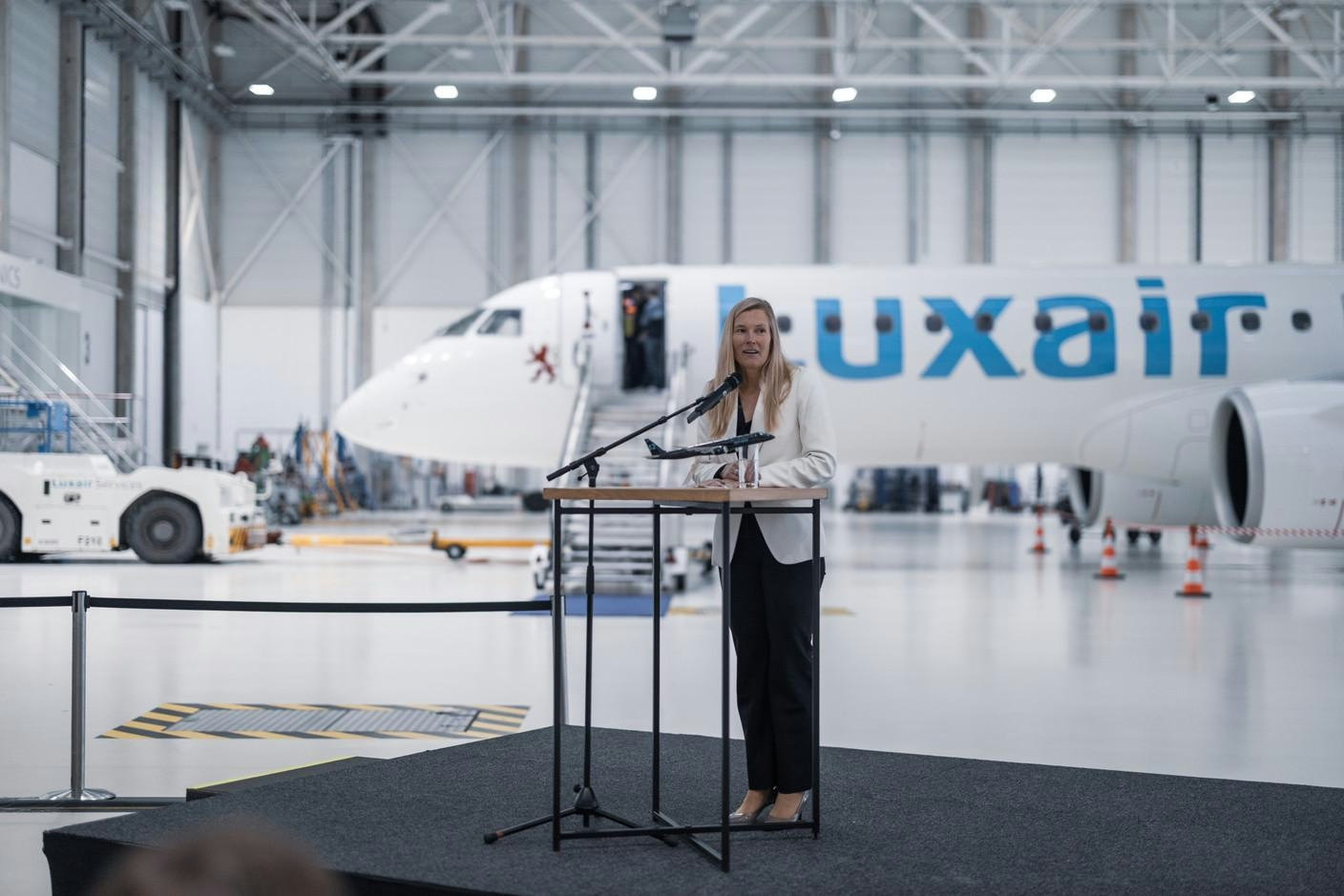
Luxair marked a significant milestone in its fleet modernization and expansion strategy with the official delivery of its first Embraer E195-E2 aircraft at Luxembourg’s Findel Airport on November 29. The jet, registered LX-LEA, arrived from Embraer’s São José dos Campos facility in Brazil, landing under overcast skies. This delivery initiates the arrival of six E195-E2s on firm order, alongside three additional purchase rights that Luxair may exercise for either the E195-E2 or the E190-E2 models.

Fleet Integration and Operational Plans

The new aircraft features a 136-seat single-class cabin and is slated for deployment on European routes originating from Luxembourg. It will complement Luxair’s existing fleet, which includes Boeing 737NGs, 737 MAXs, and Dash 8-Q400s. The E195-E2 is scheduled to commence commercial operations on January 15, 2026, with its inaugural flight planned to Vienna. This addition reflects Luxair’s commitment to enhancing its competitiveness while addressing environmental concerns.

The E2 family is recognized for its superior fuel efficiency and reduced emissions compared to previous-generation aircraft, aligning with broader industry efforts to promote sustainability. Nonetheless, the integration of new technology and the pursuit of operational efficiency present challenges that Luxair must navigate as it adapts to the latest advancements in regional aviation.

Industry Context and Market Dynamics

Luxair’s fleet renewal occurs amid a dynamic market environment where competitors are also adjusting their strategies. For instance, Avelo Airlines has recently consolidated its network in anticipation of its own E2 deliveries, demonstrating a cautious approach to fleet expansion. Embraer’s recent announcement regarding a “turning point” for the E2’s Pratt & Whitney GTF engines, highlighting improved reliability, may further influence airline decisions and market competition.

Other carriers are pursuing different fleet strategies in response to evolving market conditions. Etihad Airways, for example, is expanding its widebody Airbus fleet, reflecting a preference among some airlines for alternative aircraft types to meet their operational requirements.

As Luxair prepares to integrate the E195-E2 into its operations, the airline positions itself at the forefront of regional aviation modernization in Europe. The successful deployment of this aircraft will be critical to achieving anticipated gains in efficiency, sustainability, and passenger experience.

More news
KLM Resumes Service of E195-E2 Jets Following Engine Shortages

KLM Resumes Service of E195-E2 Jets Following Engine Shortages

KLM Resumes Operations of E195-E2 Jets Amid Improving Engine Supply KLM Cityhopper has begun reactivating part of its Embraer E195-E2 fleet following a prolonged grounding caused by a global shortage of Pratt & Whitney geared turbofan (GTF) engines. Earlier this year, the Dutch regional carrier was compelled to park up to six of these jets at Twente Airport due to the scarcity of engines, a disruption that has affected airlines worldwide and particularly impacted the relatively new E195-E2 model. Aircraft Preservation and Reactivation Process One of the aircraft, registered PH-NXA, is currently undergoing preparation for a return to service after months in storage. Prior to being grounded, the jet was subjected to a meticulous preservation procedure. This involved removing engines, auxiliary power units, and batteries, followed by wrapping the airframe in protective film—a method KLM refers to as “cocooning”—to safeguard the aircraft from environmental damage during long-term storage. Reactivating the aircraft requires reinstalling critical components, performing comprehensive technical inspections, and implementing necessary upgrades, including the installation of onboard Wi-Fi. KLM anticipates that this process will take approximately two months before the aircraft can resume commercial operations. Fleet Context and Market Challenges KLM Cityhopper operates one of the largest E195-E2 fleets globally, with 25 leased aircraft. The airline introduced the type in February 2021, initially configuring the jets with 132 seats, later increasing capacity to 136 passengers. Alongside the E195-E2s, KLM’s regional fleet includes 22 first-generation E190s and 17 smaller E175s. However, persistent GTF engine issues led to nearly half of the E195-E2 fleet being grounded at various points in early 2023. The reintroduction of these jets coincides with rising fuel costs, prompting KLM to reduce its European capacity. This strategy aligns with similar measures taken by competitors such as Lufthansa, who are also adjusting operations to mitigate the impact of higher fuel prices. The broader aviation market remains cautious as ongoing supply chain constraints continue to limit the availability of aircraft and engine components. Industry analysts suggest that further capacity adjustments or shifts in fleet strategy may be necessary as airlines navigate the combined pressures of supply shortages and escalating operating expenses. Currently, two E195-E2 jets are in the process of reactivation, with the remaining parked aircraft expected to return to service later this year as engine availability improves. KLM’s ability to restore full capacity will depend on continued easing of supply constraints and how effectively the airline and its competitors adapt to the evolving economic and operational landscape.
Sheikh Hamdan Announces First Air Taxi Station Near Dubai Airport

Sheikh Hamdan Announces First Air Taxi Station Near Dubai Airport

Sheikh Hamdan Announces Dubai’s First Air Taxi Station Near International Airport Dubai’s Crown Prince, Sheikh Hamdan bin Mohammed bin Rashid Al Maktoum, has officially announced the completion of the city’s inaugural air taxi station, situated adjacent to Dubai International Airport. This pioneering facility, designed to accommodate electric vertical take-off and landing (eVTOL) vehicles, represents a landmark achievement in Dubai’s ambitious strategy to advance urban mobility. It is the first station of its kind globally, underscoring the city’s commitment to innovation in transportation. The station forms part of a wider network, with additional hubs planned for prominent locations including Downtown Dubai, Palm Jumeirah, and Dubai Marina. These are expected to become operational by the end of 2024. Sheikh Hamdan has mandated that the air taxi service be made available to the public within the year, with the initial station anticipated to handle up to 170,000 passengers annually. “This project is a key milestone in Dubai’s urban mobility journey, reducing travel time and bringing the city closer,” Sheikh Hamdan remarked. “With the completion of the first air taxi station, we reaffirm our commitment to shaping the future of mobility and building a global city that puts people first.” Advanced Infrastructure and Operational Framework The newly completed station spans 3,100 square metres across four storeys and includes a two-level car park, two dedicated take-off and landing pads, charging infrastructure for eVTOL vehicles, and climate-controlled passenger amenities. Constructed to meet the highest international safety standards, the facility is designed for seamless integration with Dubai’s existing public transport network, encompassing metro lines, bus routes, and shared mobility services. Skyports Infrastructure is responsible for the station’s design, development, and ongoing operations, while Joby Aviation manages aircraft manufacturing and passenger services. The Roads and Transport Authority (RTA) oversees the overall operational framework, ensuring the air taxi service is fully integrated within the city’s broader transport ecosystem. Enhancing Connectivity Amid Challenges The air taxi service aims to provide residents and visitors with a rapid and secure alternative for travel between key urban destinations. For instance, the journey from Dubai International Airport to Palm Jumeirah is projected to take approximately 10 minutes, a significant reduction from the current 45-minute car trip. The service is designed to support multimodal travel, connecting with electric scooters, bicycles, and other mobility options to enhance overall citywide connectivity. Despite the ambitious rollout, the initiative faces several challenges. Regulatory frameworks are still evolving as authorities work to ensure safety and compliance in the face of rapid technological advancements. The sector is also contending with growing competition from established autonomous vehicle companies such as WeRide and Uber, both of which have introduced driverless robotaxi services in Dubai. Market responses have been mixed, with some Gulf carriers expressing concerns over potential fluctuations in demand amid ongoing geopolitical tensions. Additionally, Joby Aviation, the developer behind Dubai’s air taxis, is currently embroiled in legal disputes with rival Archer Aviation concerning trade secrets and import practices. The US Trade Commission has also initiated an investigation into Joby for possible import violations, adding further regulatory scrutiny. Similar urban air mobility projects worldwide, including those planned in Florida, are encountering comparable regulatory and infrastructure challenges, highlighting the complexities involved in bringing air taxi services to market. As Dubai prepares to launch its air taxi service, the city continues to position itself at the forefront of smart mobility innovation. The successful integration of air taxis into the public transport network could establish a global precedent for urban mobility, even as the sector navigates regulatory, competitive, and market challenges.
Alaska Airlines Partners with Tailsight to Reduce Aircraft Downtime Using AI

Alaska Airlines Partners with Tailsight to Reduce Aircraft Downtime Using AI

Alaska Airlines Partners with Tailsight to Reduce Aircraft Downtime Using AI Alaska Airlines has entered into a strategic, multiyear partnership and investment agreement with Tailsight, a Texas-based company specializing in artificial intelligence-driven maintenance planning and optimization. This collaboration marks Alaska Airlines as the first major carrier to implement Tailsight’s platform, representing a significant milestone for the technology’s formal introduction into the commercial aviation sector after nearly two years of joint development and testing. Transforming Maintenance Operations Through AI The Tailsight platform is engineered to enhance maintenance planning by consolidating disparate data sources, including maintenance systems, flight schedules, staffing levels, station capabilities, and parts availability. By creating a constraint-aware planning environment, the system seeks to optimize the use of labor and parts, reduce aircraft-on-ground (AOG) time, and improve overall operational efficiency. Nathan Engel, vice president of maintenance operations at Alaska Airlines, underscored the depth of the collaboration: “Tailsight will transform Alaska’s maintenance operations by offering real-time insights beyond current capabilities. For nearly two years, we have worked closely together to define requirements, shape the software, and test it in real-world conditions. That depth of partnership is why we believe Tailsight can scale: it’s built by aviation experts and engineers.” The announcement precedes MRO Americas 2026 in Orlando, Florida, where Tailsight will showcase how its technology integrates maintenance constraints, operational context, and planner workflows into a unified system. Tailsight’s high-speed optimization engine allows planners to generate, compare, and refine maintenance plans in real time, providing a shared operational view of the fleet while highlighting critical constraints. This capability enables technical operations teams to coordinate planning and execution with a unified perspective on work packages and readiness, align labor, parts, and station capacity more effectively, and adapt plans swiftly as conditions evolve, thereby improving utilization across fleets and stations. Challenges and Industry Implications Despite the promising benefits, integrating advanced AI technology into traditional maintenance operations presents challenges. Staff accustomed to established procedures may initially resist the transition, necessitating comprehensive training and adaptation efforts. Nevertheless, the market is expected to respond favorably if the partnership yields measurable improvements in efficiency and cost savings, potentially enhancing Alaska Airlines’ competitive standing. Industry analysts anticipate that competitors may respond by investing in similar AI-driven solutions or closely monitoring Alaska’s implementation to identify both advantages and potential vulnerabilities. This initiative could establish a new benchmark for maintenance planning within the airline industry. Adam Houghton, CEO of Tailsight, emphasized the broader impact of the partnership: “Maintenance planning sits at the center of airline reliability, but the tools supporting it have lagged behind the operational complexity that teams manage every day. We built Tailsight to help airlines plan and adapt with greater speed, visibility, and confidence. We are proud to launch with Alaska.” Looking forward, Alaska Airlines and Tailsight intend to continue their collaboration on deployment, integration, and ongoing product enhancements, leveraging operational feedback to refine the platform as its use expands across the airline’s operations.
Top Gun Requires More Than Maverick

Top Gun Requires More Than Maverick

Top Gun Requires More Than Maverick Admiring an aircraft soaring through the sky is effortless, yet comprehending the intricate engineering that sustains its flight is a far more complex endeavor. Central to every fighter jet is the jet engine—a formidable furnace of fire and metal where extreme heat and pressure are meticulously controlled through advanced engineering. This engine is not merely a component but one of the most sophisticated technological achievements of modern times, operating at the very limits of scientific possibility. The Engineering Behind Jet Propulsion The fundamental principle of jet propulsion is deceptively simple: thrust is generated by accelerating air rearwards, propelling the aircraft forward in accordance with Newton’s third law of motion. Unlike propeller-driven aircraft, jet engines utilize high-speed exhaust gases to achieve significantly greater speeds and altitudes. Most contemporary jets employ gas turbines functioning on the Brayton cycle, a continuous process involving air intake, compression, combustion, and exhaust. Air is drawn into the engine and compressed by rapidly spinning blades before being mixed with fuel and ignited. The resulting high-energy gases spin turbines and are expelled to produce thrust. A substantial portion of the turbine’s energy is recycled to power the compressor, making efficiency a constant engineering challenge. Within these engines, temperatures exceed 1,500°C, subjecting components to extreme conditions. Turbine blades, crafted from single-crystal superalloys and shielded by thermal coatings and sophisticated cooling channels, represent some of the most advanced metal components ever produced. Evolution and Impact on Aviation The development of jet engines has closely mirrored the evolution of modern aviation. From the pioneering turbojets of World War II—independently developed by Frank Whittle and Hans von Ohain—to today’s digitally controlled, stealth-optimized engines, each generation has expanded the boundaries of speed, altitude, and maneuverability. The shift from piston-propeller systems to jet propulsion revolutionized both military and commercial flight, enabling aircraft to reach unprecedented heights and velocities. Early commercial jets such as the de Havilland Comet and Boeing 707 opened the door to global travel, though initial designs faced challenges related to fuel efficiency, noise, and heat management. These issues spurred the development of turbofan engines, which improve efficiency by routing additional air around the engine core. Modern fighter jets typically employ low-bypass turbofans, often equipped with afterburners to provide bursts of speed, while specialized engines like ramjets and scramjets are designed for supersonic and hypersonic flight. Challenges Beyond the Skies As the technology that inspires films like *Top Gun* continues to advance, the cinematic franchise confronts its own set of challenges. Competing against other high-budget action films, the latest installment must strike a delicate balance between honoring the original’s nostalgic appeal and introducing fresh elements to captivate both longtime fans and new audiences. The film’s success will hinge not only on its technical authenticity and exhilarating aerial sequences but also on its capacity to connect emotionally with viewers. Meanwhile, rival studios are preparing their own high-stakes sequels and innovative marketing campaigns, intensifying the competition for box office dominance. Ultimately, just as a jet’s performance depends on more than a single pilot, the enduring appeal of *Top Gun* requires more than Maverick alone. It demands innovation, precision, and a willingness to push beyond established limits—both in the skies and on the screen.
American Airlines Cargo Marks 100 Years of Service and Innovation

American Airlines Cargo Marks 100 Years of Service and Innovation

American Airlines Cargo Marks 100 Years of Service and Innovation As American Airlines celebrates its centennial, its cargo division reflects on a rich history spanning more than eight decades of pioneering achievements and operational excellence. The origins of American Airlines Cargo date back to 1926 with the airline’s first mail flight, but its formal cargo operations began on October 15, 1944. On that day, a DC-3 completed the world’s first scheduled air cargo flight, transporting over 6,000 pounds of freight from New York City to Burbank, California. Even earlier, American Airlines played a foundational role in the development of airmail routes, including those flown by Charles Lindbergh between Chicago and St. Louis. A Legacy of Innovation and Industry Leadership American Airlines Cargo has been at the forefront of numerous industry advancements that have shaped modern air freight. In the 1940s, the airline became the first to establish dedicated cargo terminals, significantly improving the efficiency of freight handling. It introduced several pioneering initiatives, such as coast-to-coast all-cargo flights, air freight loading conveyors, and the first corrugated shipping container designed specifically for apparel. The introduction of the Paul Bunyan Box in 1954 marked the industry’s first Unit Load Device, revolutionizing cargo transport. The 1960s brought further innovation with the Astroloader, the first powered cargo loader for the Boeing 707, and the Astroroller, an in-plane roller system that enhanced both speed and safety in cargo handling. American Airlines’ innovation extended beyond freight logistics. In the 1950s, the airline developed the first standardized animal container, establishing new standards for the safe transport of live animals—a commitment that continues to define its operations. Over the years, the cargo division has managed extraordinary shipments, including the transport of a San Francisco cable car to New York City in the 1970s and priceless artifacts from Tutankhamun’s tomb for a Dallas exhibition in the 2000s. The company has also played a critical role in the cold chain pharmaceutical sector, ensuring the secure delivery of temperature-sensitive vaccines and treatments. Community Commitment and Future Challenges American Airlines Cargo’s dedication to community support has been evident during times of crisis. Following Hurricane Maria in 2017, the airline was among the first to deliver essential supplies to Puerto Rico. Its ongoing partnership with Airlink has facilitated humanitarian shipments to regions such as Ukraine, Haiti, Maui, Brazil, and Jamaica. As the company marks its centennial, it faces a complex and evolving industry landscape. Potential antitrust scrutiny looms amid discussions of a United Airlines merger, which could compel American Airlines to navigate regulatory challenges and possibly cede market share. Market concerns about consolidation include the risk of higher prices and diminished competition. Competitors like JetBlue may respond by pursuing new partnerships or expanding their own cargo services to protect market position. The air cargo sector is also experiencing slower growth, with e-commerce shipments plateauing, which may affect American Airlines Cargo’s revenue streams. Despite these challenges, the company recently reported one of its strongest operational performances, moving over 475 million kilograms of freight. Looking ahead, American Airlines Cargo remains committed to its century-long tradition of innovation and service as it adapts to an increasingly competitive and dynamic industry environment.
Bristol's Vertical Aerospace Completes First Real-World e-Air Taxi Flight

Bristol's Vertical Aerospace Completes First Real-World e-Air Taxi Flight

Bristol’s Vertical Aerospace Completes First Real-World e-Air Taxi Flight Vertical Aerospace, the Bristol-based electric aviation pioneer, has achieved a significant milestone in urban air mobility with the successful completion of its Valo eVTOL (electric vertical takeoff and landing) aircraft’s first real-world piloted transition flight. On April 16th, the company announced that the Valo executed a full flight cycle, taking off and landing vertically like a helicopter before transitioning to and from horizontal flight. A Landmark in Electric Aviation This accomplishment distinguishes the Valo as only the second electric aircraft to complete a full vertical takeoff, horizontal flight, and landing sequence, and notably the first to do so under the regulatory framework of the UK Civil Aviation Authority (CAA). While similar transition maneuvers have been performed by tiltrotor aircraft such as the Bell Boeing V-22 Osprey, those rely on conventional fuel-powered engines. The Valo’s all-electric propulsion system represents a pivotal advancement toward sustainable aviation and the future of urban air transport. The Valo is currently Europe’s sole piloted electric VTOL aircraft, engineered to carry six passengers over distances up to 100 miles at speeds reaching 150 mph. Its maiden flight as a conventional battery-powered airplane took place in late 2025. Manufactured at Vertical Aerospace’s Cotswolds Airport facility, the company produces up to 25 units annually, including in-house fabrication of replaceable battery packs. Progress and Industry Implications The recent test flight featured the first-ever piloted “transition” flight, including a successful two-way transition, underscoring Vertical Aerospace’s rapid advancement within the competitive advanced air mobility sector. These developments position the company as a frontrunner in the race to commercialize electric air taxis. However, significant challenges remain, including securing regulatory approval, validating safety standards, and achieving market acceptance. The company’s progress is expected to intensify competition, prompting rivals to accelerate their own research, development, and strategic collaborations. Market response to Vertical Aerospace’s achievements has been largely positive, reflecting growing confidence in the transformative potential of urban air mobility solutions. The company targets CAA certification for the Valo by 2028, with commercial operations anticipated shortly thereafter on routes such as Canary Wharf to Heathrow and JFK to Manhattan. Giancarlo Buono, Group Director of Safety & Airspace Regulation at the UK Civil Aviation Authority, remarked, “New technology is unlocking new opportunities for the aerospace industry, and will reshape how people travel. This milestone for Vertical Aerospace shows how far and fast new aviation innovations are progressing. Effective and proportionate regulations are supporting groundbreaking innovation and putting new technologies in our skies. We will continue to work with and support the industry to ensure that emerging aviation technologies can develop safely.” As Vertical Aerospace advances its pioneering efforts, its achievements illuminate both the promise and the complexities involved in integrating electric air taxis into everyday urban transportation.
Collins Finalizes Helix Agreements for 200 Narrow-Body Aircraft

Collins Finalizes Helix Agreements for 200 Narrow-Body Aircraft

Collins Finalizes Helix Agreements for 200 Narrow-Body Aircraft Collins Aerospace has secured agreements with three international airlines to supply its new Helix main cabin seat for approximately 200 narrow-body aircraft deliveries. These orders encompass both the Airbus A320 and Boeing 737 families, reflecting the company’s strategic focus on the evolving single-aisle market. The Helix seat is engineered to enhance passenger comfort and operational efficiency through an ergonomic design, tactile elements, and a range of customizable features tailored to meet contemporary travel demands. Innovation in Design and Operational Efficiency The Helix seat aims to optimize usable passenger space while reducing overall weight compared to previous seat generations, thereby supporting airlines’ efficiency and sustainability objectives. Steve Kotso, Vice President and General Manager of Commercial Seating at Collins Aerospace, emphasized that airlines are increasingly seeking adaptable cabin solutions in response to shifting fleet compositions and network strategies. Early adoption by customers indicates strong market demand for a product that balances comfort, durability, and efficiency amid a rapidly changing aviation landscape. The design reduces part count and mechanical complexity to improve reliability and passenger satisfaction without compromising seating density, a critical factor for airline economics. Utilizing premium materials and a carefully engineered structure, the Helix seat is intended to lower lifecycle costs. Collins’ extensive global aftermarket support network is positioned to ensure operational continuity throughout the product’s service life. Challenges and Market Dynamics Despite finalizing these agreements, Collins faces significant challenges in integrating new technology into airline fleets and maintaining competitive pricing against established rivals. Managing complex supply chain logistics will be essential as the company prepares for large-scale production and delivery. Market reactions have been mixed, with some investors expressing skepticism about the feasibility and scalability of the new technology. Furthermore, competitors such as Boeing and Airbus may accelerate their own narrow-body aircraft development programs in response to Collins’ advancements. Recent industry developments, including Finnair’s decision to select Embraer over Airbus for its fleet renewal, highlight the intense competitive pressures within the market. Such moves may compel Collins to further enhance its offerings and value proposition to retain its position among airline customers. Currently showcased at the Aircraft Interiors Expo, the Helix seating platform is promoted as a next-generation solution for narrow-body cabin design. Although still under development, initial shipsets are scheduled to coincide with aircraft deliveries toward the end of 2027. As the market continues to evolve, Collins’ ability to deliver on its commitments and navigate emerging challenges will be closely monitored by industry stakeholders and competitors alike.
DGCA and Gati Shakti Vishwavidyalaya Sign MoU to Strengthen Aviation Workforce and MRO Sector

DGCA and Gati Shakti Vishwavidyalaya Sign MoU to Strengthen Aviation Workforce and MRO Sector

DGCA and Gati Shakti Vishwavidyalaya Sign MoU to Strengthen Aviation Workforce and MRO Sector In a strategic effort to bolster India’s aviation industry and address the rising demand for air travel, the Directorate General of Civil Aviation (DGCA) has entered into a Memorandum of Understanding (MoU) with Gati Shakti Vishwavidyalaya (GSV). This partnership is designed to advance aviation education, training, and research, with a particular emphasis on cultivating skilled professionals in aircraft maintenance, repair, and overhaul (MRO). Enhancing Aviation Education and Industry Collaboration Beginning with the 2026-27 academic year, GSV will launch a three-year Bachelor of Science programme in Aviation Maintenance Engineering. This course will integrate rigorous academic instruction with practical industry experience, aligning closely with regulatory requirements and hands-on MRO training. The collaboration aims to address critical industry needs, including the development of sustainable aviation fuels (SAF), aircraft parts manufacturing, and comprehensive capacity building for aviation professionals. GSV will also play a pivotal role as an academic partner in curriculum development, facilitating industry-linked apprenticeships and competency-based training programmes. This approach is intended to ensure that graduates are well-equipped to meet the evolving demands of the aviation sector. Addressing Workforce Demand and Industry Challenges Civil Aviation Minister Kinjarapu Rammohan Naidu highlighted the importance of cultivating a robust aviation manufacturing and maintenance ecosystem to support India’s future growth. Over the past five years, the number of MRO facilities in India has increased from approximately 160 to more than 240. With the country’s aircraft fleet expected to reach nearly 3,000 by 2036 and around 1,700 aircraft currently on order, the demand for skilled professionals is projected to rise sharply. This includes an estimated requirement for 10,000 to 12,000 pilots over the next decade. The partnership comes at a critical juncture as the global aviation industry faces intensified competition for skilled labor, particularly within the MRO sector. The expansion of airline fleets worldwide and the emergence of new technologies, such as electric vertical takeoff and landing (EVTOL) aircraft, are increasing the risk of maintenance bottlenecks. Additionally, the market for used serviceable materials is becoming more competitive, prompting companies to reassess their investment and workforce strategies. India’s proactive measures reflect broader global trends, exemplified by the recent African MRO Summit’s emphasis on developing a self-reliant aftermarket ecosystem to enhance the competitiveness of regional airlines. These developments highlight the urgent need for strategic investments and partnerships to mitigate workforce shortages and maintenance challenges across the aviation industry. By aligning academic training with industry requirements and regulatory standards, the DGCA-GSV collaboration is poised to strengthen India’s aviation workforce pipeline, enhance MRO capabilities, and support the wider travel and hospitality sectors. This initiative aligns with India’s long-term vision of establishing itself as a global aviation and MRO hub, thereby fostering tourism growth, improving connectivity, and advancing the Viksit Bharat 2047 mission.
Veryon Enhances MRO Ecosystem with Integrated Work Centre and GSE Solutions

Veryon Enhances MRO Ecosystem with Integrated Work Centre and GSE Solutions

Veryon Enhances MRO Ecosystem with Integrated Work Centre and GSE Solutions Veryon has unveiled two new digital platforms—Veryon Work Center and Veryon GSE—set to be showcased at MRO Americas in Orlando from April 21 to 23. This development represents a significant expansion of Veryon’s maintenance, repair, and overhaul (MRO) ecosystem, building upon its acquisition of the EBIS platform from Tronair last year. The new solutions are designed to augment Veryon’s comprehensive fleet and asset management capabilities, enhancing its existing Tracking and Tracking+ products by adding a more robust operational layer. Integrated Solutions for Maintenance and Ground Support The Veryon Work Center platform is specifically developed for North American Part 145 repair stations, A&P shops, service centers, fixed-base operators (FBOs), and original equipment manufacturers (OEMs). It offers a centralized environment to manage maintenance workflows by integrating work orders, quoting, parts management, and inventory control. Concurrently, Veryon GSE extends digital management to ground support equipment, addressing the operational needs of Part 121 airlines, airports, and global ground handling providers. Chief Executive Bethany Little highlighted that these platforms respond to increasing industry pressures, as operators contend with more complex operations and constrained resources. Veryon Work Center consolidates planning, execution, and documentation into a unified digital system, encompassing labor tracking, scheduling, compliance, invoicing, and recordkeeping. This integration is intended to enhance efficiency and maintain audit readiness. Early feedback from users indicates measurable productivity improvements, with some operators noting that the system can replace multiple administrative roles, thereby delivering significant time and cost savings. Veryon GSE complements this by providing centralized oversight of ground equipment, delivering real-time insights into asset status, maintenance schedules, and parts availability. This capability is critical for minimizing downtime and ensuring equipment readiness aligns with flight operations, particularly in high-frequency airline environments. Unified Platform Powered by AI Both solutions are integrated within Veryon’s broader platform, supported by shared data and workflows. Central to this ecosystem is Veryon AIRE, an artificial intelligence engine trained on over 100 million maintenance events. This AI-driven core enables predictive insights, accelerates fault identification, and supports more confident decision-making. By linking the entire maintenance lifecycle into a cohesive and intelligent system, Veryon aims to reduce inefficiencies, improve operational visibility, and ensure reliable performance of both aircraft and their supporting equipment. Market Context and Challenges Veryon’s expansion occurs within a highly competitive MRO technology landscape. The company faces challenges including competition from established providers, potential supply chain disruptions affecting component availability, and the necessity for seamless integration with airlines’ existing systems. Market responses are expected to include increased interest from airlines seeking to modernize maintenance operations, while competitors may intensify product development or pursue strategic partnerships to protect market share. Additionally, recent trends indicate a growing reliance on private equity investments to drive consolidation in the U.S. aftermarket, a factor likely to influence competitive dynamics within the MRO sector.
Clyde & Co Aviation Partner Moves to Singapore Office

Clyde & Co Aviation Partner Moves to Singapore Office

Clyde & Co Strengthens Asia-Pacific Aviation Practice with Singapore Relocation Clyde & Co has announced the relocation of partner Jahnavi Ramachandran from its London office to Singapore, marking a strategic move to bolster its aviation practice in the Asia-Pacific region. This decision aligns with the firm’s response to significant growth in aviation-related legal matters across Asian markets, driven by rapid expansion in emerging economies such as Vietnam and Indonesia, alongside established high-growth markets like China. Expanding Presence Amid Regional Market Growth Kevin Sutherland, partner and chair of Clyde & Co’s global aviation group, emphasized that the firm’s growth in the Asia-Pacific aviation sector mirrors the region’s accelerating market development. He noted that as aviation activity intensifies, clients increasingly require specialist legal support to address complex issues including sustainability mandates, operational resilience, and geopolitical challenges. The relocation of Ramachandran is intended to enhance the firm’s capacity to meet these evolving client needs within the region. Ramachandran brings a wealth of expertise in aviation finance, particularly in debt financing structures such as Japanese operating lease with call option (JOLCO) and pre-delivery payment (PDP) financings. Her experience extends to operating leases, restructurings, and airport slot financings. She advises a broad spectrum of clients—including banks, export credit agencies, lessors, airlines, and operators—on the acquisition, financing, and leasing of aviation assets ranging from commercial aircraft and helicopters to engines and airport slots. Strategic Positioning in Singapore’s Competitive Legal Market The move to Singapore is expected to reinforce Clyde & Co’s standing within the city-state’s increasingly competitive legal services sector. Singapore has emerged as a key hub for international law firms seeking to capitalize on the growing demand from aviation companies operating throughout the Asia-Pacific. Competitors such as Baker Botts have also expanded their regional presence, intensifying competition among legal advisors specializing in aviation. Singapore’s robust business environment, underscored by its high ranking in StartupBlink’s business environment index, provides a conducive ecosystem for Clyde & Co’s operations. Nonetheless, the firm must navigate a complex regulatory landscape. For example, the Civil Aviation Authority of Singapore recently postponed the implementation of its sustainable aviation fuel levy amid ongoing geopolitical tensions in the Middle East, highlighting the regulatory uncertainties that continue to affect the sector. By establishing a stronger foothold in Singapore, Clyde & Co aims to better support clients confronting the challenges of sustainability, operational resilience, and regulatory evolution within the Asia-Pacific aviation industry.
line










