
Zet AI‑inzichten om in gerichte actie

Trending
Categories
Lynchburg Regional Airport Receives $5.2 Million Federal Grant for Infrastructure Expansion
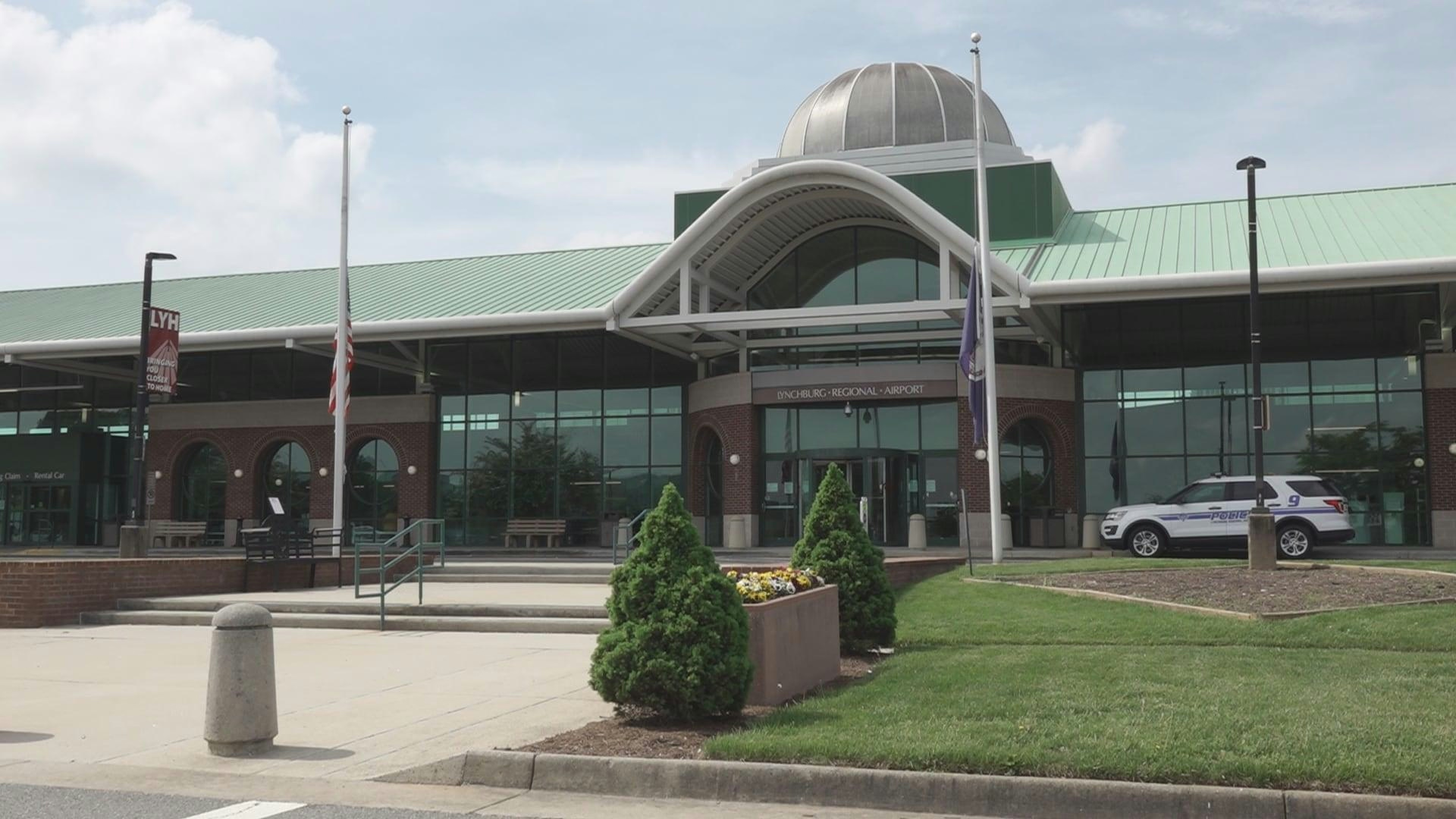
Lynchburg Regional Airport Awarded $5.2 Million Federal Grant for Infrastructure Expansion
Lynchburg Regional Airport in Virginia has secured a $5.2 million federal grant from the Federal Aviation Administration, funded through the Infrastructure Investment and Jobs Act, marking a significant step forward in its development plans. The funding will support the North Development Project, which includes the construction of roads, parking facilities, and other site improvements adjacent to a recently completed apron and taxiway. These enhancements are intended to facilitate the future construction of a hangar facility, thereby expanding the airport’s operational capacity and opening new avenues for growth.
Preparing for Future Growth and Economic Impact
Airport Director Cedric Simon highlighted that the grant represents an investment in the airport’s next phase of development, with particular emphasis on the potential establishment of a maintenance, repair, and overhaul (MRO) facility. Simon noted that such a facility could create a pipeline for local talent, allowing individuals to train at nearby Liberty University and subsequently build careers within the region. “It really is an investment in the community,” he stated, underscoring the broader economic benefits anticipated from the project.
The expansion arrives at a critical juncture for local aviation businesses, which are currently constrained by limited space. Kyle Falwell, owner of Bon Air—a Lynchburg-based company specializing in medical transport and private charter flights—described the increasing demand for aviation services. Bon Air operates a fleet of 10 jets, with plans to add three more, intensifying the need for additional hangar space. Falwell emphasized the challenges of managing a diverse fleet in limited quarters, noting that “hangar space is a commodity” and that maximizing operating room is essential, especially when accommodating both jets and smaller piston aircraft.
Addressing Capacity Constraints and Attracting Investment
The federal grant is expected to alleviate some of these spatial limitations, although accommodating a wide range of aircraft types remains a complex task. By expanding its infrastructure, Lynchburg Regional Airport aims to attract private investment and enhance its aviation capabilities, positioning itself as a competitive hub within the region. The improvements are anticipated to generate positive market reactions by fostering new business opportunities and creating well-paying jobs in the aviation sector.
Falwell views the infrastructure investment as a catalyst for broader economic development, observing that enhanced facilities enable surrounding businesses to grow. As airport officials collaborate with contractors to finalize construction timelines, regional competitors may respond by upgrading their own facilities or monitoring the economic impact of Lynchburg’s expansion. This federal grant firmly establishes Lynchburg Regional Airport as a key player in the regional aviation landscape, poised to capitalize on emerging opportunities.

Etihad Airways Suspends Airbus A380 Flights on Key Route

Aditya Birla Group Seeks Approval for Aircraft Leasing in GIFT City

Qatar Airways Highlights Innovation and Connectivity at Arabian Travel Market 2026

Hong Kong's Five-Year Plan Includes Andrew Fan's Aircraft Parts Processing Hub Proposal

ACIA Aero Leasing Delivers ATR72-600 to Air Nostrum

RTX Appoints Jill Albertelli as Head of Pratt & Whitney

TAT Technologies Joins Beyond Aero Hydrogen Aircraft Program

AURAK Study Highlights Barriers to Air Taxi Adoption in Emerging Economies

Xiamen Air Selects Altitude for 787 Maintenance at Heathrow

Etihad and Swissport Extend Global Partnership
